Loading genres...
Explore the best books about Disease genre.


Here David Oshinsky tells the gripping story of the polio terror and of the intense effort to find a cure, from the March of Dimes to the discovery of the Salk and Sabin vaccines--and beyond. Drawing on newly available papers of Jonas Salk, Albert Sabin and other key players, Oshinsky paints a suspenseful portrait of the race for the cure, weaving a dramatic tale centered on the furious rivalry between Salk and Sabin. He also tells the story of Isabel Morgan, perhaps the most talented of all polio researchers, who might have beaten Salk to the prize if she had not retired to raise a family.Oshinsky offers an insightful look at the National Foundation for Infantile Paralysis, which was founded in the 1930s by FDR and Basil O'Connor, it revolutionized fundraising and the perception of disease in America. Oshinsky also shows how the polio experience revolutionized the way in which the government licensed and tested new drugs before allowing them on the market, and the way in which the legal system dealt with manufacturers' liability for unsafe products. Finally, and perhaps most tellingly, Oshinsky reveals that polio was never the raging epidemic portrayed by the media, but in truth a relatively uncommon disease. But in baby-booming America--increasingly suburban, family-oriented, and hygiene-obsessed--the specter of polio, like the specter of the atomic bomb, soon became a cloud of terror over daily life.Both a gripping scientific suspense story and a provocative social and cultural history, Polio opens a fresh window onto postwar America.

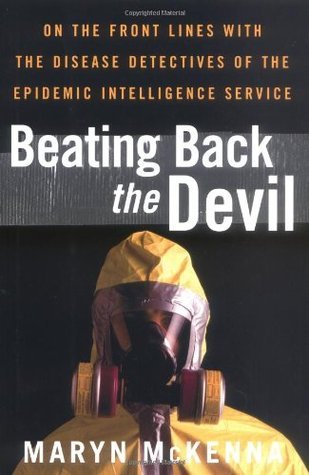
IN THE WAR AGAINST DISEASES, THEY ARE THE SPECIAL FORCES. They always keep a bag packed. They seldom have more than twenty-four hours' notice before they are dispatched. The phone calls that tell them to head to the airport, sometimes in the middle of the night, may give them no more information than the country they are traveling to and the epidemic they will tackle when they get there.The universal human instinct is to run from an outbreak of disease. These doctors run toward it.They are the disease detective corps of the U.S. Centers for Disease Control and Prevention (CDC), the federal agency that tracks and tries to prevent disease outbreaks and bioterrorist attacks around the world. They are formally called the Epidemic Intelligence Service (EIS) -- a group founded more than fifty years ago out of fear that the Korean War might bring the use of biological weapons -- and, like intelligence operatives in the traditional sense, they perform their work largely in anonymity. They are not household names, but over the years they were first to confront the outbreaks that became known as hantavirus, Ebola virus, and AIDS. Now they hunt down the deadly threats that dominate our headlines: West Nile virus, anthrax, and SARS.In this riveting narrative, Maryn McKenna -- the only journalist ever given full access to the EIS in its fifty-three-year history -- follows the first class of disease detectives to come to the CDC after September 11, the first to confront not just naturally occurring outbreaks but the man-made threat of bioterrorism. They are talented researchers -- many with young families -- who trade two years of low pay and extremely long hours for the chance to be part of the group that has helped eradicate smallpox, push back polio, and solve the first major outbreaks of Legionnaires' disease, toxic shock syndrome, and "E. coli" O157.Urgent, exhilarating, and compelling, "Beating Back the Devil" goes with the EIS as they try to stop epidemics -- before the epidemics stop us.

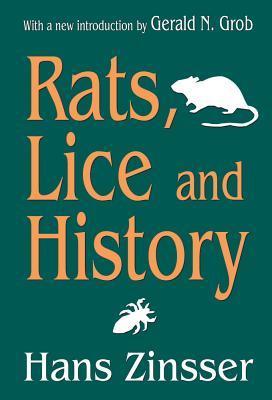
When Rats, Lice and History appeared in 1935, Hans Zinsser was a highly regarded Harvard biologist who had never written about historical events. Although he had published under a pseudonym, virtually all of his previous writings had dealt with infections and immunity and had appeared either in medical and scientific journals or in book format. Today he is best remembered as the author of Rats, Lice, and History , which gone through multiple editions and remains a masterpiece of science writing for a general readership. To Zinsser, scientific research was high adventure and the investigation of infectious disease, a field of battle. Yet at the same time he maintained a love of literature and philosophy. His goal in Rats, Lice and History was to bring science, philosophy, and literature together to establish the importance of disease, and especially epidemic infectious disease, as a major force in human affairs. Zinsser cast his work as the "biography" of a disease. In his view, infectious disease simply represented an attempt of a living organism to survive. From a human perspective, an invading pathogen was abnormal; from the perspective of the pathogen it was perfectly normal. This book is devoted to a discussion of the biology of typhus and history of typhus fever in human affairs. Zinsser begins by pointing out that the louse was the constant companion of human beings. Under certain conditions–to wash or to change clothing–lice proliferated. The typhus pathogen was transmitted by rat fleas to human beings, who then transmitted it to other humans and in some strains from human to human. Rats, Lice and History is a tour de force. It combines Zinsser's expertise in biology with his broad knowledge of the humanities

Level 4: Virus Hunters of the CDC, is a memoir by America's most famous virus researchers. "Level 4" is the highest degree of laboratory containment for isolation and experimentation on microbiological organisms. Level-4 organisms produce lethal illnesses in humans and, for the most part, have no treatment and no prevention. Among the most infamous are the hemorrhagic viral diseases Ebola and Lassa Fever.This is the story of those who hunt the emerging diseases making global headlines. Join husband-and-wife team Dr. Joseph B. McCormick and Dr. Susan Fisher-Hoch in their search for those who may be infected by these lethal viruses. You will travel through equatorial Africa, the ghettos and rainforests of Brazil, and through settlements in northern Pakistan. Both Dr. McCormick and Dr. Fisher-Hoch will offer their scientific knowledge about how and why these viruses are so lethal to humans and what can be done to prevent any kind of devastating epidemic from ever breaking out. The book shows how dedication, intelligence and courage can prevail--and give us hope for the future of global health. 1570362777 , 978-1570362774

The definitive account of epidemics in our time, from the Pulitzer Prize-winning public heath expert Laurie Garrett.A New York Times notable bookUnpurified drinking water. Improper use of antibiotics. Local warfare. Massive refugee migration. Changing social and environmental conditions around the world have fostered the spread of new and potentially devastating viruses and diseases—HIV, Lassa, Ebola, and others. Laurie Garrett takes you on a fifty-year journey through the world's battles with microbes and examines the worldwide conditions that have culminated in recurrent outbreaks of newly discovered diseases, epidemics of diseases migrating to new areas, and mutated old diseases that are no longer curable. She argues that it is not too late to take action to prevent the further onslaught of viruses and microbes, and offers possible solutions for a healthier future.

For more than 3000 years, hundreds of millions of people have died or been left permanently scarred or blind by the relentless, incurable disease called smallpox. In 1967, Dr. D.A. Henderson became director of a worldwide campaign to eliminate this disease from the face of the earth.This spellbinding book is Dr. Henderson’s personal story of how he led the World Health Organization’s campaign to eradicate smallpox—the only disease in history to have been deliberately eliminated. Some have called this feat "the greatest scientific and humanitarian achievement of the past century."In a lively, engrossing narrative, Dr. Henderson makes it clear that the gargantuan international effort involved more than straightforward mass vaccination. He and his staff had to cope with civil wars, floods, impassable roads, and refugees as well as formidable bureaucratic and cultural obstacles, shortages of local health personnel and meager budgets. Countries across the world joined in the effort; the United States and the Soviet Union worked together through the darkest cold war days; and professionals from more than 70 nations served as WHO field staff. On October 26, 1976, the last case of smallpox occurred. The disease that annually had killed two million people or more had been vanquished–and in just over ten years.The story did not end there. Dr. Henderson recounts in vivid detail the continuing struggle over whether to destroy the remaining virus in the two laboratories still that held it. Then came the startling discovery that the Soviet Union had been experimenting with smallpox virus as a biological weapon and producing it in large quantities. The threat of its possible use by a rogue nation or a terrorist has had to be taken seriously and Dr. Henderson has been a central figure in plans for coping with it.New methods for mass smallpox vaccination were so successful that he sought to expand the program of smallpox immunization to include polio, measles, whooping cough, diphtheria, and tetanus vaccines. That program now reaches more than four out of five children in the world and is eradicating poliomyelitis.This unique book is to be treasured—a personal and true story that proves that through cooperation and perseverance the most daunting of obstacles can be overcome.

In recent years, malaria has emerged as a cause célèbre for voguish philanthropists. Bill Gates, Bono, and Laura Bush are only a few of the personalities who have lent their names—and opened their pocketbooks—in hopes of curing the disease. Still, in a time when every emergent disease inspires waves of panic, why aren’t we doing more to eradicate one of our oldest foes? And how does a parasitic disease that we’ve known how to prevent for more than a century still infect 500 million people every year, killing nearly 1 million of them?In The Fever , the journalist Sonia Shah sets out to answer these questions, delivering a timely, inquisitive chronicle of the illness and its influence on human lives. Through the centuries, she finds, we’ve invested our hopes in a panoply of drugs and technologies, and invariably those hopes have been dashed. From the settling of the New World to the construction of the Panama Canal, through wars and the advances of the Industrial Revolution, Shah tracks malaria’s jagged ascent and the tragedies in its wake, revealing a parasite every bit as persistent as the insects that carry it. With distinguished prose and original reporting from Panama, Malawi, Cameroon, India, and elsewhere, The Fever captures the curiously fascinating, devastating history of this long-standing thorn in the side of humanity.

A story of courage and risk-taking, House on Fire tells how smallpox, a disease that killed, blinded, and scarred millions over centuries of human history, was completely eradicated in a spectacular triumph of medicine and public health. Part autobiography, part mystery, the story is told by a man who was one of the architects of a radical vaccination scheme that became a key strategy in ending the horrible disease when it was finally contained in India. In House on Fire, William H. Foege describes his own experiences in public health and details the remarkable program that involved people from countries around the world in pursuit of a single objective—eliminating smallpox forever. Rich with the details of everyday life, as well as a few adventures, House on Fire gives an intimate sense of what it is like to work on the ground in some of the world’s most impoverished countries—and tells what it is like to contribute to programs that really do change the world.

With a death toll of between 50 and 100 million people and a global reach, the Spanish flu of 1918–1920 was the greatest human disaster, not only of the twentieth century, but possibly in all of recorded history. And yet, in our popular conception it exists largely as a footnote to World War I.In Pale Rider, Laura Spinney recounts the story of an overlooked pandemic, tracing it from Alaska to Brazil, from Persia to Spain, and from South Africa to Odessa. She shows how the pandemic was shaped by the interaction of a virus and the humans it encountered; and how this devastating natural experiment put both the ingenuity and the vulnerability of humans to the test.Laura Spinney writes that the Spanish flu was as significant – if not more so – as two world wars in shaping the modern world; in disrupting, and often permanently altering, global politics, race relations, family structures, and thinking across medicine, religion and the arts.