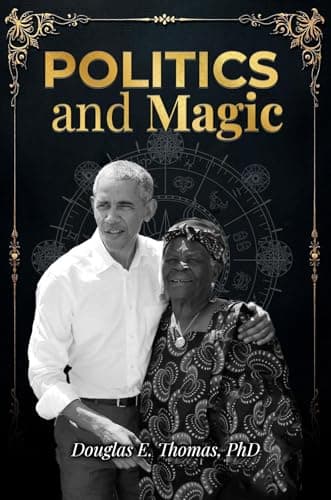
Politics and Magic
About this book
Rituals and magic have played significant roles in the political landscape throughout history, often intertwining with power, authority, and control. Political leaders, elites, and institutions have used these practices to reinforce legitimacy, influence public opinion, and manipulate societal structures.Political authority was frequently intertwined throughout history with religious and ritualistic practices in ancient civilizations. Pharaohs in Egypt were considered gods or divine intermediaries, and their rule was legitimized through elaborate religious rituals. Similarly, in Mesopotamia, rulers such as the Sumerian kings engaged in religious ceremonies to ensure divine favor and the prosperity of their people. These rituals often involved sacrifices, oracles, and augury (interpreting signs from the gods) to guide political decision-making.In the 20th century, as traditional religion and magical practices lost their direct influence, political ideologies began to take on a quasi-magical role. Totalitarian regimes, such as those under Adolf Hitler in Nazi Germany or Joseph Stalin in the Soviet Union, used ritualistic elements of state propaganda to craft a kind of “political magic.” Mass rallies ( President Trump), symbolic imagery (such as the swastika or the hammer and sickle), and robust public speeches were all meant to invoke collective fervor and loyalty, akin to religious or magical rituals that transcended individual reason.Rituals and symbolism are pervasive in contemporary politics, though they are often more subtle. Political leaders rely on public rituals, national holidays, and ceremonial events (such as inaugurations or state visits) to establish their legitimacy and maintain control. In the traditional sense, magic has largely been replaced by psychological manipulation, media strategies, and the creation of ideological “myths” that function similarly to earlier magical beliefs. Politicians and governments may use symbolism, narrative control, and emotional appeal to create a sense of unity or to legitimize power in ways that echo past practices of ritual and magic.Rituals and magic have been integral tools of political leaders throughout history, used to maintain control, legitimize authority, and unite people under a common cause. Although their forms and methods have evolved, the underlying goal of manipulating belief systems and influencing public perception remains constant. From divine kingships to modern media spectacles, the use of rituals and symbolic gestures continues to be a powerful political force.