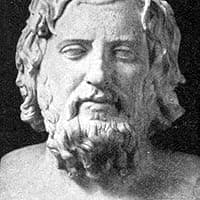
Xenophon
Xenophon (Ancient Greek Ξενοφῶν, Modern Greek Ξενοφώντας; ca. 431 – 355 BC), son of Gryllus, of the deme Erchia of Athens, was a soldier, mercenary and a contemporary and admirer of Socrates. He is known for his writings on the history of his own times, preserving the sayings of Socrates, and the life of ancient Greece. Historical and biographical works: Anabasis (or The Persian Expedition) Cyropaedia Hellenica Agesilaus Socratic works and dialogues: Memorabilia Oeconomicus Symposium Apology Hiero Short treatises: On Horsemanship The Cavalry General Hunting with Dogs Ways and Means Constitution of Sparta
22 Books Written

Scripta Minora: Hiero/Agesilaus/Constitution of the Lacedaemonians/Ways & Means/Cavalry Commander/Art of Horsemanship/On Hunting/Constitution of the Athenians
by Xenophon
Rating: 4.0 ⭐
Xenophon (ca. 430 to ca. 354 BCE) was a wealthy Athenian and friend of Socrates. He left Athens in 401 and joined an expedition including ten thousand Greeks led by the Persian governor Cyrus against the Persian king. After the defeat of Cyrus, it fell to Xenophon to lead the Greeks from the gates of Babylon back to the coast through inhospitable lands. Later he wrote the famous vivid account of t

This is a public domain work of Morris H. Morgan's 1893 translation.

Thucydides' magisterial history told of the unhappy conflict of Greeks against the Greeks in the Peloponnesian War, but his narrative broke off in 411 B.C., seven years before the end, and Greeks were to continue fighting one another for many more years. Xenophon continues the account to 362 B.C. These years saw Athens humbled by Sparta; Sparta humbled by Athens and her former ally, Thebes; Athens

One of Socrates' Athenian disciples in his youth, Xenophon (c. 498-354 bc) fought as a mercenary commander in Cyrus the Younger's campaign to seize the Persian throne, and later wrote a wide range of works on history, politics and philosophy. These six treatises offer his informed insights into the nature of leadership.In the dialogue between the poet Simonides and Hiero, tyrant of Syr
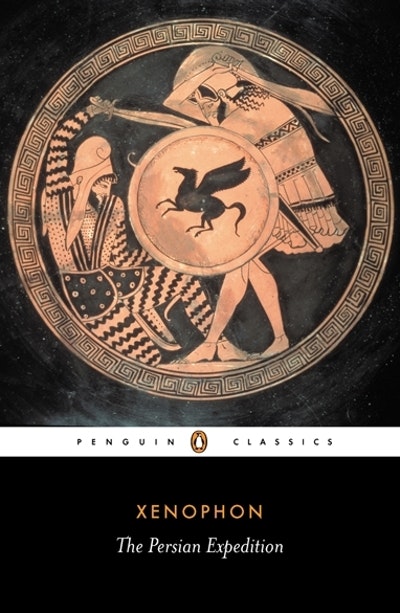
In The Persian Expedition, Xenophon, a young Athenian noble who sought his destiny abroad, provides an enthralling eyewitness account of the attempt by a Greek mercenary army - the Ten Thousand - to help Prince Cyrus overthrow his brother and take the Persian throne. When the Greeks were then betrayed by their Persian employers, they were forced to march home through hundreds of miles of difficult

Cyropaedia: The Education of Cyrus by Xenophon is a historical and philosophical work that details the life and education of Cyrus the Great. The text, translated by Henry Graham Dakyns and revised by F. M. Stawell, explores themes of leadership, governance, and military strategy through the fictionalized biography of Cyrus. It combines elements of history and idealized rhetoric to present an infl

This book presents translations of three dialogues Xenophon devoted to the life and thought of his teacher, Socrates. Each is accompanied by notes and an interpretative essay that will introduce new readers to Xenophon and foster further reflection in those familiar with his writing. "Apology of Socrates to the Jury" shows how Socrates conducted himself when he was tried on the capital charge of n

s/t: A New Critical Edition with a Facing Page English TranslationThis work is a new critical text of "The Constitution of the Lacedaemonians", written in the fourth century BC by Xenophon of Athens, based upon collations of the two best manuscript witnesses presently available. Each page of Greek text is faced with an idiomatic English translation, and the author provides a collation of the

Agesilaus summarizes the life of King Agesilaus II (440 BC – 360 BC) of Sparta.

The Cavalry General is a historical book written by Xenophon, a Greek historian, soldier, and philosopher. The book is a memoir of his experiences as a cavalry officer in the Persian Expedition of the Greek army led by Cyrus the Younger in 401 BC. Xenophon's account provides a vivid description of the campaign, battles, and the political intrigue that led to the expedition. He also gives a detaile

After the execution of Socrates in 399 BC, a number of his followers wrote dialogues featuring him as the protagonist and, in so doing, transformed the great philosopher into a legendary figure. Xenophon's portrait is the only one other than Plato's to survive, and while it offers a very personal interpretation of Socratic thought, it also reveals much about the man and his philosophical views. In

The Oeconomicus is unique in Greek literature in combining a discussion of the proper management of a family or household and didactic material on agriculture within a Socratic dialogue. One of the richest primary sources for the social, economic, and intellectual history of classical Athens, it has been largely neglected despite the current widespread interest in the subjects discussed. This volu

Xenophon (431-355 BC), son of Gryllus, of the deme Erchia of Athens, was a soldier, mercenary and an admirer of Socrates. He is known for his writings on the history of his own times, the sayings of Socrates, and the life of Greece. He participated in the expedition led by Cyrus the Younger against his older brother, the emperor Artaxerxes II of Persia, in 401 BC. His record of the entire expediti

Xenophon (431-355 BC), son of Gryllus, of the deme Erchia of Athens, was a soldier, mercenary and an admirer of Socrates. He is known for his writings on the history of his own times, the sayings of Socrates, and the life of Greece. He participated in the expedition led by Cyrus the Younger against his older brother, the emperor Artaxerxes II of Persia, in 401 BC. His record of the entire expediti

Xenophon the Athenian was born 431 BCE. He was a pupil of Socrates. He marched with the Spartans & was exiled from Athens. Sparta gave him land & property in Scillus, where he lived for many years before having to move once more, to settle in Corinth. He died in 354. The Agesilaus summarises the life of his Spartan friend & king, whom he met after the events of the Anabasis.<br /

This book was converted from its physical edition to the digital format by a community of volunteers. You may find it for free on the web. Purchase of the Kindle edition includes wireless delivery.

Celebrated for his stirring historical accounts and insightful philosophical treatises, Xenophon’s works have enlightened readers across the world for almost two and a half thousand years. For the first time in digital publishing history, readers can now own the complete works of Xenophon in English and the original Greek. This comprehensive eBook presents the complete works with beautiful illustr

ONLY ONE MAN CAN LEAD THE GREEK ARMY HOME...Trying to help a prince overthrow the king of Persia, the Greek army has been betrayed. Now the surviving soldiers are trapped in a hostile country as unforgiving enemies attack from all sides.Enter Xenophon, a tough and brilliant leader who must guide the retreating Greeks across the treacherous mountains and rivers that stand in

This collection of literature attempts to compile many of the classic works that have stood the test of time and offer them at a reduced, affordable price, in an attractive volume so that everyone can enjoy them.

MemorabiliaXenophon (c. 430 c. 354 BCE) adds to Plato s picture of Socrates from a different viewpoint. The Apology complements Plato s account of Socrates defense at his trial. The Symposium portrays a dinner party at which Socrates speaks of love. In Oeconomicus Socrates advises on household management and married life.

Xenophon: Anabasis (Loeb Classical Library) (English and Greek Edition) by Xenophon
by Xenophon
Rating: 4.3 ⭐

Twenty-five hundred years ago Cyrus, a great Persian leader of wisdom and virtue, created the Persian Empire, conquered Babylon, freed forty thousand Jews from captivity, wrote mankind's first human rights charter, and ruled over those he had defeated with respect and benevolence. The Iranians came to regard Cyrus as "The Father," the Babylonians as "The Liberator," and the Jews as "Th