
Wolfgang Pauli
Dr. Wolfgang Ernst Pauli, Ph.D. (Ludwig-Maximilians University, 1921), was a theoretical physicist and one of the pioneers of quantum mechanics, for which he was awarded the 1945 Nobel Prize in Physics. His paper on Einstein's theory of relativity, written two months after receiving his doctorate, remains a standard reference on the subject to this day. In the field of quantum theory, the "Pauli exclusion principle" is named for him; he also developed the theory of nonrelativistic spin. In 1928, Pauli was appointed Professor of Theoretical Physics at ETH Zurich in Switzerland. He held visiting professorships at the University of Michigan in 1931, and the Institute for Advanced Study in Princeton in 1935. He was awarded the Lorentz Medal in 1931. At the end of 1930, shortly after his postulation of the neutrino and immediately following his November divorce, Pauli had a severe breakdown. He consulted psychiatrist and psychotherapist Carl Jung who, like Pauli, lived near Zurich. Jung immediately began interpreting Pauli's deeply archetypal dreams, and Pauli became one of the depth psychologist's best students. He soon began to criticize the epistemology of Jung's theory scientifically, and this contributed to a certain clarification of the latter's thoughts, especially about the concept of synchronicity. A great many of these discussions are documented in the Pauli/Jung letters, today published as Atom and Archetype . Jung's elaborate analysis of more than 400 of Pauli's dreams is documented in Psychology and Alchemy . The German annexation of Austria in 1938 made Pauli a German citizen, which became a problem for him in 1939 after the outbreak of World War II. In 1940, he tried in vain to obtain Swiss citizenship, which would have allowed him to remain at the ETH. Pauli moved to the United States in 1940, where he was employed as a professor of theoretical physics at the Institute for Advanced Study. In 1946, after the war, he became a naturalized citizen of the United States and subsequently returned to Zurich, where he mostly remained for the rest of his life. In 1949, he was granted Swiss citizenship. In 1958, Pauli was awarded the Max Planck medal. In that same year, he fell ill with pancreatic cancer.
31 Books Written

On savait déjà que Wolfgang Pauli, l'un des plus grands physiciens de ce siècle et prix Nobel en 1946, avait suivi dans les années trente une cure analytique avec l'un des élèves de Carl Gustav Jung, cure dont la série de rêves a été étudiée par Jung lui-même dans Psychologie et alchimie .Ce que l'on savait moins jusqu'ici, et que l'on découvre avec jubilation dans ce livre, c'est que les relations avec Jung se sont étalées sur un quart de siècle, jusqu'à la disparition de Pauli en 1958.C'est donc à l'échange entre deux géants de ce siècle que nous assistons ici, dans l'effort de chacun pour comprendre le domaine de l'autre afin d'enrichir et d'approfondir sa propre réflexion : le but avoué étant de découvrir ce point d'unité dans le réel où la connaissance scientifique objective de la nature à travers ses règles et ses lois et la connaissance intérieure de la psyché et des manifestations de l'inconscient trouveraient une sorce ou une structure communes.Ainsi voit-on apparaître le concept révolutionnaire de synchronicité, Pauli s'intéresser à l'alchimie ou aux autres philosophies néo-platoniciennes, Jung s'initier à certaines des conceptions de la physique moderne, dans une recherche a deux voix, complémentaire et réciproque, qui représente au total l'une des entreprises scientifique et philosophique les plus originales et les plus audacieuses de notre siècle.

Wolfgang Pauli (1900–1958) was one of the 20th-century's most influential physicists. He was awarded the 1945 Nobel Prize for physics for the discovery of the exclusion principle (also called the Pauli principle). A brilliant theoretician, he was the first to posit the existence of the neutrino and one of the few early 20th-century physicists to fully understand the enormity of Einstein's theory of relativity.Pauli's early writings, Theory of Relativity , published when the author was a young man of 21, was originally conceived as a complete review of the whole literature on relativity. Now, given the plethora of literature since that time and the growing complexity of physics and quantum mechanics, such a review is simply no longer possible.In order to maintain a proper historical perspective of Professor Pauli's significant work, the original text is reprinted in full, in addition to the author's insightful retrospective update of the later developments connected with relativity theory and the controversial questions that it provokes.Pauli pays special attention to the thorny problem of unified field theories, its connection with the range validity of the classical field concept, and its application to the atomic features of nature. While an early skeptic of solutions along classical lines, Pauli's alternative model was subsequently supported by the newer epistemological analysis of quantum or wave mechanics. Given the many pieces of the puzzle yet to be fitted into a cohesive picture of relativity, the differences of opinion on the relation of relativity theory to quantum theory are merging into one of science's great open problems.Pauli provides additional informative views on: problems beyond the original frame of special and general relativity; the conflict between "classical physics" and the quantum mechanical approach; the importance of Einsteinian theory in the development of physics; and finally, the epistemological analysis of the finiteness of the quantum of action and the move away from naïve visualizations.
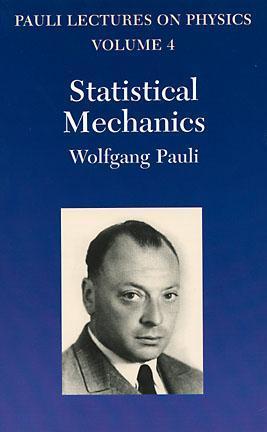
In the 1950s, the distinguished theoretical physicist Wolfgang Pauli delivered a landmark series of lectures at the Swiss Federal Institute of Technology in Zurich. His comprehensive coverage of the fundamentals of classical and modern physics was painstakingly recorded not only by his students but also by a number of collaborators whose carefully edited transcriptions resulted in a remarkable six-volume work.This volume, the fourth in the series, represents a concise course on statistical mechanics, centering on the historic development of the basic ideas and on the logical structure of the theory. Major chapter headings include General Statistical Mechanics, Brownian Motion, and Quantum Statistics.Originally published in 1973, the text remains an important resource thanks to Pauli's manner of presentation. As Victor F. Weisskopf notes in the Foreword to the series, Pauli's style is "commensurate to the greatness of its subject in its clarity and impact. . . . Pauli's lectures show how physical ideas can be presented clearly and in good mathematical form, without being hidden in formalistic expertise." Alone or as part of the complete set, this volume represents a solid introduction to statistical mechanics that will be invaluable to individuals, as well as to libraries and other institutions.

Scopritore del principio di esclusione, che gli valse il Premio Nobel, Pauli non solo ha fornito determinanti contributi alla meccanica quantistica, ma si è interrogato, con una profondità ignota ad altri fisici, sull'esistenza di principi presenti universalmente nel processo psichico - principi che ha trovato negli archetipi di Jung. Ma che cosa è in realtà un archetipo? Per Pauli si tratta di immagini fondamentali e primitive che si impongono alla mente in maniera oggettiva e inconscia, e legate ai concerti fisici della scienza da questo legame scaturisce quella unità di psiche e materia che senza alcun dubbio lo legava a Jung.
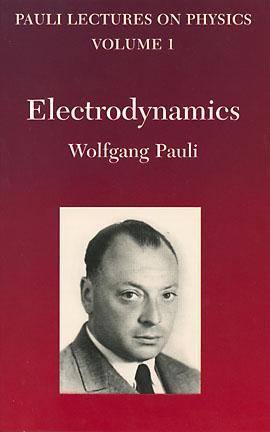
In the 1950s, the distinguished theoretical physicist Wolfgang Pauli delivered a landmark series of lectures at the Swiss Federal Institute of Technology in Zurich. His comprehensive coverage of the fundamentals of classical and modern physics was painstakingly recorded not only by his students but also by a number of collaborators, whose carefully edited transcriptions resulted in a remarkable six-volume work.This volume, the first of the series, presents a brief survey of the historical development and then-current problems of electrodynamics, followed by sections on electrostatics and magnetostatics, steady-state currents, quasi-static fields, and rapidly varying fields. As does each book in the series, Volume 1 includes an index and a wealth of helpful figures, and can be read independently of the series by those who wish to focus on a particular topic.Originally published in 1973, the text remains entirely relevant thanks to Pauli's manner of presentation. As Victor F. Weisskopf notes in the Foreword to the series, Pauli's style is "commensurate to the greatness of its subject in its clarity and impact. Pauli's lectures show how physical ideas can be presented clearly and in good mathematical form, without being hidden in formalistic expertise." Alone or as part of the complete set, this volume represents a peerless resource invaluable to individuals, libraries, and other institutions.
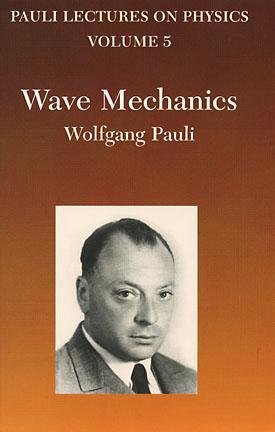
In the 1950s, the distinguished theoretical physicist Wolfgang Pauli delivered a landmark series of lectures at the Swiss Federal Institute of Technology in Zurich. His comprehensive coverage of the fundamentals of classical and modern physics was painstakingly recorded not only by his students, but also by a number of collaborators whose carefully edited transcriptions resulted in a remarkable six-volume work.This volume, the fifth in the series, focuses on topics chosen by Pauli for their conceptual and historical the probabilistic nature of quantum theory, the concept of spin, the problem of identical particles, and the relation of the statistics of rotational states of diatomic molecules to nuclear spin. Chapter headings include Wave Functions of Force-Free Particles, Description of a Particle in a Box and in Free Space, Particle in a Field of Force, More than One Particle, Eigenvalue Problems, Collision Processes, Angular Momentum and Spin, Identical Particles with Spin, and more.Originally published in 1973, the text remains an important resource thanks to Pauli's manner of presentation. As Victor F. Weisskopf notes in the Foreword to the series, Pauli's style is "commensurate to the greatness of its subject in its clarity and impact .… Pauli’s lectures show how physical ideas can be presented clearly and in good mathematical form, without being hidden in formalistic expertise." Alone or as part of the complete set, this volume represents a mathematically rigorous treatment that will be invaluable to individuals, as well as to libraries and other institutions.
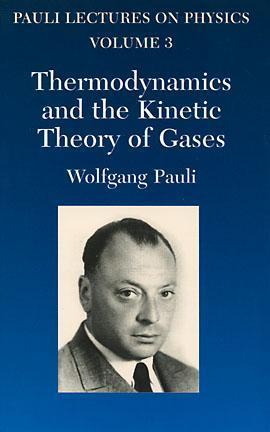
Pauli Lectures on Physics: Volume 3, Thermodynamics and the Kinetic Theory of Gases
by Wolfgang Pauli
Rating: 4.1 ⭐
In the 1950s, the distinguished theoretical physicist Wolfgang Pauli delivered a landmark series of lecturers at the Swiss Federal Institute of Technology in Zurich. His comprehensive coverage of the fundamentals of classical and modern physics was painstakingly recorded not only by his students, but also by a number of collaborators whose carefully edited transcriptions resulted in a remarkable six-volume work. This volume, the third in that series, offers a superb course on phenomenological thermodynamics, with emphasis given to historic development and the logical structure of the theory. Topics include basic concepts and the First Law, the Second Law, equilibria, Nernst's heat theorem, and the kinetic theory of gases.Originally published in 1973, the text remains an important resource for physicists and students thanks to Pauli's manner of presentation. As Victor F. Weisskopf notes in the Foreword to the series, Pauli's style is "commensurate to the greatness of its subject in its clarity and impact …. Pauli's lectures show how physical ideas can be presented clearly and in good mathematical form, without being hidden in formalistic expertise." Alone or as part of the complete set, this volume represents a solid introduction to thermodynamics that will be invaluable to individuals, as well as to libraries and other institutions.

Like Bohr, Einstein and Heisenberg, Wolfgang Pauli was not only a Nobel laureate and one of the creators of modern physics, but also an eminent philosopher of modern science. This is the first book in English to include all his famous articles on physics and epistemology. They were actually translated during Pauli's lifetime by R. Schlapp and are now edited and annotated by Pauli's former assistant Ch. Enz. Pauli writes about the philosophical significance of complementarity, about space,time and causality, symmetry and the exclusion principle, but also about therole of the unconscious in modern science. His famous article on Kepler is included as well as many historical essays on Bohr, Ehrenfest,and Einstein as well as on the influence of the unconscious on scientific theories. The book addresses not only physicists, philosophers and historians of science, but also the general public.

Pauli Lectures on Physics: Volume 2, Optics and the Theory of Electrons
by Wolfgang Pauli
Rating: 3.9 ⭐
In the 1950s, the distinguished theoretical physicist Wolfgang Pauli delivered a trademark series of lectures at the Swiss Federal Institute of Technology in Zurich. His comprehensive coverage of the fundamentals of classical and modern physics was painstakingly recorded not only by his students but also by a number of collaborators whose carefully edited transcriptions resulted in a remarkable six-volume work.This volume, the second of the series, focusing on optics and the theory of electrons, examines geometrical optics, the theory of interference and diffraction, Maxwell's Theory, crystal optics, and molecular optics. As does each volume in the series, this book includes an index and a wealth of helpful figures, and can be read independently of the series by those who wish to focus on a particular topic.
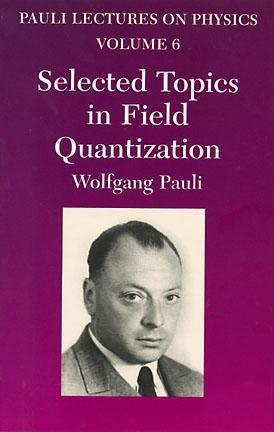
Pauli Lectures on Physics: Volume 6, Selected Topics in Field Quantization
by Wolfgang Pauli
Rating: 3.9 ⭐
In the 1950s the distinguished theoretical physicist Wolfgang Pauli delivered a landmark series of lectures at the Swiss Federal Institute of Technology in Zurich. His comprehensive coverage of the fundamentals of classical and modern physics was painstakingly recorded not only by his students, but also by a number of collaborators whose carefully edited transcriptions resulted in a remarkable six-volume work.This volume, the sixth in the series, focuses on selected topics in field quantization and considers such subjects as quantization of the electron-positron field, response to an external field, quantization of free fields, quantum electrodynamics, interacting fields, the Heisenberg representation, the S-matrix, and Feynman's approach to quantum electrodynamics. As does each book in the series, Volume 6 includes an index and a wealth of helpful figures.Originally published in 1973, the text remains entirely relevant thanks to Pauli's manner of presentation. As Victor F. Weisskopf notes in the Foreword to the series, Pauli's style is "commensurate to the greatness of its subject in its clarity and impact…. Pauli's lectures show how physical ideas can be presented clearly

I am very happy to accept the translators' invitation to write a few lines of introduction to this book. Of course, there is little need to explain the author. Pauli's first famous work, his article on the theory of relativity in the Encyklopädie der Mathematischen Wissenschaften was written at the age of twenty. He afterwards took part in the development of atomic physics from the still essentially classical picture of Bohr's early work to the true quantum mechanics. Thereafter, some of his work concerned the treatment of problems in the framework of the new theory, especially his paper on the hydrogen atom following the matrix method without recourse to Schrodinger's analytic form of the theory. His greatest achievement, the exclusion principle, generally known today under his own name as the Pauli principle, that governs the quantum theory of all problems including more than one electron, preceded the basic work of Heisenberg and Schrodinger, and brought him the Nobel prize. It includes the mathematical treatment of the spin by means of the now so well known Pauli matrices. In 1929, in a paper with Heisenberg, he laid the foundation of quantum electrodynamics and, in doing so, to the whole theory of quantized wave fields which was to become the via regia of access to elementary particle physics, since here for the first time processes of generation and annihilation of particles could be described for the case of the photons.

Questo libro, curato da Pauli poco prima della morte, raccoglie un insieme di saggi che ben rappresentano la consapevolezza che egli ebbe sempre vivissima del significato più generale di ogni ricerca scientifica, valida non solo per il risultato singolo ma per il contributo più ampio al sapere. I saggi, percorsi dal tema comune del valore e dei limiti della conoscenza umana, possono essere distinti in due la prima puntualizza i personali apporti dell'autore e di altri grandi fisici alla scienza contemporanea; la seconda è dedicata a riflessioni sul potere del pensiero e alla validità di alcuni concetti fondamentali della teoria dell'evoluzione biologica e della psicologia dell'inconscio. Con un saggio di Victor F. Weisskopf.

These lectures covering topics basic to classical and modern physics were given by Pauli at the Zurich Federal Institute, where they were transcribed by his collaborators. They have now been translated and edited for English publication, and are introduced by Victor Weisskopf, who writes as follows:"It is often said that scientific texts quickly become obsolete. Why are the Pauli lectures brought to the public today, when some of them were given as long as twenty years ago? The reason is simple: Pauli's way of presenting physics is never out of date. His famous article on the foundations of quantum mechanics appeared in 1933 in the German encyclopedia Handbuch der Physik. Twenty-five years later it reappeared practically unchanged in a new edition, whereas most other contributions to this encyclopedia had to be completely rewritten. The reason for this remarkable fact lies in Pauli's style, which is commensurate to the greatness of its subject in its clarity and impact. Style in scientific writing is a quality that today is on the point of vanishing. The pressure of fast publication is so great that people rush into print with hurriedly written papers and books that show little concern for careful formulation of ideas. Mathematical and instrumental techniques have become complicated and difficult today; they demand so much skill and training that most of the effort of writing and learning is devoted to the acquisition of this skill instead of insight into important concepts. Essential ideas of physics are often lost in the dense forest of mathematical reasoning. This situation need not be so. Pauli's lectures show how physical ideas can be presented clearly and in good mathematical form, without being hidden in formalistic expertise."

Exclusion principle and quantum mechanics;: Lecture given in Stockholm after the award of the Nobel prize of physics 1945
by Wolfgang Pauli
Rating: 4.0 ⭐

Wolfgang Pauli, né à Viene en 1900 et mort à Zurich à l'âge de cinquante-huit ans, est l'un des physiciens majeurs de notre siècle Père, dès 1925, de ce que l'on appelle le " principe d'exclusion ", inventeur, en 1931, de cette particule fantastique puisque ne possédant en principe ni charge ni masse qu'est le neutrino, Pauli, qui reçut en 1946 le prix Nobel de physique, est aussi l'un des fondateurs de la physique quantique qui a véritablement révolutionné notre vision du monde.Mais Wolfgang Pauli ne s'est pas contenté d'être un physicien et un théoricien hors-pair. Devant l'ébranlement sans précédent que provoquait la physique moderne relativité générale et physique quantique mêlées, il a été l'un de ceux, aux côtés de Niels Bohr, Werner Karl Heisenberg ou Erwin Schrödinger, à penser cette révolution pour en évaluer les conséquences et en tirer les principes d'une véritable philosophie moderne.Dans la lignée de La Partie et le tout , où Heisenberg rapporte les discussions incessantes qu'il avait avec Bohr et Pauli dans la plus grande liberté d'esprit, Physique moderne et philosophie nous introduit à certains des points cruciaux de la nouvelle physique. Dans une extraordinaire audace de pensée, cet ouvrage jette aussi les ponts vers des disciplines apparemment totalement étrangères, comme les antiques philosophies mystiques, la science de l'inconscient ou l'histoire de la philosophie, ouvrant ainsi d'immenses territoires de réflexion au sujet desquels nous n'avons pas fini de nous interroger.

Le Cas Kepler: précédé de « Les conceptions philosophiques de Wolfgang Pauli » par Werner Heisenberg
by Wolfgang Pauli
Rating: 4.0 ⭐
Prix Nobel de physique pour l'invention du « neutrino » et l'un des pères de la physique contemporaine avec Niels Bohr et Werner Heisenberg, Wolfgang Pauli ne s'est jamais contenté de son activité scientifique : il voulait comprendre comment toute connaissance était possible, il recherchait avec une remarquable opiniâtreté comment penser l'unité de la matière et de l'esprit.Dans cette quête passionnée d'un arrière-fond unifié aux mondes de la matière et de l'âme, il collabora avec le grand psychologue que fut Carl Gustav Jung et échangea avec lui lettres et idées pendant un quart de siècle.C'est ainsi que Pauli rencontra l'alchimie dont les images le hantaient et qu'il partit à la découverte des grandes philosophies néo-platoniciennes, qui lui fournirent le thème de l'« unus mundus », monde supra-sensible, monde de l'âme réalisée où la matière est encore spirituelle, et l'esprit déjà matérialisé.D'où sa thèse que les grandes inventions, les conceptions scientifiques s'enracinent dans un terreau que gouvernent les archétypes, formes vides de l'inconscient et équivalents en psychologie des idées de Platon.Dans un texte qui avait d'abord été publié avec l'étude de Jung sur la synchronicité, il applique ici les notions qui fondent l'astronomie moderne de Kepler : proche parent de Koyré ou d'un certain Bachelard, il renouvelle ainsi l'histoire des sciences et se montre le précurseur de la transdisciplinarité contemporaine.

Wissenschaftlicher Briefwechsel mit Bohr, Einstein, Heisenberg u.a. Band IV, Teil III: 1955–1956. Scientific Correspondence with Bohr, Einstein, ... and Physical Sciences, 17)
by Wolfgang Pauli
Rating: 1.0 ⭐
Aus Paulis letztem Lebensjahrzehnt sind über 2000 Briefe erhalten und in diesem grundlegenden Werk zur Physikgeschichte der Nachkriegszeit zusammengefaßt. Neben der Physik wird hier auch der allgemeinere geistesgeschichtliche Hintergrund unserer Naturwissenschaft beleuchtet. Dieser Teilband enthält wissenschaftliche Korrespondez über grundlegende und andere allgemeine Fragen der Physik der Jahre 1955-1956. In diese Zeit fallen der Beginn der axiomatischen Feldtheorie, die Anfänge von CERN, der Berner Relativitätskongress zur 50-Jahr-Feier von Einsteins Entdeckung sowie N. Bohrs 70. Geburtstag und natürlich die frühe Geschichte des Neutrinos. Pauli und seine Briefpartner nehmen aktiv an diesen Ereignissen teil und beleuchten sie in eindrucksvoller Weise in ihrer Korrespondenz. Die reich annotierten und kommentierten Briefe sind chronologisch angeordnet und durch Verzeichnisse und Register erschlossen.From the final decade of Pauli's life, nearly 2000 letters survive. These are collected in this fundamental work on the history of physics in the post-war era. Going beyond physics, these letters also shed light on the cultural and philosophical background of our natural sciences.This part of the collection contains scientific correspondence about fundamental and other general questions concerning physics in the years 1955-1956. This period saw the beginnings of axiomatic field theories, the birth of CERN, the Berner Relativity Congress marking the 50th Anniversary of Einstein's discovery, and N. Bohr's 70th birthday. They were also the formative years of neutrino physics. Pauli and his correspondence partners played an active role in these events and illuminate them in an impressive manner in their letters. The extensively annotated and commented letters are organized chronologically and complemented by indexes and references.
Collected Scientific Papers: Vol. 1 & 2
by Wolfgang Pauli

Eiweisskörper und Kolloide: Zwei Vorträge für Biologen und Chemiker
by Wolfgang Pauli

Bubble Physics Solution: Relativity
by Wolfgang Pauli
Book Publishing Pub 256 World Book Publishing Company This book is the 9 volumes of the World Book Publishing Company published in the Bubble Physics Lecture. the theme is the relativity. Wolfgang bubble is a 20th century atroph physici

Bubble Lecture Physics: Waveness
by Wolfgang Pauli
Book Publishing Pub 222 World Book Publishing Company This book is the 5 volumes of the World Book publishing company published in the Bubble Physics Lecture. the theme of wave mechanics. Wolfgang bubble is a 20th century. theoretical p

Vierpoltheorie und ihre Anwendung auf elektronische Schaltungen (Wissenschaftliche Taschenbücher, 135)
by Wolfgang Pauli
Beyond the Atom: The Philosophical Thought of Wolfgang Pauli
by Wolfgang Pauli
The Austrian physicist Wolfgang Pauli (1900-1958) was often called the conscience of physics. He was famous for his sharp and critical mind which made him a central figure among the founders of quantum physics. He also was an outstanding philosopher, especially interested in finding a new conception of reality and of causality. A careful study of the original sources of the past culminated in his study of Kepler and of medieval symbolism, a concept that played a central role in his discussion with Carl Jung on what they called the psycho-physical problem. Pauli considered the sharp distinctions between knowledge and faith and between spirit and matter as dangerous. He thought they should complement each other in our comprehension of reality. Professor Laurikainen here for the first time describes Pauli's ideas in detail. His book is based on the large and as yet unpublished correspondence between Pauli and M. Fierz. Its careful analysis adds depth and clarity to the few publications by Pauli on philosophical problems and explains why Pauli grasped the meaning of atomic theory more deeply than even Niels Bohr himself. The book should interest both philosophers and physicists and should encourage further studies on Pauli the humanist and his contribution to our understanding of reality.

物理学と哲学に関する随筆集
by Wolfgang Pauli

Aus Paulis letztem Lebensjahrzehnt sind über 2000 Briefe erhalten. Neben der Physik wird hier auch der allgemeinere geistesgeschichtliche Hintergrund unserer Naturwissenschaft beleuchtet. In einem ersten Teilband werden zunächst 430 Briefe aus diesem Bestand vorgelegt, die Pauli von 1950 bis 1952 mit 72 Personen austauschte. Im Zentrum dieser Briefe steht die von Pauli maßgeblich mitbestimmte physikalische Grundlagenforschung der frühen 50er Jahre. Daneben treten immer häufiger auch ideengeschichtliche Probleme in den Vordergrund. Im Glauben an einen psycho-physischen Wirklichkeitszusammenhang im Sinne der Kopenhagener Komplementaritätsidee hat Pauli diese Frage sowohl mit seinen physikalischen Kollegen als auch mit dem Psychologen C.G. Jung und dessen Schülern erörtert.

Physik und Erkenntnistheorie (Facetten der Physik)
by Wolfgang Pauli

Sōtaisei Riron Jō
by Wolfgang Pauli

Die allgemeinen Prinzipien der Wellenmechanik: Neu herausgegeben und mit historischen Anmerkungen versehen von Norbert Straumann
by Wolfgang Pauli
W. Paulis Handbuchartikel Die allgemeinen Prinzipien der Wellenmechanik übertraf für Jahrzehnte alle anderen Darstellungen an Tiefe und Gründlichkeit. Er sollte nach wie vor von jedem Studierenden, der sich ernsthaft mit den Grundlagen der Quantentheorie auseinandersetzen will, zu Rate gezogen werden. Paulis konzentrierte Darstellung der nichtrelativistischen Quantenmechanik hat als Klassiker die Zeiten überdauert. Sie macht den ersten Teil des Werks aus, der zweite behandelt Diracs relativistische Quantentheorie zum Einkörperproblem und zur Strahlung. Der Herausgeber hat das Werk durch ein wissenschaftliches Kurzportrait Paulis und zahlreiche Anmerkungen ergänzt, so daß das Buch auch als ein Beitrag zur Wissenschaftsgeschichte gesehen werden muß. Das Buch eignet sich für Studenten ab dem 4. Semester.

Meson Theory Of Nuclear Forces
by Wolfgang Pauli
This vintage book contains Wolfgang Pauli's 1948 treatise, "Meson Theory of Nuclear Forces". This fascinating exploration of a fundamental scientific theory will appeal to those with an interest in scientific development, and would make for a worthy addition to collections of related literature. Contents "Various Types of Meson Fields", "Pseudoscalar Symmetric Theory", "Vector-Field Theory", "Theory of Extended Source", "Scattering of Mesons", "Magnetic Moment in the Strong Coupling Case", "Magnetic Moment in the Weak Coupling Case", "Quantum Theory of Scattering", et cetera. Wolfgang Ernst Pauli (1900-1958) was a Swiss theoretical physicist and one of the forefathers of quantum physics. He received the Nobel Prize in Physics for his "decisive contribution through his discovery of a new law of Nature, the exclusion principle or Pauli principle." Many vintage texts such as this are becoming increasingly rare and expensive, and it is with this in mind that we are republishing this volume now, in an affordable, modern, high-quality edition. It comes complete with a specially commissioned new biography of the author.

Aus Paulis letztem Lebensjahrzehnt sind über 2000 Briefe erhalten und in diesem grundlegenden Werk zur Physikgeschichte der Nachkriegszeit zusammengefaßt. Neben der Physik wird hier auch der allgemeinere geistesgeschichtliche Hintergrund unserer Naturwissenschaft beleuchtet. Dieser Teilband enthält wissenschaftliche Korrespondez über grundlegende und andere allgemeine Fragen der Physik der 50er Elementarteilchen, Erkenntnistheorie und Quantenfeldtheorie. Im besonderen wird hier die Geschichte der frühen Quantenfeldtheorie beleuchtet. Die reich annotierten und kommentierten Briefe sind chronologisch angeordnet und durch Verzeichnisse und Register erschlossen.From the last decade of Paulis life, more than 2000 of his letters have survived. Together they represent a remarkable contribution to the history of post-war physics. In addition to discussing questions of physics they provide illuminating insights into debates on the philosophical and human components of the history of science. This part of Volume IV contains scientific correspondence on foundational and other general problems of physics in the 1950 elementary particles, epistemology, and quantum field theory. In particular, one can clearly trace the development of the early quantum field theory. Generous annotations and commentary accompany the letters, which are ordered chronologically and listed in registers and an index for easy access.

Wissenschaftlicher Briefwechsel mit Bohr, Einstein, Heisenberg u.a.: Band 1: 1919-29
by Wolfgang Pauli
Die vorliegende Briefsammlungenthalt BriefevonundanWolfgangPauliwahrend der Zeitspanne 1919 bis 1929. Viele Autoren haben diese Zeit mit Recht als die "goldene Periode der Physik"betrachtet. Bis zu dieser Zeithatten die Physiker eine ungeheure Menge von Fakten iiber die Eigenschaften der Atome angesammelt, insbesondere in den Resultaten der Spektralanalyse. AIle diese Resultate wider- sprachen den Erwartungen der klassischen Physik. Zwar war das Bohrsche Atommodell, erganzt durch die Betrachtungen Sommerfelds, wohl im Stande, einige dieser Tatsachen zu beschreiben, solange es sich urn die einfachsten Atome handelte, in denen man bloB die Bewegung eines Elektrons in Betracht zu ziehen hatte, wie in Wasserstoffatomen oder in den Alkaliatomen. In allen Mehr- Elektronensystemen und in den Fragen der Feinstruktur der Spektrallinien versagte aber dieses Modell vollig, und selbst in den Einzel-Elektron-Problemen erschienen die Grundlagen des Modells als plausible, aber willkiirliche Annahmen. Dan-n kam die Quantenmechanik und anderte alles mit einem Schlag. Die Ratsel waren gelost, das Verhalten der Atome konnte mit eindeutigen und logischen Mitteln erklart und im Prinzip berechnet werden. Selten, vielleicht noch nie in der Geistesgeschichte, haben so wenig Leute soviel in so kurzer Zeit geleistet. Innerhalb weniger Jahre, von 1925 bis 1928, waren die Prinzipien festgelegt, auf denen die Spezifitat und die Stabilitat der Atome beruhen; es wurden die Grundlagen der chemischen Bindung aufgedeckt und ebenso die Grundlagen der Struktur der Metalle und anderer Festkorper. Alles fiigte sich zusammen in ein logisches Gebaude, das auf ganz neuartigen Ideen beruhte, die den Grundideen der klassischen Physik in revolutionarer Weise widersprachen.