
William W. Lewis
3 Books Written
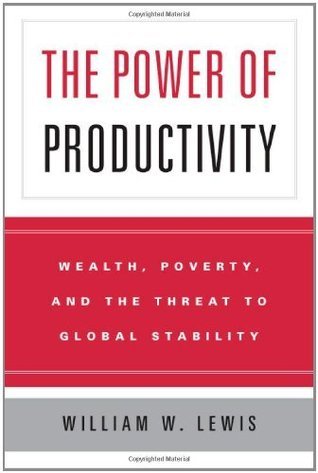
The Power of Productivity: Wealth, Poverty, and the Threat to Global Stability
by William W. Lewis
Rating: 5.0 ⭐
• 2 recommendations ❤️
The disparity between rich and poor countries is the most serious, intractable problem facing the world today. The chronic poverty of many nations affects more than the citizens and economies of those nations; it threatens global stability as the pressures of immigration become unsustainable and rogue nations seek power and influence through extreme political and terrorist acts. To address this tenacious poverty, a vast array of international institutions has pumped billions of dollars into these nations in recent decades, yet despite this infusion of capital and attention, roughly five billion of the world's six billion people continue to live in poor countries. What isn't working? And how can we fix it?The Power of Productivity provides powerful and controversial answers to these questions. William W. Lewis, the director emeritus of the McKinsey Global Institute, here draws on extensive microeconomic studies of thirteen nations over twelve years—conducted by the Institute itself—to counter virtually all prevailing wisdom about how best to ameliorate economic disparity. Lewis's research, which included studying everything from state-of-the-art auto makers to black-market street vendors and mom-and-pop stores, conclusively demonstrates that, contrary to popular belief, providing more capital to poor nations is not the best way to help them. Nor is improving levels of education, exchange-rate flexibility, or government solvency enough. Rather, the key to improving economic conditions in poor countries, argues Lewis, is increasing productivity through intense, fair competition and protecting consumer rights.As The Power of Productivity explains, this sweeping solution affects the economies of poor nations at all levels—from the viability of major industries to how the average consumer thinks about his or her purchases. Policies must be enacted in developing nations that reflect a consumer rather than a producer mindset and an attendant sense of consumer rights. Only one force, Lewis claims, can stand up to producer special privileges—consumer interests.The Institute's unprecedented research method and Lewis's years of experience with economic policy combine to make The Power of Productivity the most authoritative and compelling view of the global economy today, one that will inform political and economic debate throughout the world for years to come.

Experiential Spectatorship
by William W. Lewis

Experiential Spectatorship: Immersion, Participation, and Play During Times of Deep Mediatization
by William W. Lewis
Experiential Spectatorship offers a lens for analyzing audience experience with(in) a variety of contemporary media. Using a broad-based perspective, this media includes participatory theatre, video games, digital simulations, social media platforms, alternate reality games, choose your own adventure narratives, interactive television, and a variety of other experiential performance events. Through a taxonomy that includes Immersion, Participation, Game Play, and Role Play the book guides the reader to understand the ways mediatization and technics brought about by digital technologies are changing the capacities and expectations of contemporary audiences. In their daily interactions and relations with their technologies, they become mediatized spectators. By reading these technologies' impacts on individual subjectivity prior to acts of spectatorship, one gains the tools to best describe how the spectator creates forms of relational exchange with their experential media.This book prepares the reader to think in a digital manner so they can best recognize how performance and spectatorship in the twenty-first century are evolving to meet the needs of future waves of spectators brought up in a postdigital world.