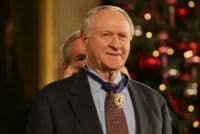
William Safire
William Lewis Safire was an American author, columnist, journalist and presidential speechwriter. He was perhaps best known as a long-time syndicated political columnist for the New York Times and a regular contributor to "On Language" in the New York Times Magazine, a column on popular etymology, new or unusual usages, and other language-related topics.
29 Books Written

The Right Word in the Right Place at the Right Time: Wit and Wisdom from the Popular "On Language" Column in The New York Times Magazine
by William Safire
Rating: 3.9 ⭐
The author of No Uncertain Terms and Words of Wisdom presents a wealth of humorous new investigations into language, usage, words, speech, and writing. 25,000 first printing.
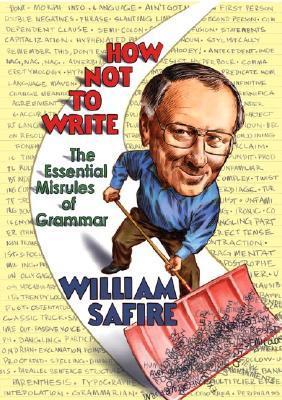
These fifty humorous misrules of grammar will open the eyes of writers of all levels to fine style. How Not to Write is a wickedly witty book about grammar, usage, and style. William Safire, the author of the New York Times Magazine column "On Language," homes in on the "essential misrules of grammar," those mistakes that call attention to the major rules and regulations of writing. He tells you t

A collection of the Pulitzer Prize-winning author's most outstanding New York Times columns from the past six years

Tidbits of writing advice on everything from Action to Writers Block by the masters of the craft fill this essential reference for wordsmiths compiled by a New York Times columnist. 25,000 first printing. National ad/promo.

As William Safire writes in his introduction to Spread the Word , the eleventh book collecting his "On Language" columns from The New York Times Magazine , in language matters "it's a comfort to have a rule." And yet, as he makes clear throughout this entertaining collection,the question that confronts writers and public speakers daily is deciding when a rule should be applied rigorously to

From Simon & Schuster, Words of Wisdom , compiled and edited by William Safire and Leonard Safir, is a collection of good advice.A follow-up to the highly successful Good Advice , here are more witty, insightful words of advice on every subject under the sun--from sources as diverse as Hippocrates and Babe Ruth.

William Safire was a speechwriter for Richard Nixon from 1968 to 1973. During that time, as a Washington insider, Safire was able to observe the thirty-seventh president in his entirety: as noble and mean-spirited; as good and bad; as a man desirous of greatness. Rarely has there been a White House memoir more intimate or revealing in its exploration of the great events that took place "before the

One of America's foremost political columnists ties the Book of Job to the news of the day in a provacative exploration of how we can reshape politics by following Job's empowering example.
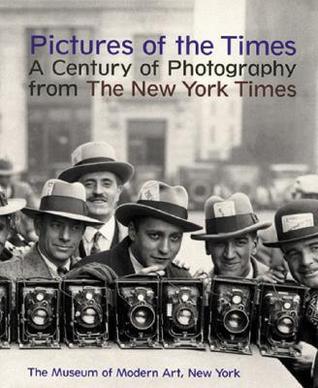
Pictures of the Times: A Century of Photography from The New York Times
by William Safire
Rating: 4.1 ⭐
Selected from 17 million prints preserved in the archives of The New York Times , the spectacular photographs in this book provide a spellbinding sample from the rich archive that is the twentieth century, as seen through the eyes of a great newspaper. Revealed is the extraordinary and omnivorous breadth of photography's vivid pictures of both World Wars; of presidents, mayors, dictators and celeb

Leadership: A Treasury of Great Quotations for Those Who Aspire to Lead
by William Safire
Rating: 3.1 ⭐
A Treasury of Great Quotation for Those Who Aspire to Lead
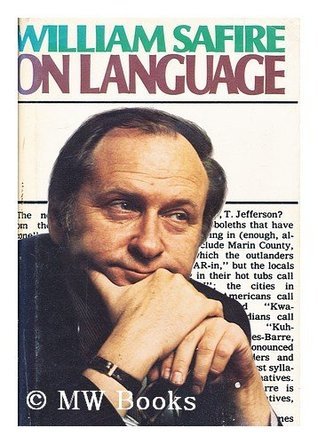
William Safire is the most widely read writer on language in America. In his witty way, Mr. Safire enlightens us concerning proper usage, correct pronunciation, the roots of our daily discourse, and the vacuous vogue lingo in which "subsume" is co-opting "co-opt," wood-burning stoves become "energy systems," and stores that sell eyeglasses squint out at us as "vision centers." He is aided in his c

The Pulitzer Prize-winning columnist presents an illustrated collection of pieces from his "New York Times Magazine" column--"On Language"--which highlights the use and misuse of the English language today

William Safire, America’s favorite writer on language, offers a new collection of pieces drawn from his nationally syndicated “On Language” column. Laced with liberal (a loaded word, but apt) doses of Safire’s wit, these pieces search culture (high and low), politics, entertainment, and the word on the street to explore what the old but livelier-than-ever English language has been up to lately.<br

No Uncertain Terms: More Writing from the Popular "On Language" Column in The New York Times Magazine
by William Safire
Rating: 3.8 ⭐
There is no wittier, more amiable or more astute word maven than Pulitzer Prize-winning columnist William Safire.For many people, the first item on the agenda for Sunday morning is to sit down and read Safire's "On Language" column in The New York Times Magazine, then to compose a "Gotcha" letter to the Times. Each of his books on language is a classic, to be read, re-read and fought over. S

In this sixth collection of his syndicated "On Language" columns, Safire deals wittily, playfully and, above all, instructively with thorny linguistic issues. He takes to task writers who use the passive voice, elitists who grimly stick to "dicta" and "memoranda" despite the general preference for "-ums," and groups who declare themselves offended by the use of certain words (such as "tribes"). Th

The Pulitzer Prize-winning columnist discusses contemporary figures of speech, from witty stories about expressions such as "kiss and tell" and "stab in the back" to the evolution of "read my lips."NOTE: This edition does not include illustrations.


This basic grammar book highlights fifty mock rules, each using the mistake it purports to correct, such as the "Passive voice should never be used" and "A writer must not shift your point of view"

"The ninth volume of tidbits of stylistic wit and wisdom from a man willing to display his grammar in public. . . . Yet again, readers will find that William Safire's apparently endless capacity to be fascinated by language is highly contagious. "-- Kirkus ReviewsAmerica's most entertaining language maven is back with more words to live by in his latest exploration of hot catchph

William Safire, Pulitzer Prize-winning columist, former White House speechwriter, and novelist. His "On Language" column has appeared in the New York Times and more than 300 newspapers. This book contains dozens of Safire's most illuminating and witty columns.

The bestselling historical novel that exposes the less than honorable side of our Founding Fathers by the Pulitzer Prize-winning columnist.In this gripping and timely work, William Safire unveils the story behind the nation's first great political scandals. James Thomson Callender, the "scandalmonger" of the title, is an ambitious gossip-peddling editor secretly hired by Thomas Jeffers

The Author condems the way books are been written in the Book You can look it up is pointing out how books was written in proper Grammar and prefix meanings correctly The Author William Safire is a political columunist and the author of the"On Language" Colum of the New york times as well as winner of the Pulitzer Prize for distinguishedcommentary.

From the war-room of the White House to Washington's drawing rooms, from the bloody battlefields of Shiloh and Antietam to the battleships Monitor and Merrimack, the drama, the passions and the characters of the Civil War leap to life in a monumental bestseller from one of today's Washington insiders, William Safire. HC: Doubleday.

Provides witty, erudite, and down-to-earth commentary on language and usage

Only one man could have written this book——a man with all the remarkable insight and behind-the-scenes knowledge of a former presidential aide and the style and tightly-packed prose of one of the best-known columnists on the New York Times. With Full Disclosure William Safire has produced the most breathtakingly exciting best-seller of the decade. In this totally absorbing and gripping novel, Will

A best-selling espionage thriller by the New York Times

When it comes to the vagaries of language in American politics, its uses and abuses, its absurdities and ever-shifting nuances, its power to confound, obscure, and occasionally to inspire, William Safire is the language maven we most readily turn to for clarity, guidance, and penetrating, sometimes lacerating, wit.Safire's Political Dictionary is a stem-to-stern updating and expansion

The Pulitzer Prize-winning columnist describes his lifelong fascination with Norma Loquendi--common speech--in a collection of columns that celebrates the mysteries and continual evolution of the English language. 15,000 first printing.

Featuring more than one thousand new, rewritten, and updated entries, this timely reference on American politics explains current terms in politics, economics, and diplomacy and includes a new introduction and index. 25,000 first printing. $30,000 ad/promo.