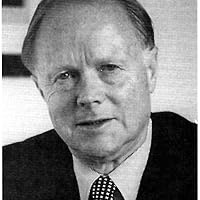
William Roger Louis
William Roger Louis CBE FBA, also known as Wm. Roger Louis, or Roger Louis, informally, is an American historian, currently distinguished historian at the University of Texas at Austin. Louis is the Editor-in-Chief of The Oxford History of the British Empire, the former President of the American Historical Association, the former Chairman of the Department of State Historical Advisory Committee, and the Founding Director of the American Historical Association's National History Center in Washington, D.C.
16 Books Written

Imperialism at Bay: The United States and the Decolonization of the British Empire, 1941-1945
by William Roger Louis
Rating: 3.9 ⭐
• 2 recommendations ❤️
This book examines the wartime controversies between Britain and America about the future of the colonial world, and considers the ethical, military, and economic forces behind imperialism during World War II. It concludes that, for Britain, there was a revival of the sense of colonial mission; the Americans, on the other hand, felt justified in creating a strategic fortress in the Pacific Islands while carrying the torch of "international trusteeship" throughout the rest of the world--a scheme that Churchill and others viewed as a cloak for American expansion.

Ends of British Imperialism: The Scramble for Empire, Suez, and Decolonization
by William Roger Louis
Rating: 4.1 ⭐
Pax Britannica to Pax Americana is the story of the British Empire from its late-nineteenth century flowering to its present extinction. Louis traces the British Empire from the scramble for Africa, the turbulent imperial history of the Second World War in Asia, and the mid-20th century rush to independence to the Suez crisis, the icon of empire's end. It forms the ideal platform from which to examine the aims and outcome of empire. This authoritative and highly engaging history appears at a time when interest in the history of the British Empire has, ironically, never been stronger, making Ends of British Imperialism a must-read item for both scholar and general reader.

The British Empire in the Middle East, 1945-1951: Arab Nationalism, the United States, and Postwar Imperialism
by William Roger Louis
Rating: 4.1 ⭐
This is a far-reaching study of how Britain's postwar Labour government attempted to sustain a vision of Britain as a world power. Committed to the liquidation of the old British Empire, the government sought to develop new relationships in the Middle East as a replacement for India, hoping to halt the decline of the Empire by putting it on a new basis. Caught between the forces of anti-British nationalism and American anti-colonialism, the attempt was ultimately destined to fail; but it marks a crucial phase in the story of British imperialism and of Middle Eastern history.

The Origins of the Second World War: A. J. P. Taylor and His Critics,
by William Roger Louis
Rating: 3.6 ⭐
Book by


In the Name of God, Go!: Leo Amery and the British Empire in the Age of Churchill
by William Roger Louis
Rating: 3.3 ⭐
Amery (1873-1955) was a leading British imperialist who played a pivotal role in the fall of Neville Chamberlain and the rise of Winston Churchill. Louis, a noted historian of 20th-century Britain, portrays Amery's part in those events as well as in the evolution of the British Empire and Commonwealth. Annotation copyright Book News, Inc. Portland, Or.

Penultimate Adventures with Britannia: Personalities, Politics and Culture in Britain
by William Roger Louis
Rating: 4.3 ⭐
A rich and varied collection from leading scholars and writers, edited with skill and sensitivity by one of the greatest historians of empire. It provides a vivid vignette of modern cultural, literary, intellectual and political life. Penultimate Adventures with Britannia takes the reader on an engaging and fascinating journey through British society and its interaction with other cultures. It covers the cultural and literary themes but also the political, and while the collection does not shrink from conflict, there are always fascinating by-ways. The First World War is a massive theme but with glances behind the scenes, for example with Susan Pedersen's "Frances Stevenson" and Martin Gilbert's "Tolkien." The British Empire is enlivened with Bernard Porter's "The British Empire and British Culture" while Priaya Satia's "The Cultural Foundation of British Power in Iraq" brings in current international concerns, as do Geoffrey Wheatcroft's "The Partitions of India and Ireland" and Dane Kennedy's "The New American Empire." Literary and artistic themes are important and have political and historical relevance. These include Hilary Spurling's "Reassessing Paul Scott," Larry Carver on "Felix Topolski" and Martin Francis on "Cecil Beaton" while Felipe Fernandez Armesto’s original and stimulating essay "An Accidental Criminal" rounds off this remarkably rich and rewarding volume.

Ultimate Adventures with Britannia: Personalities, Politics and Culture in Britain
by William Roger Louis
Rating: 4.5 ⭐
The latest volume in Wm. Roger Louis's acclaimed ""Adventures with Britannia"" series takes the reader on a highly engaging excursion through British life and intellectual biography. Collecting the interpretations of outstanding writers on the literature and history of modern Britain, Ultimate Adventures with Britannia deals with a rich variety of themes -- some familiar, many unexpected. The scope of this wide-ranging volume includes not only the personalities, politics and culture of England, Wales, Scotland and Ireland, but also the interaction between British and other societies throughout the world. The chapters embracing historical themes include Brian Harrison and Dominic Sandbrook on the 1960s and Geoffrey Wheatcroft on Churchill and the Jews. In Britannia's literary domain, Dan Jacobson assesses Thomas Hardy and T.S. Eliot while Margaret Macmillan asks how well Paul Scott’s Raj Quartet bears up after some four decades. And in a combination of cultural, architectural and intellectual history, Bernard Wasserstein traces the decline and possible revival of the ""second city in the Empire,"" Glasgow. Ultimate Adventures with Britannia retains all the intellectual originality and accessibility that characterise the earlier volumes in this series and continues a stimulating and highly appealing tradition.


Indispensable Reading: 1001 Books From The Arabian Nights to Zola
by William Roger Louis
Rating: 4.0 ⭐
The world of books can seem like a trackless forest stretching to the horizon in all directions, full of wrong turns, dead ends, and pitfalls. But it is in fact full of treasure, and Indispensable Reading is a map to books that can provide a lifetime of reading that is thoughtful, provocative, pleasurable, and, above all, memorable―for at a minimum, a book worth reading should linger in the mind.The selections are informed by Wm. Roger Louis’s lifetime of reading and 56 years of university teaching. The range of titles is vast. Almost 50 countries are represented in the literature category, and in history the scope is equally broad. A highlight of the book is the carefully curated section on politics. Extensive chapters cover biographies and memoirs, ancient and modern philosophy, and religion. Smaller groupings take account of the social and natural sciences, ethnic and gender studies, and the arts.Indispensable Reading is not meant to be a prescribed course of study. It is not a standardized list of “best books” or “great books” or “read before you die” books. Many of its choices are quirky, surprising. Ultimately, its goal is to stimulate a reader into making a personal list of titles that he or she finds indispensable, another unique map of the way through the forest of books.

The quarter century after the end of the Second World War and the transfer of power in India in 1947 marked the slow and turbulent dissolution of the British Empire in the Middle East.Seeking to capture the period in its full complexity and contradictions, acclaimed historian Wm. Roger Louis here provides a through-going account of the British Empire's gradual decline. Unpicking the overlapping motivations of those across Britian, the US, and the Middle East, the book demonstrates how and why enthusiasm for the British involvement in the region waned, the chaotic ways in which the withdrawal unfolded, and the importance of these events for understanding the region today. The book explores the period in full detail: from the overthrow of the Musaddiq government in Iran, the Egyptian Revolution, Sudan's independence, and the events of the pivotal year of 1955 that set the stage for the Suez crisis the following year; through the pivotal Suez crisis of 1956 itself; to the crises of 1957, the Iraqi Revolution of 1958, and the 1967 Arab-Israeli war; and concluding with the collapse of the British position in Aden and the decision to withdraw from the Gulf, a process completed by the end of 1971.This panoramic and comprehensive history draws on six decades' work in archives across Europe, the Middle East, and the US - including those from governmental archives and private papers and in multiple languages - complemented by a considerable body of oral history testimony, much of it acquired by the author through conversations with contemporary British politicians and officials. In so doing, the book sheds new light onto the nature and complexity of the British Empire in its final days - and the importance of understanding this history today.

Irrepressible Adventures with Britannia: Personalities, Politics and Culture in Britain
by William Roger Louis
Rating: 5.0 ⭐
Irrepressible Adventures with Britannia is the latest addition to Wm Roger Louis's stimulating and acclaimed series, Adventures with Britannia. It draws upon a distinguished array of writers and scholars - historians, political scientists, journalists, novelists, biographers and English literature specialists - to guide the reader through a fascinating labyrinth of British culture, history and politics. Together, they provide a unique insight into the pivotal themes, political, literary and cultural, which have shaped British state and society. Including a comparison of A.J.P. Taylor and Hugh Trevor-Roper by Adam Sisman, a new appraisal of Prince Albert by Rosemary Hill, an assessment of Keats by Ferdinand Mount and a Diamond Jubilee portrait of Elizabeth II by Max Hastings, this book provides a rich mix of original ideas, historical and literary allusion, personality and anecdote, which together provide an intellectual adventure into the mainsprings of modern British and international society.

National security and international trusteeship in the Pacific
by William Roger Louis

Speak for England: Leo Amery and the British Empire in the Age of Churchill
by William Roger Louis
Leo Amery was a leading British Conservative politician and imperialist who played a pivotal role in the fall of Neville Chamberlain and the rise of Winston Churchill. In this highly-regarded account of Amery's career, the distinguished historian Wm. Roger Louis portrays his part in those great events as well as in the evolution of the British Empire and Commonwealth. Amery believed that the people of the Empire could not be held within the British Empire against their will. He helped, at first reluctantly, to prepare the way for the transfer of power in India and to advance the movements of national independence in Asia and Africa. Louis here traces the close association of Amery and Churchill from their school days at Harrow to the clashes over India that almost destroyed their friendship.
Imperialism at Bay: The United States and the Decolonization of the British Empi
by William Roger Louis