
Wilfred Owen
Librarian Note: There is more than one author by this name in the goodreads data base. Wilfred Owen was a defining voice of British poetry during the First World War, renowned for his stark portrayals of trench warfare and gas attacks. Deeply influenced by Siegfried Sassoon, whom he met while recovering from shell shock, Owen’s work departed from the patriotic war verse of the time, instead conveying the brutal reality of combat and the suffering of soldiers. Among his best-known poems are Dulce et Decorum est, Anthem for Doomed Youth, and Strange Meeting—many of which were published only after his death. Born in 1893 in Shropshire, Owen developed an early passion for poetry and religion, both of which would shape his artistic and moral worldview. He worked as a teacher and spent time in France before enlisting in the British Army in 1915. After a traumatic experience at the front, he was treated for shell shock at Craiglockhart War Hospital, where Sassoon’s mentorship helped refine his poetic voice. Owen returned to active service in 1918, determined to bear witness to the horrors of war. He was killed in action just one week before the Armistice. Though only a few of his poems were published during his lifetime, his posthumous collections cemented his legacy as one of the greatest war poets in English literature. His work continues to be studied for its powerful combination of romantic lyricism and brutal realism, as well as its complex engagement with themes of faith, duty, and identity.
29 Books Written

Wilfred Owen was born in 1893 in Plas Wilmot, near Oswestry in Shropshire. He worked as a teacher of English as a Foreign Language and was tutoring in France when war was declared against Germany. He enlisted in 1915 and fought for two years before suffering from concussion and trench fever. He was sent to recover at Craiglockart War Hospital, near Edinburgh where he introduced himself to the established poet Siegfried Sassoon, who was also a patient. Sassoon encouraged Owen to write and worked with him on some of his poems.When he was recovered, Owen was posted back to France where he won the military cross but was killed on the bank of the Oise-Sambre Canal just a week before the end of the war.Only five of Owen's poems were published while he was alive. Sassoon collected his poems and published then in 1920. It has been said that Owen's poems shaped the attitude of a generation to the futility and tragedy of war, exemplified by his own life.This edition includes all Owen's known poems, his Preface to his poems, an Introduction by Siegfried Sassoon and a Memoir by Edmund Blunden.

Wilfred Owen was twenty-two when he enlisted in the Artists' Rifle Corps during World War I. By the time Owen was killed at the age of 25 at the Battle of Sambre, he had written what are considered to be the most important British poems of WWI. This definitive edition is based on manuscripts of Owen's papers in the British Museum and other archives.

'Tonight he noticed how the women's eyesPassed from him to the strong men that were whole.' The true horror of the trenches is brought to life in this selection of poetry from the front line. Introducing Little Black Classics: 80 books for Penguin's 80th birthday. Little Black Classics celebrate the huge range and diversity of Penguin Classics, with books from around the world and across many centuries. They take us from a balloon ride over Victorian London to a garden of blossom in Japan, from Tierra del Fuego to 16th-century California and the Russian steppe. Here are stories lyrical and savage; poems epic and intimate; essays satirical and inspirational; and ideas that have shaped the lives of millions. Wilfred Owen (1893-1918). Owen is available in Penguin Classics in Three Poets of the First World War: Ivor Gurney, Isaac Rosenberg, Wilfred Owen.

Dulce et Decorum est is a poem written by poet Wilfred Owen in 1917, during World War I, and published posthumously in 1920. Owen's poem is known for its horrific imagery and condemnation of war. It was drafted at Craiglockhart in the first half of October 1917 and later revised, probably at Scarborough but possibly Ripon, between January and March 1918.

Wilfred Owen was the greatest poet of the First World War, and his death in battle, a few days before Armistice, was a disastrous loss to English letters.This volume gathers together the poems for which he is best known, and which represent his most important contribution to poetry in the twentieth century. Taken from the definitive edition of Owen’s work, and containing material unavailable to other editions, this selection has been edited by Professor Jon Stallworthy, who has written an illuminating and authoritative introduction.

No poetry has touched readers' hearts more deeply than the soldier poets of the First World War. Published to commemorate the centenary of 1914, this stunning set of books, with specially commissioned covers by leading print makers, is an essential gathering of our most beloved war poets introduced by leading poets and biographers of our present day.Dying at twenty-five, a week before the end of the First World War, Wilfred Owen (1893-1918) has come to represent a generation of young men sacrificed - as it seems to the next generation, one in unprecedented rebellion against its fathers - by guilty old generals, politicians, profiteers. Owen has now taken his place in literary history as perhaps the first, certainly the quintessential, war poet.

Many of the earliest books, particularly those dating back to the 1900s and before, are now extremely scarce and increasingly expensive. We are republishing these classic works in affordable, high quality, modern editions, using the original text and artwork."This book is not about heroes. English Poetry is not yet fit to speak of them. Nor is it about deeds or lands, nor anything about glory, honour, dominion or power, except War. Above all, this book is not concerned with Poetry. The subject of it is War, and the pity of War. The Poetry is in the pity. Yet these elegies are not to this generation, This is in no sense consolatory. They may be to the next. All the poet can do to-day is to warn. That is why the true Poets must be truthful. If I thought the letter of this book would last, I might have used proper names; but if the spirit of it survives Prussia, -- my ambition and those names will be content; for they will have achieved themselves fresher fields than Flanders."Wilfred Owen - 1917This Preface was found, in an unfinished condition, among Wilfred Owen's papers.

. with light wear to dustjacket, clean bright copy, no markings, Professional booksellers since 1981

This collection contains the complete poetic works of Wilfred Owen, published in chronological order. It has been carefully formatted for clarity of viewing, and includes a Preface by the Author, and and Introduction by the celebrated war poet Siegfried Sassoon, who was a friend and contemporary of Wilfred Owen.The collection contains the following 1. To Poesy 2. Written in a Wood, September 1910 3. My Dearest Colin 4. Sonnet 5. Lines Written on my Nineteenth Birthday 6. Supposed Confessions of a Secondrate Sensitive Mind in Dejection 7. O Believe That God Gives You all that He Promises 8. Little Claus and Big Claus 9. The Rivals 10. A Rhymed Epistle to E.L.G. 11. The Dread of Falling into Naught 12. Science had Looked, and Sees No Life But 13. The Little Mermaid 14. The Two Reflections 15. Deep Under the Turfy Grass and Heavy Clay 16. Unto What Pinnacles of Desperate Heights 17. Impromptu 18. Sonnet- (Daily I Muse on Her) 19. But it is not Enough to Look Upon a Rolling Main 20. Uriconium 21. When Late I Viewed the Gardens of Rich Men 22. Long Ages Past in Egypt Thou Wert Worshipped 23. O World of Many Worlds, O Life of Lives 24. The Time was Aeon; and the Place All Earth 25. Nocturne 26. Now, Let Me Feel 27. A Palinode 28. It Was a Navy Boy, So Prim, So Trim 29. Whereas Most Women Live This Difficult Life 30. A New Heaven 31. The Storm 32. To The Bitter Sweet A Dream 33. Roundel 34. How Do I Love Thee? 35. The Fates 36. Happiness 37. Song of Songs 38. Has Your Soul Sipped 39. The Swift 40. Inspection 41. With an Identity Disc 42. The Promisers 43. Music 44. Anthem For Doomed Youth 45. Winter Song 46. Six O'Clock in Princes Street 47. The One Remains 48. The Sleeping Beauty 49. The City Lights Along the Waterside 50. Autumnal 51. The Unreturning 52. Perversity 53. Maundy Thursday 54. The Peril of Love 55. The Poet In Pain 56. Whither is Passed the Softly-Vanished Day 57. On My Songs 58. To - - 59. To Eros 60. 1914 61. Purple 62. On A Dream 63. Stunned by Their Life's Explosion Into Love 64. From My Diary, July 1914 65. The Ballad of Many Thorns 66. I Saw his Round Mouth's Crimson Deepen as it Fell 67. Apologia Pro Poemate Meo 68. Le Christianisme 69. Hospital Barge 70. Sweet is Your Antique Body, Not Yet Young 71. Page Eglantine 72. The Rime of the Youthful Mariner 73. Who is the God of Canongate? 74. My Shy Hand 75. At a Calvary Near the Ancre 76. Miners 77. The Letter 78. Conscious 79. Schoolmistress 80. Dulce Et Decorum Est 81. A Tear Song 82. The Dead-Beat 83. Insensibility 84. Strange Meeting 85. Sonnet on Seeing a Piece of Our Heavy Artillery Brought into Action 86. Asleep 87. Arms and the Boy 88. The Show 89. Futility 90. The End 91. S.I.W. 92. The Calls 93. Training 94. The Next War 95. Greater Love 96. The Last Laugh 97. Mental Cases 98. The Chances 99. The Send-Off 100. The Parable of the Old Man and the Young 101. Disabled 102. A Terre 103. The Kind Ghosts 104. Soldier's Dream 105. I Am the Ghost of Shadwell Stair 106. Elegy in April and September 107. Exposure 108. The Sentry 109. Smile, Smile, Smile 110. Spring Offensive 111. Before Reading a Biography of Keats for the First Time 112. Consummation is Consumption 113. Within Those Days 114. Handling Upon the Fairy-Strange Enchantments 115. Full Springs of Thought Around me Rise 116. At Dawn, I Love to Stray Upon the Meeting-Line 117. The West! I Dare Not Pass into the West 118. When I Perceive by Watching 119. Spring Not, Spring Not in my Wild Eyes, O Tears 120. Impressionist 121. O, Jesus, Now Thine Own Self Speaking 122. Eve of St. Mark 123. Why Should the Anguish of Leaving Those We Love 124. How do the Heavens Rule my Moods! 125. Tis But Love's Shadow - That So Haunts my Thought 126. Hearts and Tarts 127. There is a Set of Men Today Who Deal 128. Science Contradicted 129. Listen! The Multitude is Wailing for it's Sins 130. Now, What's Your Poet, But a Child of Nine? 131. Convalescent Stage of New Monia 132. Here all the Summer Could I Stay 133. I Began to Run 134. Written on a June Night, 1911 135. An Imperial Elegy 136. I Know the Music 137. But I Was Looking at the Permanent Stars 138. Beauty 139. Spells & Incantation 140. Cramped in That Funnelled Hole 141. As Bronze May Be Much Beautified 142. The Roads Also Have Their Wistful Rest 143. The Wrestlers

The Delphi Poets Series offers readers the works of literature's finest poets, with superior formatting. This volume presents for the first time in digital publishing the complete poetical works of the beloved war poet Wilfred Owen, with beautiful illustrations and the usual Delphi bonus material. (4MB Version 1)* Beautifully illustrated with images relating to Owen's life and works* Concise introduction to Owen and his poetry* Excellent formatting of the poems* Includes rare poems and fragments often missed out of collections, with over 140 poems, many appearing for the first time in digital print* Special chronological and alphabetical contents tables for the poetry* Easily locate the poems you want to read - organised in the most precise chronological order possible* Includes Owen's letters - spend hours exploring the poet's personal correspondence* Scholarly ordering of texts into chronological order and literary genres* UPDATED with an additional version of the famous poem DULCE ET DECORUM ESTThe Poetry CollectionsPOEMS, 1920THE COMPLETE POEMSTHE FRAGMENTSThe PoemsLIST OF POEMS IN CHRONOLOGICAL ORDERLIST OF POEMS IN ALPHABETICAL ORDERThe LettersTHE LETTERS OF WILFRED OWENINDEX OF LETTERS BY YEAR OF COMPOSITIONLIST OF CORRESPONDENTS AND DATES
ExposureBY WILFRED OWENOur brains ache, in the merciless iced east winds that knive us . . . Wearied we keep awake because the night is silent . . .Low drooping flares confuse our memory of the salient . . .Worried by silence, sentries whisper, curious, nervous, But nothing happens. Watching, we hear the mad gusts tugging on the wire,Like twitching agonies of men among its brambles.Northward, incessantly, the flickering gunnery rumbles,Far off, like a dull rumour of some other war. What are we doing here?The poignant misery of dawn begins to grow . . .We only know war lasts, rain soaks, and clouds sag stormy.Dawn massing in the east her melancholy armyAttacks once more in ranks on shivering ranks of grey, But nothing happens.Sudden successive flights of bullets streak the silence.Less deadly than the air that shudders black with snow,With sidelong flowing flakes that flock, pause, and renew,We watch them wandering up and down the wind's nonchalance, But nothing happens.Pale flakes with fingering stealth come feeling for our faces—We cringe in holes, back on forgotten dreams, and stare, snow-dazed,Deep into grassier ditches. So we drowse, sun-dozed,Littered with blossoms trickling where the blackbird fusses. —Is it that we are dying?Slowly our ghosts drag home: glimpsing the sunk fires, glozedWith crusted dark-red jewels; crickets jingle there;For hours the innocent mice rejoice: the house is theirs;Shutters and doors, all closed: on us the doors are closed,— We turn back to our dying.Since we believe not otherwise can kind fires burn;Now ever suns smile true on child, or field, or fruit.For God's invincible spring our love is made afraid;Therefore, not loath, we lie out here; therefore were born, For love of God seems dying.Tonight, this frost will fasten on this mud and us,Shrivelling many hands, and puckering foreheads crisp.The burying-party, picks and shovels in shaking grasp,Pause over half-known faces. All their eyes are ice, But nothing happens.

Wilfred Owen is perhaps the most remembered of the First World War poets, writing some of the most powerful denouncements of the horrors and hypocricies of war. Here, Jon Stallworthy selects his favourite poems.

This selection from the full 1967 edition of Owen's letters includes some early examples, but concentrates on the last seven years of his short life. His letters--almost all to his mother--constitute his self-portrait.


A collection of poems by Wilfred Owen, including all his classic wartime poetry based on his experiences in World War I, and several poems not in the 1920s edition. 1914 The Show Anthem for Doomed Youth Dulce et Decorum est The Sentry The Dead-Beat Strange Meeting Greater Love Apologia pro Poemate Meo Mental Cases Parable of the Old Men and the Young Arms and the Boy The Send-off Conscious I Saw His Round Mouth’s Crimson With an Identity Disc Insensibility Exposure Smile, Smile, Smile Spring Offensive Disabled Futility A Terre Wild with all Regrets The End The Next War
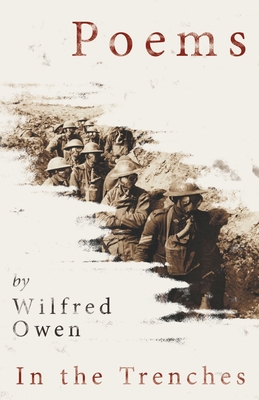
“Poems by Wilfred Owen - In the Trenches” is a 1920 collection of poetry by English poet and soldier Wilfred Edward Salter Owen, MC (1893–1918). A leading poet during the First World War, his work concentrated on life in the trenches and gas warfare. Some of his best-known works include: "Dulce et Decorum est", "Insensibility", "Spring Offensive", "Anthem for Doomed Youth", "Futility", and "Strange Meeting". The poems include: “Strange Meeting”, “Greater Love”, “Apologia Pro Poemate Meo”, “The Show”, “Mental Cases”, “Parable Of The Old Men And The Young”, “Arms And The Boy”, “Anthem For Doomed Youth”, “The Send-Off”, “Insensibility”, “Dulce Et Decorum Est”, “The Sentry”, etc. A moving and stark representation of the horrors of life on the front lines not to be missed by fans and collectors of war poetry.

WILFRED OWEN (1893-1918) was killed in action a week before the signing of the armistice. Only a handful of his verses were published in his lifetime. In spite of this, Owen more than any other writer has shaped modern ideas about the Great War. "Dulce Et Decorum Est", "Strange Meeting" and "Anthem for Doomed Youth" have saddened and thrilled generations since. This is largely thanks to his friend Siegfried Sassoon, who brought out an edition of the war poems in 1920. Edmund Blunden edited a more complete collection in 1931 and C. Day Lewis a third in 1963, but it is Sassoon's choice, selected and arranged for impact, that everyone remembers. This ebook includes all the familiar poems plus a few others less directly concerned with the fighting. They are rearranged in chronological order, in so far as dates are known, to show the development of his work.

Each book in this established series contains the full and complete text, and is designed to motivate and encourage students who may be writing on these challenging writers for the first time. It contains useful notes to add depth and knowledge to students' understanding, comments to explain literacy and historical allusions, tasks to help students explore themes and issues, and suggestions for further reading.


First published in 1987. Routledge is an imprint of Taylor & Francis, an informa company.

Paperback. 12,50 / 19,50 cm. In Turkish. 128 p. Original War Poems Translated by Tamer Gülbek Cover design by Faruk Özcan Asker ve sair Wilfred Owen'in Savas Siirleri, asker ve sair Tamer Gülbek'in duru Türkçesiyle tam yüz yil sonra dilimize kazandiriliyor. Birinci Dünya Savasi edebiyatinin en önemli isimlerinden biri olan Owen (1893-1918), savasta Ingiltere adina tegmen rütbesiyle görev yapmis ve savasin bitmesine çok kisa bir süre kala cephede hayatini kaybetmistir. Owen Birinci Dünya Savasinin ve genel olarak tüm savaslarin yol açtigi büyük acilari, siir sanatinin en güzel örneklerini verecek sekilde dizelere dökmüstür. Çagdas akademi dünyasi Owen'in eserlerini savas kosullarinda savasa dair yazilmis en çarpici siirler olarak görmekte ve onun sonraki nesiller üzerindeki derin etkisini teslim etmektedir.

‘Spring Offensive’ by Wilfred Owen, an anti-war poem, portrays how a group of soldiers embraced the cold breast of death having no way out. Whereas, some of them managed to escape the death-route. The title of the poem, ‘Spring Offensive’ is a reference to the Kaiser’s Battle of 1918. The consecutive attacks of Germans on the Western Front during the First World War are collectively called Spring Offensive. Here, “offensive” means a “military attack”. From the title, it becomes clear Wilfred Owen presents an episode of Spring Offensive in this poem. Moreover, the use of imagery and symbolism in the poem help readers to imagine what happened on the actual battlefield.

By matching the paper, pencil, ink and 24 watermarks of the largely undated manuscripts with those of the poet’s dated letters, Professor Jon Stallworthy has been able to disentangle the complex chronology of Owen’s work and reveal for the first time the overall development of the poet and successive stages in the development of individual poems and fragments.The edition is divided into two volumes to enable readers to have text, notes and manuscript material before them at the same time. Volume I contains an Introduction, a Biographical Table, and the text of 110 poems (many with important new readings), and supporting factual and critical notes. Volume II provides the basis for the text of the poems, reproducing many of the manuscripts and the fragments, annotated like the poems. The manuscripts and fragments are reproduced in type-set transcription, showing Owen’s reworkings and alterations.Together with these volumes present more than twice the number of poems and fragments hitherto available, and comprise the most comprehensive and detailed edition of a twentieth-century poet writing in the English language. It is a worthy monument to a man who lived to see only four of his poems in print, but whose work is now known throughout the English-speaking world, and indeed beyond it as the text of Benjamin Britten’s great War Requiem.

Jon Stallworthy’s Wilfred Owen, called by Graham Greene ‘surely one of the finest biographies of our time’, won the Duff Cooper Prize, the W.H. Smith Literary Award, and the E.M. Forster Award of the American Academy of Arts and Letters. In its use of verse manuscripts to reveal the working of the creative imagination, it inaugurated a new form of literary biography.By matching the paper, pencil, ink and twenty-four watermarks of the largely undated manuscripts with those of the poet’s dated letters, Professor Stallworthy has been able to disentangle the complex chronology of Owen’s work and reveal for the first time the overall development of the poet and successive stages in the development of individual poems and fragments.The edition is divided into two volumes to enable readers to have text, notes and manuscript material before them at the same time. Volume I contains an Introduction, a Biographical Table, and the text of 110 poems (many with important new readings), and supporting factual and critical notes. Volume II provides the basis for the text of the poems, reproducing many of the manuscripts and the fragments, annotated like the poems. The manuscripts and fragments are reproduced in typeset transcription, showing Owen’s alterations, cancellations and reworkings.Together these volumes present more than twice the number of poems and fragments hitherto available, and comprise the most comprehensive and detailed edition of Wilfred Owen's work. It is a worthy monument to a man who lived to see only five of his poems in print, but whose work is now known throughout the English-speaking world, and indeed beyond it as the text of Benjamin Britten’s great War Requiem.

Apologia pro Poemate Meo (in Short Poetry Collection 090 )I, too, saw God through mud,—The mud that cracked on cheeks when wretches smiled.War brought more glory to their eyes than blood,And gave their laughs more glee than shakes a child.Merry it was to laugh there—Where death becomes absurd and life absurder.For power was on us as we slashed bones bareNot to feel sickness or remorse of murder.I, too, have dropped off Fear—Behind the barrage, dead as my platoon,And sailed my spirit surging, light and clearPast the entanglement where hopes lay strewn;And witnessed exultation—Faces that used to curse me, scowl for scowl,Shine and lift up with passion of oblation,Seraphic for an hour; though they were foul.I have made fellowships—Untold of happy lovers in old song.For love is not the binding of fair lipsWith the soft silk of eyes that look and long,By Joy, whose ribbon slips,—But wound with war's hard wire whose stakes are strong;Bound with the bandage of the arm that drips;Knit in the webbing of the rifle-thong.I have perceived much beautyIn the hoarse oaths that kept our courage straight;Heard music in the silentness of duty;Found peace where shell-storms spouted reddest spate.Nevertheless, except you shareWith them in hell the sorrowful dark of hell,Whose world is but the trembling of a flare,And heaven but as the highway for a shell,You shall not hear their You shall not come to think them well contentBy any jest of mine. These men are w

Jon Stallworthy’s Wilfred Owen, called by Graham Greene ‘surely one of the finest biographies of our time’, won the Duff Cooper Prize, the W.H. Smith Literary Award, and the E.M. Forster Award of the American Academy of Arts and Letters. In its use of verse manuscripts to reveal the working of the creative imagination, it inaugurated a new form of literary biography.By matching the paper, pencil, ink and twenty-four watermarks of the largely undated manuscripts with those of the poet’s dated letters, Professor Stallworthy has been able to disentangle the complex chronology of Owen’s work and reveal for the first time the overall development of the poet and successive stages in the development of individual poems and fragments.The edition is divided into two volumes to enable readers to have text, notes and manuscript material before them at the same time. Volume I contains an Introduction, a Biographical Table, and the text of 110 poems (many with important new readings), and supporting factual and critical notes. Volume II provides the basis for the text of the poems, reproducing many of the manuscripts and the fragments, annotated like the poems. The manuscripts and fragments are reproduced in typeset transcription, showing Owen’s alterations, cancellations and reworkings.Together these volumes present more than twice the number of poems and fragments hitherto available, and comprise the most comprehensive and detailed edition of Wilfred Owen's work. It is a worthy monument to a man who lived to see only five of his poems in print, but whose work is now known throughout the English-speaking world, and indeed beyond it as the text of Benjamin Britten’s great War Requiem.
Poets of the Great War Audio Cassette Sets (2 Audio Cassettes): Wilfred Owen, Siegfried Sassoon, Isaac Rosenberg, Richard Aldington, Edmund Blunden, ... Brooke and Many Others
by Wilfred Owen
Rating: 3.3 ⭐
Cambridge Literature is a series of literary texts edited for study by students aged 14-18 in English-speaking classrooms. It includes novels, poetry, short stories, essays, travel-writing and other non-fiction. It provides school students with a range of edited texts taken from a wide geographical spread, and includes writing in English from various genres and differing times.