
Wayne E. Baker
Wayne Baker is Robert P. Thome Professor of Business Administration and Professor of Management and Organizations at the University of Michigan Ross School of Business and Professor of Sociology at the University of Michigan. He currently serves as Faculty Associate at the Institute for Social Research and Faculty Director of the Center for Positive Organizations. Baker is a frequent guest speaker, management consultant, and advisor and board member of Give and Take, Inc., developers of the Givitas collaborative technology platform. He has published numerous scholarly papers, four books, and articles appearing in Harvard Business Review, Chief Executive magazine, and MIT Sloan Management Review. He earned his Ph.D. from Northwestern University and was a post-doctoral research fellow at Harvard University. He resides with his wife, son, and Birman cat in Ann Arbor, Michigan.
8 Books Written
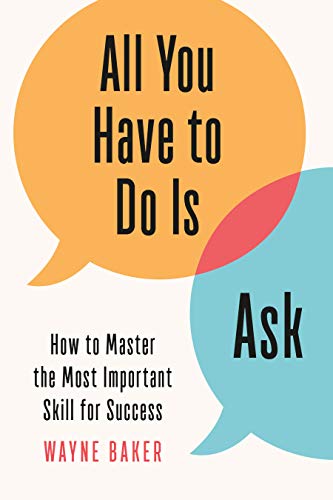
All You Have to Do Is Ask: How to Master the Most Important Skill for Success
by Wayne E. Baker
Rating: 3.5 ⭐
• 2 recommendations ❤️
A set of tools for mastering the one skill standing between us and success: the ability to ask for the things we need to succeed.Imagine you’re on a deadline for a big project, and feeling overwhelmed. Or you're looking for a job, but can't seem to get your foot in the door. Or you're dying for tickets to a sold out concert, and all your leads have gone cold.What do these problems have in common? They can all be solved simply by reaching out to a colleague, friend, or wider network and making an ask.Studies show that asking for help makes us better and less frustrated at our jobs. It helps us find new opportunities and new talent. It unlocks new ideas and solutions, and enhances team performance. And it helps us get the things we need outside the workplace as well. And yet, we rarely give ourselves permission to ask. Luckily, the research shows that asking—and getting—what we need is much easier than we tend to think. Here, Wayne Baker shares a set of strategies—used at companies like Google, GM, and IDEO—that individuals, teams, and leaders can use to make asking for help a personal and organizational habit, including:• A quiz to identify your asking-giving style• SMART criteria for who, when, and how to ask• “Plug-and-play ” routines that make requests a standard component of meetings• Mini-games that incentivize asking within teams• The Reciprocity Ring, a guided activity that allows people to tap into the giving power of a networkPicking up where the bestselling book Give and Take left off, All You Have to Do Is Ask shows us how to ignite the cycle of giving and receiving by asking for the things we need.

Achieving Success Through Social Capital: Tapping Hidden Resources in Your Personal and Business Networks
by Wayne E. Baker
Rating: 3.9 ⭐
A Book in the University of Michigan Business School Series You can build it. You can use it. You'll prosper if you do. Discover a step-by-step program for tapping the hidden resources in your business, professional, and personal networks: your social capital. Here, an expert on building connections shows how building rich social capital produces higher pay, faster promotions, better jobs, breakthrough ideas, new business opportunities, and profitable companies.You'll learn how to develop your own social capital and use it to attain your personal and professional goals and, in the process, enhance your own health and emotional well-being.

Networking Smart: How To Build Relationships for Personal and Organizational Success
by Wayne E. Baker
Rating: 3.9 ⭐
The ability to build business and personal networks can make or break a career, or a company. This business bestseller teaches entrepreneurs, change agents, and corporate executives to boost their effectiveness, influence, and happiness by building powerful networks. Named one of the top 30 business books of 1994 by Executive Book Summaries, and a main selection of the Business Week and Newbridge Book Clubs.

Is America bitterly divided? Has America lost its traditional values? Many politicians and religious leaders believe so, as do the majority of Americans, based on public opinion polls taken over the past several years. But is this crisis of values real?This book explores the moral terrain of America today, analyzing the widely held perception that the nation is in moral decline. It looks at the question from a variety of angles, examining traditional values, secular values, religious values, family values, economic values, and others. Using unique data from the World Values Surveys, the largest systematic attempt ever made to document attitudes, values, and beliefs around the world, this book systematically evaluates the perceived crisis of values by comparing America's values with those of over 60 other nations.The results are surprising. The evidence shows overwhelmingly that America has not lost its traditional values, that the nation compares favorably with most other societies, and that the culture war is largely a myth.The gap between reality and perception does not represent mass ignorance of the facts or an overblown moral panic, Baker contends. Rather, the widespread perception of a crisis of values is a real and legitimate interpretation of life in a society that is in the middle of a fundamental transformation and that contains growing cultural contradictions. Instead of posing a problem, the author argues, this crisis rhetoric serves the valuable social function of reminding us of what it means to be American. As such, it preserves the ideological foundation of the nation.

Networking Smart
by Wayne E. Baker

ソーシャル・キャピタル―人と組織の間にある「見えざる資産」を活用する
by Wayne E. Baker

Achieving Success Through Social Capital **ISBN: 9780787953096**
by Wayne E. Baker

Networking inteligente
by Wayne E. Baker