
Walter Scheidel
Dickason Professor in the Humanities Professor of Classics and History Catherine R. Kennedy and Daniel L. Grossman Fellow in Human Biology Walter Scheidel is the Dickason Professor in the Humanities, Professor of Classics and History, and a Kennedy-Grossman Fellow in Human Biology at Stanford University. The author or editor of sixteen previous books, he has published widely on premodern social and economic history, demography, and comparative history. He lives in Palo Alto, California. Scheidel's research ranges from ancient social and economic history and premodern historical demography to the comparative and transdisciplinary world history of inequality, state formation, and human welfare. He is particularly interested in connecting the humanities, the social sciences, and the life sciences.
11 Books Written

A pioneering comparative and multidisciplinary study of the interaction between local disease environments and demographic structure, this book breaks new ground in reconstructing the population history of Egypt during the Roman period and beyond.Drawing on a wide range of sources from ancient census data and funerary commemorations to modern medical accounts, statistics and demographic mode
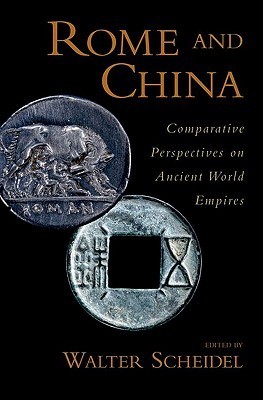
Transcending ethnic, linguistic, and religious boundaries, early empires shaped thousands of years of world history. Yet despite the global prominence of empire, individual cases are often studied in isolation. This series seeks to change the terms of the debate by promoting cross-cultural, comparative, and transdisciplinary perspectives on imperial state formation prior to the European colonial e

On Human Bondage--a critical reexamination of Orlando Patterson's groundbreaking Slavery and Social Death--assesses how his theories have stood the test of time and applies them to new case studies.Discusses the novel ideas of social death and natal alienation, as Patterson first presented them 35 years ago and as they are understood today. Brings together exciting

The Great Leveler: Violence and the History of Inequality from the Stone Age to the Twenty-First Century
by Walter Scheidel
Rating: 3.8 ⭐
How only violence and catastrophes have consistently reduced inequality throughout world historyAre mass violence and catastrophes the only forces that can seriously decrease economic inequality? To judge by thousands of years of history, the answer is yes. Tracing the global history of inequality from the Stone Age to today, Walter Scheidel shows that inequality never dies peac

Originally published in Human Mate Choice and Prehistoric Marital Networks, ed. Aoki Kenichi and Akazawa Takeru — a paper examining empirical evidence of legally and socially condoned marital unions and matings between very close kin.

The gripping story of how the end of the Roman Empire was the beginning of the modern worldThe fall of the Roman Empire has long been considered one of the greatest disasters in history. But in this groundbreaking book, Walter Scheidel argues that Rome's dramatic collapse was actually the best thing that ever happened, clearing the path for Europe's economic rise and the creatio

Slavery in the Ancient World
by Walter Scheidel
The Journal of Roman Studies: Volume XCI, 2001
by Walter Scheidel
The Journal of Roman Volume XCI, 2001, edited by Martin D. Goodman. 2000 paperback published by The Society for the Promotion of Roman Studies. "Roman Age Evidence and Models" by Walter Scheidel; "Moneta and the Coinage and Politics in Republican Rome" by Andrew Meadows and Jonathan Williams; "The Transformation of Italy 228-25 B.C." by Neville Morley; "Caesar and the Mutiny of 47 B.C." by Stefan
From one of today’s most innovative ancient historians, a provocative new vision of why ancient history matters—and why it needs to be told in a radically different, global wayIt’s easy to think that ancient history is, well, ancient history—obsolete, irrelevant, unjustifiably focused on Greece and Rome, and at risk of extinction. In What Is Ancient History?, Walter Schei

The Great Leveler: Violence and the History of Inequality from the Stone Age to the Twenty-First Century
by Walter Scheidel
Are mass violence and catastrophes the only forces that can seriously decrease economic inequality? To judge by thousands of years of history, the answer is yes. Tracing the global history of inequality from the Stone Age to today, Walter Scheidel shows that inequality never dies peacefully. Inequality declines when carnage and disaster strike and increases when peace and stability return. The