
Václav Havel
Václav Havel was a Czech playwright, essayist, poet, dissident and politician. He was the tenth and last President of Czechoslovakia (1989–92) and the first President of the Czech Republic (1993–2003). He wrote over twenty plays and numerous non-fiction works, translated internationally. He received the US Presidential Medal of Freedom, the Philadelphia Liberty Medal, the Order of Canada, the freedom medal of the Four Freedoms Award, and the Ambassador of Conscience Award. He was also voted 4th in Prospect Magazine's 2005 global poll of the world's top 100 intellectuals. He was a founding signatory of the Prague Declaration on European Conscience and Communism. Beginning in the 1960s, his work turned to focus on the politics of Czechoslovakia. After the Prague Spring, he became increasingly active. In 1977, his involvement with the human rights manifesto 'Charter 77' brought him international fame as the leader of the opposition in Czechoslovakia; it also led to his imprisonment. The 1989 "Velvet Revolution" launched Havel into the presidency. In this role he led Czechoslovakia and later the Czech Republic to multi-party democracy. His thirteen years in office saw radical change in his nation, including its split with Slovakia, which Havel opposed, its accession into NATO and start of the negotiations for membership in the European Union, which was attained in 2004.
30 Books Written

The Art of the Impossible: Politics as Morality in Practice
by Václav Havel
Rating: 4.3 ⭐
• 1 recommendation ❤️
There is no shortage of politicians who make a habit of shooting from the hip, but it is much rarer to find one who speaks from the heart. Václav Havel knows no other way to speak, or to write. Both as a dissident and as a playwright it was his sworn purpose for many years to combat evil with nothing but truth. As president of Czechoslovakia, and now of the Czech Republic, he has clung to that habit, refusing to turn over either his conscience or his voice to political handlers and professional speechwriters. Instead he assumes the additional burden--for him, it is a distinct pleasure--of composing all of his oratory. Audiences from New York to New Delhi, Oslo to Tokyo, have been the luckier for his decision.This volume consists of thirty-five of these essays, written between the years 1990 and 1996, that manage to be both profoundly personal and profoundly political. Havel writes of totalitarianism, its miseries and the nonetheless difficult emergence from it.He describes how his country and the other postcommunist countries are learning democracy from scratch and are encountering obstacles from inside and out. He marvels at the single technology-driven civilization that envelops the globe, and the challenges this presents to multicultural realities. He invokes the duty of every person alive to prevent hatred and fear from derailing history ever again. He acknowledges "the advantage it is for doing a good job as president to know that I do not belong in the position and that I can at any moment, and justifiably, be removed from it." And he reminds us that--contrary to all appearances--common sense, moderation, responsibility, good taste, feeling, instinct, and conscience are not alien to politics, but are the very key to its long-term success.
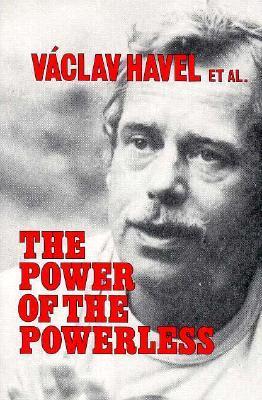
The Power of the Powerless (Czech: Moc bezmocných) is an expansive political essay written in October 1978 by the Czech dramatist, political dissident and later politician, Václav Havel. The essay dissects the nature of the communist regime of the time, life within such a regime and how by their very nature such regimes can create dissidents of ordinary citizens. The essay goes on to discuss ideas and possible actions by loose communities of individuals linked by a common cause, such as Charter 77. Officially suppressed, the essay was circulated in samizdat form and translated into multiple languages. It became a manifesto for dissent in Czechoslovakia, Poland and other communist regimes.

Forming part of the Vanek Plays trilogy, Audience is a cleverly-constructed satire on power and those who wield it. Vanek is summoned to a meeting with the Head Maltster and offered promotion, but only if he informs on himself!

Zahradní slavnost je divadelní hra Václava Havla z roku 1963. Je řazena do žánru absurdního dramatu. Hlavní postavou je mladý přičinlivý Hugo Pludek, který dosahuje společenského vzestupu pomocí dokonalého ovládnutí obsahově vyprázdněných frází.

Czech

Gathered together here for the first time are seven plays that span Havel's career from his early days at the Theater of the Balustrade through the Prague Spring, Charter 77, and the repeated imprisonments that made Havel's name into a rallying cry and propelled him to the leadership of his country. They include The Garden Party, The Increased Difficulty of Concentration, Mistake, the Vanek trilogy of Audience, Unveiling, and Protest, and the first fully corrected English version of The Memorandum--the play that won Havel the Obie for Best Foreign Play in 1968.

Spanning twenty-five years, this historic collection of writings shows Vaclav Havel's evolution from a modestly known playwright who had the courage to advise and criticize Czechoslovakia's leaders to a newly elected president whose first address to his fellow citizens begins, "I assume you did not propose me for this office so that I, too, would lie to you." Some of the pieces in Open Letters, such as "Dear Dr. Husak" and the essay "The Power of the Powerless," are by now almost legendary for their influence on a generation of Eastern European dissidents; others, such as some of Havel's prison correspondence and his private letter to Alexander Dubcek, appear in English for the first time. All of them bear the unmistakable imprint of Havel's intellectual rigor, moral conviction, and unassuming eloquence, while standing as important additions to the world's literature of conscience.


A biting drama by the famed playwright and statesman at his creative and ironic best. Vaclav Havel gives us the comically absurd and seemingly autobiographical account of Professor Leopold Nettes, a revered but reluctant revolutionary whose most recent book has irked the totalitarian government in power. The authorities demand a retraction; his friends and fans clamor for heroic defiance. Besieged by onslaught of internal demons, whining lovers, suffocating followers, and ineffectual government thugs, the professor sinks nearer and nearer to crisis, unable to confront the conflicting demands that rule his life and leave him tormented by neurotic inertia. One of Havel's best-known plays, Largo Desolato vividly dramatizes the multiple contradictions of the intellectual trapped in a totalitarian nightmare.

In a book written while he was president of Czechoslovakia, Vaclav Havel combines the same powerful eloquence, moral passion, and abiding wisdom that informed his writing as a dissident and playwright, with a candor unprecedented from one with the broad perspective and infinite responsibility of governing a country.Havel, now president of the Czech Republic, addresses the legacy of Communism as the euphoria of the Velvet Revolution gives way to a more problematic reality. Yet even as he grapples with the challenges of political change, he affirms his belief in a politics motivated by moral responsibility; in an economy tempered by compassion; and in the central roles of art and culture in the transformation of society. Summer Meditations is not only a timely and necessary testament of events in Eastern Europe but a profound reflection upon the nature and practice of politics and a stirring call for morality, civility, and openness in public life throughout the world.

To the Castle and Back: Reflections on My Strange Life as a Fairy-Tale Hero
by Václav Havel
Rating: 3.9 ⭐
An astonishingly candid memoir from the acclaimed, dissident playwright elected President after the dramatic Czechoslovakian Velvet Revolution — one of the most respected political figures of our time.As writer and statesman, Václav Havel played an essential part in the profound changes that occurred in Central Europe in the last decades of the twentieth century. In this most intimate memoir, he writes about his transition from outspoken dissident and political prisoner to a player on the international stage in 1989 as newly elected president of Czechoslovakia after the ousting of the Soviet Union, and, in l993, as president of the newly formed Czech Republic.Havel gives full rein to his impassioned stance against the devastation wrought by communism, but the scope of his concern in this engrossing memoir extends far beyond the circumstances he faced in his own country. The book is full of anecdotes of his interactions with world figures: offering a peace pipe to Mikhail Gorbachev, meditating with the Dali Lama, confessing to Pope John Paul II and partying with Bill and Hilary Clinton. Havel shares his thoughts on the future of the European Union and the role of national identity in today’s world. He explains why he has come to change his mind about the war in Iraq, and he discusses the political and personal reverberations he faces because of his initial support of the invasion. He writes with equal intelligence and candour about subjects as diverse as the arrogance of western power politics, the death of his first wife and his own battle with lung cancer.Woven through are internal memos he wrote during his presidency that take us behind the scenes of the Prague Castle – the government’s seat of power – showing the internal workings of the office and revealing Havel’s mission to act as his country’s conscience, and even, at times, its chief social convenor. Written with characteristic eloquence, wit and well-honed irony combined with an unfailing sense of wonder at the course his life has taken, To the Castle and Back is a revelation of one of the most important political figures of our time.

English (translation)Original Czech

Po více než dvaceti letech od Larga desolata a faustovského Pokoušení z půli osmdesátých let je dramatikův osobitý rukopis ještě suverénnější, neztratil originalitu a v soudobé světové dramatické literatuře je nezaměnitelný. Setkáváme se znovu s Havlovou pozorností jazyku, s analýzou a zesměšněním fráze, tentokrát fráze z denní politiky, jejíž vyprázdněný obsah zní skoro totožně na obou stranách, jež mezi sebou soupeří o moc. V nové hře je Havel přítomen hned dvakrát: jednak v postavách na jevišti, jednak přímo – tím, jak do děje zasahuje autorský hlas. Ten peskuje herce, aby nepřehrávali, a zároveň zcizuje svůj děj úvahami a pochybnostmi se sebeironizujícím odstupem. Dlouhá prodleva však přinesla novou aktuální lidskou a politickou zkušenost a Havlův dnešní pohled na teatrum mundi zůstává sice stejně groteskní, leč absurdní povaha dnešního balábile je téměř skutečná. Aktuálnost příběhu o odchodu jednoho a příchodu druhého k moci je zasazen do dějinných dimenzí citlivými odkazy ke Králi Learovi a k Višňovému sadu. Odchod bývalého kancléře z vládní vily provázejí zvuky motorové pily, nový majitel devastuje višňový sad ve jménu stejných humanistických a politických hesel, jež mají skrýt prosté kořistnictví.

Contents: pt. 1. Six texts by Václav Havel --Letter to Dr Gustáv Husák --The power of the powerless --Six asides about culture --Politics and conscience --Thriller --An anatomy of reticence --pt. 2. Sixteen texts for Václav Havel --Catastrophe / Samuel Beckett --Courtesy towards God / Heinrich Böll --Prague : a poem, not disappearing / Timothy Garton Ash --Ex-prophets and storysellers / Jiří Gruša --From Variations and reflections on topics in Václav Havel's prison letters / Ladislav Hejdánek --Citizen versus state / Harry Järv --The chaste centaur / Pavel Kohout --Conversations 36 / Iva Kotralá --Candide had to be destroyed / Milan Kundera --I think about you a great deal / Arthur Miller --When I was still living in Prague / Zdena Salivarová --The sorrowful satisfaction of the powerless / Milan Šimečka --I saw Václav Havel for the last time / Josef Škvorecký --Introduction to The memorandum / Tom Stoppard --Letter to a prisoner / Zdeněk Urbǎnek --On the house / Lukvík Vaculík.

In his most challenging work to date, Czech playwright Vaclav Havel has given the Faust legend a provocative twist. His setting is “the Institute,” whose mission is to combat the “irrational tendencies” in society through its scientific work. Personal and professional relationships at this “lighthouse of truthful knowledge” are a tissue of lies and sycophancy in which all concerned willingly collude.The only tempest in this teapot of careerism is Dr Foustka, who has lately been smitten by metaphysical doubt and is rumored to be dabbling in the black arts. His mentor, the unlikely Mephistopheles of the piece, is a dwarflike old man with smelly feet and a slippery logic that irresistibly appeals to Foustka’s intellectual hubris. With great wit and originality Havel follows the familiar outlines of the story to a unique conclusion at a “witches’ sabbath” garden party organized by the Institute’s crafty director in the spirit of “modern group-costume therapy.”For Havel, the “rational” carried to surreal lengths of irrationality is not a theatrical technique but a fact of life in Czechoslovakia since the Soviet invasion of 1968. Yet in universalizing his tale through the Faust legend, he forcefully reminds us that under conditions of modern bureaucracy neither East nor West holds a monopoly on the sale of souls.

Tři oblíbené aktovky spojuje postava Ferdinanda Vaňka, která je literárním alter egem Václava Havla. Jednoaktové „vaňkovky“ Audience, Vernisáž a Protest jsou inspirovány životními zážitky a zkušenostmi zakázaného autora a získávají si diváky i čtenáře svým neopakovatelným humorem, ironií a neotřelým pohledem na realitu normalizačních let sedmdesátých, kdy zábavné „hříčky“ vznikly. Vychází jako 137. svazek edice D


Skupina architektů připravuje demolici středověkého malebného městečka v podhradí, na jehož místě má být vystavěno panelové sídliště pro dva tisíce obyvatel. Na půdorysu historie komunistického Československa hra zobrazuje devastaci nejen krajiny a městské zástavby, ale i tvořivé svobodné duše. Mocní v rámci společenského zřízení slibují svobodu, aby ji vzápětí popřeli – následkem je deziluze, přežívání nebo smrt.

Sborník sestavený z klíčových esejů Václava Havla (Dopis Gustávu Husákovi, Moc bezmocných, Děkovná řeč za Cenu Erasma Rotterdamského, Příběh a totalita, Slovo o slovu). Úvodní slova Martina Palouše a Daniela Kroupy přibližují kulturně-historické souvislosti, ve kterých texty vznikaly. Kniha je doplněna fotografiemi, životopisem Václava Havla a výběrovými bibliografiemi jeho děl a je zaměřena na mladé čtenáře.

The Czech President Vaclav Havel, a force on behalf of international human rights and his country's most celebrated dissident, first gained prominence as a playwright. During the period when Havel was blacklisted by the Czechoslovakian government for his political activism, productions of his work in and around Prague were regarded as subversive acts. The Beggar's Opera is a free-wheeling, highly politicized adaptation of John Gay's well-known eighteenth-century work of the same name. The play, reminiscent of Havel's earlier Garden Party and The Memorandum, is up to his best satirical standard. Like the Brecht/Weill Threepenny Opera, Havel's play uses an underworld milieu to explore the intermingled themes of love, loyalty, and treachery. Paul Wilson's new English translation of The Beggar's Opera is lively, idiomatic, and sensitive to underlying linguistic and political issues. The Cornell edition contains an Introduction by Peter Steiner that details the November 1, 1976, premiere of the play in the Prague suburb of Horní Pocernice, the reaction of the Czech secret police, and the measures the government took to punish and discredit those involved in the production. Eleven photographs―of the playwright, the actors, the theatre, and the actual performance―enhance the texture of the book.

Jak podtitul napovídá, jde o literární koláž, ve které se střídají tři žánry: rozhovor, původní výňatky z instrukcí nejbližším spolupracovníkům na Hradě a deníkové zápisy z doby práce na tomto textu. V knize se střídají nejen žánry, ale i čas a místa. Václav Havel staví knihu jako drama a se všemi materiály zachází jen jako s podklady, jejichž konečnou formu si diktuje "divadelní" struktura. I z partnera rozhovoru Karla Hvížďaly se postupně stane postava tohoto zvláštního literárního útvaru. Díky zvolené metodě má kniha trvalé napětí, které čtenáře doprovází až do poslední stránky. Autor nechává v knize nahlédnout do způsobu svého komplikovaného myšlení, prezentuje své názory na politiku a politiky, soukromí a zároveň odpovídá na nejčastější výtky vznášené po léta proti jeho osobě.Kniha je volným pokračováním Dálkového výslechu Václava Havla. Před dvaceti lety vedl Karel Hvížďala rozhovor s disidentem Havlem před jeho blížící se padesátkou.
Havlova Vernisáž (1975) líčí návštěvu zakázaného spisovatele v bytě svých přátel, manželů Věry a Michala. Na rozdíl od disidenta Bedřicha nemají Michal a Věra žádné morální zábrany a bez potíží se přizpůsobili společenským poměrům. Právě dokončili nákladnou rekonstrukci svého bytu a pozvou si Bedřicha, aby se mu pochlubili.

П’ять блискучих текстів Вацлава Гавела, одного з найяскравіших інтелектуалів двадцятого століття, дисидента, політичного діяча, першого президента Чеської Республіки. У його баченні політика — не технології й маніпуляції, а постійна боротьба за ідеали й цінності, незламна віра в людину та в силу європейської культури. Вацлав Гавел нагадує про важливість історії, свободи, сумління, особистої відповідальності та спільних дій, і хоча тексти написано про інший час та про інше суспільство, українцям буде напрочуд легко впізнати в них проблеми, які ще не вповні здолали ми самі.Окрім творів самого Гавела, видання містить спогади Мустафи Джемілєва про зустрічі з цим непересічним діячем.


English, Czech (translation)

Jediná pohádka Václava Havla, kterou napsal v sedmdesátých letech do sborníku jednoho velkého německého nakladatelství. Václav Havel tehdy dlouho tvrdil, že pohádku pro děti nemůže napsat. Za prvé proto, že nic takového neumí, za druhé proto, že špatně vyslovuje hlásku "r" a v pohádkách jsou samí drraci, krrálové, čarrodějové, prrincezny , trrpaslíci, rrusalky, rrarráškové a podobné potvorry a za třetí proto, že nemá čas, neboť v pivovaru musí koulet sudy s pivem. Ale jak v knížce uvidíte, pan Havel to nakonec skvěle vyřešil, protože si vymyslel novou pohádkovou bytost bez "r". Barevné ilustrace překrásně vyvedených Pižďuchů jsou od Jiřího Sopka, skvělého malíře a autorova dobrého přítele. Česko-anglické vydání.

Zahradní slavnost, která znamenala významný přínos české dramatice a přinesla osobitou českou podobu absurdního dramatu při svém uvedení v pražském Divadle Na zábradlí v šedesátých letech, stála na začátku cesty Václava Havla – dramatika. Její ostrý vhled do sféry politiky jakoby předznamenal životní cestu dramatika, disidenta, vězně režimu i prezidenta. Drama Odcházení, které vzniklo na sklonku autorova života, uzavírá jeho cestu dramatika i politika zároveň. Obě hry jsou nadčasové, zároveň jsou významným svědectvím své doby. Vychází v edici D jako 125. svazek.

O lidskou identitu: Úvahy, fejetony, protesty, polemiky, prohlášení a rozhovory z let 1969-1979 (Edice Rozmluvy)
by Václav Havel
Rating: 4.6 ⭐
Czech

Tento svazek edice „Hry VH do kapsy“ přináší aktovky Audience a Vernisáž s nejúspěšnější divadelní postavou Václava Havla, zakázaným spisovatelem Vaňkem v centru dění. Plachý, ale zásadový hrdina se v letech husákovské normalizace nechce podřídit diktátu policejního státu, snaží se nezradit své principy a žít podle svého svědomí.

Reprezentativní soubor her Václava Havla (1936—2011) zastupuje v České knižnici nejen disidentskou tvorbu coby platformu pro vytyčování závažných společenských a politických otázek současnosti i budoucnosti. Zvolená koncepce svazku představuje Havlovu tvorbu v jejích čtenářsky i divácky oblíbených, dnes už klasických dílech, proslulých úspěšnými jevištními realizacemi na domácích i zahraničních scénách. Z autorova raného tvůrčího období přináší Zahradní slavnost, Vyrozumění a Ztíženou možnost soustředění, následují hry z doby disentu Žebrácká opera, Audience, Vernisáž, Largo desolato a Pokoušení.