
Tyler Cowen
Tyler Cowen (born January 21, 1962) occupies the Holbert C. Harris Chair of economics as a professor at George Mason University and is co-author, with Alex Tabarrok, of the popular economics blog Marginal Revolution. He currently writes the "Economic Scene" column for the New York Times and writes for such magazines as The New Republic and The Wilson Quarterly. Cowen's primary research interest is the economics of culture. He has written books on fame (What Price Fame?), art (In Praise of Commercial Culture), and cultural trade (Creative Destruction: How Globalization is Changing the World's Cultures). In Markets and Cultural Voices, he relays how globalization is changing the world of three Mexican amate painters. Cowen argues that free markets change culture for the better, allowing them to evolve into something more people want. Other books include Public Goods and Market Failures, The Theory of Market Failure, Explorations in the New Monetary Economics, Risk and Business Cycles, Economic Welfare, and New Theories of Market Failure.
28 Books Written

Discover Your Inner Economist: Use Incentives to Fall in Love, Survive Your Next Meeting, and Motivate Your Dentist
by Tyler Cowen
Rating: 3.4 ⭐
• 2 recommendations ❤️
In Discover Your Inner Economist one of America’s most respected economists presents a quirky, incisive romp through everyday life that reveals how you can turn economic reasoning to your advantage—often when you least expect it to be relevant. Like no other economist, Tyler Cowen shows how economic notions--such as incentives, signals, and markets--apply far more widely than merely to the decisions of social planners, governments, and big business. What does economic theory say about ordering from a menu? Or attracting the right mate? Or controlling people who talk too much in meetings? Or dealing with your dentist? With a wryly amusing voice, in chapters such as “How to Control the World, The Basics” and “How to Control the World, Knowing When to Stop” Cowen reveals the hidden economic patterns behind everyday situations so you can get more of what you really want. Readers will also gain less selfish insights into how to be a good partner, neighbor and even citizen of the world. For instance, what is the best way to give to charity? The chapter title “How to Save the World—More Christmas Presents Won’t Help” makes a point that is every bit as personal as it is global. Incentives are at the core of an economic approach to the world, but they don’t just come in cash. In fact, money can be a disincentive. Cowen shows why, for example, it doesn’t work to pay your kids to do the dishes. Other kinds of incentives--like making sure family members know they will be admired if they respect you--can work. Another non- monetary incentive? Try having everyone stand up in your next meeting if you don’t want anyone to drone on. Deeply felt incentives like pride in one’s work or a passing smile from a loved one, can be the most powerful of all, even while they operate alongside more mundane rewards such as money and free food. Discover Your Inner Economist is an introduction to the science of economics that shows it to be built on notions that are already within all of us. While the implications of those ideas lead to Cowen’s often counterintuitive advice, their wisdom is presented in ordinary examples taken from home life, work life, and even vacation life… How do you get a good guide in a Moroccan bazaar?

Talent: How to Identify Energizers, Creatives, and Winners Around the World
by Tyler Cowen
Rating: 3.5 ⭐
• 2 recommendations ❤️
The art and science of talent how to spot, assess, woo, and retain highly talented people.How do you find talent with a creative spark? To what extent can you predict human creativity, or is human creativity something irreducible before our eyes, perhaps to be spotted or glimpsed by intuition, but unique each time it appears?Obsessed with these questions, renowned economist Tyler Cowen and venture capitalist and entrepreneur Daniel Gross set out to study the art and science of finding talent at the highest the people with the creativity, drive, and insight to transform an organization and make everyone around them better.Cowen and Gross guide the reader through the major scientific research areas relevant for talent search, including how to conduct an interview, how much to weight intelligence, how to judge personality and match personality traits to jobs, how to evaluate talent in online interactions such as Zoom calls, why talented women are still undervalued and how to spot them, how to understand the special talents in people who have disabilities or supposed disabilities, and how to use delegated scouts to find talent. Talent appreciation is an art, but it is an art you can improve through study and experience.Identifying underrated, brilliant individuals is one of the simplest ways to give yourself an organizational edge, and this is the book that will show you how to do that. Talent is both for people searching for talent and for those who wish to be searched for, found, and discovered.
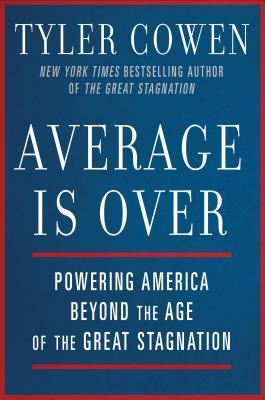
Average Is Over: Powering America Beyond the Age of the Great Stagnation
by Tyler Cowen
Rating: 3.6 ⭐
• 2 recommendations ❤️
Widely acclaimed as one of the world’s most influential economists, Tyler Cowen returns with his groundbreaking follow-up to the New York Times bestseller The Great Stagnation .The widening gap between rich and poor means dealing with one big, uncomfortable If you’re not at the top, you’re at the bottom.The global labor market is changing radically thanks to growth at the high end—and the low. About three quarters of the jobs created in the United States since the great recession pay only a bit more than minimum wage. Still, the United States has more millionaires and billionaires than any country ever, and we continue to mint them.In this eye-opening book, renowned economist and bestselling author Tyler Cowen explains that High earners are taking ever more advantage of machine intelligence in data analysis and achieving ever-better results. Meanwhile, low earners who haven’t committed to learning, to making the most of new technologies, have poor prospects. Nearly every business sector relies less and less on manual labor, and this fact is forever changing the world of work and wages. A steady, secure life somewhere in the middle—average—is over.With The Great Stagnation, Cowen explained why median wages stagnated over the last four decades; in Average Is Over he reveals the essential nature of the new economy, identifies the best path forward for workers and entrepreneurs, and provides readers with actionable advice to make the most of the new economic landscape. It is a challenging and sober must-read but ultimately exciting, good news. In debates about our nation’s economic future, it will be impossible to ignore.
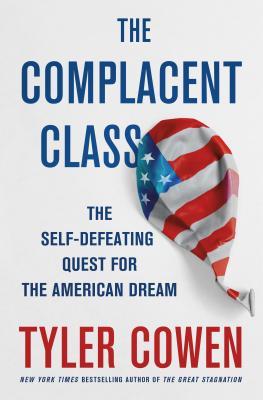
The Complacent Class: The Self-Defeating Quest for the American Dream
by Tyler Cowen
Rating: 3.6 ⭐
• 1 recommendation ❤️
Since Alexis de Tocqueville, restlessness has been accepted as a signature American trait. Our willingness to move, take risks, and adapt to change have produced a dynamic economy and a tradition of innovation from Ben Franklin to Steve Jobs.The problem, according to legendary blogger, economist and bestelling author Tyler Cowen, is that Americans today have broken from this tradition—we’re working harder than ever to avoid change. We're moving residences less, marrying people more like ourselves and choosing our music and our mates based on algorithms that wall us off from anything that might be too new or too different. Match.com matches us in love. Spotify and Pandora match us in music. Facebook matches us to just about everything else.Of course, this “matching culture” brings tremendous positives: music we like, partners who make us happy, neighbors who want the same things. We’re more comfortable. But, according to Cowen, there are significant collateral downsides attending this comfort, among them heightened inequality and segregation and decreased incentives to innovate and create.The Great Social Stagnation argues that this cannot go on forever. We are postponing change, due to our near-sightedness and extreme desire for comfort, but ultimately this will make change, when it comes, harder. The forces unleashed by the Great Stagnation will eventually lead to a major fiscal and budgetary crisis: impossibly expensive rentals for our most attractive cities, worsening of residential segregation, and a decline in our work ethic. The only way to avoid this difficult future is for Americans to force themselves out of their comfortable slumber—to embrace their restless tradition again.

The Age of the Infovore: Succeeding in the Information Economy
by Tyler Cowen
Rating: 3.2 ⭐
• 1 recommendation ❤️
Previously published as Create Your Own Economy"Will change the way you think about thinking."—Daniel H. Pink, author of A Whole New MindRenowned behavioral economist and commentator Tyler Cowen shows that our supernetworked world is changing the way we think—and empowering us to thrive in any economic climate. Whether it is micro-blogging on Twitter or buying single songs at iTunes, we can now customize our lives to shape our own specific needs. In other words, we can create our own economy—and live smarter, happier, fuller lives. At a time when apocalyptic thinking has become all too common, Cowen offers a much-needed Information Age manifesto that will resonate with readers of Dan Ariely's Predictably Irrational , Steven Johnson's Everything Bad is Good for You , and everyone hungry to understand our potential to withstand, and even thrive, in any economic climate.

The Great Stagnation: How America Ate All The Low-Hanging Fruit of Modern History, Got Sick, and Will (Eventually) Feel Better
by Tyler Cowen
Rating: 3.7 ⭐
Tyler Cowen’s controversial New York Times bestseller—the book heard round the world that ignited a firestorm of debate and redefined the nature of America’s economic malaise. America has been through the biggest financial crisis since the great Depression, unemployment numbers are frightening, media wages have been flat since the 1970s, and it is common to expect that things will get worse before they get better. Certainly, the multidecade stagnation is not yet over. How will we get out of this mess? One political party tries to increase government spending even when we have no good plan for paying for ballooning programs like Medicare and Social Security. The other party seems to think tax cuts will raise revenue and has a record of creating bigger fiscal disasters that the first. Where does this madness come from? As Cowen argues, our economy has enjoyed low-hanging fruit since the seventeenth free land, immigrant labor, and powerful new technologies. But during the last forty years, the low-hanging fruit started disappearing, and we started pretending it was still there. We have failed to recognize that we are at a technological plateau. The fruit trees are barer than we want to believe. That's it. That is what has gone wrong and that is why our politics is crazy. In The Great Stagnation, Cowen reveals the underlying causes of our past prosperity and how we will generate it again. This is a passionate call for a new respect of scientific innovations that benefit not only the powerful elites, but humanity as a whole.

One of the most influential economists of the decade-and the New York Times bestselling author of The Great Stagnation-boldly argues that just about everything you've heard about food is wrong.Food snobbery is killing entrepreneurship and innovation, says economist, preeminent social commentator, and maverick dining guide blogger Tyler Cowen. Americans are becoming angry that our agricultural practices have led to global warming-but while food snobs are right that local food tastes better, they're wrong that it is better for the environment, and they are wrong that cheap food is bad food. The food world needs to know that you don't have to spend more to eat healthy, green, exciting meals. At last, some good news from an economist!Tyler Cowen discusses everything from slow food to fast food, from agriculture to gourmet culture, from modernist cuisine to how to pick the best street vendor. He shows why airplane food is bad but airport food is good; why restaurants full of happy, attractive people serve mediocre meals; and why American food has improved as Americans drink more wine. And most important of all, he shows how to get good, cheap eats just about anywhere.Just as The Great Stagnation was Cowen's response to all the fashionable thinking about the economic crisis, An Economist Gets Lunch is his response to all the fashionable thinking about food. Provocative, incisive, and as enjoyable as a juicy, grass-fed burger, it will influence what you'll choose to eat today and how we're going to feed the world tomorrow.

Stubborn Attachments: A Vision for a Society of Free, Prosperous, and Responsible Individuals
by Tyler Cowen
Rating: 3.7 ⭐
Growth is good. Through history, economic growth, in particular, has alleviated human misery, improved human happiness and opportunity, and lengthened human lives. Wealthier societies are more stable, offer better living standards, produce better medicines, and ensure greater autonomy, greater fulfillment, and more sources of fun. If we want to continue on our trends of growth, and the overwhelmingly positive outcomes for societies that come with it, every individual must become more concerned with the welfare of those around us and in the world at large and most of all our descendants in the future. So, how do we proceed? Tyler Cowen, in a culmination of 20 years of thinking and research, provides a roadmap for moving forward. In this new book, Stubborn Attachments: A Vision for a Society of Free, Prosperous, and Responsible Individuals, Cowen argues that our reason and common sense can help free us of the faulty ideas that hold us back as people and as a society. Stubborn Attachments, at its heart, makes the contemporary moral case for economic growth and delivers a great dose of inspiration and optimism about our future possibilities. As a means of practicing the altruism that Stubborn Attachments argues for, Tyler Cowen is donating all earnings from this book to a man he met in Ethiopia earlier this year with aspirations to open his own travel business.

An against-the-grain polemic on American capitalism from New York Times bestselling author Tyler Cowen.We love to hate the 800-pound gorilla. Walmart and Amazon destroy communities and small businesses. Facebook turns us into addicts while putting our personal data at risk. From skeptical politicians like Bernie Sanders who, at a 2016 presidential campaign rally said, "If a bank is too big to fail, it is too big to exist," to millennials, only 42 percent of whom support capitalism, belief in big business is at an all-time low. But are big companies inherently evil? If business is so bad, why does it remain so integral to the basic functioning of America? Economist and bestselling author Tyler Cowen says our biggest problem is that we don't love business enough.In Big Business, Cowen puts forth an impassioned defense of corporations and their essential role in a balanced, productive, and progressive society. He dismantles common misconceptions and untangles conflicting intuitions. According to a 2016 Gallup survey, only 12 percent of Americans trust big business "quite a lot," and only 6 percent trust it "a great deal." Yet Americans as a group are remarkably willing to trust businesses, whether in the form of buying a new phone on the day of its release or simply showing up to work in the expectation they will be paid. Cowen illuminates the crucial role businesses play in spurring innovation, rewarding talent and hard work, and creating the bounty on which we've all come to depend.

A Frenchman rents a Hollywood movie. A Thai schoolgirl mimics Madonna. Saddam Hussein chooses Frank Sinatra's "My Way" as the theme song for his fifty-fourth birthday. It is a commonplace that globalization is subverting local culture. But is it helping as much as it hurts? In this strikingly original treatment of a fiercely debated issue, Tyler Cowen makes a bold new case for a more sympathetic understanding of cross-cultural trade. Creative Destruction brings not stale suppositions but an economist's eye to bear on an age-old question: Are market exchange and aesthetic quality friends or foes? On the whole, argues Cowen in clear and vigorous prose, they are friends. Cultural "destruction" breeds not artistic demise but diversity.Through an array of colorful examples from the areas where globalization's critics have been most vocal, Cowen asks what happens when cultures collide through trade, whether technology destroys native arts, why (and whether) Hollywood movies rule the world, whether "globalized" culture is dumbing down societies everywhere, and if national cultures matter at all. Scrutinizing such manifestations of "indigenous" culture as the steel band ensembles of Trinidad, Indian handweaving, and music from Zaire, Cowen finds that they are more vibrant than ever--thanks largely to cross-cultural trade.For all the pressures that market forces exert on individual cultures, diversity typically increases within society, even when cultures become more like each other. Trade enhances the range of individual choice, yielding forms of expression within cultures that flower as never before. While some see cultural decline as a half-empty glass, Cowen sees it as a glass half-full with the stirrings of cultural brilliance. Not all readers will agree, but all will want a say in the debate this exceptional book will stir.

Inspired by Bill Simmons' epic The Book of Basketball, Tyler Cowen translates a lifelong passion for economics into an entertaining and erudite analysis of who qualifies as the greatest economist of all time.Through vivid storytelling, Cowen examines the lives of history’s most influential economic thinkers, from the passionate idealism of a young John Stuart Mill to the analytical brilliance of Milton Friedman.Delving into long-forgotten lectures, private letters, and formative childhood moments, Cowen unearths surprising insights into what drove these great thinkers. Was Alfred Marshall's photographic memory the key to his theories of supply and demand? Did Adam Smith's absent father help spark his visionary ideas?In the end, Cowen crowns a surprising winner and makes a compelling case for the under-appreciated qualities that separate the good from the truly great. Call it juvenile, or overly hierarchical, but Tyler will force you to think about economics in a new way. Think he’s wrong? Tell it to the AI.

Does a market economy encourage or discourage music, literature, and the visual arts? Do economic forces of supply and demand help or harm the pursuit of creativity? This book seeks to redress the current intellectual and popular balance and to encourage a more favorable attitude toward the commercialization of culture that we associate with modernity. Economist Tyler Cowen argues that the capitalist market economy is a vital but underappreciated institutional framework for supporting a plurality of coexisting artistic visions, providing a steady stream of new and satisfying creations, supporting both high and low culture, helping consumers and artists refine their tastes, and paying homage to the past by capturing, reproducing, and disseminating it. Contemporary culture, Cowen argues, is flourishing in its various manifestations, including the visual arts, literature, music, architecture, and the cinema.Successful high culture usually comes out of a healthy and prosperous popular culture. Shakespeare and Mozart were highly popular in their own time. Beethoven’s later, less accessible music was made possible in part by his early popularity. Today, consumer demand ensures that archival blues recordings, a wide array of past and current symphonies, and this week’s Top 40 hit sit side by side in the music megastore. High and low culture indeed complement each other.Cowen’s philosophy of cultural optimism stands in opposition to the many varieties of cultural pessimism found among conservatives, neoconservatives, the Frankfurt School, and some versions of the political correctness and multiculturalist movements, as well as historical figures, including Rousseau and Plato. He shows that even when contemporary culture is thriving, it appears degenerate, as evidenced by the widespread acceptance of pessimism. He ends by considering the reasons why cultural pessimism has such a powerful hold on intellectuals and opinion-makers.

From the See the Invisible Hand. Understand Your World . That's the tagline of Modern Principles and our teaching philosophy. Nobel laureate Vernon Smith put it this At the heart of economics is a scientific mystery… a scientific mystery as deep, fundamental and inspiring as that of the expanding universe or the forces that bind matter… How is order produced from freedom of choice? We want students to be inspired by this mystery and by how economists have begun to solve it. Thus, we show how markets interconnect and respond in surprising ways to changes in resources and preferences. Consider, for example, how markets respond to a reduction in the supply of oil. Of course, the price of oil increases giving consumers an incentive to use less and suppliers an incentive to discover more. But an increase in the price of oil also encourages Brazilian sugar cane farmers to devote more of their production to ethanol and less to sugar thereby driving up the price of sugar. An increase in the price of sugar means a reduction in the quantity of candy demanded. So one way the market responds to a reduction in the supply of oil is by encouraging consumers to eat less candy! In analyses like this, we teach students to see the invisible hand and in so doing to understand their world. Similarly, we offer a unique and simple proof of the amazing invisible hand theorem that without any central direction competitive markets allocate production across firms in a way that minimizes aggregate costs! To understand their world students must understand when self-interest promotes the social interest and when it does not. Thus, Modern Principles has in-depth analyses of externalities, public goods, and ethical issues with market incomes and trade. Moreover, we always discuss economic theory in the context of real world problems such as the decline of the ocean fisheries, climate change, and the shortage of human organs for transplant.

From the authors:There's a common view that "all micro texts are the same," but we believe that innovation is possible! We offer a whole chapter on incentive design, with many business and real world applications from choosing salaries or piece rates to setting up an ideal tournament. Business applications are also extensive in our chapter on price discrimination, which covers tying and bundling as well as direct price discrimination. We cover political economy extensively and also have a whole chapter on normative judgments; it covers the assumptions behind cost-benefit analysis, the idea of a Pareto improvement, and the different ethical judgments that have been used to praise or condemn economic reasoning. We knew that our efforts to reflect modern microeconomics would be wasted if we reached only a small percentage of the students. We had to make the material simpler, more compelling, and more intuitive. We had to bring economic reasoning to life. We also knew that we were writing for a generation that doesn't always have the patience for slow delivery. We had to get to the point. Those are just some of the reasons why we call our text Modern Principles: Microeconomics . We have taken modern advances in economics and we have integrated them throughout the text. We are unabashedly enthusiastic about economics and we work hard to enthuse students with the economic way of thinking so that they too internalize it for the rest of their lives. We hope you will see that this text provides the best coverage of what it means to think like an economist.

Americans agree about government arts funding in the way the women in the old joke agree about the food at the it's terrible--and such small portions! Americans typically either want to abolish the National Endowment for the Arts, or they believe that public arts funding should be dramatically increased because the arts cannot survive in the free market. It would take a lover of the arts who is also a libertarian economist to bridge such a gap. Enter Tyler Cowen. In this book he argues why the U.S. way of funding the arts, while largely indirect, results not in the terrible and the small but in Good and Plenty --and how it could result in even more and better.Few would deny that America produces and consumes art of a quantity and quality comparable to that of any country. But is this despite or because of America's meager direct funding of the arts relative to European countries? Overturning the conventional wisdom of this question, Cowen argues that American art thrives through an ingenious combination of small direct subsidies and immense indirect subsidies such as copyright law and tax policies that encourage nonprofits and charitable giving. This decentralized and even somewhat accidental--but decidedly not laissez-faire--system results in arts that are arguably more creative, diverse, abundant, and politically unencumbered than that of Europe.Bringing serious attention to the neglected issue of the American way of funding the arts, Good and Plenty is essential reading for anyone concerned about the arts or their funding.

From the Modern. Simpler. These were our goals. We knew that to reflect modern macroeconomics we had to cover the Solow Model and the economics of ideas, Real Business Cycles, and New Keynesian economics. While most texts now cover the rudiments of economic growth, the importance of ideas is rarely even mentioned. Similarly, other texts do not offer a balanced treatment of Real Business Cycle theory and New Keynesian theory, instead favoring one theory and relegating the other to a few pages that are poorly integrated with the overall macro model. We also knew that our efforts to reflect modern macroeconomics would be wasted if we reached only a small percentage of the students. We had to make the material simpler, more compelling, and more intuitive. By boiling the Solow model down to its essence and by providing multiple paths through the material, we have made it accessible to all principles students. Our modern approach to business fluctuations is also simpler and yet more advanced at the same time. It is simpler because we model business fluctuations as fluctuations in the growth rate of output, rather than in the level of output. That creates a natural progression from growth theory to business fluctuations. It is simpler because we develop our balanced approach to Real Business Cycles and New Keynesian economics within a single, unified dynamic AD-AS model. And no other textbook offers the same depth of analysis of monetary and fiscal policy in response to both real and nominal shocks. That's why we call our text Modern Macroeconomics . We have taken recent advances in how economists think and describe macroeconomics and we have integrated them throughout the text. Growth theory is given full treatment and it is integrated with our dynamic macroeconomic model. Insights from Real Business Cycle theory and New Keynesian theory appear early in the text, not tacked on at the end as an afterthought. We are certain you will see that this text provides the best coverage of the new principles that macroeconomists use today.

In a world where more people know who Princess Di was than who their own senators are, where Graceland draws more visitors per year than the White House, and where Michael Jordan is an industry unto himself, fame and celebrity are central currencies. In this intriguing book, Tyler Cowen explores and elucidates the economics of fame. Fame motivates the talented and draws like-minded fans together. But it also may put profitability ahead of quality, visibility above subtlety, and privacy out of reach. The separation of fame and merit is one of the central dilemmas Cowen considers in his account of the modern market economy. He shows how fame is produced, outlines the principles that govern who becomes famous and why, and discusses whether fame-seeking behavior harmonizes individual and social interests or corrupts social discourse and degrades culture. Most pertinently, Cowen considers the implications of modern fame for creativity, privacy, and morality. Where critics from Plato to Allan Bloom have decried the quest for fame, Cowen takes a more pragmatic, optimistic view. He identifies the benefits of a fame-intensive society and makes a persuasive case that however bad fame may turn out to be for the famous, it is generally good for society and culture.

How do we square the inequality that is a natural byproduct of our market-based economy with the equality principle we hold dear? Is inequality worse than ever before? Will our politics self-correct or are we spiraling out of control?These questions and more are answered by today's foremost public intellectuals—Walter Russell Mead, Francis Fukuyama, Robert Reich, Tyler Cowen, Sebastian Mallaby, and others—in this thought-provoking collection of essays from The American Interest magazine.

For the first time ever renowned economist and coauthor of one of the world’s most influential economic blogs, Tyler Cowen, sits down with best-selling author and autism advocate Temple Grandin for a lively in-depth exploration of the value of autism in the modern world. Just as he does in his book Create Your Own Economy, Cowen argues that individuals on the autism spectrum are integral to the world’s many faceted economy; they create all kinds of value in financial, intellectual, cultural and even political markets. Their talents regarding the organization of information are of critical value now, and they are talents we all share to some extent. Cowen and Grandin discuss the nature of autistic thinking, the historical, future and global contributions it can make, as well as the damage done by the stigma currently associated with the autistic label. Valuing the unique and specialized autistic cognitive abilities of each member of society--understanding how we think differently--is the key to the unimaginable prosperity the modern world has yet to offer.

Markets and Cultural Voices: Liberty vs. Power in the Lives of Mexican Amate Painters
by Tyler Cowen
Rating: 3.9 ⭐
This intriguing work explores the world of three amate artists. A native tradition, all of their painting is done in Mexico, yet the finished product is sold almost exclusively to wealthy American art buyers.Cowen examines this cultural interaction between Mexico and the United States to see how globalization shapes the lives and the work of the artists and their families. The story of these three artists reveals that this exchange simultaneously creates economic opportunities for the artists, but has detrimental effects on the village.A view of the daily village life of three artists connected to the larger art world, this book should be of particular interest to those in the fields of cultural economics, Latino studies, economic anthropology and globalization.

Assertions of market failure are usually based on Paul Samuelson's theory of public goods and externalities. This book both develops that theory and challenges the conclusion of many economists and policy-makers that market failures cannot be corrected by market forces. The volume includes major case studies of private provision of public goods. Among the goods considered are lighthouse services, education, municipal services, and environmental conservation.
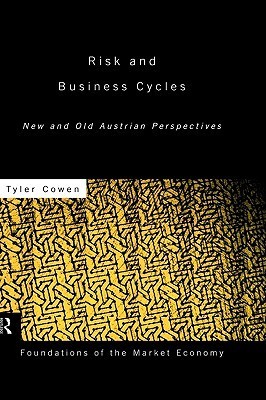
Risk and Business Cycles examines the causes of business cycles, a perennial topic of interest within economics. The author argues the case for the revival of an important role for monetary causes in business cycle theory, which challenges the current trend towards favouring purely real theories. The work also presents a critique of the traditional Austrian theory of the trade cycle. This controversial approach will ensure that the book is of interest to all those involved with business cycles, as well as Austrian economics.

Markets in the Firm: A Market-Process Approach to Management (Hobart Papers
by Tyler Cowen
Rating: 4.3 ⭐
Businesses around the world face increasing turbulence in their economic and social environments. The pace of change in market economies seems to be ever accelerating. In this book, the authors consider some of the implications for management of different views of the firm. They point to the need, in these days of global markets and increased uncertainty, for firms to be flexible and responsive to market-place requirements.

Gli incentivi sono il cuore della teoria economica applicata alle cose del mondo, ma non si usano solo sotto forma di denaro. Cowen spiega, per esempio, che con i soldi non si convincono i propri figli a lavare i piatti e che è meglio utilizzare incentivi non-economici, come dare fiducia e regalare ampi sorrisi alle persone amate, per ottenere ciò che vogliamo. Scopri l'economista che è in te è un'introduzione alle scienze economiche che dimostra come nozioni apparentemente molto complicate siano in realtà innate e possono aiutarci ad ottenere quello che più desideriamo. Usando un linguaggio accattivante e concreto, Cowen, tra i più autorevoli economisti americani, sciorina consigli saggi e realistici attraverso situazioni-tipo prese dalla vita lavoro, casa, traffico, vacanze... Come trovare una buona guida per visitare un bazar marocchino?

This book, for students and specialists in Monetary Economics, is the first systematic examination of monetary economics from a new monetary economics viewpoint - one in which markets provide financial services without recourse to traditional concepts of money.

Modern Principles: Microeconomics 4e & LaunchPad for Modern Principles of Microeconomics
by Tyler Cowen
Rating: 4.0 ⭐

El imperativo moral del crecimiento económico: Una visión de una sociedad libre y próspera de individuos responsables (Arbor nº 1)
by Tyler Cowen
Rating: 5.0 ⭐
El crecimiento es bueno. A lo largo de la historia, el crecimiento económico ha remediado la miseria humana, ha hecho más felices a las personas y les ha dado oportunidades de crecimiento, además de prolongar sus vidas. Las sociedades más ricas son más estables, ofrecen un mejor nivel de vida, producen mejores medicinas y logran que las personas tengan mayor autonomía, más fuentes de satisfacción personal y más formas de diversión. Pero si queremos apoyar el crecimiento económico y sus beneficios claramente positivos, las personas deben estar más preocupadas por el bienestar de quienes lo rodean. Luego de veinte años de investigación y reflexión, Tyler Cowen proporciona una guía para avanzar en el logro de la prosperidad. En este nuevo libro, El imperativo moral del crecimiento econó Una visión de una sociedad libre y próspera de individuos responsables, Cowen sugiere que nuestro sentido común y nuestra capacidad de razonamiento nos pueden liberar de las ideas erróneas que nos frenan como personas y como sociedad. En esencia, El imperativo moral del crecimiento económico plantea una defensa moral del crecimiento económico, y al hacerlo inyecta una gran dosis de inspiración y optimismo a las posibilidades que nos depara el futuro.

La reputazione del capitalismo non è mai stata le multinazionali e le imprese di grandi dimensioni, in particolare le piattaforme web, sono accusate di sfruttare le risorse naturali e le debolezze umane in condizioni di monopolio quasi assoluto; il settore bancario e la finanza sono visti come i responsabili senza scrupoli dell’impoverimento del ceto medio occidentale; l’idea stessa di generare profitti è considerata, nell’epoca delle disuguaglianze globali e della crisi climatica, antitetica all’idea stessa di sostenibilità sociale ed economica. È arrivato il momento di uccidere il gigante divenuto talmente avido e sfrenato da rischiare di inghiottire chi l’ha creato? secondo Tyler Cowen, considerato da molti tra i più stimolanti e provocatori economisti statunitensi, il problema del capitalismo è piuttosto un non abbiamo ancora imparato ad amarlo abbastanza. L’impresa eccezionale non è soltanto un appassionato manifesto a sostegno della grande affrontando direttamente le questioni e i problemi aperti che hanno minato la fiducia verso le grandi aziende e i giganti della finanza, Cowen dimostra come molte credenze sul loro conto siano imprecise o errate. Le imprese sono più disoneste di noi? Gli amministratori delegati sono pagati troppo? Amazon e Google detengono davvero un monopolio assoluto e minaccioso per la democrazia? Le grandi banche d’affari e Wall Street sono utili a qualcuno oltre che a loro stessi? Nessuna di queste domande ha una risposta la lettura del libro di Tyler Cowen è il primo passo per la salutare riscoperta di una parte fondamentale della nostra società.