
Trevor Leggett
23 Books Written

Samurai Zen brings together 100 of the rare riddles which represent the core spiritual discipline of Japan's ancient Samurai tradition. Dating from thirteenth-century records of Japan's Kamakura temples, and traditionally guarded with a reverent secrecy, they reflect the earliest manifestation of pure Zen in Japan. Created by Zen Masters for their warrior pupils, the Japanese Koans use incidents f


Discusses the relationship between Zen, the arts, and daily life. Includes translations of rare Zen texts.

Lotus Lake, Dragon Pool brings together the rich and complementary traditions of yoga and Zen, in stories selected and presented by Trevor Leggett. The lessons they contain serve always to guide and inform, never to lecture or preach. From accounts of long-ago kings and sages to stories of contemporary businessmen and students come timeless, universal precepts that speak directly to the modern rea

First Published in 1998. Routledge is an imprint of Taylor & Francis, an informa company.

Sankara on the Yoga Sutras: A Full Translation of the Newly Discovered Text
by Trevor Leggett
Rating: 4.6 ⭐
The text translated here is an historical an unknown commentary on the Yoga sutra-s of Patanjali by Sankara, the most eminent philospher of ancient India. Present indications are that it is likely to be authentic, which would date it about AD 700.
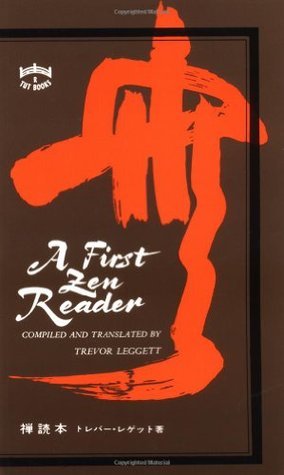
When Zen Buddhism crossed from China to Japan in the twelfth century, it entered a phase of development that was not only to inspire a magnificent range of artistic achievement but also to exert a tremendous influence upon Japanese life itself and, eventually, to bring to the attention of the West a religious philosophy both unique and challenging in its power. 'Yet,' as one of the contributors to

The well-known Zen Buddhist phrase ‘the finger pointing at the moon’ refers to the means and the end, and the possibility of mistaking one for the other. Trevor Leggett says, ‘the forms are the methods and they are very important as pointing fingers, but if we forget what they are for and they become, so to speak, the goal in their own right, then our progress is liable to stop. And if it stops, i

This is the bible of shogi, a chess-like game of strategy. Step by-step instructions and diagrams introduce basic moves and strategies. Removable pieces and a shogi board are included.

This unique book is comprised of three texts, translated from the Japanese and compiled to illuminate three ages of Zen in warrior Zen of crisis in the 13th century; feudal Zen for 18th-century samurai officials; and modern Zen in 20th-century Japan. Part One presents translations of koans from the secret records of temples in Kamakura, Japan's first samurai city. Part Two is an insp

First published in 1990. Routledge is an imprint of Taylor & Francis, an informa company.

This unique book contains a fascinating selection of traditional Japanese and Indian stories used by teachers in the Eastern spiritual schools to assist students in their training. Just as flint and steel are used to make fire, so these stories can be used to create sparks in the reader’s mind which can, with care and attention, be nurtured into the strong light of realization. The author, who has



This volume contains stories based on Buddhism and referring to martial arts, music, chess and incidents in ordinary life.Stories, parables, and examples have been a favoured way of conveying spiritual insights and truths since time immemorial, and Trevor Leggett was a master at it. He had the knack of pointing out the spiritual implications of practical events which everyone can relat


The Stories Gleaned from the author’s experiences over many years Yoga and Zen training as well as from conversations with teachers, folk stories and temple magazines, this is a fascinating and enlightening compendium of tales from the Yoga and Zen traditions. Stories such as these are used in many spiritual schools’ teaching – they’re the flint or steel that makes the spark which, when nurtured d

Collected by the author over many years, these stories from the Yoga and Zen traditions are the flint and steel that strike a spark that lights up the mind with insights that one should ponder daily to bring to light ever deeper meaning. They may be similar in intent to Zen Koans – but they are rather different in content. In many Zen Koans someone says or does something extraordinarily inappropri

The text translated here is an historical an unknown commentary on the Yoga Sutra-s of Patanjali by Sankara, the most eminent philosopher of ancient India. Present Indications are that it is likely to be authentic, which would date it about AD700. The many references to meditation in his accepted works have sometimes been regarded as concessions to accepted ideas of the time, and not really his ow

THE DRAGON MASKand other judo storiesin the Zen traditionIn 50 absorbing stories drawn from a lifetime of experience in Europe and the Far East, Trevor Leggett shows that judo is a training for life. The Cherry Tree, Cutting Off the Bull’s Horns, Tigers and Rabbits and, of course The Dragon Mask, are in themselves entertaining, informative and even surprising – but undernea

Collected by the author over many years, these stories from the Yoga and Zen traditions are the flint and steel that strike a spark that lights up the mind with insights that one should ponder daily to bring to light ever deeper meaning. They may be similar in intent to Zen Koans – but they are rather different in content. In many Zen Koans someone says or does something extraordinarily inappropri

Written by T.P. Leggett in 1963, The Demonstration of Throws; Nage-no-Kata, is a classic in Martial Arts writings. Along with a detailed technical description of the kata movements are photographs and illustrations depicting the individual movements in great detail.Trevor Leggett joined the Budokwai in London in 1932, training primarily under Yukio Tani. He went on to achieve a

This book comprises eighteen essays written with simplicity and humour, but with an underlying discipline and authority derived from a lifetime of spiritual and martial arts training both in Adhyatma Yoga and Judo.Trevor Leggett addresses matters including sportsmanship, achieving freedom of mind, training the inner self, developing an inner calm, and the four keys to learning – instruction,