
Tom Vanderbilt
Tom Vanderbilt writes on design, technology, science, and culture, among other subjects, for many publications, including Wired, Outside, The London Review of Books, The Financial Times, The Wall Street Journal, The Wilson Quarterly, Artforum, The Wilson Quarterly, Travel and Leisure, Rolling Stone, The New York Times Magazine, Cabinet, Metropolis, and Popular Science. He is contributing editor to Artforum and the design magazine Print and I.D., contributing writer of the popular blog Design Observer, and columnist for Slate magazine. His most recent book is the New York Times bestseller Traffic:Why We Drive the Way We Do (and What It Says About Us), published by Alfred A. Knopf in the U.S. and Canada, Penguin in the U.K. and territories, and by publishers in 18 other countries. He is also the author of two previous books: Survival City: Adventures Among the Ruins of Atomic America (Princeton Architectural Press, 2002; published in PB by the University of Chicago Press in 2010), an offbeat architectural travelogue of the nation’s secret Cold War past; and The Sneaker Book (The New Press, 1998), a cultural history of the athletic shoe (published in Italian and Swedish editions). His early writings for The Baffler have been collected in two anthologies, Commodify Your Dissent and Boob Jubilee (W.W. Norton, eds. Thomas Frank and Matthew Weiland), and he has also contributed essays to a number of books, including New York Stories: The Best of the City Section of the New York Times (New York University Press); Supercade: The Visual History of the Video Game Age (The MIT Press), Else/Where: Mapping (The University of Minnesota Press, 2006),Quonset Hut: Metal Living for a Modern Age (Princeton Architectural Press, 2005), The World and the Wild (The University of Arizona Press), and The Thinking Fan’s Guide to the World Cup (Harper Perennial, 2006). He has consulted for a variety of companies, from ad agencies to Fortune 500 corporations, and has given lectures at a variety of institutions around the world, from the Eero Saarinen Lecture at Yale University’s School of Architecture to the Australasian Road Safety Conference in Canberra. He has appeared on a wide variety of radio and television programs around the world, including NBC’s Today Show, ABC News’ Nightline, NPR’s Morning Edition, Fresh Air with Teri Gross, the BBC’s World Service and The One Show, MSNBC’s Morning Joe, Fox Business, and CNN’s Business Today, among many others. He is a Visiting Scholar at New York University’s Rudin Center for Transportation Policy and Management, and has received fellowships from the Andy Warhol Foundation for the Visiting Arts, the Design Trust for Public Space, and the Canadian Centre for Architecture. He is also a member of the U.S. Department of Interior’s Cold War Advisory Committee, a group studying the identification of sites and resources significant to the Cold War. Courtsey : http://www.tomvanderbilt.com/bio/
12 Books Written

In this brilliant, lively, and eye-opening investigation, Tom Vanderbilt examines the perceptual limits and cognitive underpinnings that make us worse drivers than we think we are. He demonstrates why plans to protect pedestrians from cars often lead to more accidents. He uncovers who is more likely to honk at whom, and why. He explains why traffic jams form, outlines the unintended consequences of our quest for safety, and even identifies the most common mistake drivers make in parking lots. Traffic is about more than driving: it's about human nature. It will change the way we see ourselves and the world around us, and it may even make us better drivers.
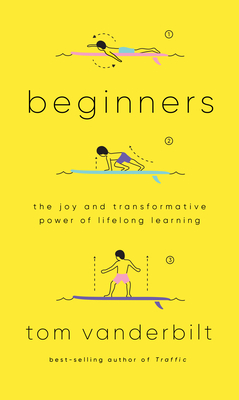
The best-selling author of Traffic and You May Also Like now gives us a thought-provoking, playful journey into the transformative joys that come with starting something new, no matter your ageWhy do so many of us stop learning new skills as adults? Are we afraid to be bad at something? Have we forgotten the sheer pleasure of beginning from the ground up? Or is it simply a fact that you can't teach an old dog new tricks?Inspired by his young daughter's insatiable need to know how to do almost everything, and stymied by his own rut of mid-career competence, Tom Vanderbilt begins a year of learning purely for the sake of learning. He tackles five main skills (and picks up a few more along the way), choosing them for their difficulty to master and their distinct lack of career marketability--chess, singing, surfing, drawing, and juggling. What he doesn't expect is that the circuitous paths he takes while learning these skills will prove even more satisfying than any knowledge he gains.He soon finds himself having rapturous experiences singing Spice Girls songs in an amateur choir, losing games of chess to eight-year-olds, and dodging scorpions at a surf camp in Costa Rica. Along the way, he interviews dozens of experts to explore the fascinating psychology and science behind the benefits of becoming an adult beginner. Weaving comprehensive research and surprising insight gained from his year of learning dangerously, Vanderbilt shows how anyone can get better at beginning again--and, more important, why they should take those first awkward steps. Ultimately, he shares how his refreshed sense of curiosity opened him up to a profound happiness and a deeper connection to the people around him. It's about how small acts of reinvention, at any age, can make life seem magical.

From the best-selling author of Traffic, a brilliant and entertaining exploration of our personal tastes--why we like the things we like, and what it says about us. Everyone knows his or her favorite color, the foods we most enjoy, and which season of House of Cards deserves the most stars on Netflix. But what does it really mean when we like something? How do we decide what's good? Is it something biological? What is the role of our personal experiences in shaping our tastes? And how do businesses make use of this information? Comprehensively researched and singularly insightful, You May Also Like delves deep into psychology, marketing, and neuroscience to answer these complex and fascinating questions. From the tangled underpinnings of our food choices, to the dynamics of the pop charts and our playlists, to our nonstop procession of "thumbs" and "likes" and "stars," to our insecurity before unfamiliar works of art, the book explores how we form our preferences--and how they shape us. It explains how difficult it is, even for experts, to pinpoint exactly what makes something good or enjoyable, and how the success of companies such as Netflix, Spotify, and Yelp depends on the complicated task of predicting what we will enjoy. Like Traffic, this book takes us on a fascinating and consistently surprising intellectual journey that helps us better understand how we perceive and appreciate the world around us.

The Cold War was the war that never happened.Nonetheless, it spurred the most significant buildup of military contingency this country has ever known: from the bunkers of Greenbrier, West Virginia, to the "proving grounds" of Nevada, where entire cities were built only to be vaporized. The Cold War was waged on a territory that knew no boundaries but left few traces.In this fascinating--and at turns frightening and comical--travelogue to the hidden battlefields of the Cold War, Tom Vanderbilt travels the Interstate (itself a product of the Cold War) to uncover the sites of Cold War architecture and reflect on their lasting heritage.In the process, Vanderbilt shows us what the Cold War landscape looked like, how architecture tried to adapt to the threat of mass destruction, how cities coped with the knowledge that they were nuclear targets, and finally what remains of the Cold War theater today, both its visible and invisible legacies. Ultimately, Vanderbilt gives us a deep look into our cultural soul, the dreams and fears that drove us for the last half of the 20th century.

Sneakers have gone—seemingly overnight—from being childhood summer staples to serious athletic instruments to full-fledged lifestyle accoutrements, but the transition is hazy. Just when and why did America (and the world) go sneaker crazy?The Sneaker Book is an entertaining, informative look at this fascinating, $11-billion-a-year industry. How (and by whom) are sneakers made? Where does your money go when you buy a pair? Who are the companies behind the logos? Why is Nike heralded by economists and lampooned by Doonesbury?Jammed full of facts, figures, cartoons by Garry Trudeau and Mark Alan Stamaty, and literary excerpts about sneakers from Tom Wolfe, Paul Beatty, Leslie Savan, Spike Lee, Ray Bradbury, and many more, The Sneaker Book swooshes past the hype, puts the numbers on the table, and takes a fresh look at familiar—if unexamined—footwear.

Discover why learning is good for us and how to develop a 'Beginner's Mindset'.For many of us, the last time we learned a new skill was during childhood. We live in an age which reveres expertise but looks down on the beginner. Upon entering adulthood and middle age, we begin to shy away from trying new things, instead preferring to stay nestled firmly in our comfort zones.Beginners asks the why are children the only ones allowed to experience the inherent fun of facing daily challenges? And could we benefit from embracing new skills, even if we're initially hopeless? Best-selling author Tom Vanderbilt sets out to find the answer, tasking himself with acquiring several new skills under the tutelage of professionals, including drawing, juggling, surfing and much more. Witty and often surprisingly profound, Beginners is an uplifting exploration of the science of brain plasticity and how we can learn how to learn anew.

You May Also Like: Why Your Favourite Colour is Blue, Your Polo Shirt Doesn't Have a Zipper, You Don't Like Heavy Metal, and Other Mysteries of Taste by Tom Vanderbilt
by Tom Vanderbilt
Rating: 3.0 ⭐


Circuit city: Tom Vanderbilt on pixelated architecture.: An article from: Artforum International
by Tom Vanderbilt
Not your typical road trip.(Book Review): An article from: Bulletin of the Atomic Scientists
by Tom Vanderbilt
A thousand words: Simon Starling talks about Kakteenhaus, 2002.: An article from: Artforum International
by Tom Vanderbilt