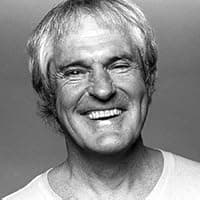
Timothy Leary
Timothy Francis Leary was an American writer, psychologist, futurist, modern pioneer and advocate of psychedelic drug research and use, and one of the first people whose remains have been sent into space. An icon of 1960s counterculture, Leary is most famous as a proponent of the therapeutic and spiritual benefits of LSD. He coined and popularized the catch phrase "Turn on, tune in, drop out."
24 Books Written

Written in the psychedelic era, Turn On, Tune In, Drop Out is Timothy Leary at his best, beckoning with humor and irreverence, a vision of individual empowerment, personal responsibility, and spiritual awakening. Includes:o Start Your Own Religion o Education as an Addictive Process o Soul Session o Buddha as Drop-Out Mad Virgin of Psychedelia God's Secret Agent o Homage to Huxley o The Awe-

This collection of essays, written by the poster boy of 1960s counterculture, describes the psychological journey Timothy Leary made in the years following his dismissal from Harvard, as his psychedelic research moved from the scientific to the religious arena. He discusses the nature of religious experience and eight crafts of God, including God as hedonic artist. Leary also examines the Tibetan,

The Psychedelic Experience: A Manual Based on the Tibetan Book of the Dead
by Timothy Leary
Rating: 3.8 ⭐
This manual uses material from The Tibetan Book of the Dead for this preparation. The authors also make an important contribution to the interpretation of The Tibetan Book of the Dead. They show that it is concerned not with the dead, but with the living. The last section of the manual provides instructions for an actual psychedelic session, under adequate safeguards.The

This book tells the inside story of Leary's early LSD research at Harvard. Known throughout the world as the guru who encouraged an entire generation to "turn on, tune in, and drop out," he draws on wit, humor, and skepticism to debunk the power of psychotherapy and to advocate reprogramming the brain with psychedelics. Discussing how various drugs affect the brain, how to change behavior, and how

Back in print after 20 years, this text from the earliest days of psychedelia chronicles the experiences on 16 acid trips taken before LSD was illegal. The trip guides or "high priests" included Aldous Huxley, Ram Dass, Ralph Meltzner, Huston Smith and a junkie from New York City named Willy. It tells of the goings-on and freaking out at the Millbrook mansion in New York State that became the Mecc

START YOUR OWN RELIGION embodies the Timothy Leary's core attraction—expansive religious (personal) freedom. Become the highest version of yourself! The purpose of life is religious discovery. return to the temple of God—your ow body. Get of out your mind and get high. Religious living is conscious here-and-now aliveness. He urges readers to drop out, turn on tune in. Drop out and detach from exte

Timothy Learys Chaos and CyberCulture is his futuristic vision of the emergence of a new humanism with an emphasis on questioning authority , independent thinking, individual creativity, and the empowerment of computer and other brain technologies. This cyberpunk manifesto describes a new breed that loves technology and uses it to revolutionize communication and tweak Big Brother while being succe

Dr. Leary's first novel presents the Quixotic saga of Dylan. He has been assigned to a primitive planet in the latter years of the Roaring 20th Century to perform those small but precise jiggles needed to cause chaos in the old, outmoded gene-pools. Leary takes the reader across the planet in his pursuit of the answer to the seminal question: WHAT DOES WOMAN WANT?

Written in 1970s with all the influence of the wild and counterculture rebelliousness of the 60s, The Game of Life reflects the depth of mind of one of the unique human beings of the 20th century. From famed psychologist and Harvard professor to LSD Guru, to stage and film star, computer junky, and more. Tim leaves no stone, or for that matter, person unturned. As an unrepentant advocate of person

Written while Leary was visiting India in 1965 and finished the following year, Psychedelic Prayers is an adaptation of Book 1 of the Tao Te Ching. With a new Introduction by Ralph Metzner, Leary's Harvard colleague, this book of poetry and meditations is being published in its first new edition in 25 years. Illustrations/photos.

The Delicious Grace of Moving One's Hand: Intelligence is the Ultimate Aphrodisiac
by Timothy Leary
Rating: 3.6 ⭐
Timothy Leary (1920-1997) was one of the most controversial figures of the 1960s, the man who urged a generation to turn on, tune in, and drop out. Now, nearly two years after his death, this manuscript has emerged comprising his best writings about sexuality. Beginning with an account of his first sexual encounter -- his own conception -- Leary takes readers on an exploration of the link between
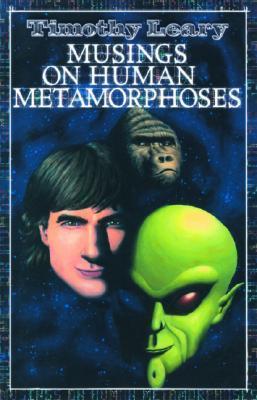
The human species is evolving. Leary describes eight circuits of human metamorphosis and the imprints that occur at each. Psychedelic drugs suspend imprints and conditioning to allow new imprints to evolve. Leary describes each circuit in depth along with the consciousness that manifest at each level and its purpose. Leary believes that human are morphing into space beings. We are becoming the ali

Dr. Leary explores the real issues of our time--Space Migration, Intelligence Increase and Life Extension--in this "Manual on the Use of the Human Nervous System according to the Instructions of the Manufacturers." "The Info-Worlds our species will discover, create, explore and inhabit in the immediate future will not be reached from launch pads alone, but also through our personal computer screen

Busted for pot in 1965, Timothy Leary was sentenced to 25 years in prison. He escaped, and thus began an almost farcical odyssey: the former West Point student and Harvard professor was now an acid-tripping fugitive. In this delightfully irreverent account, Leary describes his time in Algeria; how he was sheltered by an arms dealer in Switzerland; his exploits with the Weathermen and Eldridge Clea

An encore to Musings on Human Metamorphoses in which Leary delves deeper into his vision of "human future history." He likens human society to that of insect hives and shows how certain evolved evolutionary agents (mutants) are upsetting hive and causing it to evolve. Eventually we will become the aliens. The book describes the struggle between the forces moving into the future and those attemptin

A work of social, moral, religious and scientific satire, including articles by and about people who are changing the meaning of freedom all over the world. This is the fifth and final volume of Dr. Leary's 'Future History Series' with lots of fun pictures and ideas for your brain!

Visionary Harvard psychologist Timothy Leary became the charismatic leader of the '60s counterculture. Remembered as a pioneer of research and experimentation with psychedelic substances, he was also an author, lecturer, political dissident, and media magnet whose wit and charm captured the world's attention. In this collection of essays from Leary's early career, he presents his concept of person

Timothy Leary, Ph.D. has been a world-renowned psychologist, a defrocked Harvard professor, a relentless champion of brain change, a reputed drug guru, a stand-up philosopher, and a prisoner of the Nixon administration. He has been called 'the most dangerous man on the planet.'While in prison, at time in solitary confinement, he wrote the first version of this book. ("I must con

As the fringe guru himself put it, "Mademoiselle Cancer moved in to share [his] body." But in the days before he died, Leary -- never one to miss an opportunity for a party -- used his approaching death to create an exuberant new vision of what dying can be. Optimism, courage, joy and spirituality were central to Leary's final days and his death. Design for Dying -- Leary's last book -- shows us h

In this brief, lively book of reminiscences, the man Allen Ginsberg called “a hero of American consciousness” describes his transformation from bohemian professor to avatar of the new age. In his typically wry, provocative style, Timothy Leary gives firsthand accounts of his interrogation before Congress, Robert F. Kennedy’s LSD use, his own flamboyant campaign for governor of California, and much

Dr. Timothy Leary's passion affected an entire culture and influenced modern world history. Flashbacks, Leary's own account of his career as "an accomplished clinical psychologist at Harvard University, a dabbler in Eastern mysticism, a fugitive and convict, a stand-up comedian and actor, a writer and software designer and exponent of cybernetics" - (The New York Times), is the only book written b

February 19, 1970 Orange County Superior Court Just around midnight the jury came in with the verdict. Dehberations had lasted all day. The District Attorney was worried. We were bored. Bonne Chance deals the cards. A pack of fools, lovers, and jugglers. This deck had been shuffled long before this day of judgment. We had gone through the two weeks proceedings in that somnambulant courtroom stupor


In mid-1962, Playboy founder Hugh Hefner was given a partial transcript of an interview with Miles Davis. It covered jazz, of course, but it also included Davis’s ruminations on race, politics and culture. Fascinated, Hef sent the writer—future Pulitzer-Prize-winning author Alex Haley, an unknown at the time—back to glean even more opinion and insight from Davis. The resulting exchange, published