
Thomas H. Lee
20 Books Written

Since the 1950s, the death rate from heart attacks has plunged from 35 percent to about 5 percent--and fatalistic attitudes toward this disease and many others have faded into history. Much of the improved survival and change in attitudes can be traced to the work of Eugene Braunwald, MD. In the 1960s, he proved that myocardial infarction was not a "bolt from the blue" but a dynamic process that plays out over hours and thus could be altered by treatment. By redirecting cardiology from passive, risk-averse observation to active intervention, he helped transform not just his own field but the culture of American medicine.Braunwald's personal story demonstrates how the forces of history affected the generation of researchers responsible for so many medical advances in the second half of the twentieth century. In 1938 Nazi occupiers forced his family to flee Vienna for Brooklyn. Because of Jewish quotas in medical schools, he was the last person admitted to his class, but went on to graduate number one. When the Doctor Draft threatened to interrupt his medical training during the Korean War, he joined the National Institutes of Health instead of the Navy, and there he began the research that made him the most influential cardiologist of his time.In Eugene Braunwald and the Rise of Modern Medicine, Thomas H. Lee offers insights that only authoritative firsthand interviews can provide, to bring us closer to this iconic figure in modern medicine.
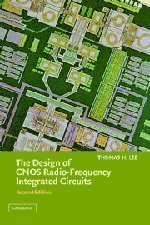
This expanded and thoroughly revised edition of Thomas H. Lee's acclaimed guide to the design of gigahertz RF integrated circuits features a completely new chapter on the principles of wireless systems. The chapters on low-noise amplifiers, oscillators and phase noise have been significantly expanded as well. The chapter on architectures now contains several examples of complete chip designs that bring together all the various theoretical and practical elements involved in producing a prototype chip. First Edition Hb (1998): 0-521-63061-4 First Edition Pb (1998); 0-521-63922-0

Two leading physicians' prescription for solving our health care organizing the fragmented system that delivers care. One of the most daunting challenges facing the new U.S. administration is health care reform. The size of the system, the number of stakeholders, and ever-rising costs make the problem seem almost intractable. But in Chaos and Organization in Health Care , two leading physicians offer an optimistic prognosis. In their frontline work as providers, Thomas Lee and James Mongan see the inefficiency, the missed opportunities, and the occasional harm that can result from the current system. The root cause of these problems, they argue, is chaos in the delivery of care. If the problem is chaos, the solution is organization, and in this timely and outspoken book, they offer a plan. In many ways, this chaos is caused by something the dramatic progress in medical science—the explosion of medical knowledge and the exponential increase in treatment options. Imposed on a fragmented system of small practices and individual patients with multiple providers, progress results in chaos. Lee and Mongan argue that attacking this chaos is even more important than whether health care is managed by government or controlled by market forces. Some providers are already tightly organized, adapting management principles from business and offering care that is by many measures safer, better, and less costly. Lee and Mongan propose multiple strategies that can be adopted nationwide, including electronic medical records and information systems for sharing knowledge; team-based care, with doctors and other providers working together; and disease management programs to coordinate care for the sickest patients.

An Epidemic of Empathy in Healthcare: How to Deliver Compassionate, Connected Patient Care That Creates a Competitive Advantage
by Thomas H. Lee
Rating: 4.0 ⭐
The best strategies in healthcare begin with empathyRevolutionary advances in medical knowledge have caused doctors to become so focused on their narrow fields of expertise that they often overlook the simplest fact of all: their patients are suffering. This suffering goes beyond physical pain. It includes the fear, uncertainty, anxiety, confusion, mistrust, and waiting that so often characterize modern healthcare.One of healthcare s most acclaimed thought leaders, Dr. Thomas H. Lee shows that world-class medical treatment and compassionate care are not mutually exclusive. In An Epidemic of Empathy in Healthcare, he argues that we must have it both ways that combining advanced science with empathic care is the only way to build the health systems our society needs and deserves. Organizing providers so that care is compassionate and coordinated is not only the right thing to do for patients, it also forms the core of strategy in healthcare s competitive new marketplace. It provides business advantages to organizations that strive to reduce human suffering effectively, reliably, and efficiently.Lee explains how to develop a culture that treats the patient, not the malady, and he provides step-by-step guidance for unleashing an epidemic of empathy by:Developing a shared understanding of the overarching goal meeting patients needs and reducing their sufferingMaking empathic care a social norm rather than the focus of economic incentivesPinpointing and addressing the most significant causes of patient sufferingCollecting and using data to drive improvementHealthcare is entering a new era driven by competition on value meeting patients needs as efficiently as possible. Leaders must make the choice either to move forward and build a new culture designed for twenty-first-century medicine or to maintain old models and practices and be left behind.Lee argues that empathic care resonates with the noblest values of all clinicians. If healthcare organizations can help caregivers live up to these values and focus on alleviating their patients suffering, they hold the key to improving value-based care and driving business success.Join the compassionate care movement and unleash an epidemic of empathy!Thomas H. Lee, MD, is Chief Medical Officer of Press Ganey, with more than three decades of experience in healthcare performance improvement as a practicing physician, a leader in provider organizations, researcher, and health policy expert. He is a Professor (Part-time) of Medicine at Harvard Medical School and Professor of Health Policy and Management at the Harvard School of Public Health."

The Good Doctor: What It Means, How to Become One, and How to Remain One
by Thomas H. Lee
Rating: 3.8 ⭐
What does it mean to be a good doctor today?Dr. Thomas Lee, a renowned practicing physician, healthcare executive, researcher, and policy expert, takes us to the frontlines of care delivery to meet inspiring, transformative doctors who are making a profound difference in patients’ lives―as well as their own. These revealing, intimate profiles of seven remarkable physicians are more than a reminder of the importance of putting patients first. They provide an invaluable working model of what it means to be a good doctor, how to become one, and how to remain one for the benefit of patients and colleagues alike. It’s a model that sustains physicians themselves over years and decades, combating the constant threat of burnout.These stories capture the daily challenges every caregiver faces―while highlighting the amazing personal triumphs that make their jobs so rewarding. You’ll meet Dr. Emily Sedgwick, the breast radiologist who redesigned screening techniques to reduce patients’ fears; Dr. Merit Cudkowicz, a neurologist who is leading the way in ALS research and treatments; Dr. Mike Englesbe, a transplant surgeon who is improving how physicians prescribe analgesics in response to the opioid epidemic; Dr. Laura Monson, a pediatric plastic surgeon addressing the long-term social effects of cleft palates; Dr. Lara Johnson, a primary care physician dedicated to providing care to the homeless; Dr. Joseph Sakran, a trauma surgeon who started a movement among healthcare providers to curb gun violence, and Dr. Babacar Cisse, a neurosurgeon who was an undocumented alien and once worked as a restaurant busboy, and epitomizes what it means to be a “Dreamer.” Their stories are not only powerful but offer practical lessons and insights into developing high reliability cultures, resilience, and improvement mindsets. This is what is takes to be a good doctor.

Planar Microwave Engineering: A Practical Guide to Theory, Measurement, and Circuits
by Thomas H. Lee
Rating: 4.3 ⭐
Modern wireless communications hardware is underpinned by RF and microwave design techniques. This insightful book contains a wealth of circuit layouts, design tips, and practical measurement techniques for building and testing practical gigahertz systems. The book covers everything you need to know to design, build, and test a high-frequency circuit. Microstrip components are discussed, including tricks for extracting good performance from cheap materials. Connectors and cables are also described, as are discrete passive components, antennas, low-noise amplifiers, oscillators, and frequency synthesizers. Practical measurement techniques are presented in detail, including the use of network analyzers, sampling oscilloscopes, spectrum analyzers, and noise figure meters. Throughout the focus is practical, and many worked examples and design projects are included. There is also a CD-ROM that contains a variety of design and analysis programs. The book is packed with indispensable information for students taking courses on RF or microwave circuits and for practicing engineers.

"In July 1974, Air Force Lieutenant Colonel Terry Lawson accepts an assignment in Thailand to fill a career development objective and recover from five grueling years of developing sophisticated computer systems for the Air Force. He also wishes to get over a failed marriage and renew his love affair with the C-130, the aircraft he flew in combat in Vietnam. But most importantly, he wants to relax, enjoy himself, and become immersed in the Thai culture.Lawson is well along in satisfying these objectives when he is asked to fly to Saigon to assist the United States Embassy’s Defense Attaché Office in fixing problems with their intelligence systems. In a matter of days, he finds himself drawn into the dark world of CIA operations by a cultured and attractive French-speaking Vietnamese woman, Lan Le Ninh. Finding both her and the nature of the work compelling, Lawson voluntarily abandons his life of leisure in Thailand.From this point on, it’s a race to correct the aberrant systems before the North Vietnamese communists launch their long-feared final offensive. In the process, Lawson learns a great deal about America’s long-running secret war in Southeast Asia—and how many Americans died anonymously in carrying it out."

Planar Microwave Engineering: A Practical Guide to Theory, Measurement, and Circuits by Thomas H. Lee
by Thomas H. Lee
[Chaos and Organization in Health Care (The MIT Press)] [Author: Lee, Thomas H] [October, 2009]
by Thomas H. Lee

Social Capital in Healthcare: How Trust and Teamwork Drive Organizational Excellence
by Thomas H. Lee
Harness the power of social capital to improve the efficacy and efficiency of healthcare organizationsWritten by Thomas Lee, Chief Medical Officer at Press Ganey, Social Capital in Healthcare describes a new and powerful framework for improving healthcare, arguing that managers should approach the work of building trust, teamwork, and high reliability with the same intensity and discipline as CFOs use when managing the finances of their organizations.Lee's powerful framework integrates management priorities such as safety, quality, patient experience, and workforce resilience/burnout/loyalty, demonstrating through data that these “silos” are in fact intertwined, and the work of improving them is best taken on with a single improving social capital.In this book, readers will learn Key social capital themes in healthcare, including trust, respect, connectedness, and teamwork The necessity of social capital in healthcare due to changes in medicine, patients, and society Building social capital through transitivity, reciprocity, bridging connections, and driving the right values Social capital initiatives at institutions such as the Mayo Clinic, Houston Methodist, and Vanderbilt University Medical Center Drawing upon deeply respected work from sociology, psychology, and business strategy, Social Capital in Healthcare earns a well-deserved spot on the bookshelves of all forward-thinking healthcare executives, managers, and consultants.

An Unruly Career: Phyllis Levin, Work, and Family
by Thomas H. Lee
Healthcare's Path Forward: How Ongoing Crises Are Creating New Standards for Excellence - Library Edition
by Thomas H. Lee
From the author of The Epidemic of Empathy in Healthcare and The Good Doctor comes a book that explores how the persistent pandemic has revealed what excellence in healthcare truly means and presents an action plan to achieve it.The goal of healthcare has always been to reduce suffering, but Covid-19 has sharpened and added important nuances to our understanding of what that means. In Healthcare's Path Forward , Thomas Lee explores how the work of healthcare is being transformed by a deeper knowledge of what suffering means for patients, their families, and healthcare providers themselves. He reveals how build patient trust, starting with their initial internet search; develop a high-reliability culture that eases patient fears; make equity and inclusiveness a cultural norm; actively listen to patients across all channels of communication; and enhance understanding of important issues through AI and other means.Lee uses data to demonstrate trends and insights into how health systems should respond, offers examples of organizations making major advancements, and provides specific, practical recommendations for healthcare leaders, clinicians, and other caregivers. This book is a thoughtful, impassioned call to action.

Excellent Book
Chaos and Organization in Health Care
by Thomas H. Lee
One of the most daunting challenges facing the new U.S. administration is health care reform. The size of the system, the number of stakeholders, and ever-rising costs make the problem seem almost intractable. But in Chaos and Organization in Health Care , two leading physicians offer an optimistic prognosis. In their frontline work as providers, Thomas Lee and James Mongan see the inefficiency, the missed opportunities, and the occasional harm that can result from the current system. The root cause of these problems, they argue, is chaos in the delivery of care. If the problem is chaos, the solution is organization, and in this timely and outspoken book, they offer a plan. In many ways, this chaos is caused by something the dramatic progress in medical science--the explosion of medical knowledge and the exponential increase in treatment options. Imposed on a fragmented system of small practices and individual patients with multiple providers, progress results in chaos. Lee and Mongan argue that attacking this chaos is even more important than whether health care is managed by government or controlled by market forces. Some providers are already tightly organized, adapting management principles from business and offering care that is by many measures safer, better, and less costly. Lee and Mongan propose multiple strategies that can be adopted nationwide, including electronic medical records and information systems for sharing knowledge; team-based care, with doctors and other providers working together; and disease management programs to coordinate care for the sickest patients.

Eugene Braunwald and the Rise of Modern Medicine (Chinese Edition) 从医生到医学泰斗:尤金·布劳恩瓦尔德与现代医学的兴起
by Thomas H. Lee
尤金·布劳恩瓦尔德是当代杰出的心脏病学大师、全球最影响力的心脏病学教科书《Braunwald心脏病学》的主编。哈佛大学医学院托马斯·H·李博士撰写的这本尤金·布劳恩瓦尔德的传记,不仅讲述了这位医学泰斗的传奇经历,还梳理了现代医学史尤其是心脏病学发展史中的关键事件,同时清晰展示了现代医学兴起与发展的脉络。 中国科学院院士葛均波教授、浙江大学医学院附属第二医院院长王建安,推荐每位医生和医学生阅读这本优秀的传记。做优秀的医生,从阅读优秀的传记开始。
Justifying War: Law, Politics, and Morality
by Thomas H. Lee


Prescription for Revolution
by Thomas H. Lee
When the phantom patriots realized that their quiet revolution had fallen short of cleaning up the government, they agreed to launch another more aggressive campaign to do so. The challenge was daunting, however, because to succeed they would have to overcome two obstacles. The first was that rich and powerful ultra conservatives had successfully used their wealth to corrupt congress and were using that leverage to sabotage governmental functions. Their ultimate objective was to have the government fail, freeing them of any regulations that would interfere with their effort to become wealthier. The second obstacle the patriots faced was the fact that this reality was being covered up by a news media predominately owned and/or operated by conservatives. Given these obstacles, the task of sufficiently informing a generally ignorant voting public of all this seemed rather daunting. But they came up with a plan, a prescription if you will, for getting the job done. Using all the CIA's technical and financial resources available to them, they enlist Sidney Thurston, an investigative reporter they have in deep cover, write a compelling and informative novel that exposes both the corrupted and the corruptors. The novel becomes a bestseller, but since most voters seldom read, the patriots work to get the novel converted to a screen play for a movie that would be shown nationwide. But it was a significant challenge that required an extraordinary effort on their part.

Physics and Engineering of High Power Switching Devices
by Thomas H. Lee

Based on a profoundly important six-year study by the Center for the Quality of Management (CQM), "Integrated Management Systems" shows how successful organizations accomplish something unbelievably Creating their own particular ways of executing the scientific method. The authors worked with the cooperation of some of America's largest companies - Teradyne, Hewlett-Packard, Eastman Chemical, Ritz-Carlton -- and of non-profit organizations including top hospitals and the U.S. Navy. They were surprised to find how radically successful systems differed from one organization to the next.Yet the core of each was Each organization had designed a system that gathered data about the organization's particular problems, developed theories, tested the theories, and finally documented and shared the results throughout the organization. Each successful organization's methods were unique much as the methods of each successful discipline within the sciences are unique. But less successful organizations had nothing comparable. And the processes through which the leaders in these organizations had gotten them on the right path had a great deal in common.