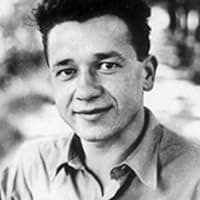
Tadeusz Borowski
Tadeusz Borowski (1922-1951) - prozaik, poeta, publicysta. Urodził się w Żytomierzu w Ukrainie, zmarł śmiercią samobójczą w Warszawie. Studiował polonistykę na podziemnym Uniwersytecie Warszawskim, brał aktywny udział w podziemnym życiu kulturalnym w czasie wojny. W 1943 roku został aresztowany, trafił do obozu koncentracyjnego w Oświęcimiu, następnie przetransportowano go między innymi do Dachau. W 1946 roku powrócił do kraju. Po 1948 roku stał się zwolennikiem partii komunistycznej, a swoją twórczość podporządkował założeniom realizmu socjalistycznego. Zadebiutował w 1942 roku cyklem wierszy Gdziekolwiek ziemia. W 1948 roku opublikował dwa tomy opowiadań - Pożegnanie z Marią i Kamienny świat - które spotkały się z szerokim odzewem.
3 Books Written

Tadeusz Borowski’s concentration camp stories were based on his own experiences surviving Auschwitz and Dachau. In spare, brutal prose he describes a world where where the will to survive overrides compassion and prisoners eat, work and sleep a few yards from where others are murdered; where the difference between human beings is reduced to a second bowl of soup, an extra blanket or the luxury of

In a brief life deeply and traumatically disrupted by two years in concentration camps as a political prisoner, Tadeusz Borowski (1922–1951) was tragically destined to become one of the most eloquent witnesses to the Holocaust in Poland. His recollections and stories, the most famous of which is This Way for the Gas, Ladies and Gentlemen , document in stark historical, literary, and personal terms

The most complete English-language collection of the prose of Tadeusz Borowski, the most challenging chronicler of Auschwitz, with a foreword by Timothy Snyder, author of On TyrannyIn 1943, the twenty-year-old Polish poet Tadeusz Borowski was arrested and deported to Auschwitz as a political prisoner. What he experienced in the camp left him convinced that no one who su