
Stuart Russell
Librarian Note: There is more than one author in the GoodReads database with this name. See this thread for more information.
26 Books Written
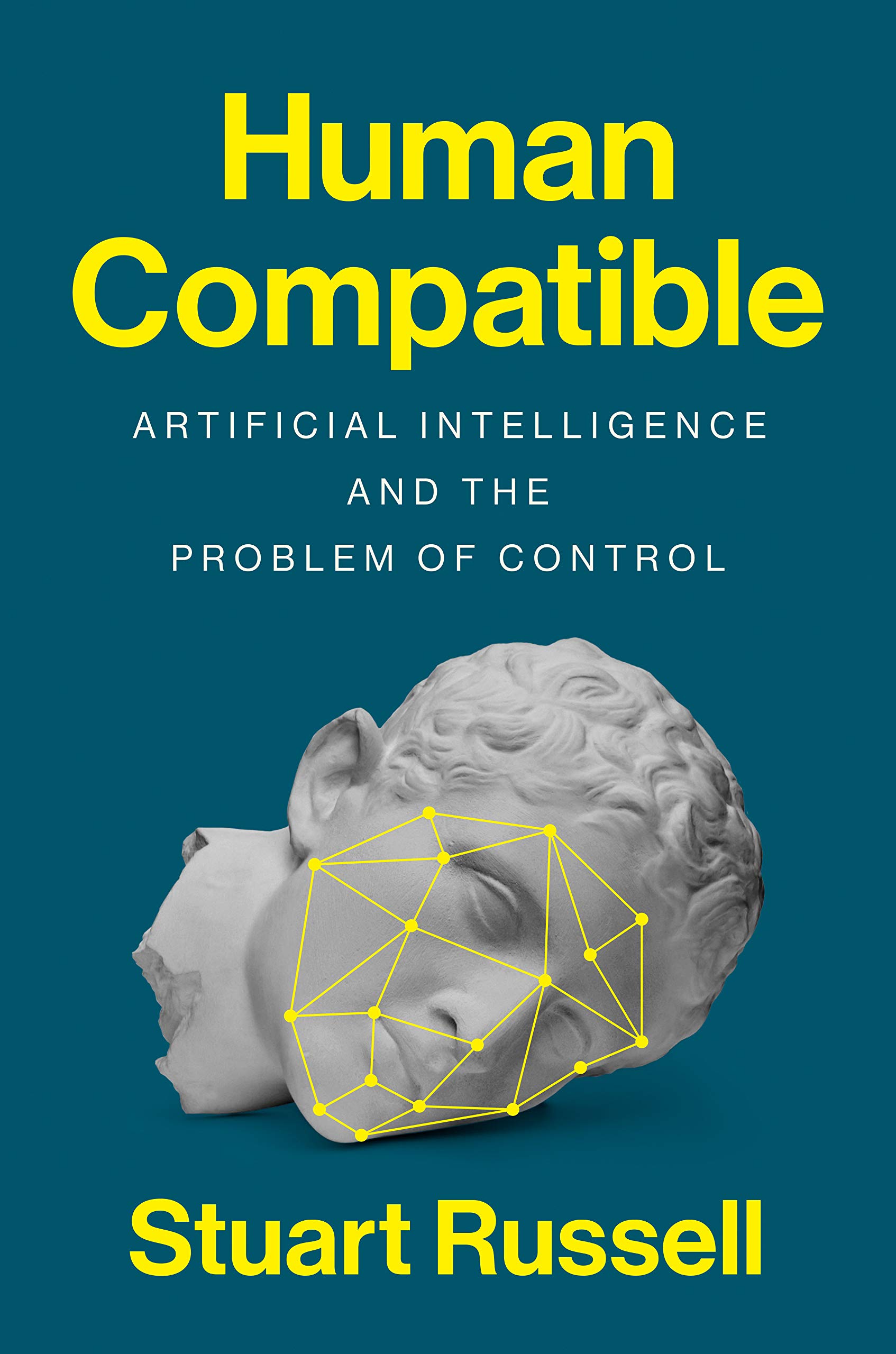
Human Compatible: Artificial Intelligence and the Problem of Control
by Stuart Russell
Rating: 4.0 ⭐
• 2 recommendations ❤️
A leading artificial intelligence researcher lays out a new approach to AI that will enable us to coexist successfully with increasingly intelligent machines In the popular imagination, superhuman artificial intelligence is an approaching tidal wave that threatens not just jobs and human relationships, but civilization itself. Conflict between humans and machines is seen as inevitable and its outcome all too predictable.In this groundbreaking book, distinguished AI researcher Stuart Russell argues that this scenario can be avoided, but only if we rethink AI from the ground up. Russell begins by exploring the idea of intelligence in humans and in machines. He describes the near-term benefits we can expect, from intelligent personal assistants to vastly accelerated scientific research, and outlines the AI breakthroughs that still have to happen before we reach superhuman AI. He also spells out the ways humans are already finding to misuse AI, from lethal autonomous weapons to viral sabotage.If the predicted breakthroughs occur and superhuman AI emerges, we will have created entities far more powerful than ourselves. How can we ensure they never, ever, have power over us? Russell suggests that we can rebuild AI on a new foundation, according to which machines are designed to be inherently uncertain about the human preferences they are required to satisfy. Such machines would be humble, altruistic, and committed to pursue our objectives, not theirs. This new foundation would allow us to create machines that are provably deferential and provably beneficial.In a 2014 editorial co-authored with Stephen Hawking, Russell wrote, "Success in creating AI would be the biggest event in human history. Unfortunately, it might also be the last." Solving the problem of control over AI is not just possible; it is the key that unlocks a future of unlimited promise.

Abstract Success in the quest for artificial intelligence has the potential to bring unprecedented benefits to humanity, and it is therefore worthwhile to investigate how to maximize these benefits while avoiding potential pitfalls. This article gives numerous examples (which should by no means be construed as an exhaustive list) of such worthwhile research aimed at ensuring that AI remains robust and beneficial.
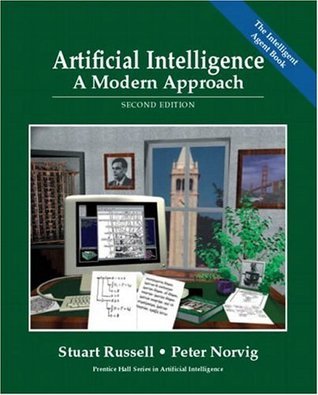
For one or two-semester, undergraduate or graduate-level courses in Artificial Intelligence. The long-anticipated revision of this best-selling text offers the most comprehensive, up-to-date introduction to the theory and practice of artificial intelligence. *NEW-Nontechnical learning material-Accompanies each part of the book. *NEW-The Internet as a sample application for intelligent systems-Added in several places including logical agents, planning, and natural language. *NEW-Increased coverage of material - Includes expanded coverage of: default reasoning and truth maintenance systems, including multi-agent/distributed AI and game theory; probabilistic approaches to learning including EM; more detailed descriptions of probabilistic inference algorithms. *NEW-Updated and expanded exercises-75% of the exercises are revised, with 100 new exercises. *NEW-On-line Java software. *Makes it easy for students to do projects on the web using intelligent agents. *A unified, agent-based approach to AI-Organizes the material around the task of building intelligent agents. *Comprehensive, up-to-date coverage-Includes a unified view of the field organized around the rational decision making pa

Like Mooki, the hero of Spike Lee's film "Do the Right Thing," artificially intelligent systems have a hard time knowing what to do in all circumstances. Classical theories of perfect rationality prescribe the "right thing" for any occasion, but no finite agent can compute their prescriptions fast enough. In Do the Right Thing, the authors argue that a new theoretical foundation for artificial intelligence can be constructed in which rationality is a property of "programs" within a finite architecture, and their behavior over time in the task environment, rather than a property of individual decisions.Do the Right Thing suggests that the rich structure that seems to be exhibited by humans, and ought to be exhibited by AI systems, is a necessary result of the pressure for optimal behavior operating within a system of strictly limited resources. It provides an outline for the design of new intelligent systems and describes theoretical and practical tools for bringing about intelligent behavior in finite machines. The tools are applied to game planning and realtime problem solving, with surprising results.
Book by Russel, S.J.
Instructor's Solutions Manual: Artificial Intelligence: A Modern Approach
by Stuart Russell
Rating: 3.5 ⭐

Questo libro parla del tentativo, che gli esseri umani portano avanti da millenni, di sondare il mistero dell'intelligenza; e racconta gli sforzi compiuti nell'ultimo secolo per riuscire a creare una mente artificiale. Perché l'IA sta rapidamente diventando un elemento pervasivo del presente, e sarà la tecnologia dominante dell'immediato futuro. Ma dobbiamo prepararci all'eventualità che le macchine superino di gran lunga la nostra capacità di prendere decisioni nel mondo reale. Ottenere accesso a un'intelligenza tanto sterminata potrebbe essere l'evento piú importante della storia dell'umanità. Bisogna però fare in modo che non si tratti anche dell'ultimo evento della storia dell'umanità. «Il libro piú importante che ho letto negli ultimi tempi. Spiega in maniera lucida come l'imminente era dell'intelligenza artificiale rischia di minacciare l'umanità. Ma propone anche delle soluzioni per evitare questo rischio e ci dà buone ragioni per avere speranza». Daniel Kahneman «Se state cercando un libro serio sull'intelligenza artificiale adatto a tutti questo è perfetto». «Financial Times» «Un importante campanello di allarme. Compatibile con l'uomo segna un passo avanti negli studi sull'intelligenza artificiale, perché sceglie di concentrarsi sulle sue implicazioni etiche». «Nature»Il concetto di intelligenza è centrale nella costruzione dell'identità umana, non è un caso che la nostra specie abbia deciso di chiamarsi Homo sapiens. E dopo piú di duemila anni siamo arrivati a una definizione dell'intelligenza che si può forse sintetizzare in questo siamo intelligenti nella misura in cui ci possiamo aspettare che le nostre azioni raggiungano gli obiettivi che ci prefiggiamo. Alla luce di questa definizione tutte le altre caratteristiche della nostra sfera intellettuale - percezione, pensiero, apprendimento, inventiva e cosí via - possono essere ridotte al contributo che danno alla capacità di agire efficacemente. Si tratta di una definizione piuttosto funzionale, che presenta però dei rischi, soprattutto se estesa alle macchine. Dagli albori dell'IA, infatti, l'intelligenza sintetica è stata definita allo stesso le macchine sono intelligenti nella misura in cui ci si può aspettare che le loro azioni raggiungano gli obiettivi che si prefiggono. E qui sta il non esiste una garanzia certa che i loro obiettivi siano uguali ai nostri. E non esiste una garanzia che nel portarli in maniera piú efficiente possibile a termine non decidano di prendere il controllo. Per scongiurare questa ipotesi, ci spiega Russell con linguaggio chiaro e accessibile, dobbiamo abbandonare l'assunto per cui le macchine dovrebbero avere un obiettivo definito, cosicché si rimettano al volere degli esseri umani, chiedano autorizzazioni, agiscano con cautela e si lascino spegnere. Questo significa sostituire parte delle fondamenta e della sovrastruttura che, oggi, reggono l'intelligenza artificiale. È un lavoro lungo, ma è necessario farlo per costruire una nuova relazione tra esseri umani e macchine che, invece di proiettarci in una inquietante distopia, ci lasci immaginare un futuro in cui la vita sarà infinitamente piú facile e migliore grazie al benefico supporto della tecnologia.

Heroes, Villains & Victims Of Hull and the East Riding (Heroes, Villains and Victims
by Stuart Russell
Rating: 4.2 ⭐
Heroes, Villains, and Victims is a collection of stories about ordinary people of Hull and the East Riding who found themselves in extraordinary situations. For the most part they are people that history has forgotten, but for no longer. Some were bad, true villains who killed or harmed their fellows and paid the ultimate price, others were benefactors who left their mark on society, and many were innocent victims who remind us that the 'good old days' were not always so. Stories from bravery at sea, to the innocent casualties of war, to the repressed victims of their religious beliefs all feature in a book that will appeal to anyone with an interest in the area's heritage. The author has trawled newspaper archives and other public documents to uncover the details of the extraordinary lives that are recalled in these pages. The result is a well-researched yet entertaining look at the people of the past.
Explains the importance of prior knowledge in machine learning.

In his second volume looking at the lives of people who became heroes, villains and victims of the times in which they lived, Stuart Russell records stories of people who history, and time, forgot. This is a collection of extraordinary and at times jaw-dropping stories all based either in Hull or on the happenings of Hull's citizens. It includes the full text of the book "Dark Winter", the story of the Hull fishing disasters of 1968. There are the men who fought the worst that the Arctic weather could throw at them, entombed in their whaling ship for several months and the heroic Hull sailor who lost both feet in a desperate attempt to live when marooned in Newfoundland. Read about the campaigning journalist who exposed Hull's dens of vice, the killer whose lies led another man to the gallows and how a fake gun protected the city of Hull from zeppelin attack."More Heroes, Villains and Victims of Hull and the East Riding" is an enthralling look into how ordinary people led extraordinary lives. It is a well researched, yet entertaining insight into the area's past.

Weight of the World is a story about Seth Osbourne, a 17-year-old teenager dealing with all the usual problems a teenager would normally deal with. Only he isn’t a normal teenager. Upon moving to Cookstown, Seth meets a group of friends he eventually becomes very close to. Seth also comes to realize that vampires and demons really do exist, and he is the chosen one, sent to save the world from these forces of evil. With the help of his new friends, and someone known as his guide, Seth strives to understand his powers and rid the world of this evil.

This edition captures the changes that have taken place in the field of artificial intelligence (AI) since the last edition in 2003. There have been important applications of AI technology, such as the widespread deployment of practical speech recognition, machine translation, autonomous vehicles and household robotics. There have been algorithmic landmarks, such as the solution of the game of checkers. There has also been a great deal of theoretical progress, particularly in areas such as probabilistic reasoning, machine learning and computer vision.
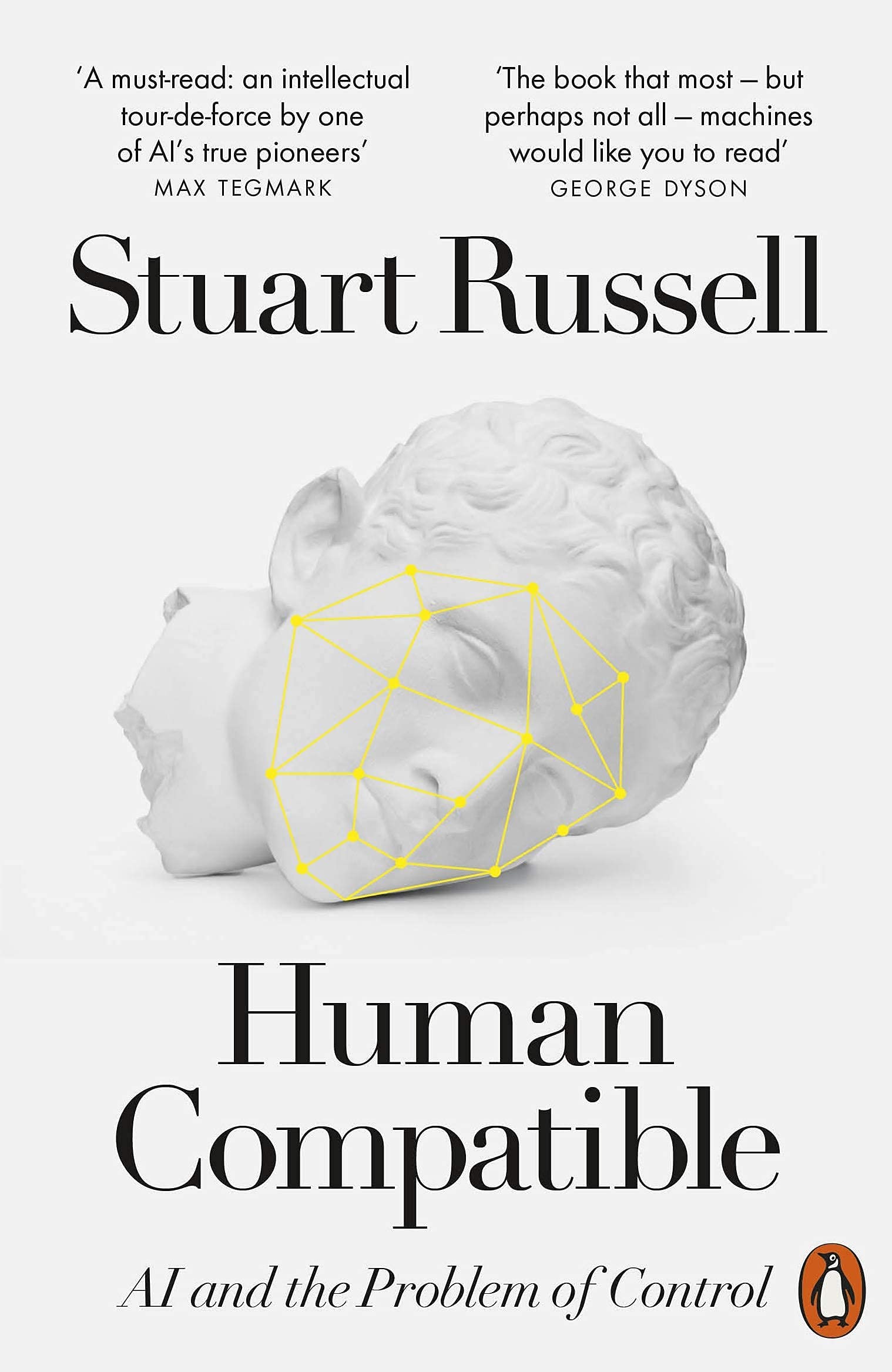
Human Compatible, Algorithms to Live By, The Courage To Be Disliked 3 Books Collection Set
by Stuart Russell
Rating: 4.0 ⭐
Please Note That The Following Individual Books As Per Original ISBN and Cover Image In this Listing shall be Dispatched Human Compatible, Algorithms to Live By, The Courage To Be Disliked 3 Books Collection Human In this groundbreaking book, Stuart Russell sets out why he has come to consider his own discipline an existential threat to humanity, and how we can change course before it's too late. In brilliant and lucid prose, he explains how AI actually works and its enormous capacity to improve our lives - and why we must never lose control of machines more powerful than we are. Russell contends that we can avert the worst threats by reshaping the foundations of AI to guarantee that machines pursue our objectives, not theirs. Algorithms to Live In this dazzlingly interdisciplinary work, acclaimed author Brian Christian and cognitive scientist Tom Griffiths show us how the simple, precise algorithms used by computers can also untangle very human questions. Modern life is constrained by limited space and time, limits that give rise to a particular set of problems. What should we do, or leave undone, in a day or a lifetime? How much messiness should we accept? The authors explain how to have better hunches and when to leave things to chance, how to deal with overwhelming choices and how best to connect with others. The Courage To Be The Courage to be Disliked shows you how to unlock the power within yourself to become your best and truest self, change your future and find lasting happiness. Using the theories of Alfred Adler, one of the three giants of 19th century psychology alongside Freud and Jung, the authors explain how we are all free to determine our own future free of the shackles of past experiences, doubts and the expectations of others.

USED LIKE NEW

Inteligência Artificial chega à quarta edição como o livro mais importante para profissionais e estudantes da área, confirmando sua liderança e referência em todo o mundo. O objetivo principal da obra é transmitir as ideias emergentes sobre pesquisa em inteligência artificial nos últimos 70 anos, sintetizando o conhecimento atual do tema – especialmente com as mudanças ocorridas desde o lançamento da edição anterior. O conteúdo foi revisto e atualizado e reúne tudo o que há de mais recente sobre o tema no mercado e no meio acadêmico.Principais destaques desta ediçã Cerca de 25% do conteúdo é novo. Ênfase no aprendizado de máquina, devido à maior disponibilidade de dados, recursos de computação e novos algoritmos. Capítulos específicos sobre aprendizado profundo, programação probabilística e sistemas com vários agentes. Revisão dos conteúdos sobre linguagem natural, robótica e visão computacional para refletir o impacto do aprendizado profundo. No capítulo sobre robótica, acréscimo da interação entre robôs e seres humanos e da aplicação da aprendizagem por reforço à robótica. Inclusão da incerteza do sistema, o qual precisa aprender o que maximizar diante do objetivo e deve funcionar adequadamente. Ampliação da cobertura do impacto da inteligência artificial sobre a sociedade, incluindo questões sobre ética, justiça, confiança e segurança. Inteligência Artificial foi traduzido para 14 idiomas e usado em 1.500 universidades de 135 países.?


Sztuczna inteligencja. Nowe spojrzenie. Wydanie IV. Tom 1
by Stuart Russell
Sztuczna inteligencja budzi zachwyt i kontrowersje. W porównaniu z innymi gałęziami nauki jest stosunkowo młoda: liczy około siedemdziesięciu lat, mimo że czerpie ze znacznie starszych idei. Jednak błyskawiczny rozwój sztucznej inteligencji i przeobrażanie osiągnięć nauki w działające technologie sprawiają, że wyrobienie poglądu na całokształt tej dziedziny jest trudnym zadaniem. Warto więc spojrzeć na historię rozwoju sztucznej inteligencji z perspektywy jej współczesnych osiągnięć i dzięki temu lepiej zrozumieć, czym ta nauka jest w swojej istocie i dokąd podąża.Oto pierwszy tom dzieła, które stanowi inspirujące spojrzenie na sztuczną inteligencję. Jego zrozumienie nie wymaga wybitnej znajomości informatyki i matematyki. Książka jest wspaniałą syntezą wczesnych i późniejszych koncepcji, a także technik, przeprowadzoną we frameworku idei, metod i technologii. Zawiera ogrom rzetelnej wiedzy przekazanej w niezbyt sformalizowany sposób. Opisy, formuły matematyczne i algorytmy, pokazane w formie czytelnego pseudokodu, cechują się przejrzystością i precyzją. Zaprezentowano tu wszystkie ważne idee i koncepcje sztucznej inteligencji, zgodnie z najnowszymi trendami i osiągnięciami.W tomie pierwszym między innymi:koncepcje sztucznej inteligencjiróżne podejścia do rozwiązywania problemów z wykorzystaniem sztucznej inteligencjireprezentacja wiedzy i modelowanie, a także wyszukiwanie i planowaniewnioskowanie w warunkach niepewnościpodejmowanie złożonych decyzji, również w środowisku wieloagentowymSztuczna inteligencja: to się staje na naszych oczach!
AI Human Compatible هوش مصنوعی سازگاری با انسان و مسئله کنترل
by Stuart Russell
استوارت راسل دانشمند ،کامپیوتر، از پژوهشگران ارشد و نویسنده کتاب درسی دانشگاهی در زمینه هوش مصنوعی و بنیان گذار مرکز هوش مصنوعی سازگار با انسان در دانشگاه کالیفرنیا برکلی است. وی در این اثر استدلال میکند که اگرچه ادامه پیشرفت در قابلیت هوش مصنوعی به سبب انگیزههای اقتصادی اجتناب ناپذیر است باید خطرات ناشی از هوش مصنوعی فراهوش بر آینده بشریت به سبب عدم قطعیت در مورد چگونگی پیشرفت آن را جدی گرفت.
Vestacka inteligencija
by Stuart Russell
Memory Lane Cleethorpes
by Stuart Russell
Complete Guide to MRS
by Stuart Russell

The word "Parousia" (par-oo-see-ah) is not a household word, but students of endtime prophecy know it is a reference to the Second Coming of Christ. It comes from two Greek words ("para" beside, and "ousia" state of being) and literally means "to be beside" (present with someone). It came to be a more specific reference to important people coming for an extended (but not long-term) visit to one of their subject territories (a "visitation"). It can refer either to the initial arrival or the afterward presence. It is used in the New Testament almost exclusively of Christ's Second Coming. Russell examines every significant New Testament text about Christ's return, to see when it would occur and what it would be like. Since he believed the Second Coming occurred in the first century at the destruction of Jerusalem in AD 70, his view is labeled "Preterist." The word "Preterist" is another prophetic term with which many are unfamiliar. According to Webster's Unabridged Dictionary, a Preterist is "a theologian who believes the prophecies of the Apocalypse have already been fulfilled." A Preterist is the opposite of a Futurist. Futurists teach that the three major endtime events (parousia, resurrection, judgment) are still future in fulfillment, whereas Preterists teach these events have already been fulfilled. Some may wonder what difference it makes? Everything crucial to Christianity is at risk. The Deity of Christ, the integrity of the apostles and prophets, and the inspiration of the New Testament is at stake. How so? Jesus and the NT writers repeatedly make time-restricted predictions about His return and the other endtime events. They do not merely suggest that Christ's Parousia might occur in their lifetime, they unequivocally affirm it. Liberals, skeptics, and Jewish/Islamic critics use those "time statements" to discredit Jesus and the New Testament. Inspired men cannot make mistakes. Since Jesus and the NT writers predicted Christ's return to occur in their lifetime, and it supposedly didn't happen, they assume Jesus and the NT writers were mistaken. Indeed, if we cannot trust their prophetic utterances, we cannot trust anything else they say. Christianity is totally discredited if those predictions failed to materialize exactly as they prophesied.

Dark Winter the Story of the Hull Triple Trawler Tragedy, 1968
by Stuart Russell

Himmlers Burg: Wewelsburg Zentrum der SS
by Stuart Russell

Summer Fruits
by Stuart Russell
A punnet of poetry. From childhood nostalgia to innocence lost, Stuart Russell shares memories of summer and details his experience growing up LGBT+ in a small town in Scotland. Illustration by Madison Grimshaw.