
Steve Andreas
30 Books Written

NLP has already helped millions of people overcome fears, increase confidence, enrich relationships, and achieve greater sucess. Now the NLP Comprehensive Training Team has written a book that reveals how to use this breakthrough technology to achieve whatever you want. Short for neuro-linguistic programming, NLP is a revolutionary approach to human communication and development. In NLP: The New Technology of Achievement, you'll be guided step-by-step through specific programs for learning the characeristics of top achievers and creating a blueprint for unlimited sucess. Plus, an all-new twenty-one-day program created especially for this book provides you with the essential skills you'll need to achieve peak performance in business and life.

Learn a model for changing the beliefs that impact us the most -- those about our own identity. Everyone agrees it's good to have high self-esteem, but almost no one knows how to actually get it. Practices such as "just loving yourself more" don't usually work. This model shows how to discover the unconscious structure of identity, and how to align your identity with your values. The result is a resilient self-esteem that naturally leads to "becoming who you want to be." This is an advanced NLP book, most useful for those who have background in Neuro-Linguistic Programming.
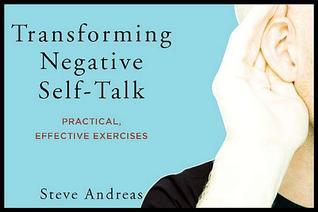
Hearing a judgmental or disapproving internal narrative is a very common mental health complaint, and not always a sign of schizophrenia or another serious diagnosis. Persistent inner chatter and rumination can lead to depression, anxiety, phobias, trauma, obsessive-compulsive thoughts, and more. In this unique collection of practical, take-charge strategies, the author reveals how self-critical voices can actually be altered and used to your own advantage.Rather than changing the words themselves, Steve Andreas’s approach is to change how the words are spoken through specific, easy-to-implement techniques, such as changing the location of the voice; its distance from you; its tempo, tone, or volume; and much more. Unlike most therapies that advocate talking back or ignoring it, this guide offers exercises for viewing our self-talk as a useful and productive indicator of our emotions, and shows us how to take control of them in a more meaningful way.

Six Blind Elephants: Understanding Ourselves and Each Other, Vol. 1: Fundamental Principles of Scope and Category
by Steve Andreas
Rating: 4.3 ⭐
This two-volume book presents a detailed "unified field theory" of experience, thinking, and personal change that goes beyond NLP to understand the structure of any experience or change of experience. If you ever find yourself out of choices-either in your own life, or in your work with others-you know how nice it would be to always have something to do next. The fundamental distinction between scope and category offers a way to describe and track someone's experience-from ordinary troubles and difficulties to positive mystic experiences of union or oneness. The same knowledge provides surprisingly endless possibilities for changing your experience when you want it to be different. Rich with examples gleaned from a variety of different therapists and a lifetime of experience illustrate every aspect described.

A verbatim transcript of this master therapist and the author's astute analysis of her techniques, philosophies, and inspired improvisations.

Six Blind Elephants: Understanding Ourselves and Each Other, Vol. 2: Applications and Explorations of Scope and Category
by Steve Andreas
Rating: 4.1 ⭐
This book applies the fundamental insights developed in volume I to understand a number of communication patterns that are often troublesome, but can also be used for positive change. These include Implication, Self-reference, Self-contradiction, Paradox, Double Binds, Negation, Judgment, Certainty, Modes of Operating, Meta-messages, Para messages, Metaphor, and concludes with a Verbatim annotated transcript of a client session teaching how to go from anger to forgiveness.

Whether an infrequent occurrence or a constant running narrative, internal self-talk can be mildly irritating or severely debilitating. Not always the classic sign of schizophrenia or other serious psychiatric disorder, it’s a common mental health complaint that can lead to depression, anxiety, phobias, and obsessive-compulsive thoughts if left unchecked. In this rich collection of practical, take-charge strategies, the author reveals how self-critical voices can be transformed and used to your own advantage.As a follow-up to his first popular book, Andreas digs deeper here, showing how to actually engage a voice as opposed to simply change it. Rather than talk back or try to silence it, Andreas teaches readers how to join with a voice, clarify what it’s saying, ask for its positive intent, use its specific abilities to your advantage, and more. Follow the exercises and you’ll be equipped to better manage your worst self-talk.

This anthology is filled with short stories and essays, poems and quotes that can touch your heart, turn your head, clarify your vision, and tickle your fancy. A glance at the contents reveals the wide range of living touched on: tears and laughter, wisdom and foolishness, dreaming and action, knowledge and ignorance, thinking and feeling, loving and purpose, anguish and gratitude, separation and connection, mistakes and perfection, certainty and mystery, good and evil, aging and dying, mind and spirit. All of these are stepping stones on the path of discovering what it means to be a fully human being.

The principles of Gestalt therapy form the basis for experiments that heighten the individual's awareness of himself and the world and people around him

Ez a könyv felfedező és kísérletező útra hív, amelynek során a tanultakat önmagad alakítására és tökéletesítésére használhatod. Sosem véletlen, hogy éppen milyen könyvet kapunk ajándékba vagy veszünk le a polcról. Kész vagy elindulni? Vagy előbb összecsomagolsz a nagy útra? Tudnod kell, hogy amikor visszatérsz, már más ember leszel! Ha figyelmesen olvasol, és követed a gyakorlatokat, megtanulhatsz elegánsan, tartós és mély változást elérni. Az Énkép segítségével feltérképezhetjük a múltból származó korlátozó viselkedéseinket, amelyeket a magunkról alkotott, tudattalanul megjelenő gondolataink módosításával feloldhatjuk ezeket. Ha céljainkat el akarjuk érni, önmagunk képének gyakran új oldalait kell kifejlesztenünk. Több mint tíz év lázas kutatómunka, egyéni és csoportos foglalkozás eredményeként Steve Andreas ebben a könyvben írta meg a változás csodáját.Steve Andreas 1977 óta tanára és aktív fejlesztője az emberi kiválóság modellezésére szolgáló neurolingvisztikus programozás (NLP) tudományának. Számos jól ismert és bevált NLP-módszert alkotott. Több könyv szerzője és társszerzője: Heart of the Mind (Az elme szíve), Virginia Satir - The Patterns of Her Magic (Virginia Satir csodálatos mintái), Change Your Mind and Keep the Change (Gondold meg magad és őrizd meg a változást). Megalkotta az NLP esszenciáját, az énképet.


This book provides a detailed analysis of how family therapy pioneer Virginia Satir--one of the greatest therapists of our time--helped people solve problems in relationships. The first section of the book describes 16 key themes in Satir's work--the techniques and ideas she used to move people from their current situations to their desired outcomes. Satir skillfully reframed perceptions and attitudes, and installed useful presuppositions about positive intentions, alternative choices and learnings. She did this using physical contact, exaggeration, and humor. She directly challenged limiting beliefs and overgeneralizations, and used a wide range of hypnotic language patterns to help clients see events in new ways. The second section is a richly-annotated verbatim transcript of a 73-minute videotaped session with Linda, a woman who started out with great resentment toward her mother, but who ended with a deep appreciation and loving understanding of her mother's behavior and attitudes. A follow-up interview with Linda, conducted three years later, shows the permanent impact of the changes Satir had achieved with her. Steve Andreas' insightful commentary reveals the subtlety, precision, and wisdom of Satir's methods, both verbal and nonverbal. Therapists and other professionals who seek positive change in their clients can learn a lot from his book. From the Publisher (Introduction by Steve Andreas) Virginia Satir is almost universally acknowledged as one of the most powerful and effective therapists of the century. Throughout a career spanning some forty-five years, she developed systematic ways of helping people grow and change. Her remarkable warmth and precision in working with people was developed by her fine ability to observe what worked--and what didn't--to move people closer to their desired outcomes When learning from experts, it is usually much more important to observe what they actually do, than it is to listen to what they say about what they do. Our descriptions of our own behavior are often biased and myopic, and we all know how to do much more than we can explain to someone else. This was particularly true of Virginia, who was continually moving away from her psychiatric-based training of the 1940s, and intuitively pioneering new ways of helping people learn how to deal with life's inevitable problems. Most therapists' descriptions of their therapy tend to be global and unspecific. Virginia, for instance, would talk about "gaining trust," "making contact," "building positive self-worth," and the importance of the "human connection" and an "I-thou relationship." Although she demonstrated these skills exquisitely, she was much less able to specify exactly how she accomplished them, either verbally or nonverbally. To learn how she actually achieved these things, we have to study her work itself. Although few therapists are willing to demonstrate publicly what they do--they prefer to practice privately--Virginia was a happy exception. Not only did she conduct thousands of public demonstrations during her long career, she also freely allowed videotape recording. Probably as many videotaped hours of Virginia's work exist as of all other prominent therapists combined. Used with a verbatim transcript, a videotape makes it possible to analyze the fine details of verbal communication, the accompanying nonverbal communication which is even richer and more complex, the ongoing interplay between the verbal and nonverbal communication, and the flow and sequence of the session as a whole. Repeated review brings an ever-deepening understanding of the process of change.

Six Blind Elephants: Understanding Ourselves and Each Other: Vol. 1: Fundamental Principles of Scope and Category
by Steve Andreas
Rating: 4.5 ⭐
A truly ground-breaking new book that provides a practical and generative "unified field theory" of experience and personal change. These simple understandings are illustrated with examples from the most effective therapists, collected over a lifetime. If you ever find yourself out of choices -- either in your own life, or in your work with others -- you know how nice it would be to always have something to do next. You'll learn how the fundamental distinctions of scope, category, and logical level offer a way to describe and track all our experiences -- from ordinary troubles and difficulties to positive mystic experiences of union or oneness. The same knowledge provides surprisingly endless possibilities for changing your experience when you want it to be different. The book is illustrated with a multitude of rich examples gleaned from expert therapists -- Milton Erickson, Virgina Satir, Frank Farrelly, Leslie Cameron-Bandler, Carl Whitaker, Salvador Minuchin, and many others. Some of these examples would be completely baffling without these understandings. Those who appreciate a rigorous analysis will appreciate the clear discussion of logical levels. Although misunderstood by many previous thinkers, including Gregory Bateson, logical levels provide a simple way to determine where and how to intervene in problems. (Volume II continues this by examining a variety of more complex and troublesome communication patterns.) While I had been thinking of this as an advanced book, the proofreader, with no NLP or therapeutic background at all, said that he wished he had read it twenty years ago, because it would have made his life so much easier.

CAMBIA TU MENTE PARA CAMBIAR TU VIDA ...Y CONSERVA EL CAMBIO: NUEVAS SUBMODALIDADES EN PROGRAMACIÓN NEUROLINGÜÍSTICA
by Steve Andreas
Rating: 4.0 ⭐
Por paradójico que parezca, el cerebro humano es el "único superordenador automantenido y para todo uso, manejado por un trabajador inexperto". Los patrones desarrollados por la PNL son esencialmente una especie de software humano para ese ordenador. El material que aquí presentamos explora los patrones mentales que definen quiénes somos y proporciona poderosas herramientas que permiten cambiar rápidamente comportamientos y actitudes indeseadas, superar limitaciones, acceder a estados alterados de conciencia y desarrollar aptitudes y capacidades. La mayor parte de este texto está compuesto por trascripciones de los cursos de Formación en Submodalidades Avanzadas que Steve y Connirae Andreas han impartido con gran éxito durante muchos años. El magisterio de Steve y Connirae Andreas es altamente reconocido por su integridad, eficacia y atención a los detalles, todo lo cual se refleja claramente en el presente texto. En esta obra se reúnen algunos de los patrones más potentes de la PNL, desarrollados por Richard Bandler, Ed Reese y los propios Andreas, patrones rediseñados en una sintaxis clara y elegante que permite que sean comprendidos en su totalidad y empleados con éxito, hasta el punto de que este libro se ha convertido exitosamente en un referente en todo el mundo. Steve y Connirae Andreas se iniciaron en la Programación Neuro-Lingüística con Richard Bandler en 1977. Steve Andreas ha sido modelador, desarrollador, entrenador, escritor y editor en el área de Programación Neurolingüística con más de veinte años de experiencia en dicha disciplina. Connirae Andreas ha sido líder e iinovadora en el campo de la Programación Neurolingüística durante más de dos décadas. Es especialmente conocida por el desarrollo de un conjunto de técnicas de la PNL llamado Core Transformation, así como por sus contribuciones en áreas de los Patrones de Lenguaje Avanzados [Advanced Language Pattersn], Líneas Temporales [Time Lines] y Resolución de la Aflicción y Vergüenza [Solving Grief and Shame]. En 1979 ambos fundaron el NLP COMPREHENSIVE, en Boulder (Colorado), uno de los primeros y más importantes institutos de entrenamiento en Programación Neurolingüística. Son autores y editores de una gran variedad de libros sobre PNL y desarrollo personal, que han sido traducidos a más de catorce idiomas.

Transforma-te! este un ghid foarte practic, care te ajuta in mod direct si usor sa iti construiesti o imagine despre sine puternic pozitiva, astfel incat sa ai incredere in fortele proprii in orice imprejurari si sa reusesti indiferent ce iti propui. Autorii acestei carti cunosc mecanismele fine dupa care functioneaza creierul, de aceea stiu ca parerea ta despre tine sta la baza succesului sau esecului in orice faci. Lasa-te transformat de aceasta carte si atinge excelenta!Te astepti ca aceasta carte sa-ti deschida ochii in privinta conceptiei despre sine si asa se intampla. Apoi, esti incantat sa simti ca ea face mult mai mult decat atat: te ajuta sa-ti explorezi cele mai intime mistere si sa gasesti raspunsuri corecte la intrebarile tale despre tine.
NLP: Recreating Yourself
by Steve Andreas
Most self help programs list the habits and abilities that you need to be successful. Unfortunately, they don't tell you how to create those habits and abilities in ways that work for you, in your life now. In this powerful program you'll discover how your beliefs and generalizations limit or empower your behaviors and accomplishments, and how they control your life. By doing the step by step instructions in Steve’s book you can build a self-concept that will have you living the way you always wanted to. You'll find easy-to-follow demonstrations, explanations, and exercises that provide surprisingly simple and practical ways to change your experience of who you are — and the experience of others if you work as a therapist or coach. Learn how to strengthen your sense of self to become more independent of others’ views, while at the same time becoming more responsive to useful feedback. "I know because I lost 70 pounds in 6 months by creating a self concept of 'I am a healthy eater.' Using Steve’s process I was able * Identify all the times when I was a healthy eater. I wasn’t as bad as I had thought. * Establish the deep motivation, not just will power, to be even more of a healthy eater, regardless of what was going on in my life. * Redirect all the habits and beliefs that prevented me from consistently being a healthy eater. I have kept the weight off for over 5 years, and I have no fear of it ever coming back." Methods for utilizing and transforming mistakes are followed by processes for positively transforming uncertain or unwanted aspects of yourself, as well as transforming aspects that are negated. Processes for discovering and changing your unconscious boundaries so that they protect you from others' opinions, beliefs, and intrusions, are followed by ways to adjust your boundaries so that you can connect with others in shared intimacy, while retaining a secure sense of yourself.
NLP: Decision Destroyer
by Steve Andreas
The Decision Destroyer - Advanced NLP requiring a solid familiarity with submodalities. Recommended is prior study of "An Insider's View of the Mind"-Faulkner Advanced submodality pattern enables you to accomplish reimprinting more rapidly and thoroughly. You can learn how to create robust and compelling resources in your personal history ahead of time. When these resources are brought forward through time, all of the problem-related experiences are suddenly re-evaluated in a useful, even positive way. Powerful and transformative, the Decision Destroyer takes reimprinting to a new dimension. Although it is usually difficult to change a traumatic imprint directly, it is quite easy to use the same structural elements to create a new powerful positive imprint and install it at a time in the past before the traumatic one. Then when the client travels forward in time with this new imprint s/he spontaneously reevaluates the old traumatic imprint in a useful way. When people experience traumatic events, they respond by creating dramatic “imprint” memories that affect them strongly. They also use these imprints as the basis for conclusions, decisions, and beliefs that restrict their behavior and may even result in illnesses such as allergies, depression, etc. A person’s representation of an imprint experience is impactful because of structural elements called submodalities that are independent of the content of the experience. For instance, a panoramic holographic image in color will typically affect you much more than a black-and-white framed still photograph of the same event. A memory with full kinesthetics and booming voice with harsh tonality will be much more impactful than one without them. Steve Andreas demonstrates how this highly effective process is useful for solving current life problems, which stem from past experiences. The “decision destroyer” is a rapid method that uses structural submodality elements to rapidly change traumatic imprints.
Steve Andreas - Integrating Either/Or Polarities [DVD]
by Steve Andreas
Beryl expressed a strong polarity which she variously described moving forward vs. receiving and allowing, risk vs. stability, doing vs. being, confidence vs. fear, masculine vs. feminine, “everything else” vs. love. The task in this 48-minute session was to transform these “either/or” opposites into “both/ands,” so that she could become more integrated, and draw on all her abilities simultaneously. In a second 44-minute session, Beryl processed her mother’s suicide when she was ten years old. Two unedited NLP client sessions with follow-up, totaling 1 hour, 32 minutes. . . NTSC / DOLBY. From the follow-up After her first session Beryl wrote, “My 45 minute visit was profound. It didn’t necessarily go where I thought it would, but it definitely went where it was needed—to a core place, allowing me to access and transform a really deep and old belief system. I particularly liked that it didn’t involve a story, thrashing about breathing deeply, writhing in tears or otherwise having to re-experience a deeply traumatic event. While there were a few tears, it was a simple, gentle and easy session. Afterwards, I got in my car and drove away. I’ve been more wiped out after a visit to Costco. Had I not known I was going for NLP, I would have thought I was simply having a short conversation. Sometimes we’re just ready for something to change, and that could certainly be what was happening here, but either way I got to see and feel myself move something that has been STU-UCK!! for a long, long time.”
![Steve Andreas - NLP Client Session: Resolving Music Performance Anxiety [DVD]](https://m.media-amazon.com/images/S/compressed.photo.goodreads.com/books/1697001809i/135448170.jpg)
54 minute DVD; Cynthia was a professional pianist whose performance anxiety was a serious block in her career. Sometimes she froze up completely during performance—the musical notes disappeared, and she even lost track of the location of the keys. After this single NLP session, Cynthia described a complete At her next concert, she enjoyed each of the performances that came before her, and then played comfortably when it was her turn. She only recalled her previous anxiety after someone commented on how calm she looked. She also taught the same process to one of her students to resolve her performance anxiety. An unedited 49-minute NLP client session with follow-up. . . . From the follow-up “What was really strange was that I remember just sitting there enjoying the other people who were playing. I was like fifth or sixth, whatever—and I got up and did my thing, and I sat back down. And one of the other ladies said to me, ‘Wow, you seem really calm today. What’s different?’ And it didn’t even hit me until after that. It was like, ‘Oh! Yeah! I didn’t freak out!’ I was completely calm. I had one—I remember having one little point in time in the middle of the second piece where I got a little keyed up, but I was able to just brush that off. So I felt really, really good about it.”

A Essência Da Mente
by Steve Andreas

NLP si succesul. Editia a II-a
by Steve Andreas
NLP reprezinta un sistem de metode si exercitii prin care are loc crearea unui model al excelentei. Aplicarea lui poate conduce la o schimbare fundamentala a calitatii vietii si la obtinerea unor rezultate spectaculoase. Modalitatile utilizate sunt foarte de la modificarea gandurilor, actiunilor si sentimentelor la tenacitate, motivare, receptivitate la nevoile si dorintele celorlalti. Practicand NLP, putem obtine responsabilitate fata de propria motivatie, un viitor fascinant si o cale personala de a-l realiza. Totodata, ajungem la relatii mai stranse si capacitate de convingere, neutralizarea experientelor negative din trecut, intensificarea autoaprecierii si a respectului de sine, o atitudine mentala pozitiva puternica si acces la o experienta deosebita. ,,La inceput, NLP parea o steluta stralucitoare; apoi m-am gandit la ea ca la un magician misterios, greu de inteles; acum este asemenea unui prieten loial, demn de incredere, si nu inteleg cum am putut trai fara el.“ Gerry Schmidt — trainer NLP ,,NLP ar putea fi cea mai importanta sinteza a cunoasterii legate de comunicarea umana aparuta din anii ’60 pana astazi.“ Science Digest ,,NLP a deschis modalitati nebanuite pentru tratarea problemelor individuale... S-a metamorfozat intr-un program si o tehnologie de autoperfectionare completa.“ Time

Przebudowa twojego Ja
by Steve Andreas

Transformationen des Selbst.
by Steve Andreas

NLP-Basarinin Yeni Teknolojisi
by Steve Andreas

Six Blind Elephants: Understanding Ourselves and Each Other,: Vol. 2: Applications and Explorations of Scope and Category
by Steve Andreas
In this book, the fundamental understandings of scope, category, and logical levels established in Volume I are applied to understanding a variety of more complex and troublesome communication patterns, showing how these understandings can be used for positive personal change. This book applies the fundamental understandings to additional communication patterns that are more subtle, obscure, and Implication, Negation, Judgment, Modes of Operating, Self-reference, Self-contradiction, Paradox, Certainty, Double-binds, and Metaphor, An annotated verbatim transcript of a session in which a client reaches forgiveness shows how these patterns can be used in a systematic way to achieve a client's outcome. All these patterns often exist in the painful and confusing communication traps that people often find themselves in, yet most people are unaware of them, and usually respond to them or use them unconsciously. Understanding how these patterns work makes it possible to recognize them, and use them in positive ways to help yourself and others out of these communication dead-ends, enhancing your life and the lives of others. Specific examples show how many of these patterns were essential elements in the work of Milton Erickson and other effective therapists. (Best read along with Volume I.)

Is There Life Before Death?
by Steve Andreas
This unique collection of stories and poems will touch your heart, turn your head, clarify your vision, and tickle your fancy. A glance at the contents reveals the wide range of living touched tears and laughter, wisdom and foolishness, dreaming and action, knowledge and ignorance, thinking and feeling, loving and purpose, anguish and gratitude, separation and connection, mistakes and perfection, certainty and mystery, good and evil, aging and dying, mind and spirit. All of these are stepping stones on the path of discovering what it means to be a fully human being. Besides pieces by Steve Andreas, this book includes thoughtful and inspiriting selections from a wide range of authors, from ancient to Maya Angelou, Gregory Bateson, John Berry, Robert Lee Brothers, Carlos Castenada, e.e. cummings, Benjamin Elkin, Robert Frost, Robert Fulgham, Jean Giono, Peter Goblen, Judson Jerome, Sister Mary Corita Kent, Omar Khayyam, D. H., Lawrence, Malcolm Lowry, Paul Reps, Rainer Maria Rilke, Virginia Satir, Idries Shah, George Bernard Shaw, Leo Tolstoy, Kurt Vonnegut, Jr., Jane Yolan, and many more. This collection includes the favorite poems and stories of Steve Andreas, gathered through a lifetime of experience. We hope you are touched and inspired by them as he was.

Seis elefantes cegos - vol 2: aplicações e explorações de abrangência e categoria na programação neurolinguística
by Steve Andreas
Este segundo volume ensina a aplicar os conceitos apreendidos no primeiro livro, especialmente no que se refere a padrões de comunicação que às vezes nos confundem. A obra também pode servir de guia para promover mudanças positivas de comportamento, como a mudança do sentimento de raiva para o de perdão.

Seis elefantes cegos - vol 1: princípios fundamentais de abrangência e categoria na programação neurolinguística
by Steve Andreas
Este livro explica os conceitos de abrangência e categoria, mostrando como sua compreensão pode nos ajudar a resolver problemas e dilemas do cotidiano. Usando exemplos reais e muito instrutivos, o autor explica como podemos mudar nossa visão para que as experiências advindas delas também se transformem.