
Rudolf Rocker
An anarcho-syndicalist writer and activist of some prominence, whose politics had a major influence in the Spanish Civil War and the jewish émigré community in London, England (see The London Years). His political ideas had emerged from the failings of late 19th century Marxism/Social Democracy under the Germany's SPD, having seen firsthand the erosive influence of electoralism. Would maintain lifelong relationships with Emma Goldman and Errico Malatesta among others. For more, including e-texts of his works: http://libcom.org/tags/rudolf-rocker
29 Books Written

Rudolf Rockerb's classic survey of anarcho-syndicalism was written during the Spanish Civil War to explain to the wider reading public the ideology which inspired the social revolution in Spain. It remains unsurpassed as a general introduction to anarchist thought and an authoritative account of the early history of international anarchism by one of the movement's leading figures.

Originally published in 1937, Rudolf Rocker’s classic Nationalism and Culture is a detailed study of the intellectual development and cultural history of European nationalism. Tracing the evolution of religious and political systems and their relation to the authoritarian state, Rocker analyses concepts of ‘Nation’ as alleged communities of race, culture, language,and common interest.

Another version of Anarcho-Syndicalism, with a new introduction by Nicholas Walter.


Rudolf Rocker, a German Catholic fleeing political persecution, moved to London to become the acknowledged leader of the Yiddish-speaking Jewish anarchists. There, at a time of mass immigration by impoverished Jews—persecuted by a right-wing press and an “anti-alien” movement—he organized demonstrations of up to 25,000 against the contemporary Russian pogroms. Rocker established the Jewish Bakers Union in a community action where housewives would only buy union label bread, and most famously, in 1912, organized a general strike of Jewish tailors, which abolished the sweatshop system. The London Years is the autobiography of a remarkable man and chronicles this vanished world. Rudolf Rocker , the main theorist of anarcho-syndicalism, edited numerous Yiddish political and cultural journals.

The classic pamphlet of anarchist critique of Marxist theory, now revised and updated for the 21st century. Rudolf Rocker's thought is considered some of the finest anarchist theory of the pre-World War II era. In this incisive study, Rocker dissects the Marxist canon and puts forward the argument that, because Marx and Engels embraced parliamentary politics rather than labor union activism, Lenin, Trotsky, Stalin, and Mao were inevitable and the brutality of Marxism-Leninism was not an aberration but an inherent outcropping of the Marxist philosophy. In the aftermath of the Cold War and in a new century rife with racism, class war, and labor struggles, this work is a true guide to avoiding the pitfalls of the last century.'I am an Anarchist not because I believe Anarchism is the final goal, but because there is no such thing as a final goal.' -Rudolf Rocker, 1956

Anarchism and Sovietism: The Soviet System or the Dictatorship of the Proletariat
by Rudolf Rocker
Rating: 3.9 ⭐

Pioneers Of American Freedom: Origin of Liberal and Radical Thought in America
by Rudolf Rocker
Rating: 4.2 ⭐
Italian, English, German

Nota editorial La edición de la presente obra de Rudolf Rocker persigue fundamental: 1. Acabar con el mito basado en el hecho de que el anarquismo, como teoría política, se opone a cualquier forma de organización;2. Dar a conocer a grandes rasgos un periodo de la historia del anarquismo alemán.

"Quem detém o poder abusa dele; eis por que é preciso impedir toda tomada do poder, seja por um partido, seja por indivíduos, pois ela sempre conduz a uma nova escravidão para o povo. Que isso se passe sob o signo do cetro ou da foice e do martelo, [...] não há, no fundo, grande diferença. Uma verdadeira libertação só é possível quando o aparelho do poder desaparece, pois o monopólio do poder não é menos perigoso do que aquele da propriedade."

«La obra de Rocker es extraordinariamente instructiva y testimonia una rara originalidad de espíritu. Incontables hechos y relaciones se han expuesto en ella de una manera completamente nueva y persuasiva».—Albert Einstein.«La obra de Rocker supone una contribución fundamental a la filosofía política, tanto por su análisis profundo y amplio de muchos autores famosos como por su brillante crítica a la idolatría del Estado, la superstición más difundida y funesta de nuestro tiempo».—Bertrand Russell.Escritas casi a la par que su obra más importante, Nacionalismo y cultura —y complementarias a esta—, las gemas que componen este libro, publicadas en la prensa anarquista de principios del siglo xx a ambos lados del Atlántico, son —todavía hoy— de una clarividencia asombrosa para diseccionar el nacionalismo, el fascismo y el culto a la religión del Estado.[...] Igual que en la religión el creyente trata de salvar su alma, sin preocuparse mayormente por la salvación de la de su vecino, en la vida cívica, el ciudadano común trata de amoldarse al Estado lo mejor que puede sin preocuparse de lo que piensen sus semejantes al respecto. El Estado en un principio mina los sentimientos de solidaridad del hombre, invadiendo la vida social y encauzando toda actividad mediante normas aprobadas oficialmente. Cuanto más se infiltra un gobierno en la vida de sus ciudadanos, menos atiende a sus necesidades y derechos; cuanto más anula el sentimiento de solidaridad, más fácil le resulta disgregar los distintos elementos constituyentes de la sociedad y convertirlos en dóciles instrumentos de la maquinaria política. [...] La producción moderna, con su división científica del trabajo, la racionalización y la disciplina de cuartel, respaldada por el embrutecimiento sistemático que llaman educación, es síntoma de una condición enfermiza que deberíamos considerar detenidamente. El nacionalismo moderno, enemigo declarado de la libertad y, por lo tanto, militarista, es uno de los factores que convierten al hombre en un autómata físico y mental. Y no es exagerado afirmar que, si no reaccionamos enérgicamente ante el peligro, puede conducirnos a la destrucción de la civilización. Todavía estamos a tiempo, pues afortunadamente la humanidad posee la suficiente vitalidad y energía creadora para rechazar ese trágico desarrollo. [...]


A mediados de marzo de 2020, mientras la crisis sanitaria nos obligaba a confinarnos y empezábamos a ver el lado más oscuro de la pandemia, nos topamos con el editorial del número 3 de la revista Mujeres Libres (Madrid, julio de 1936), al que llegamos a través del libro sobre Lucía Sánchez Saornil editado por LaMalatesta (Madrid, 2014). En el texto, las compañeras de Mujeres Libres se hacían eco de una «noticia inquietante» que les llegaba desde Moscú. Nos contaban que Zensl Mühsam, la viuda de Erich Müsham, había desaparecido en la Unión Soviética y se preguntaban por su paradero, advirtiendo que podría haber sido secuestrada e internada en algún gulag siberiano.

Buenos Aires. 20 cm. 77 p. Encuadernación en tapa blanda de editorial. Colección 'Colección Radar. Serie Las Revoluciones y sus Protagonistas', numero coleccion(14). Rudolf Rocker. Ejemplar con notas manuscritas. El problema ruso -- El camino hacia la derecha -- Un error histórico -- La actividad contrarevolucionaria de los anarquistas -- Néstor Mackno y los bolcheviques -- La insurrección de Cronstad -- Origen y significado de la idea de "soviet" -- Dictadura y socialismo -- La verdadera esencia del Estado -- Revolución popular y dictadura de partido -- La tercera un instrumento del gobierno ruso -- La influencia del bolcheviquismo sobre el movimiento obrero internacional -- La corriente centralista. Comunismo. Historia y crítica. Siglo XX. Anarquismo. Dictadura del proletariado. Radar. Serie Las Revoluciones y sus Protagonistas (Reconstruir). 14 .. Este libro es de segunda mano y tiene o puede tener marcas y señales de su anterior propietario.

stock au sol 190g Né en 1873 à Mayence, une ville séduite par les idéaux de la Révolution française, Rudolf Rocker est d'abord attiré par la social-démocratie avant de s'orienter vers l'anarchisme. Contraint de quitter l'Allemagne, il se réfugie à Paris puis à Londres, où il exerce sa profession de relieur et fréquente le groupe d'anarchistes juifs qui édite la revue Arbayter Fraynd. Revenu en Allemagne après l'armistice, il participe fin 1922-début août 1923 à la fondation de l'AIT (Association Internationale des Travailleurs), dont il assure le secrétariat. En mars 1933, après l'incendie du Reichstag, il quitte définitivement son pays natal. Expatrié aux Etats-Unis, il collabore aux activités du cercle d'ouvriers regroupés autour de la Fraye Arbayter Shtime (La Voix du travailleur libre) puis, à partir de juillet 1936, à la campagne en faveur de la révolution espagnole. Mort en 1958, près de New York, il laisse une oeuvre importante dans laquelle deux livres brillent d'un éclat tout particulier : ses Mémoires qui, en quelques 1 500 pages, retracent une trajectoire personnelle qui est aussi celle de l'anarcho-syndicalisme de la première partie du XXe siècle, et son grand ouvrage théorique, Nationalisme et culture, que Bertrand Russell salua comme une « importante contribution à la pensée politique », en louant « sa brillante critique du culte de l'État [...], la superstition dominante et la plus nocive de notre temps ». Fruit d'un très long travail achevé en 1933, le livre ne sera publié dans sa langue d'origine qu'en 1949, soit bien après les versions en espagnol et en anglais. Il aura fallu beaucoup plus de temps encore pour que ce grand livre soit enfin disponible en langue française. Voici réparée l'injustice dont a été victime en France celui qui fut une des têtes les mieux faites du mouvement anarcho-syndicaliste, et c'est avec grande fierté que nous mettons à la disposition des lecteurs français ce qui est à l'évidence une des oeuvres les plus précieuses de la pensée libertaire du siècle passé, servie par le beau et rigoureux travail de Jacqueline Soubrier-Dumonteil.

De Duitse boekbinder Rudolf Rocker (1873-1958) beschrijft in deze fragmenten uit zijn herinneringen de meest succesvolle periode uit zijn leven als anarchistisch propagandist. Hij speelt een belangrijke rol in de bewustmaking en organisatie van het Joodse proletariaat in Londen dat in de textielindustrie wordt uitgebuit. Hij werkt hierin samen met bekende revolutionairen als Kropotkin, Malatesta en Emma Goldman. De charismatische Rocker is actief als spreker op politiek èn cultureel gebied, als redacteur van en schrijver in Jiddische tijdschriften die hij deels ook nog eigenhandig zet en uiteindelijk als stakingsleider. Hoogtepunt is wel de succesvolle, algemene staking in de kledingindustrie tegen het ‘sweatshop’systeem in 1912. Naast deze fascinerende fragmenten zijn een drietal artikelen van Rocker opgenomen waarin hij zijn ervaringen bundelt en naar voren komt als een inspirerend denker. Het verhelderende voorwoord is van Rudolf de Jong.

Η διαστρέβλωση του περιεχομένου και της ουσίας της Ισπανικής Επανάστασης, ενορχηστρώθηκε τόσο τέλεια απ' όλες τις πλευρές (και κυρίως από τους αριστερούς), ώστε να την μετατρέψει σε εμφύλιο πόλεμο, αντιφασιστικό αγώνα, πρελούδιο του Β΄ Παγκοσμίου Πολέμου, πάλη για τη δημοκρατία κλπ, δηλαδή, σε οτιδήποτε άλλο εκτός από εκείνο που υπήρξε πραγματικά: μια Επανάσταση. (Απόσπασμα από τον πρόλογο της έκδοσης)

En juillet 1936, Franco lance un coup d'État contre la république espagnole. Ce putsch va entraîner une guerre civile opposant notamment les franquistes aux anarcho-syndicalistes et aux communistes. Les puissances européennes et soviétiques vont alors chacune défendre une politique servant leurs intérêts. Dans ce texte écrit en 1938, Rudolf Rocker, historien et théoricien du mouvement libertaire, met en lumière la géopolitique du conflit au niveau national et international. Ce livre est une excellente première approche du conflit espagnol de 1936. À compléter par la lecture de La Collectivisation en Espagne pour avoir une vision d'ensemble de ce qui se révèle être un temps majeur de l'histoire moderne des politiques occidentales.

Nel corso della sua straordinaria parabola esistenziale, Rudolf Rocker, uno dei maggiori protagonisti dell'anarchismo tedesco e internazionale, ha profuso la sua attività militante in una molteplicità di contesti sociali e politici, passando dalla Germania di Bismarck alla Londra del movimento operaio yiddish, per approdare infine negli Stati Uniti. Se il suo impegno sociale rimane costante, il suo approccio politico cambia nel corso dei decenni, muovendo da una visione prettamente anarcosindacalista a una visione più pragmatica e gradualista attenta a proporre concrete analisi delle trasformazioni in atto nella società. A sessant'anni dalla morte, queste sue riflessioni ancora inedite in italiano, che vanno dal 1919 al 1953, consentono di ricostruire il percorso intellettuale di uno dei più lucidi pensatori libertari del Novecento, come testimonia la sua acuta analisi del totalitarismo di destra e di sinistra e la sua incisiva critica di una concezione rivoluzionaria incapace di riflettere a fondo sulle ragioni che avevano portato alla sconfitta della Rivoluzione spagnola e alla degenerazione della Rivoluzione russa.

Il s'agit là de la première critique d'ensemble du régime bolchevik d'un point de vue anarchiste, parue en Allemagne en 1921 sous le titre La faillite du communisme d'État russe. Rudolf Rocker, militant anarcho-syndicaliste, avait au cours d'une longue période d'exil à Londres participé aux combats des ouvriers de la confection contre l'exploitation ; rentré en Allemagne en 1918, il avait oeuvré au regroupement des militants anarcho-syndicalistes. Dans ce livre, il montre comment, devenus maîtres des soviets qui étaient nés de l'action spontanée des masses, les bolcheviks, après s'être emparés des pouvoir étatiques, en ont usé pour tenter d'intégrer à l'appareil d'État toutes les autres tendances révolutionnaires, ainsi que pour diffamer, calomnier, éliminer et massacrer quiconque refusait de se soumettre. S'appuyant sur des témoignages de première main, il dénonce les méthodes des bolcheviks qui ont, par exemple, cyniquement trahi le pacte conclu avec les troupes de Makhno, aggravé la famine qui sévissait déjà en détruisant les communes et les coopératives paysannes pour bâtir un État tout-puissant, prétendument socialiste, instrument d'une nouvelle forme de l'esclavage salarié.

Der Kapp-Putsch Eine Schilderung aus dem Deutschland der Noske-Diktatur
by Rudolf Rocker
Rating: 3.0 ⭐
Am 13.März 1920 versuchte die deutschnationale Rechte zum ersten Mal, sich an die Macht zu putschen. Dieser - nach einem seiner Anführer "Kapp-Putsch" genannte - Staatsstreich brach binnen einiger Tage zusammen. Dazu wesentlich beigetragen hatte der bislang größte Generalstreik in der deutschen Geschichte und der bewaffnete Wiederstand von Arbeitermilizen an vielen Orten. Nur wenige Tage später jedoch hetzte die soeben gerettete Reichsregierung, die gleichen Putschtruppen gegen das Proletariat u. a. des Ruhrgebietes. Unter der Verantwortung des SPD-Ministers Noske schlugen dessen rechtsextreme Freikorbs die "Märzrevolution" nieder und veranstalteten ein Blutbad unter geschlagenen ArbeiterInnen. Der vorliegende Text aus der Feder des bekannten deutschen Anarcho-Syndikalisten Rudolf Rocker, wurde im Archiv der Schwedischen syndikalistischen Gewerkschaft SAC (wieder)entdeckt. Da das deutschsprachige Manuskript für die schwedische Broschüre "Kapp-Kuppen" verschollen ging, wurde es für die vorliegende Broschüre aus dem Schwedischen rückübersetzt. Eine historische Einordnung und umfangreiche Quellen und Verweise runden diese deutschsprachige Erstveröffentlichung des Textes von Rudolf Rocker ab.

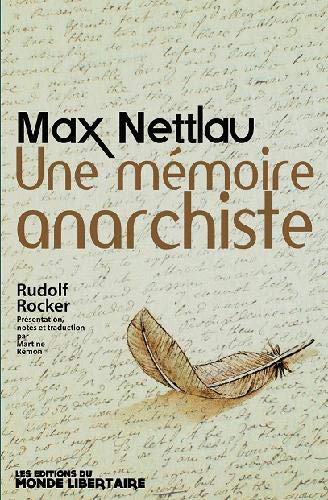
Max Nettlau, Une mémoire anarchiste
by Rudolf Rocker
Historien, philologue, infatigable chercheur, Max Nettlau passa sa vie à préserver la mémoire de l'idéal anarchiste. Il l'étudia comme un naturaliste. Rudolf Rocker, ami très proche de Nettlau, écrit : « Peu de compagnons ont une idée réelle de la vie de cet homme hors du commun. Hormis Proudhon, personne dans tout le mouvement anarchiste n'a accompli un travail aussi considérable. » Cette monographie honore la mémoire d'un homme, et celle d'individus qui oeuvrèrent à l'édification d'une société anarchiste.

THE SIX
by Rudolf Rocker
German anarchist Rudolf Rocker’s (1873-1958) little-known novel, Die Sechs (1938: The Six) is a philosophical allegory about a great and mysterious black marble Sphinx that stands in a desert. Six roads from widely separated lands converge on the desert sands; along these roads travel six well-known characters from world literature: Faust, Don Juan, Hamlet, Don Quixote, Medardus the Monk (from E.T.A. Hoffmann), and the bard Heinrich von Ofterdingen. The character of each is described individually (in the words of their creators) before meeting at the end to solve the ancient riddle of the Sphinx.

Milly Witkop-Rocker
by Rudolf Rocker
Milly Witkop was born Vitkopski in the Ukrainian shtetl of Zlatopol to a Jewish Ukrainian-Russian family as the oldest of four sisters. The youngest of the four, Rose, was also a well-known anarchist. In 1894, Witkop left the Ukraine for London where she worked in a tailoring sweatshop saving enough money to finance her parents' and sisters' passage to England, and it was her involvement in a bakers' strike that led her to become involved with the group around the Jewish anarchist newspaper Arbayter Fraynd. In 1895, she met Rudolf Rocker in the course of her political work and, in May 1898, Rocker invited her to accompany him to New York, where he hoped to find employment. The two were, however, not admitted to the country, because they refused to marry legally and were returned to the United Kingdom on the same ship that had taken them to the United States. From October 1898, Rocker and Witkop co-edited the Arbeyter Fraynd, and in March 1900, they published the culturally- focused newspaper Germinal. In 1907, the couple's son, Fermin, was born. Rocker and Witkop opposed World War I in 1914 — unlike some other anarchists such as Kropotkin, who supported the Allied cause. To ease the poverty and deprivation caused by the joblessness that accompanied the war, Witkop and her husband opened a soup kitchen. In December 1914, however, Rocker like many Germans and Austrians in the UK, was interned as an enemy alien. Witkop continued her anti-war activities until she too was arrested in 1916. She remained imprisoned until the autumn of 1918. She then left the United Kingdom to join her husband and son in the Netherlands.This 1956 tribute to Molly Witkop by her life partner, Rudolph Rocker, was originally handset with the Kennerley and Hadriang types, designed by Frederick W. Goudy & printed on superfine text paper at the Oriole Press by Joseph Ishill, Berkley Heights, New Jersey. The frontispiece illustration is a crayon drawing by their son, Fermin Rocker. Republished 1981 by Cienfuegos Press, Over the Water, Sanday, Orkney, UK, and Soil of Liberty, Minneapolis, Minnesota.

Anarcho-Syndicalism: Theory and Practice
by Rudolf Rocker
The essential introduction to anarchist theory of the labor struggle.In 1937, under the shadow of risingauthoritarianism and at the behest of Emma Goldman, Rudolf Rocker penned Anarcho-Syndicalismto champion the ideals of equality, voluntary cooperation, and mutual aid that were fueling the Spanish Revolution and igniting resistance to capitalism the worldover. In this political masterpiece, Rocker offers a clear introduction toanarchist ideas, a history of the international workers’ movement, and anoutline of the syndicalist tactics of direct action, sabotage, and the generalstrike. This essential text rejects both capitalist exploitation and authoritarian state socialism, charting the way for a radical alternativeof freedom through solidarity.This edition includes a critical introduction byNicholas Walter and a foreword by Noam Chomsky.