
Roland Barthes
Roland Barthes of France applied semiology, the study of signs and symbols, to literary and social criticism. Ideas of Roland Gérard Barthes, a theorist, philosopher, and linguist, explored a diverse range of fields. He influenced the development of schools of theory, including design, anthropology, and poststructuralism. https://en.wikipedia.org/wiki/Roland_...
31 Books Written

La chambre claire: Note sur la photographie suivi d'un entretien avec Benoît Peeters
by Roland Barthes
• 1 recommendation ❤️
Le jeu de Daniel Mesguich au service de l'écriture de Roland Barthes : l’'ssociation de deux arts qui brillent par leur sensibilité, pour en sublimer un autre, celui de la photographie. Marpa fut très remué lorsque son fils fut tué, et l'un de ses disciples dit : "Vous nous disiez toujours que tout est illusion. Qu'en est-il de la mort de votre fils, n'est-ce pas une illusion ?" Et Marpa répondit : "Certes, mais la mort de mon fils est une super-illusion." ( Pratique de la voie tibétaine) La Chambre claire se présente au départ comme un essai sur la photographie. À ce titre, il est devenu une référence majeure. Mais il s'agit aussi et surtout d'un superbe récit. Au moment où Roland Barthes découvre le lien essentiel entre la photographie et l'épreuve intime qui l'obsède- la mort de sa mère -, il parvient à nous emporter dans un cheminement à la recherche du temps perdu et de l'être aimé. Comme l'explique Benoît Peeters dans l'entretien qui accompagne ici la bouleversante lecture de Daniel Mesguich, l'expérience la plus noire devient alors lumineuse ; c'est pourquoi ce livre, peut-être le plus beau de Roland Barthes, ne s'appelle pas la chambre obscure, mais bien La chambre claire.
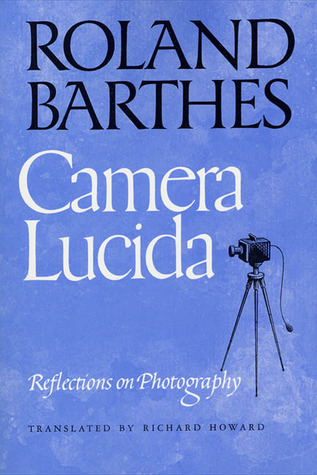
A graceful, contemplative volume, Camera Lucida was first published in 1979. Commenting on artists such as Avedon, Clifford, Mapplethorpe, and Nadar, Roland Barthes presents photography as being outside the codes of language or culture, acting on the body as much as on the mind, and rendering death and loss more acutely than any other medium. This groundbreaking approach established Camera Lucida as one of the most important books of theory on this subject, along with Susan Sontag's On Photography.

"No denunciation without its proper instrument of close analysis," Roland Barthes wrote in his preface to Mythologies. There is no more proper instrument of analysis of our contemporary myths than this book—one of the most significant works in French theory, and one that has transformed the way readers and philosophers view the world around them.Our age is a triumph of codification. We own devices that bring the world to the command of our fingertips. We have access to boundless information and prodigious quantities of stuff. We decide to like or not, to believe or not, to buy or not. We pick and choose. We think we are free. Yet all around us, in pop culture, politics, mainstream media, and advertising, there are codes and symbols that govern our choices. They are the fabrications of consumer society. They express myths of success, well-being, and happiness. As Barthes sees it, these myths must be carefully deciphered, and debunked.What Barthes discerned in mass media, the fashion of plastic, and the politics of postcolonial France applies with equal force to today's social networks, the iPhone, and the images of 9/11. This new edition of Mythologies, complete and beautifully rendered by the Pulitzer Prize–winning poet, critic, and translator Richard Howard, is a consecration of Barthes's classic—a lesson in clairvoyance that is more relevant now than ever.

A Lover's Discourse, at its 1978 publication, was revolutionary: Roland Barthes made unprecedented use of the tools of structuralism to explore the whimsical phenomenon of love. Rich with references ranging from Goethe's Werther to Winnicott, from Plato to Proust, from Baudelaire to Schubert, A Lover's Discourse artfully draws a portrait in which every reader will find echoes of themselves.

What is it that we do when we enjoy a text? What is the pleasure of reading? The French critic and theorist Roland Barthes's answers to these questions constitute "perhaps for the first time in the history of criticism . . . not only a poetics of reading . . . but a much more difficult achievement, an erotics of reading . . . . Like filings which gather to form a figure in a magnetic field, the parts and pieces here do come together, determined to affirm the pleasure we must take in our reading as against the indifference of (mere) knowledge." --Richard Howard

Image-Music-Text brings together major essays by Roland Barthes on the structural analysis of narrative and on issues in literary theory, on the semiotics of photograph and film, and on the practice of music and voice.Throughout the volume runs a constant movement from work to text: an attention to the very ‘grain’ of signifying activity and the desire to follow – in literature, image, film, song and theatre – whatever turns, displaces, shifts, disperses.Stephen Heath, whose translation has been described as ‘skilful and readable’ (TLS) and ‘quite brilliant’ (TES), is the author of Vertige du déplacement, a study of Barthes. His selection of essays, each important in its own right, also serves as ‘the best... introduction so far to Barthes’ career as the slayer of contemporary myths’. (John Sturrock, New Statesman)

This is Barthes's scrupulous literary analysis of Balzac's short story Sarrasine.

A major discovery: The lost diary of a great mind—and an intimate, deeply moving study of grief. The day after his mother's death in October 1977, the influential philosopher Roland Barthes began a diary of mourning. Taking notes on index cards as was his habit, he reflected on a new solitude, on the ebb and flow of sadness, and on modern society's dismissal of grief. These 330 cards, published here for the first time, prove a skeleton key to the themes he tackled throughout his work. Behind the unflagging mind, "the most consistently intelligent, important, and useful literary critic to have emerged anywhere" (Susan Sontag), lay a deeply sensitive man who cherished his mother with a devotion unknown even to his closest friends.

"we know that to restore to writing its future, we must reverse its myth: the birth of the reader must be ransomed by the death of the Author." 'The Death of the Author' is a 1967 essay by the French literary critic and theorist Roland Barthes. Barthes's essay argues against traditional literary criticism's practice of incorporating the intentions and biographical context of an author in an interpretation of a text, and instead argues that writing and creator are unrelated. Roland Barthes (1915-1980) was a French literary theorist, philosopher, linguist, critic, and semiotician. Barthes' ideas explored a diverse range of fields and he influenced the development of schools of theory including structuralism, semiotics, social theory, design theory, anthropology, and post-structuralism.

With this book, Barthes offers a broad-ranging meditation on the culture, society, art, literature, language, and iconography--in short, both the sign-oriented realities and fantasies--of Japan itself.

Is there any such thing as revolutionary literature? Can literature, in fact, be political at all? These are the questions Roland Barthes addresses in Writing Degree Zero, his first published book and a landmark in his oeuvre. The debate had engaged the European literary community since the 1930s; with this fierce manifesto, Barthes challenged the notion of literature's obligation to be socially committed. Yes, Barthes allows, the writer has a political and ethical responsibility. But the history of French literature shows that the writer has often failed to meet it—and from his perspective, literature is committed to little more than the myth of itself. Expert and uncompromising, Writing Degree Zero introduced the themes that would soon establish Barthes as one of the leading voices in literary criticism.

" Barthes par Barthes is a genuinely post-modern autobiography, an innovation in the art of autobiography comparable in its theoretical implications for our understanding of autobiography to Sartre's The Words ."--Hayden White, University of California

"In his Course in General Linguistics , first published in 1916, Saussure postulated the existence of a general science of signs, or Semiology, of which linguistics would form only one part. Semiology, therefore aims to take in any system of signs, whatever their substance and limits; images, gestures, musical sounds, objects, and the complex associations of all these, which form the content of ritual, convention or public these constitute, if not languages , at least systems of signification . . . The Elements here presented have as their sole aim the extraction from linguistics of analytical concepts which we think a priori to be sufficiently general to start semiological research on its way. In assembling them, it is not presupposed that they will remain intact during the course of research; nor that semiology will always be forced to follow the linguistic model closely. We are merely suggesting and elucidating a terminology in the hope that it may enable an initial (albeit provisional) order to be introduced into the heterogeneous mass of significant facts. In fact what we purport to do is furnish a principle of classification of the questions. These elements of semiology will therefore be grouped under four main headings borrowed from structural I. Language and Speech ; II. Signified and Signifier ; III. Syntagm and System; IV. Denotation and Connotation ."--Roland Barthes, from his Introduction

Roland Barthes (1915-1980) was a major French writer, literary theorist and critic of French culture and society. His classic works include Mythologies and Camera Lucida. Criticism and Truth is a brilliant discussion of the language of literary criticism and a key work in the Barthes canon. It is a cultural, linguistic and intellectual challenge to those who believe in the clarity, flexibility and neutrality of language, couched in Barthes' own inimitable and provocative style.

In his consideration of the language of the fashion magazine―the structural analysis of descriptions of women's clothing by writers about fashion―Barthes gives us a brief history of semiology. At the same time, he identifies economics as the underlying reason for the luxuriant prose of the fashion "Calculating, industrial society is obliged to form consumers who don't calculate; if clothing's producers and consumers had the same consciousness, clothing would be bought (and produced) only at the very slow rate of its dilapidation."

The Rustle of Language is a collection of forty-five essays, written between 1967 and 1980, on language, literature, and teaching—the pleasure of the text—in an authoritative translation by Richard Howard.From science to literature --To write : an intransitive verb? --Reflections on a manual --Writing reading --On reading --Freedom to write --The death of the author --From work to text --Mythology today --Research : the young --The rustle of language --Rhetorical analysis --Style and its image --Pax Culturalis --The war of languages --The division of languages --The discourse of history --The reality effect --Writing the event --Revelation --A magnificent gift --Why I love Benveniste --Kristeva's Semeiotike --The return of the poetician --To learn and to teach --Cayrol and erasure --Bloy --Michelet, today --Michelet's modernity --Brecht and discourse: a contribution to the study of discursivity --F.B. --The Baroque side --What becomes of the signifier --Outcomes of the text --Reading Brillat-Savarin --An idea of research --Longtemps, je me suis couche de bonne heure ... --Preface to Renaud Camus's Tricks --One always fails in speaking of what one loves --Writers, intellectuals, teachers --To the seminar --The indictment periodically lodged ... --Learning the movie theater --The image --Deliberation

Leçon. Texte de la leçon inaugurale prononcée le 7 janvier 1977 au Collège de France
by Roland Barthes
Rating: 3.8 ⭐
Le texte de la leçon inaugurale prononcée le 7 janvier 1977 au Collège de France. Du pouvoir inscrit dans la langue comme code, à ce qui dans la langue même l'esquive : la littérature. Et du signe comme objet de science autorisée, au texte comme plaisir d'être par le signe imaginairement capturé.

A Barthes Reader gives one the image of Barthes as one of the great public teachers of our time, someone who thought out, argued for, and made available several steps in a penetrating reflection on language sign systems, texts- and what they have to tell us about the concept of being human. Susan Sontag's prefatory essay is one of her finest acts of criticism, informed by intellectual sympathy and a sure sense of the contours of the mind she is describing.

The Responsibility of Forms: Critical Essays on Music, Art, and Representation
by Roland Barthes
Rating: 4.2 ⭐
These late essays of Roland Barthes's are concerned with the visible and the audible, and here the preoccupations are particularly intense and rewarding, in part because Barthes was himself, by predilection, an artist and a musician, and in part because he was of two minds about the very possibility of attaching to art and to music a written text, a criticism.

In this appealing and luminous collection of short essays, Roland Barthes examines the mundane and exposes hidden texts, causing the reader to look afresh at the famous landmark and symbol of Paris, and also at the Tour de France, the visit to Paris of Billy Graham, the flooding of the Seine—and other shared events and aspects of everyday experience.

In 1979, just after having written skeptically on the question of whether a journal was worth keeping "with a view to publication," Roland Barthes began to keep an intimate journal called "Soirées de Paris" in which he gave direct notation to his gay desire in its various states of excitation, panic, and despair. Together with three other uncollected texts by Barthes, including an earlier journal he kept in Morocco, this remarkable document was published in France after its author's death under the title of Incidents . Richard Howard's translation now makes the volume available to readers of English."I gave him some money, he promised to be at the rendezvous an hour later, and of course never showed up. I asked myself if I was really so mistaken (the received wisdom about giving money to a hustler in advance! ) and concluded that since I really didn't want him all that much (nor even to make love), the result was the sex or no sex, at eight o'clock I would find myself back at the same point in my life."—from Incidents

Não foi por gosto pela provocação que se pensou em reunir, num mesmo livro, Sade, Fourier e Inácio de Loyola, o escritor maldito, o filósofo utopista e o santo jesuíta. É porque os três foram classificadores, fundadores de línguas - a língua do prazer erótico, a língua da felicidade social, a língua da interpelação divina. Cada um deles pôs, na construção dessa segunda língua, toda a energia de uma paixão. O objetivo deste livro não é voltar às propostas de conteúdo com que são habitualmente creditados os três autores, isto é, uma filosofia do Mal, um Socialismo utópico, uma mística da obediência, mas considerar Sade, Fourier e Loyola como formuladores, inventores de escritura, operadores de texto.

"I define the Neutral as that which outplays the paradigm, or rather I call Neutral everything that baffles paradigm." With these words, Roland Barthes describes a concept that profoundly shaped his work and was the subject of a landmark series of lectures delivered in 1978 at the Collège de France, just two years before his death. Not published in France until 2002, and appearing in English for the first time, these creative and engaging lectures deepen our understanding of Roland Barthes's intellectual itinerary and reveal his distinctive style as thinker and teacher.The Neutral (le neutre), as Barthes describes it, escapes or undoes the paradigmatic binary oppositions that structure and produce meaning in Western thought and discourse. These binaries are found in all aspects of human society ranging from language to sexuality to politics. For Barthes, the attempt to deconstruct or escape from these binaries has profound ethical, philosophical, and linguistic implications.The Neutral is comprised of the prewritten texts from which Barthes lectured and centers around 23 "figures," also referred to as "traits" or "twinklings," that are possible embodiments of the Neutral (sleep, silence, tact, etc.) or of the anti-Neutral (anger, arrogance, conflict, etc.). His lectures draw on a diverse set of authors and intellectual traditions, including Lao-tzu, Tolstoy, German mysticism, classical philosophy, Rousseau, Baudelaire, Walter Benjamin, and John Cage. Barthes's idiosyncratic approach to his subjects gives the lectures a playful, personal, and even joyous quality that enhances his rich insights.In addition to his reflections on a variety of literary and scholarly works, Barthes's personal convictions and the events of his life shaped the course and content of the lectures. Most prominently, as Barthes admits, the recent death of his mother and the idea of mourning shape several of his lectures.

Roland Barthes, widely regarded as one of the most subtle and perceptive critics of the 20th Century, was particularly fascinated by fashion and clothing. The Language of Fashion brings together all Barthes' untranslated writings on fashion.The Language of Fashion presents a set of remarkable essays, revealing the breadth and insight of Barthes' long engagement with the history of clothes. The essays range from closely argued essays laying down the foundations for a structural and semiological analysis of clothing to a critical analysis of the significance of gemstones and jewellery, from an exploration of how the contrasting styles of Courrges and Chanel replayed the clash between ancient and modern to a discussion of the meaning of hippy style in Morocco, and from the nature of desire to the role of the dandy and colour in fashion.Constantly questioning, always changing, Barthes' ideas about clothes and fashion remain to provoke another generation of readers seeking to understand not only the culture of fashion but the fashion of culture.

Ce que Racine exprime immédiatement, c’est donc l’aliénation, ce n’est pas le désir. Ceci est évident si l’on examine la sexualité racinienne, qui est de situation plus que de nature. Dans Racine, le sexe est lui-même soumis à la situation fondamentale des figures tragiques entre elles, qui est une relation de force.Le sexe est un privilège tragique dans la mesure où il est le premier attribut du conflit originel : ce ne sont pas les sexes qui font le conflit, c’est le conflit qui définit les sexes.

Hace unos dias una estudiante vino a verme. Me pidio que preparar vino a verme. Me pidio que preparara un doctorado sobre el tema siguiente, que me propuso con un aire soportablemente ironico, pero de ninguna manera hostil: Critic ideologica de la semiologia. Me parece que en esta pequena escena estan presentes todos los elementos a partir de los cuales es posible esbozar la situacion de la semiologia y su historia reciente. Se encuentra en ella, ante todo, el proceso ideologico, es decir, politico, al que se somete con frecuencia a la semiologiab& En segundo lugar, la idea de que aquel a quien esta estudiante se dirigia era uno de los representantes de esta semiologiab& Por ultimo, la intuicion de que, en el papel de semiologo semioficial que ella me atribuia, subsistia cierta vibracion, cierta duplicidadb&: de ahi esa especie de leve amistosidad que esta escena, llena de coqueteria intelectual, me ha dejado en el recuerdo.

Rayon : Littérature Editeur : Seuil Date de parution : 1981 Description : In-12, 178 pages, broché, occasion, bon état. Envois quotidiens du mardi au samedi. Les commandes sont adressées sous enveloppes bulles. Photos supplémentaires de l'ouvrage sur simple demande. Réponses aux questions dans les 12h00. Librairie Le Piano-Livre. Merci. Référence catalogue 55433. Please let us know if you have any questions. Thanks

The Preparation of the Novel: Lecture Courses and Seminars at the Collège de France, 1978-1979 and 1979-1980
by Roland Barthes
Rating: 4.3 ⭐
Completed just weeks before his death, the lectures in this volume mark a critical juncture in the career of Roland Barthes, in which he declared the intention, deeply felt, to write a novel. Unfolding over the course of two years, Barthes engaged in a unique pedagogical experiment: he combined teaching and writing to "simulate" the trial of novel-writing, exploring every step of the creative process along the way.Barthes's lectures move from the desire to write to the actual decision making, planning, and material act of producing a novel. He meets the difficulty of transitioning from short, concise notations (exemplified by his favorite literary form, haiku) to longer, uninterrupted flows of narrative, and he encounters a number of setbacks. Barthes takes solace in a diverse group of writers, including Dante, whose La Vita Nuova was similarly inspired by the death of a loved one, and he turns to classical philosophy, Taoism, and the works of François-René Chateaubriand, Gustave Flaubert, Franz Kafka, and Marcel Proust.This book uniquely includes eight elliptical plans for Barthes's unwritten novel, which he titled Vita Nova, and lecture notes that sketch the critic's views on photography. Following on The Neutral: Lecture Course at the Collège de France, 1977-1978 and a third forthcoming collection of Barthes lectures, this volume provides an intensely personal account of the labor and love of writing.

The essays in this volume were written during the years that its author's first four books were published in France. They chart the course of Barthe's criticism from the vocabularies of existentialism and Marxism (reflections on the social situation of literature and writer's responsibility before History) to a psychoanalysis of substances (after Bachelard) and a psychoanalytical anthropology (which evidently brought Barthes to his present terms of understanding with Levi-Strauss and Lacan).

In The Preparation of the Novel , a collection of lectures delivered at a defining moment in Roland Barthes's career (and completed just weeks before his death), the critic spoke of his struggle to discover a different way of writing and a new approach to life. The Neutral preceded this work, containing Barthes's challenge to the classic oppositions of Western thought and his effort to establish new pathways of meaning. How to Live Together predates both of these achievements, a series of lectures exploring solitude and the degree of contact necessary for individuals to exist and create at their own pace. A distinct project that sets the tone for his subsequent lectures, How to Live Together is a key introduction to Barthes's pedagogical methods and critical worldview.In this work, Barthes focuses on the concept of "idiorrhythmy," a productive form of living together in which one recognizes and respects the individual rhythms of the other. He explores this phenomenon through five texts that represent different living spaces and their associated ways of Émile Zola's Pot-Bouille , set in a Parisian apartment building; Thomas Mann's The Magic Mountain , which takes place in a sanatorium; André Gide's La Séquestrée de Poitiers , based on the true story of a woman confined to her bedroom; Daniel Defoe's Robinson Crusoe , about a castaway on a remote island; and Pallidius's Lausiac History , detailing the ascetic lives of the desert fathers.As with his previous lecture books, How to Live Together exemplifies Barthes's singular approach to teaching, in which he invites his audience to investigate with him―or for him―and wholly incorporates his listeners into his discoveries. Rich with playful observations and suggestive prose, How to Live Together orients English-speaking readers to the full power of Barthes's intellectual adventures.

This book brings together the great majority of Roland Barthes' interviews that originally appeared in French in Le Figaro Littéraire, Cahiers du Cinéma, France-Observateur, L'Express, and elsewhere. Barthes replied to questions—on the cinema, on his own works, on fashion, writing, and criticism—in his unique voice; here we have Barthes in conversation, speaking directly, with all his individuality. These interviews provide an insight into the rich, probing intelligence of one of the great and influential minds of our time.