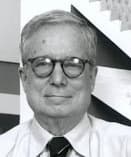
Robert Venturi
Robert Charles Venturi, Jr. is an American architect, founding principal of the firm Venturi, Scott Brown and Associates, and one of the major architectural figures in the twentieth century. Together with his wife and partner, Denise Scott Brown, he helped to shape the way that architects, planners and students experience and think about architecture and the American built environment. Their buildings, planning, theoretical writings and teaching have contributed to the expansion of discourse about architecture. Venturi was awarded the Pritzker Prize in Architecture in 1991; the prize was awarded to him alone despite a request to include his equal partner Denise Scott Brown. As of 2013 a group of women architects is attempting to get her name added retroactively to the prize.[1][2] He is also known for coining the maxim "Less is a bore" a postmodern antidote to Mies van der Rohe's famous modernist dictum "Less is more". Venturi lives in Philadelphia with Denise Scott Brown.
11 Books Written
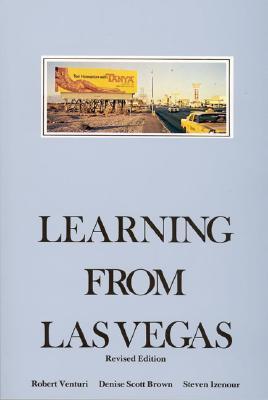
Learning from Las Vegas: The Forgotten Symbolism of Architectural Form
by Robert Venturi
Rating: 4.0 ⭐
Editorial Reviews - Learning from Las Vegas From the Publisher Learning from Las Vegas created a healthy controversy on its appearance in 1972, calling for architects to be more receptive to the tastes and values of "common" people and less immodest in their erections of "heroic," self-aggrandizing monuments. This revision includes the full texts of Part I of the original, on the Las Vegas strip,
Robert Venturi exploded onto the architectural scene in 1966 with a radical call to arms in Complexity and Contradiction . Further accolades and outrage ensued in 1972 when Venturi and Denise Scott Brown (along with Steven Izenour) analyzed the Las Vegas strip as an archetype in Learning from Las Vegas . Now, for the first time, these two observer-designer-theorists turn their iconoclastic vision

Iconography and Electronics upon a Generic Architecture: A View from the Drafting Room
by Robert Venturi
Rating: 3.9 ⭐
Robert Venturi's Complexity and Contradiction in Architecture and Learning from Las Vegas (the latter coauthored with Denise Scott Brown and Steven Izenour) are among the most influential books by any architect of our era -- the one celebrating complexity in architecture, the other the uses of symbolism in commercial and vernacular architecture and signage. This new collection of writings in a var

Mother's House: The Evolution of Vanna Venturi's House in Chestnut Hill
by Robert Venturi
Rating: 4.1 ⭐
From my professional (retired architect) library. Purchased new in bookstore and never (evidently) opened! Dust jacket perfect, no markings or folded pages, etc. great "gift-able" item. If you saw this in a book store, you would not know it wasn't "brand new".

Seventeen essays by two prominent American architects examine prominent buildings of the past and present and discuss the theoretical basis for modern design

Two Responses to Some Immediate Issues
by Robert Venturi

As a legend in their own time, the team of Venturi and Scott Brown have been equally affective in theory as well as practice, consistently producing books and buildings that change the course of architecture. "On Houses and Housing", through articles and project descriptions, charts the formulation of their ideas and realised buildings. It is in this complete record of a particular segment of the

Robert Venturi, Denise Scott Brown & Steven Izenour at Acadia Summer Arts Program
by Robert Venturi
Rating: 4.0 ⭐
The founder of the Acadia Summer Arts Program, Marion Boulton Stroud, asked Robert Venturi, Denise Scott Brown and Steven Izenour to design and construct houses and other structures for the camp. The architects took as inspiration Maine's indigenous architecture, such as shingle houses and lobster shacks.


Complexity and Contradiction at Fifty: Robert Venturi's "Gentle Manifesto": A Symposium
by Robert Venturi
Rating: 5.0 ⭐
Now available in its original edition along with critical commentary, Complexity and Contradiction in Architecture is the founding text of postmodernism in architecture First published in 1966, Robert Venturi’s Complexity and Contradiction in Architecture , widely considered the foundational text of postmodernism, has become an essential document in architectural theory and criticism.This ne
OUT OF THE ORDINARY architecture/urbanism/design
by Robert Venturi