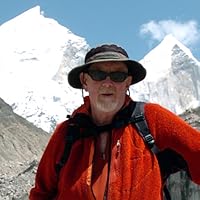
Robert Hutchison
Robert A. Hutchison was born in Canada and studied at McGill University in Montreal. He was a correspondent for the London Sunday and Daily Telegraph, and his articles for the Toronto Financial Post won him four National Business Writing Awards. He is the author of four other investigative non-fiction books covering a range of subjects: Vesco, Off the Books, Juggernaut and In the Tracks of the Yeti. For the past fifty years he has lived in Switzerland. His website can be found at roberthutchison.ch
9 Books Written

Good/Good; dust jacket has light wear on edges some light age spots. books has some light age spots.

An illuminating exposé of Opus Dei, the secretive sect operating at the heart of the Roman Catholic ChurchTo the outside world, Opus Dei claims that its only goal is "to remind all people that they are called to holiness, especially through work and ordinary life." But with an elite membership of 90,000 and influences reaching around the globe, Opus Dei has far greater potential power than its leaders are willing to reveal.Investigative journalist Robert Hutchison charts the seemingly unstoppable growth of this shadow government behind the Vatican. Hutchison demonstrates how Opus Dei has forged an unholy alliance with the Mafia, secular powerbrokers, and highly placed prelates, with the result that Christian values are being threatened by the malign influences of power politics and big money.In this updated edition, Hutchison sheds light on the future of Opus Dei, its ties to the new pope, and the details of its preparations for what the organization regards as Christendom's inevitable showdown with radical Islam.

A young British officer deserted during the First Afghan War (1839-42) and went to ground in the wilds of Tehri-Garhwal. Frederick 'Pahari'Wilson changed the face of the region forever and became a Himalayan legend. He played a daring role in the Great Game, was witness to the Anglo-Sikh War of 1845 - when the British nearly lost India - and became a pioneering force in the great Indian Railways adventure. Capturing the humour of the petty world of officers'clubs in Meerut, Mussoorie and Shimla, the chill of stiff winds on the high passes into Tibet, and the hardships of life in the remote valleys of Garhwal, The Raja of Harsil is a thrilling account of that tumultuous and exciting period. Driven by personal ambition, Frederick Wilson introduced commercial timbering to the Himalayas and became India's first timber magnate. An avid hunter, ornithologist and botanist, he settled at Harsil, near the source of the Ganges, and shared the lives and destinies of the Garhwali people. He acquired enormous wealth - becoming the richest man in northern India - and famous as the 'raja'of Harsil before falling into disfavour - termed a pariah for plundering Garhwal of its wildlife and natural resources.

The story revolves around Proby Cautley and his work on the Ganga Canals. He witnessed the great famine of the North India and realized that irrigation canals could help to combat future droughts and subsequent famines. He made it his life's work to bring an idea, that many thought was foolish, to fruition and with such success. It is a very interesting read for people who are interested in the region around Haridwar and the Northern Plains of India. It also details how the Engineering College at Roorkee came into existence. The book is well researched and the author makes the events come to life for the reader.

The yeti is alive, though perhaps not so well, and living in Khumbu, the Sherpa homeland of north-eastern Nepal. A victim of the deteriorating environment, however, the yeti is on the brink of extinction and may disappear from the Himalayas before science admits that it ever existed.

Monolith Corporation’s systems security officer Anne Hopkins becomes immersed in the world of cyber criminality when pursued by a dangerous terrorist, the mysterious Khaled Benwalid, who wants to get hold of the protocols for the Orion software that powers the flight decks of virtually all commercial jetliners worldwide. Possession of the protocols could enable Benwalid to “simultaneously cause hundreds of airliners to crash without placing a single hijacker aboard any of them”. To protect the protocols, the President’s Special Counter-Terrorism Adviser sends Hopkins to Lausanne, Switzerland, to work with undercover agent Steve Loftis, the managing partner of an exclusive private bank, and Netwar specialist Bruce Campbell in unmasking Doctor Benwalid. She finds Lausanne swamped with refugees who have fled a wave of violence in the Middle East and North Africa that discredits the “Arab Spring” revolution instead of bringing hope and democracy to the region. Days after Hopkins’ arrival in the Olympic Capital fanatical extremists manipulate Lausanne’s refugees into rising against their Swiss hosts. The uprising occurs during a two-day Techno music festival, qualified by the leader of the refugees as an “outrage against Allah”. The refugees unleash an orgy of arson and killing unknown in Europe since the Middle Ages. The action climaxes with a series of unexpected twists, demonstrating that neither side on the religious divide has all the answers.

To the outside world, Opus Dei's stated intention is 'to remind all people that they are called to holiness, especially through work and ordinary life'. But with an elite membership of 80,000 and tentacles reaching around the globe, this secretive sect within the Catholic Church has far greater potential influence.In recent years it has come under criticism from within the Catholic Church and from authorities in the countries where it operates, revealing a more sinister intention: to confront Islam on the world's spiritual battlefields, by whatever means necessary.

To the outside world, Opus Dei's stated intention is 'to remind all people that they are called to holiness, especially through work and ordinary life'. But with an elite membership of 80,000 and tentacles reaching around the globe, this secretive sect within the Catholic Church has far greater potential influence.In recent years it has come under criticism from within the Catholic Church and from authorities in the countries where it operates, revealing a more sinister intention: to confront Islam on the world's spiritual battlefields, by whatever means necessary.Their Kingdom Come demonstrates how Opus Dei has forged an unholy alliance with the Mafia, secular powerbrokers and highly placed prelates, with the result that Christian values are being threatened by the malign influences of power politics and big money.Opus Dei's command council runs an immense intelligence network and a vast multinational conglomerate, preparing for what the organisation regards as Christendom's inevitable showdown with radical Islam...

Looks at modern international currency exchanges, explains how Citibank illegally evaded local taxes and exchange controls in Europe, and discusses the impact of currency trading