
Richard Saul Wurman
29 Books Written
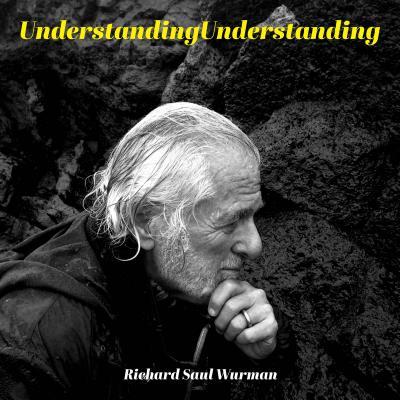
This is a book for people to dip into, as they would walk in and out of the room of a dinner party and embrace their interests. Before Information Architecture, before the rules on how to organize information, before you learn grammar, before you work hard at expanding your vocabulary and go through the exercises of parallel meanings of things as using a Thesaurus and as one writes papers in class, before any learning one must understand. Understanding Understanding precedes the whole process of learning, of giving yourself permission to understand the formations of facts, data, stories, pictures, words, conversations that allow you to understand. This book could be called A Celebration of Conversation or Musings with my Mentors. It is about the fantasy of being the dumbest person in the room and being able to identify all the myriad connections of how others think, talk, explain and visualize. The following is a collection of many of the most interesting idiosyncratic paths of understanding that lead to creation.

A decade after publication of what has become a cult guidebook to understanding the information age, this expanded and updated edition gives clarity to confusion with new maps for navigating through a stream of data that leaves us starved for the tools and patterns that give data meaning. Discussion touches on aesthetic considerations versus making information understandable, the pervasiveness of advertising, bartering and conversation, and communication in the work environment, with humorous asides and b&w cartoons. Wurman is a publisher and a fellow of the American Institute of Architects. Annotation c. Book News, Inc., Portland, OR (booknews.com)

Information Anxiety offers a cure for the uneasiness most people feel daily as they're overwhelmed with facts and data pretending to be useful information. With simple, creative guidance, this book teaches readers how to learn what they want to learn from the media and other communication sources.

Libro usado en buenas condiciones, por su antiguedad podria contener señales normales de uso


Start spreading the news – this 11th edition of Access New York City polishes the Big Apple till it gleams for first–time travellers, returning visitors, and jaded locals alike. Fully revised and updated, this is the ultimate guide that will lead you street by street into the heart of the city that can only be seen and enjoyed on foot. Sophisticated and brutal. Exhilarating and oppressive. Earthy and aloof. A thorough description of New York City might exhaust the largest vocabulary. A city of dynamic contrasts, from the sleek granite powerhouses of Wall Street and Midtown to the charming tenements of Brooklyn and the Bronx, from the Bohemian spirit of Greenwich Village to the old–money atmosphere of the Upper Fifth Avenue, and from the avant–garde art galleries of SoHo to the historic churches of Harlem – New York is all of this and more. This 11th edition of Access New York City is comprehensive, fully updated and filled with revised maps, sidebars and points of interest, offering travellers the best of this city's myriad pleasures, guaranteeing that when theyᵥ said and done as much as they can, they'll wave good–bye to the Statue of Liberty while humming New York, New York.

Follow the Yellow Brick Road: Learning to Give, Take, and Use Instructions
by Richard Saul Wurman
Rating: 3.9 ⭐
Examines the difficulties Americans have in following directions and offers advice for using logical reasoning to create and follow instructions

You might describe Richard Saul Wurman as a provocateur, a pioneer, a creative genius. Inspirational, innovative, larger-than-life ... legendary, even. Others have. But the most apt description of this singular individual -- this architect, designer, creator of the celebrated TED Conference, and prolific author -- is storyteller. Springing to life from the mind of the world's original information architect is 33: Understanding Change & the Change in Understanding. A book that breaks out of any traditional (dare we say even rational) story-telling framework, 33 invites readers to journey through its pages as they will. A fable re-imagined three decades after its original telling as a conference keynote address, 33 chronicles the adventures and musings of an eccentric (yet oddly familiar) the Commissioner of Curiosity and Imagination. This bemused, amused, and roundish imp waddles through the city of What-If in the land of Could-Be, trying to make sense of the myriad changes that have transpired in the past 33 years. The story is presented in an ingenious, multi-layered format -- information upon information, as the Commissioner himself might say -- with the original fable at its core. Surrounding this is an updated tale as presented through 33 episodes and accompanying graphics.

Understanding your automobile and how to service and repair it is certainly useful. Understanding your body and how to maintain and improve it is far more important. Understanding Healthcare answers 100s of key questions and contains links to the best websites and other resources. Understanding Healthcare is a visual encyclopedia -- each spread making the complex clear. Understanding Healthcare takes the powerful tools of information architecture to create a roadmap for each reader. Understanding Healthcare empowers each of us to constructively navigate through our own patterns of health information as well as those for whom we care.

The architectural vision of Louis Kahn!

Understanding Children is a guidebook for anyone who takes care of young children. A wide range of topics are covered using a question-and-answer format, beautiful graphics and easy-to-understand Ages & Stages, Prenatal & Childbirth, Stuff You Need, Health & Nutrition, The Brain, Child Care, Sleep, Play, Behavior, Financial & Legal Issues, Fathers, Grandparents, Adoption and Challenges Facing Our Children.

The Nature of Recreation: A Handbook in Honor of Frederick Law Olmsted
by Richard Saul Wurman
Rating: 4.0 ⭐
The Nature of Recreation is a handbook through which the reader-participant can learn to discover what he really wants and needs in the way of recreation. By stressing the identification of performance components in the environment, and with the aid of questions and exercises, the book enables the reader to define and articulate his recreational needs—and maybe those of his neighbors down the street or across town, depending on the scope of his social imagination. Originally created to accompany and supplement the exhibitions on Frederick Law Olmsted mounted by the National Gallery of Art in Washington and the Whitney Museum of American Art in New York, this book goes beyond the scope of traditional museum catalogs and so extends the scope of the genre. In this respect, the book is designed and planned to lead a full life independent of an exhibition. And should the reader come away from it determined to use his newly acquired analytical skills and constructive demands as a participating citizen, it will be to the benefit of us all and truly in the spirit of Olmsted.The handbook is filled with photographs and diagrams. Olmsted's work is depicted in tones of brown, and more recent creations are shown in green. These two sections (with text about and by Olmsted and on recreation in general) run in parallel throughout the book along with a third section that brings together interesting facts about various facets of recreation.

A book containing statistics on death (and life), dying, causes of death, longevity, and related topics, that are presented graphically. A conversation between Richard Saul Wurman and Dr. Islon Woolf runs on the bottom of the pages throughout the book.
Yellow Pages of Learning Resources: Resources Directory Area Code 800
by Richard Saul Wurman
Rating: 5.0 ⭐
After describing the city as an open university, the authors suggest research projects designed to stimulate interest in junkyards, factories, the postman, department stores, and other features of urban life

The 15 detailed neighborhood maps in this guide will help you immediately locate the hotels, restaurants, shops, and sights of Las Vegas.

The Philadelphia of the 1970s retains strong ties with the Philadelphia of the 1770 they share a number of significant buildings; there is a partial congruence of squares and streets; and, although the city has otherwise changed greatly since its youth, it remains one of the very few in America that fully merits a guide as comprehensive as this one, which affectionately details beauty marks and warts and all.The book encompasses the city and its regional context, and presents—through text, photographs, maps in color of routes, areas, events, and resources—a full image of the city as seen by citizen and visitor as they drive along the major routes and walk within distinctive, largely homogeneous areas. The book highlights individual buildings and monuments, but these are placed in their human settings and are seen from a point of view that takes in the total environment. This guide to a city as it is and as it grew covers routes and areas, the facts of growth, and the plans for growth.The reader is oriented along the major routes—Market and Broad, the Benjamin Franklin Parkway and the Schuylkill Expressway. He is shown through a number of areas, including Independence Mall, Franklin and Washington and Rittenhouse Squares, Logan Circle, Society Hill, University City, Fairmount Park, Penn Center, Germantown, and Chestnut Hill.A following section graphically displays historical data on the city and the region, showing their growth patterns, total population and ethnic population changes, and legal jurisdictions and political districts. Transportation networks are also shown. The final section summarizes city plans from William Penn's of 1682 to the Citizen's Plan of 1960-1970 and the Center City Plan of 1970, gives additional information on Philadelphia architects and architecture, and leads the reader to some interesting interiors.If Philadelphia merits a book like this, it's also true that the book is worth of Philadelphia. It is a kind of advanced celebration of the bicentennial of 1776.
Answers the most frequently asked questions about stocks, bonds, mutual funds, tax-deferred annuities, retirement plans, real-estate investments, and other personal investment opportunities

1984 Olympic access: Los Angeles Olympic Games : TV viewer's guide
by Richard Saul Wurman
Rating: 4.5 ⭐
Book by Wurman, Richard Saul

Color-coded entries highlight everything you need to knwo about Cape Cod, Martha's Vineyard and Nantucket. From where to commune with a whale and where to find the oldest lighthouse to who serves the best seafood and which are the prize places for antiquing, follow the well-charted trail--it's all you'll ever need and more.
"The city is education," this book proclaims. "The city is education—and the architecture of education rarely has much to do with the building of schools. The city is a schoolhouse, and its ground floor is both bulletin board and library. The graffiti of the city are its window displays announcing events; they should reveal its people to themselves, telling about what they're doing and why and where they're doing it. Everything we do—if described, made clear, and made observable—is the 'Show and Tell,' the city itself.... It is a classroom without walls, an open university for people of all ages offering a boundless curriculum with unlimited expertise. If we can make our urban environment comprehensible and observable, we will have created classrooms with endless windows on the world." The book resembles the phone company's Yellow Pages, but the intent is not to "let your fingers do the walking"—the book is meant to lead you out into the environment, to put you into contact with a lot of different kinds of people, to teach you the what, where, why, and how-to of all sorts of things that go on in the real world. The intent, finally, is to led your head do the thinking, your eyes do the seeing, and—it's good exercise—your feet do the walking. "...The city is everywhere around us, and it is rife with learning resources. Even more than classrooms and teachers, the most valuable learning resources in the city are the people, places, and processes that we encounter every day. But in order to realize the vast learning potential of these resources, we must learn to learn from them." Yellow Pages of Learning Resources is a guide to the city—any city, any town. It consists of some seventy alphabetically arranged categories and tells us how to tune them in and why they are important to know about. It is a specific guide to people (the pharmacist, the taxicab driver), to places (the airport, the courtroom), and to processes (candy making, city planning). Here are some architect—bricklayer—cemetery—dry cleaner—electrician—food distribution center—garbage man—hospital—insurance company—junk yard—kindergarten room—locksmith—museum—next-door neighbor—orchestra member—paper box factory—quarry—real estate broker—social worker—tree stump (tree stump?)—union boss—vacant lot—weather forecasting—x-ray technician—Yellow Pages Telephone Directory—zoo. Any number of other possibilities can be thought of by students and teachers, and they can then be sought out once the book has made it clear how to get around. "Student" here can be anybody—while the book is within the range of school-age kids, it is also open to adults, except those who already know how locks work, who the next-door neighbor is, and what ward leaders really do. They are excused from class and are free to go out and learn something new on the way home or at home 9like, why doesn't the furnace thermostat work?). Some of the resources listed are also especially suitable for group learning experiences, and thus the book becomes a valuable tool for the teacher, parent, boy or girl scout leader, or adult education group leader.

This book takes you through the decision processes of this most -personal of topics including where to go for help, how to involve family and when to revise plans.

Looks at the history, equipment, and strategy of football, lists college and professional records, and includes highlights of past Superbowls

With several scenarios illustrated, this book helps answer: "When should I retire?"; "What importance should I place on my 401(k), stock investments, Roth IRA, etc.?"; and "Who will cover my health care costs?"

Organized by body systems, this book's beautiful illustrations and easy-to-read text cover medical testing for those in search of answers and presents testing time tables for those who want to practice good health maintenance. See also "Diagnostic Tests for Men".

This publication is a catalogue of various means of urban communication that the author hopes to see evolve and spread in the development of materials about the city and in the articulation of physical aspects of the city itself. The inner connection of the seemingly miscellaneous items manifested here is made immediately apparent to the reader.This special issue of the journal Design Quarterly is a catalogue of projects, ideas, books, guides, maps, advertisements, curricula, teaching aids, place signs, route symbols, models, graphs, and other items that make it easier to understand and to "imagine" the environment. A catalogue is meant to give provocative hints of ideas and items available. This catalogue attempts, through the juxtaposition of some 80 projects (all of them pictured), to outline a syllabus for urban communication. "Making the city observable," Wurman observes, "means making the plethora of public information public."Information and communication are components of learning, and giving the city visibility implies allowing the city to become an environment for learning. The city can be made observable by developing a school curriculum about our man-made environment, or by designing a clear subway map, or by writing the propositions on a ballot so that nonlawyers can understand them, or by any number of other possibilities illustrated in this volume.The following partial list of items is meant only to indicate the range of the catalogue—Peltier's birds-eye view of Paris; Wurman's 60 comparative city models; Eames' film on urban communications; Fetter's computer graphics; the AIA Guide to New York City; Michelin's Green Guides; Pan Am's taped tours; Halprin's RSVP Cycles; Lynch's Image of the City; Wyman's Mexico City metro graphics; the London underground map; Psychology Today's city survey; maps for the blind; Philadelphia's school without walls; Kahn's movement notation; and displays from the Laboratory of Computer Graphics and Spatial Analysis.

Presents area maps of the United States and regional and street maps of major cities, and includes information on points of interest, campgrounds, and recreation areas