
Phillips Payson O'Brien
Phillips Payson O’Brien is a Professor of Strategic Studies at the University of St. Andrews in Fife, Scotland, where he has taught since 2016. A graduate of Trinity College in Hartford, Connecticut, O'Brien earned a PhD in British and American politics and naval policy before being selected as Cambridge University’s Mellon Research Fellow in American History, and a Drapers Research Fellow at Pembroke College.
9 Books Written

How the War Was Won: Air-Sea Power and Allied Victory in World War II
by Phillips Payson O'Brien
Rating: 4.3 ⭐
• 2 recommendations ❤️
World War II is usually seen as a titanic land battle, decided by mass armies, most importantly those on the Eastern Front. Phillips Payson O'Brien shows us the war in a completely different light. In this compelling new history of the Allied path to victory, he argues that in terms of production, technology and economic power, the war was far more a contest of air and sea than land supremacy. He shows how the Allies developed a predominance of air and sea power which put unbearable pressure on Germany and Japan's entire war-fighting machine from Europe and the Mediterranean to the Pacific. Air and sea power dramatically expanded the area of battle and allowed the Allies to destroy over half the Axis' equipment before it had even reached the traditional 'battlefield'. Battles such as El Alamein, Stalingrad and Kursk did not win World War II; air and sea power did.

The Second Most Powerful Man in the World: The Life of Admiral William D. Leahy, Roosevelt's Chief of Staff
by Phillips Payson O'Brien
Rating: 4.3 ⭐
The life of Franklin Roosevelt's most trusted and powerful advisor, Admiral William D. Leahy, Chief of Staff to the Commander-in-Chief“Fascinating… greatly enriches our understanding of Washington wartime power.”—Madeleine AlbrightAside from FDR, no American did more to shape World War II than Admiral William D. Leahy--not Douglas MacArthur, not Dwight Eisenhower, and not even the legendary George Marshall. No man, including Harry Hopkins, was closer to Roosevelt, nor had earned his blind faith, like Leahy. Through the course of the war, constantly at the president's side and advising him on daily decisions, Leahy became the second most powerful man in the world.In a time of titanic personalities, Leahy regularly downplayed his influence, preferring the substance of power to the style. A stern-faced, salty sailor, his U.S. Navy career had begun as a cadet aboard a sailing ship. Four decades later, Admiral Leahy was a trusted friend and advisor to the president and his ambassador to Vichy France until the attack on Pearl Harbor. Needing one person who could help him grapple with the enormous strategic consequences of the war both at home and abroad, Roosevelt made Leahy the first presidential chief of staff--though Leahy's role embodied far more power than the position of today. Leahy's profound power was recognized by figures like Stalin and Churchill, yet historians have largely overlooked his role. In this important biography, historian Phillips Payson O'Brien illuminates the admiral's influence on the most crucial and transformative decisions of WWII and the early Cold War. From the invasions of North Africa, Sicily, and France, to the allocation of resources to fight Japan, O'Brien contends that America's war largely unfolded according to Leahy's vision. Among the author's surprising revelations is that while FDR's health failed, Leahy became almost a de facto president, making decisions while FDR was too ill to work, and that much of his influence carried over to Truman's White House.

The Strategists: Churchill, Stalin, Roosevelt, Mussolini, and Hitler--How War Made Them and How They Made War
by Phillips Payson O'Brien
Rating: 4.1 ⭐
Churchill. Hitler. Stalin. Mussolini. Roosevelt. Five of the most impactful leaders of WW2, each with their own individualistic and idiosyncratic approach to warfare. But if we want to understand their military strategy, we must first understand the strategist.In The Strategists, Professor Phillips Payson O'Brien shows how the views these five leaders forged in WW1 are crucial to understanding how they fought WW2. For example, Churchill's experiences of facing the German Army in France in 1916 made him unwilling to send masses of British soldiers back there in the 1940s, while Hitler's mistakes on the Eastern Front were influenced by his reluctance to accept that conditions had changed since his own time fighting. The implications of the power of leaders remain with us to this to truly understand what is happening in Ukraine, for example, requires us to know what has influenced the leaders involved.This is a history in which leaders—and their choices—matter. For better or worse.

'Phillips Payson O'Brien is one of our finest historical thinkers.' James Holland, author of Normandy '44 War and power are two of the most-widely discussed issues in all of human history, and yet they are, time and again, misunderstood — often disastrously so.Whilst we might think the outcome of war is determined by so-called ‘Great Powers’ who dominate their opponents with their impressive size and military prowess, the reality of modern conflict, as renowned strategic historian Professor Phillips Payson O’Brien demonstrates, is very different. He urges us instead to look for ‘Full Spectrum Powers’.For if we are considering how powerful a nation is and who will win a war, we need to think less about weapons, and more about the economies and societies that produce them; less about individual battles, and more about sustaining campaigns and alliances in which states operate.Using fascinating examples from the late 19th century to the present day, War and Power explains how misunderstanding war and power has led to terrible, even preventable conflicts – such as the war in Ukraine – and how more accurate analysis can help us consider the potential conflict between the US and China.War and Power provides a bold new way of understanding the dangerous world around us.

The Second Most Powerful Man in the World: The Life of Admiral William D. Leahy, Roosevelt's Chief of Staff
by Phillips Payson O'Brien
Rating: 4.0 ⭐
The life of Franklin Roosevelt's most trusted and powerful advisor, Admiral William D. Leahy, Chief of Staff to the Commander-in-Chief“Fascinating… greatly enriches our understanding of Washington wartime power.”—Madeleine AlbrightAside from FDR, no American did more to shape World War II than Admiral William D. Leahy--not Douglas MacArthur, not Dwight Eisenhower, and not even the legendary George Marshall. No man, including Harry Hopkins, was closer to Roosevelt, nor had earned his blind faith, like Leahy. Through the course of the war, constantly at the president's side and advising him on daily decisions, Leahy became the second most powerful man in the world.In a time of titanic personalities, Leahy regularly downplayed his influence, preferring the substance of power to the style. A stern-faced, salty sailor, his U.S. Navy career had begun as a cadet aboard a sailing ship. Four decades later, Admiral Leahy was a trusted friend and advisor to the president and his ambassador to Vichy France until the attack on Pearl Harbor. Needing one person who could help him grapple with the enormous strategic consequences of the war both at home and abroad, Roosevelt made Leahy the first presidential chief of staff--though Leahy's role embodied far more power than the position of today. Leahy's profound power was recognized by figures like Stalin and Churchill, yet historians have largely overlooked his role. In this important biography, historian Phillips Payson O'Brien illuminates the admiral's influence on the most crucial and transformative decisions of WWII and the early Cold War. From the invasions of North Africa, Sicily, and France, to the allocation of resources to fight Japan, O'Brien contends that America's war largely unfolded according to Leahy's vision. Among the author's surprising revelations is that while FDR's health failed, Leahy became almost a de facto president, making decisions while FDR was too ill to work, and that much of his influence carried over to Truman's White House.

British and American Naval Power: Politics and Policy, 1900-1936
by Phillips Payson O'Brien
Rating: 1.0 ⭐
U.S. and British naval power developed in quite different ways in the early 20th century before the Second World War. This study compares, contrasts, and evaluates both British and American naval power as well as the politics that led to the development of each. Naval power was the single greatest manifestation of national power for both countries. Their armies were small and their air forces only existed for part of the period covered. For Great Britain, naval power was vital to her very existence, and for the U.S., naval power was far and away the most effective tool the country could use to exercise armed influence around the world. Therefore, the decisions made about the relative strengths of the two navies were in many ways the most important strategic choices the British and American governments ever made. An important book for military historians and those interested in the exercise and the extension of power.
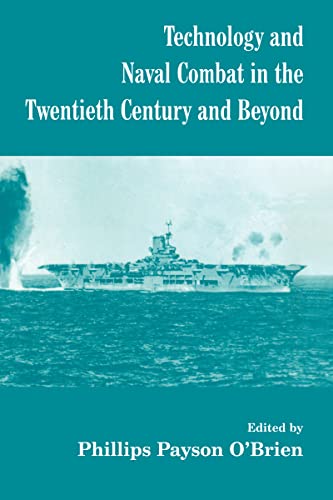
Technology and Naval Combat in the Twentieth Century and Beyond
by Phillips Payson O'Brien
This work examines how the navies of Great Britain, the USA, Germany, Japan, the Soviet Union, France and Italy confronted the various technological changes posed during different periods in the 20th century.

War and Power Who Wins Wars and Why By Phillips Payson O'Brien & Nuclear War By Annie Jacobsen 2 Books Collection Set
by Phillips Payson O'Brien
Please Note The individual books included in this listing will be dispatched as per the original UK ISBN and UK edition cover image shown—are included in the War and Power Who Wins Wars and Why By Phillips Payson O'Brien & Nuclear War By Annie Jacobsen 2 Books Collection 📚 Books in This War and Who Wins Wars ? and Why [Hardcover] Nuclear War [Paperback] War and Who Wins Wars ? and Why [Hardcover]:War and power are two of the most-widely discussed issues in all of human history, and yet they are, time and again, misunderstood ? often disastrously so. Whilst we might think the outcome of war is determined by so-called ‘Great Powers’ who dominate their opponents with their impressive size and military prowess, the reality of modern conflict, as renowned strategic historian Professor Phillips Payson O’Brien demonstrates, is very different. He urges us instead to look for ‘Full Spectrum Powers’. For if we are considering how powerful a nation is and who will win a war, we need to think less about weapons, and more about the economies and societies that produce them; less about individual battles, and more about sustaining campaigns and alliances in which states operate.Nuclear There is only one scenario other than an asteroid strike that could end the world as we know it in a matter of nuclear war. Until now, no one outside official circles has known exactly what would happen if a rogue state launched a nuclear missile at the Pentagon. Second by second and minute by minute, these are the real-life protocols that choreograph the end of civilization. Decisions that affect hundreds of millions of lives need to be made within six minutes, based on partial information, in the knowledge that once launched, nothing is capable of halting the destruction. Based on dozens of new interviews with military and civilian experts who have built the weapons, been privy to the response plans, and taken responsibility for crucial decisions, this is the only account.
War and Power Who Wins Wars and Why By Phillips Payson O'Brien & Das Boot By Lothar Gunther Buchheim 2 Books Collection Set
by Phillips Payson O'Brien
Please Note The individual books included in this listing will be dispatched as per the original UK ISBN and UK edition cover image shown—are included in the War and Power Who Wins Wars and Why By Phillips Payson O'Brien & Das Boot By Lothar Gunther Buchheim 2 Books Collection 📚 Books in This War and Who Wins Wars ? and Why [Hardcover] Das Boot [Paperback] War and Who Wins Wars ? and Why [Hardcover]:War and power are two of the most-widely discussed issues in all of human history, and yet they are, time and again, misunderstood ? often disastrously so. Whilst we might think the outcome of war is determined by so-called ‘Great Powers’ who dominate their opponents with their impressive size and military prowess, the reality of modern conflict, as renowned strategic historian Professor Phillips Payson O’Brien demonstrates, is very different. He urges us instead to look for ‘Full Spectrum Powers’. For if we are considering how powerful a nation is and who will win a war, we need to think less about weapons, and more about the economies and societies that produce them; less about individual battles, and more about sustaining campaigns.Das It is autumn 1941 and a German U-boat commander and his crew set out on yet another hazardous patrol in the Battle of the Atlantic. Over the coming weeks they must brave the stormy waters of the Atlantic in their mission to seek out and destroy British supply ships. But the tide is beginning to turn against the Germans in the war for the North Atlantic. Their targets now travel in convoys, fiercely guarded by Royal Navy destroyers, and when contact is finally made, the hunters rapidly become the hunted. As the U-boat is forced to hide beneath the surface of the sea, a game of cat-and-mouse begins, where the increasing claustrophobia of the submarine becomes an enemy as frightening as the depth charges that explode around it. Of the 40,000 men who served on German submarines, 30,000 never returned.