
Philip Larkin
Philip Arthur Larkin, CH, CBE, FRSL, was an English poet, novelist and jazz critic. He spent his working life as a university librarian and was offered the Poet Laureateship following the death of John Betjeman, but declined the post. Larkin is commonly regarded as one of the greatest English poets of the latter half of the twentieth century. He first came to prominence with the release of his third collection The Less Deceived in 1955. The Whitsun Weddings and High Windows followed in 1964 and 1974. In 2003 Larkin was chosen as "the nation's best-loved poet" in a survey by the Poetry Book Society, and in 2008 The Times named Larkin as the greatest post-war writer. Larkin was born in city of Coventry, England, the only son and younger child of Sydney Larkin (1884–1948), city treasurer of Coventry, who came from Lichfield, and his wife, Eva Emily Day (1886–1977), of Epping. From 1930 to 1940 he was educated at King Henry VIII School in Coventry, and in October 1940, in the midst of the Second World War, went up to St John's College, Oxford, to read English language and literature. Having been rejected for military service because of his poor eyesight, Larkin was able, unlike many of his contemporaries, to follow the traditional full-length degree course, taking a first-class degree in 1943. Whilst at Oxford he met Kingsley Amis, who would become a lifelong friend and frequent correspondent. Shortly after graduating he was appointed municipal librarian at Wellington, Shropshire. In 1946, he became assistant librarian at University College, Leicester and in 1955 sub-librarian at Queen's University, Belfast. In March 1955, Larkin was appointed librarian at The University of Hull, a position he retained until his death.
29 Books Written

The complete poems of the most admired British poet of his generationThis entirely new edition brings together all of Philip Larkin’s poems. In addition to those that appear in Collected Poems (1988) and Early Poems and Juvenilia (2005), some unpublished pieces from Larkin’s typescripts and workbooks are included, as well as verse—by turns scurrilous, satirical, affectionate, and sentimental—that had been tucked away in his letters. For the first time, Larkin’s poems are given a comprehensive commentary. This draws critically upon, and substantially extends, the accumulated scholarship on Larkin, and covers closely relevant historical contexts, persons and places, allusions and echoes, and linguistic usage. Prominence is given to the poet’s comments on his own work, which often outline the circumstances that gave rise to a poem or state that he was trying to achieve. Larkin often played down his literariness, but his poetry enrichingly alludes to and echoes the writings of many others. Archie Burnett’s commentary establishes Larkin as a more complex and more literary poet than many readers have suspected.
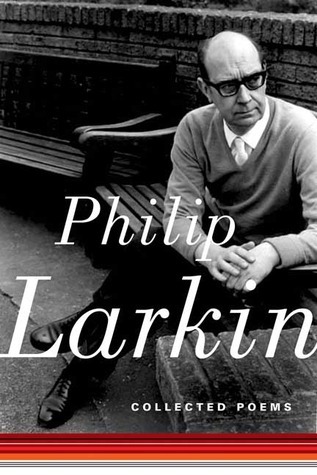
One of the best-known and best-loved poets of the English-speaking world, Philip Larkin had only a small number of his poems published during his lifetime. Collected Poems brings together not only all his books--The North Ship, The Less Deceived, The Whitsun Weddings, and High Windows--but also his uncollected poems from 1940 to 1984.This new edition reflects Larkin's own ordering for his poems and is the first collection to present the body of his work with the organization he preferred. Preserving everything he published in his lifetime, the new Collected Poems is an indispensable contribution to the legacy of an icon of twentieth-century poetry.

Philip Larkin (1922-1985) remains England's best-loved poet - a writer matchlessly capable of evoking his native land and of touching all readers from the most sophisticated intellectual to the proverbial common reader. The late John Betjeman observed that 'this tenderly observant poet writes clearly, rhythmically, and thoughtfully about what all of us can understand'. Behind this modest description lies a poet who made greatness look, in Milton's prescription, 'simple, sensuous and passionate'.This collection, first published in 1967, contains many of his best-loved poems, including The Whitsun Weddings, An Arundel Tomb, Days, Mr Bleaney and MCMXIV.
A collection of poems which includes some of the poet's best-known pieces (The Old Fools, This Be the Verse, The Explosion, and the title poem.

This story of Katherine Lind and Robin Fennel, of winter and summer, of war and peace, of exile and holidays.

A subtle and moving account of a young English undergraduate from the provinces, this portrait of Oxford during the war is now regarded by man critics as a classic of its kind."Jill is, in a sense, a kind of cryptic manifesto. It is a novel about writing, about discovering a literary personality, and about the sorts of consolation that art can provide." -Andrew Motion

A beautiful little book of short, simple, classic and contemporary poems to dip into, to make life feel better.From Shakespeare and Shelley to Lemn Sissay and Kate Tempest, poets have always been the best at showing us we're not alone, however sh*t things might seem.Funny, reflective, romantic and life-affirming - here is an anthology of poems to remind you to keep on looking at the stars: from that first 'what the f*ck' moment to empowering you to do something about this sh*t and ultimately realising that life is still beautiful after all.Rediscover old favourites and find some new treasures - you might be surprised just how much poetry can help.

Philip Larkin's second collection, The Less Deceived was published by The Marvell Press in 1955, and now appears for the first time in Faber covers.The eye can hardly pick them out From the cold shade they shelter in, Till wind distresses tail and mane; Then one crops grass, and moves about - The other seeming to look on - And stands anonymous again.from 'At Grass'
For the first time, Faber publish a selection from the poetry of Philip Larkin. Drawing on Larkin's four collections and on his uncollected poems. Chosen by Martin Amis.'Many poets make us smile; how many poets make us laugh - or, in that curious phrase, "laugh out loud" (as if there's another way of doing it)? Who else uses an essentially conversational idiom to achieve such a variety of emotional effects? Who else takes us, and takes us so often, from sunlit levity to mellifluous gloom?... Larkin, often, is more than he is instantly unforgettable.' - Martin Amis

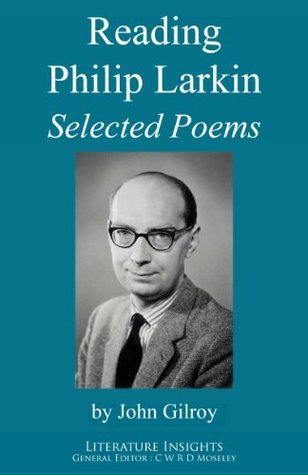
The book offers a detailed commentary on the poetry of Philip Larkin, exploring the political and cultural contexts which have shaped his contemporary reputation. Part 1, Life and Times, traces Larkin’s early years and follows his development, within his career as a university librarian, into one of the most important and popular voices in twentieth-century poetry. Part 2, Artistic Strategies, explores a range of methodologies and aesthetic influences by which Larkin was able to create poetry at once both accessible and profound. Part 3, Reading Larkin, provides detailed critical commentary on many of the poems from his three major collections, The Less Deceived, The Whitsun Weddings and High Windows. Part 4, Reception, outlines the history of Larkin’s reputation from the mid-1950s to the present, examining the debates and ideological confrontations to which his poetry has given rise.BEWARE FAKE REVIEWS ON AMAZON.COM. ****Five Star Reviews on Amazon UK*****Insightful Assessment of a still under-rated Poet. I found this book gripped me from the start. Confirming some things I though I knew, illuminating areas I knew little about and flatly contradicting some misconceptions, the book is insightful, sympathetic and, of course, literate. Here is the real Larkin - a poet I admired more than liked, revealed to be more interesting and accomplished than I knew. By RoyAn Excellent Larkin Teacher provides a great insight into the Poet and his Times. This book reflects great scholarship. Mr Gilroy is a dedicated and insightful reader of Larkin and I recommend this book simply because it has made Larkin one of my favorite poets. By Alexandros Alexandropoulos
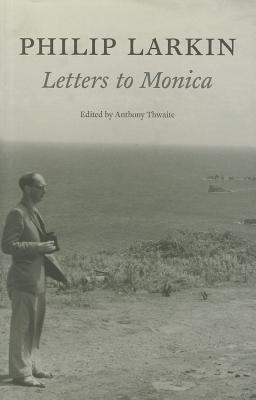
Philip Larkin met Monica Jones at University College Leicester in autumn 1946, when they were both twenty-four; he was the newly-appointed assistant librarian and she was an English lecturer. In 1950 Larkin moved to Belfast, and thence to Hull, while Monica remained in Leicester, becoming by turns his correspondent, lover and closest confidante, in a relationship which lasted over forty years until the poet's death in 1985. This remarkable unpublished correspondence only came to light after Monica Jones' death in 2001, and consists of nearly two thousand letters, postcards and telegrams, which chronicle - day by day, sometimes hour by hour - every aspect of Larkin's life and the convolutions of their relationship.

The reappearance of Philip Larkin's Required Writing will be welcomed by the late poet's many readers and admirers. The book's first two parts, "Recollections" and "Interviews," provide autobiographical glimpses of the very private Larkin's childhood, his youth at Oxford, the genesis of his forty-year career as a librarian, and the influences that initially steered his poetry.The second half of the book reflects Larkin's literary standards and opinions in often witty and surprising, always beautifully wrought, essays and reviews. His subjects range from Emily Dickinson (were her first lines her best?) to the contemporary mystery novel. Required Writing concludes with a selection of pieces on jazz music."Larkin is a punctilious, honest critic. He prefers good clear writing to pretentious eyewash; he prefers tunes to discordant wailing; and he prefers home to abroad. Unlike the majority of critics, he is clear-sighted enough to say so." --A. N. Wilson, Sunday Telegraph"I read the collection with growing excitement, agreement and admiration. It is the best contemporary account of the writer's true aims I have encountered." --John Mortimer, Sunday Times (London)"Subtle, supple, craftily at ease, Required Writing is on a par with Larkin's poetry--which is just about as high as praise can go." --Clive James, ObserverPhilip Larkin was the author of poetry collections, including High Windows , The Whitsun Weddings , and The Less Deceived ; a book of essays entitled All What A Record Diary ; and two novels, Jill , and A Girl in Winter , published early in his career. Required Reading was originally published by Farrar, Straus & Giroux.

In addition to his acknowledged position as one of Britain's most important poets of the post-World War II era, Philip Larkin was unquestionably one of the last great letter writers. There are over seven hundred letters in this impressive collection, dating from Larkin's late teens until close to his death at the age of sixty-three in 1985. Early letters to school friends, including the writer Kingsley Amis, form a portrait of the young artist, full of jazz, literature, and obscenities. Later correspondents include the novelist Barbara Pym (whose fictional portraits of genteel English country life Larkin so admired), Robert Conquest, Andrew Motion, and Julian Barnes.In his Introduction, Anthony Thwaite writes: "What is remarkable, for all the masks he put on, is how consistently Larkin emerges, whoever he is writing to . . . [The letters] are an informal record of the lonely, gregarious . . . intolerant, compassionate, eloquent, foul-mouthed, harsh and humorous Philip Larkin, who was not only one of the finest poets of our time but also a compulsive and entertaining letter-writer."

"The Sunday Sessions" consists of twenty-six poems, the contents of two tapes recorded by Philip Larkin in Hull in February 1980 - reportedly, each on a Sunday, after lunch with John Weeks, a sound engineer and colleague of the poet. The tapes, which contain work from Larkin's first major collection, "The North Ship", as well as poems from his best-known collections, "The Whitsun Weddings" and "High Windows", remained 'lost' for over two decades, lying on a shelf in the garage in which they were recorded. Since their rediscovery they have been the subject of widespread media attention, including a BBC Radio 4 Archive Hour documentary. Their contents are here published in full for the first time. The running time is approx 1 hour/1 disc.


Compilación de la poesía esencial de Philip Larkin, el gran poeta inglés de la segunda mitad del siglo XX.«Escritor ácido, controvertido y misántropo que en sus versos vadeó como nadie las aguas de la incorrección».Gonzalo Torné, El Mundo«No acabo de entender a esos tipos que van de universidad en universidad dando charlas y contando cómo escriben sus es como ir por ahí contándole a todo el mundo como le haces el amor a tu mujer.» Philip LarkinPhilip Larkin es uno de los poetas capitales del siglo xx. Su tono mordaz y conversacional, su mirada inclemente, donde se refleja una emoción honda pero siempre contenida, así como su espíritu urbano, su peculiar sentido del humor y su capacidad para detectar las miserias de la sociedad contemporánea, le han convertido en uno de los poetas más leídos de todos los tiempos, favorito incluso de lectores poco habituados a la poesía.En este volumen se reúne, por primera vez en castellano, el cuerpoesencial de la poesía de Larkin, desde Engaños, el primer libro en que dominó su voz, pasando por Las bodas de Pentecostés y Ventanas altas, quizá sus dos obras maestras, hasta algunos poemas finales y dispersos, como el estremecedor «Albada», una de las despedidas más lúcidas que jamás se han escrito.La crítica ha «El lobo triunfal de la poesía británica. [...] Philip Larkin generó una poesía meditativa, coloquial, cercana, culta. [...] La fundamental edición de su Poesía reunida, que en edición de Damià Alou publica Lumen, confirma que aquel escritor escaleno se mantiene en pie». Antonio Lucas, El Mundo«Larkin, a menudo, es más que es instantáneamente inolvidable». Martin Amis«Uno de los mejores poetas de la segunda mitad del siglo XX, el más radicalmente británico y uno de los más citados en lengua inglesa.» Olga Merino, El Periódico«Esta pulcra edición posee el don de recoger los tres libros esenciales de Larkin, lo que garantiza al lector la calidad del autor, al tiempo que una coherencia que proviene de su condición de auténtico poeta, de la revelación de un mundo exclusivamente suyo después, insisto, de la inmediata presencia e influencia de los grandes maestros de la lírica inglesa de la primera mitad del siglo XX.» Antonio Colinas, El Cultural«Larkin se disfraza de funcionario, de cínico, de perverso, de ciudadano vulgar e incluso grosero, de sarcástico y ordinario. Sus poemas, sin embargo, cantan una y otra vez la desesperante fugacidad del esplendor y lo hacen con una intensidad tan dolorosa que exige esa máscara de funcionario casposo e idiota para ocultar con dignidad el sufrimiento.» Félix de Azúa«Uno de los poetas más radicalmente británicos del siglo XX». Juan Domingo Aguilar, Zenda«Con un estilo que en pleno siglo XXI nos sigue paradójicamente enseñando a ser modernos,[…] con

The book opens with works written under the pseudonym 'Brunette Coleman', including the two novellas, Trouble at Willow Gables and Michaelmas Term at St Bride's, and the poem sequence Sugar and Spice. The remainder of the volume is devoted to the unfinished drafts of two novels, No For An Answer and A New World Symphony, on which Larkin worked after the completion of A Girl in Winter. It ends with two short debats of 1950 and 1951, which pungently dramatise his sense of failure as a novelist and his rejection of marriage.

Further Requirements: Interviews, Broadcasts, Statements and Book Reviews, 1952-85
by Philip Larkin
Rating: 3.5 ⭐
Further Requirements gathers interviews, broadcasts, statements, and reviews that collectively offer a surprising portrait of Philip mordant, modest, intolerant, and generous-but always himself." . . . reveals a deadpan humour and intuitive intelligence tempered by genuine modesty . . . cannot fail to appeal to those with a passion for poetry."--Joanna Hunter, The Observer" . . . good writing, unfussy and unadorned-seeming; but with the impression that [Larkin] has worked hard at every sentence. Even his responses in interviews suggest a mind taking its time to get the words just right."--Nicholas Lezard, The Guardian"It is a treat to encounter once more those splendidly grouchy tones. . . . Larkin's insights into himself are spot-on."-- The Independent" . . . impeccably edited . . . hugely readable . . . provides solid confirmation of Larkin's stature. Austere? No, thank goodness, though he had his austerities. But a classic? Undoubtedly."-- The Daily TelegraphPhilip Larkin (1922-85) was a prolific and honored British poet, editor, fiction writer, and reviewer. His books of poetry include High Windows , The Whitsun Weddings , The Less Deceived , and The North Ship . In addition to Further Requirements, his prose works include the essay collections Required Writing (Michigan, 1999) and All What A Record Diary , and two novels, Jill and A Girl in Winter . Anthony Thwaite is an acclaimed writer and poet, whose most recent books include Selected Poems 1956-1996 and A Different New Poems .


A meeting at Oxford University during World War II signalled the beginning of a lifelong friendship between two outstanding contributors to 20th century English Philip Larkin, poet, and Kingsley Amis, the prolific novelist. Selected from correspondence written between 1943 and 1985, these letters offer an entertaining and illuminating insight into the prejudices, exasperations and in-jokes of two literary greats. A linking commentary complements the writers' own words as they relate events in their personal lives, report on their work in progress, and generally rail against the modem world.

Letters Home gives access to the last major archive of Larkin's writing to remain unpublished: the letters to members of his family. These correspondences help tell the story of how Larkin came to be the writer and the man he was: to his father Sydney, a 'conservative anarchist' and admirer of Hitler, who died relatively early in Larkin's life; to his timid, depressive mother Eva, who by contrast lived long, and whose final years were shadowed by dementia; and to his sister Kitty, the sparse surviving fragment of whose correspondence with her brother gives an enigmatic glimpse of a complex and intimate relationship. In particular, it was the years during which he and his sister looked after their mother that shaped the writer we know so well: a number of poems written over this time are for her, and the mood of pain, shadow and despondency that characterises his later verse draws its strength from his experience of the long, lonely years of her senility. One surprising element in the volume, however, is the joie de vivre shown in the large number of witty and engaging drawings of himself and Eva, as 'Young Creature' and 'Old Creature', with which he enlivens his letters throughout the three decades of her widowhood.This important edition, meticulously edited by James Booth is a key piece of scholarship that completes the portrait of this most cherished of English poets.

PoemThis Be The VerseBy Philip Larkin"...your mum and dad. They may not mean to, but they do. They fill you with the faults they had And add some extra, just for you..."


Philip Larkin (1922-85) was not only one of the foremost English poets of the twentieth century, but also a notable novelist and a distinguished writer on jazz. He was jazz critic for The Daily Telegraph between 1961 and 1971. Jazz Writings brings together Larkin's reviews, articles and essays written for The Guardian, The Observer, The New Statesman, and numerous other publications.

کتاب یه میخ به دیوار بکوب نوشته فیلیپ لارکین شاعر مشهور انگلیسی است. این کتاب با ترجمه علیرضا بنیجانی و بهرام معصومی منتشر شده است. لارکین در سالهای پایانی عمر، جوایز، رتبهها و عناوین افتخاری بسیاری را به پاس نوشتههایش دریافت کرد که از آن جمله است رتبه فرمانده امپراتوری بریتانیا (۱۹۷۵)، کرسی هیئت داوری جایزه بوکر (۱۹۷۷)، عضویت افتخاری انجمن کتابخانهٔ بریتانیا (۱۹۸۰)، مقام استادی دانشگاه هال (۱۹۸۲)، فوقدکترای افتخاری دانشگاه آکسفورد (۱۹۸۴) و عضویت در کتابخانهٔ سلطنتی بریتانیا.تو خواب بهِم گفتی:بیا همدیگه رو ببوسیمتو این اتاق، رو این تختاما وقتی همهچی تموم شددیگه نباید همدیگه رو ببینیم.بعد از شنیدن حرف آخرتدیگه هیچ شبِ زایمونیهیچ پرندهٔ توفانزدهایهیچ ریشهٔ یخزدهایبه سردیِ قلب من پیدا نمیشه.

Philip Larkin was one of the most admired and loved English poets of the twentieth century. His Collected Poems has become essential reading on any bookshelf, covering his four published volumes and late work. But Larkin was a prolific writer in his youth, and wrote over two hundred and fifty poems in the years leading up to his first collection. Drawing on the pamphlets, manuscripts and workbooks from 1938 to 1946-46, the Early Poems reveals, for the first time, the formative writings and literary origins of this most gifted of poets.