
Philip K. Dick
Philip Kindred Dick was a prolific American science fiction author whose work has had a lasting impact on literature, cinema, and popular culture. Known for his imaginative narratives and profound philosophical themes, Dick explored the nature of reality, the boundaries of human identity, and the impact of technology and authoritarianism on society. His stories often blurred the line between the real and the artificial, challenging readers to question their perceptions and beliefs. Raised in California, Dick began writing professionally in the early 1950s, publishing short stories in various science fiction magazines. He quickly developed a distinctive voice within the genre, marked by a fusion of science fiction concepts with deep existential and psychological inquiry. Over his career, he authored 44 novels and more than 100 short stories, many of which have become classics in the field. Recurring themes in Dick's work include alternate realities, simulations, corporate and government control, mental illness, and the nature of consciousness. His protagonists are frequently everyday individuals—often paranoid, uncertain, or troubled—caught in surreal and often dangerous circumstances that force them to question their environment and themselves. Works such as Ubik, The Three Stigmata of Palmer Eldritch, and A Scanner Darkly reflect his fascination with perception and altered states of consciousness, often drawing from his own experiences with mental health struggles and drug use. One of Dick’s most influential novels is Do Androids Dream of Electric Sheep?, which served as the basis for Ridley Scott’s iconic film Blade Runner. The novel deals with the distinction between humans and artificial beings and asks profound questions about empathy, identity, and what it means to be alive. Other adaptations of his work include Total Recall, Minority Report, A Scanner Darkly, and The Man in the High Castle, each reflecting key elements of his storytelling—uncertain realities, oppressive systems, and the search for truth. These adaptations have introduced his complex ideas to audiences well beyond the traditional readership of science fiction. In the 1970s, Dick underwent a series of visionary and mystical experiences that had a significant influence on his later writings. He described receiving profound knowledge from an external, possibly divine, source and documented these events extensively in what became known as The Exegesis, a massive and often fragmented journal. These experiences inspired his later novels, most notably the VALIS trilogy, which mixes autobiography, theology, and metaphysics in a narrative that defies conventional structure and genre boundaries. Throughout his life, Dick faced financial instability, health issues, and periods of personal turmoil, yet he remained a dedicated and relentless writer. Despite limited commercial success during his lifetime, his reputation grew steadily, and he came to be regarded as one of the most original voices in speculative fiction. His work has been celebrated for its ability to fuse philosophical depth with gripping storytelling and has influenced not only science fiction writers but also philosophers, filmmakers, and futurists. Dick’s legacy continues to thrive in both literary and cinematic spheres. The themes he explored remain urgently relevant in the modern world, particularly as technology increasingly intersects with human identity and governance. The Philip K. Dick Award, named in his honor, is presented annually to distinguished works of science fiction published in paperback original form in the United States. His writings have also inspired television series, academic studies, and countless homages across media. Through his vivid imagination and unflinching inquiry into the nature of existence, Philip K. Dick redefined what science fiction could achieve. His work continues to challenge and inspire, offering timeless insights into the human condition a
31 Books Written

"The single most resonant and carefully imagined book of Dick's career." New York TimesIt's America in 1962. Slavery is legal once again. The few Jews who still survive hide under assumed names. In San Francisco, the I Ching is as common as the Yellow Pages. All because some twenty years earlier the United States lost a war and is now occupied by Nazi Germany and Japan.This harrowing, Hugo Award-winning novel is the work that established Philip K. Dick as an innovator in science fiction while breaking the barrier between science fiction and the serious novel of ideas. In it Dick offers a haunting vision of history as a nightmare from which it may just be possible to wake.Winner of the Hugo Award.

It was January 2021, and Rick Deckard had a license to kill. Somewhere among the hordes of humans out there, lurked several rogue androids. Deckard's assignment--find them and then..."retire" them. Trouble was, the androids all looked exactly like humans, and they didn't want to be found!

Glen Runciter está muerto. ¿O lo están todos los demás? Lo que es seguro es que alguien ha muerto en una explosión organizada por los competidores de Runciter. De hecho, sus empleados asisten a un funeral. Pero durante el duelo comienzan a recibir mensajes descorcentantes, e incluso morbosos, de su jefe. Y el mundo a su alrededor comienza a desmoronarse de un modo que sugiere que a ellos tampoco les queda mucho tiempo. Esta mordaz comedia metafísica de muerte y salvación (que podrá llevar un cómodo envase) es un tour de force de amenaza paranoica y comedia absurda, en la cual los muertos ofrecen consejos comerciales, compran su siguiente reencarnación y corren el riesgo continuo de volver a morir.

Substance D is not known as Death for nothing. It is the most toxic drug ever to find its way on to the streets of LA. It destroys the links between the brain's two hemispheres, causing, first, disorientation and then complete and irreversible brain damage.The undercover narcotics agent who calls himself Bob Arctor is desperate to discover the ultimate source of supply. But to find any kind of lead he has to pose as a user and, inevitably, without realising what is happening, Arctor is soon as addicted as the junkies he works among...

Jason Taverner woke up one morning to find himself completely unknown. The night before he had been the top-rated television star with millions of devoted watchers. The next day he was just an unidentified walking object, whose face nobody recognised, of whom no one had heard, and without the I.D. papers required in that near future. When he finally found a man who would agree to counterfeiting such cards for him, that man turned out to be a police informer. And then Taverner found out not only what it was like to be a nobody but also to be hunted by the whole apparatus of society. It was obvious that in some way Taverner had become the pea in in some sort of cosmic shell game—but how? And why? Philip K. Dick takes the reader on a walking tour of solipsism's scariest margin in his latest novel about the age we are already half into.

In the overcrowded world and cramped space colonies of the late 21st century, tedium can be endured through the drug Can-D, which enables users to inhabit a shared illusory world. When industrialist Palmer Eldritch returns from an interstellar trip, he brings with him a new drug, Chew-Z. It is far more potent than Can-D, but threatens to plunge the world into a permanent state of drugged illusion controlled by the mysterious Eldritch.Cover illustration: Chris Moore

VALIS is the first book in Philip K. Dick's incomparable final trio of novels (the others being The Divine Invasion and The Transmigration of Timothy Archer). This disorienting and bleakly funny work is about a schizophrenic hero named Horselover Fat; the hidden mysteries of Gnostic Christianity; and reality as revealed through a pink laser. VALIS is a theological detective story, in which God is both a missing person and the perpetrator of the ultimate crime.

In the world of The Minority Report, Commissioner John Anderton is the one to thank for the lack of crime. He is the originator of the Precrime System, which uses precogs—people with the power to see into the future—to identify criminals before they can do any harm. Unfortunately for Anderton, his precogs perceive him as the next criminal.

Ragle Gumm is an ordinary man leading an ordinary life, except that he makes his living by entering a newspaper contest every day - and winning, every day.But he gradually begins to suspect that his life - indeed his whole world - is an illusion, constructed around him for the express purpose of keeping him docile and happy. But if that is the case, what is his real world like, and what is he actually doing every day when he thinks he is guessing 'Where Will The Little Green Man Be Next?'
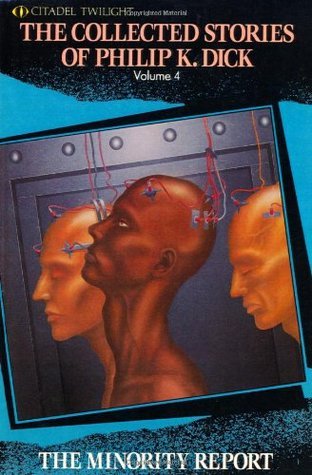
Many thousands of readers consider Philip K. Dick the greatest science fiction mind on any planet. Since his untimely death in 1982, interest in Dick's works has continued to mount and his reputation has been further enhanced by a growing body of critical attention. The Philip K. Dick Award is now given annually to a distinguished work of science fiction, and the Philip K. Dick Society is devoted to the study and promulgation of his works.This collection includes all of the writer's earliest short and medium-length fiction (including some previously unpublished stories) covering the years 1954-1964. "A useful acquisition for any serious SF library or collection" -- Kirkus"The collected stories of Philip K. Dick is awe inspiring". -- The Washington Post"More than anyone else in the field, Mr. Dick really puts you inside people's minds". -- Wall Street JournalVolume 4/5. Includes stories from 1954-1964:- Autofac (1955)- Service Call (1955)- Captive Market (1955)- The Mold of Yancy (1955)- The Minority Report (1956)- Recall Mechanism (1959)- The Unreconstructed M (1957)- Explorers We (1959)- War Game (1959)- If There Were No Benny Cemoli (1963)- Novelty Act (1964)- Waterspider (1964)- What the Dead Men Say (1964)- Orpheus with Clay Feet (1987)- The Days of Perky Pat (1963)- Stand-By (1963)- What'll We Do with Ragland Park? (1963)- Oh, to Be a Blobel! (1964)Other editions of this volume have the same stories, and were published under these titles:- The Days of Perky Pat,- The Minority Report,- The Minority Report and Other Classic Stories.

On the arid colony of Mars the only thing more precious than water may be a ten-year-old schizophrenic boy named Manfred Steiner. For although the UN has slated 'anomalous' children for deportation and destruction, other people—especially Supreme Goodmember Arnie Kott of the Water Workers' union—suspect that Manfred's disorder may be a window into the future. But what sort of future? And what happens to those unfortunates whom Manfred ushers into it? In Martian Time-Slip Philip K. Dick uses power politics and extraterrestrial real estate scams, adultery, and murder to penetrate the mysteries of being and time.

World War III is raging - or so the millions of people crammed in their underground tanks believe. For fifteen years, subterranean humanity has been fed on daily broadcasts of a never-ending nuclear destruction, sustained by a belief in the all powerful Protector. But up on Earth's surface, a different kind of reality reigns. East and West are at peace. Across the planet, an elite corps of expert hoaxers preserve the lie.Cover Illustration: Chris Moore

The Collected Stories of Philip K. Dick 1: The Short Happy Life of the Brown Oxford
by Philip K. Dick
Rating: 4.2 ⭐
Many thousands of readers consider Philip K. Dick the greatest science fiction mind on any planet. Since his untimely death in 1982, interest in his works has continued to mount, and his reputation has been further enhanced by a growing body of critical attention. Dick won the prestigious Hugo Award for best novel of 1963 for "The Man in the High Castle," and in the last year of his life, the film Blade Runner was made from his novel Do Androids Dream of Electric Sheep? This volume includes all of the writer's earliest short and medium-length fiction (including some previously unpublished stories) covering the years 1952-1955. Volume 1/5. Contents: - Stability- Roog- The Little Movement- Beyond Lies the Wub- The Gun- The Skull- The Defenders- Mr. Spaceship- Piper in the Woods- The Infinites- The Preserving Machine- Expendable- The Variable Man- The Indefatigable Frog- The Crystal Crypt- The Short Happy Life of the Brown Oxford- The Builder- Meddler- Paycheck- The Great C- Out in the Garden- The King of the Elves- Colony- Prize Ship- Nanny Other editions of this volume have the same list of stories, and were published under these titles:- Beyond Lies the Wub,- Paycheck and Other Classic Stories,- The King of the Elves (+1 extra story).

The Collected Stories of Philip K. Dick 2: We Can Remember it for You Wholesale
by Philip K. Dick
Rating: 4.2 ⭐
Many thousands of readers consider Philip K. Dick the greatest science fiction mind on any planet. Since his untimely death in 1982, interest in Dick's works has continued to mount and his reputation has been further enhanced by a growing body of critical attention. The Philip K. Dick Award is now given annually to a distinguished work of science fiction, and the Philip K. Dick Society is devoted to the study and promulgation of his works. This collection includes all of the writer's earliest short and medium-length fiction (including some previously unpublished stories) covering the years 1953-1955"A useful acquisition for any serious SF library or collection." -- Kirkus Reviews"The collected stories of Philip K. Dick is awe inspiring." -- The Washington Post"More than anyone else in the field, Mr. Dick really puts you inside people's minds." -- Wall Street Journal Volume 2/5. Contents: - The Cookie Lady- Beyond the Door- Prominent Author- We Can Remember it for You Wholesale- Jon's World- The Cosmic Poachers- Progeny- Some Kinds of Life- Martians Come in Clouds- The Commuter- The World She Wanted- A Surface Raid- Project: Earth- The Trouble with Bubbles- Breakfast at Twilight- A Present for Pat- The Hood Maker- Of Withered Apples- Human Is- Adjustment Team- The Impossible Planet- Imposter- James P. Crow- Planet for Transients- Small Town- Souvenir- Survey Team. Other editions of this volume are titled:- We Can Remember it for You Wholesale and Other Classic Stories [by Citadel],- Second Variety,- Adjustment TeamEditions published by Citadel include "We can remember..." instead of "Second Variety" into Volume 2.

Fourteen strangers come to Delmak-O. Thirteen of them were transferred by the usual authorities. One got there by praying. But once they arrived on that treacherous planet, whose very atmosphere seemed to induce paranoia and psychosis, the newcomers tound that even prayer was useless. For on Delmak-O, God is either absent or intent on destroying His creations. At once a wrenching metaphysical thriller and an ingenious meditation on the nature of divinity, A Maze of Death is Philip K. Dick at his most dizzyingly provocative.

He awoke—and wanted Mars. The valleys, he thought. What would it be like to trudge among them? Great and greater yet: the dream grew as he became fully conscious, the dream and the yearning. He could almost feel the enveloping presence of the other world, which only Government agents and high officials had seen. A clerk like himself? Not likely.Novellete-length, this story is the inspiration behind the popular Total Recall movies from 1990 and 2012.

Dr. Bloodmoney is a post-nuclear-holocaust masterpiece filled with a host of Dick's most memorable characters: Hoppy Harrington, a deformed mutant with telekinetic powers; Walt Dangerfield, a selfless disc jockey stranded in a satellite circling the globe; Dr. Bluthgeld, the megalomaniac physicist largely responsible for the decimated state of the world; and Stuart McConchie and Bonny Keller, two unremarkable people bent on the survival of goodness in a world devastated by evil. Epic and alluring, this brilliant novel is a mesmerizing depiction of Dick's undying hope in humanity.

In The Divine Invasion, Philip K. Dick asks: What if God — or a being called Yah — were alive and in exile on a distant planet? How could a second coming succeed against the high technology and finely tuned rationalized evil of the modern police state?The Divine Invasion "blends Judaism, Kabalah, Zoroastrianism, and Christianity into a fascinating fable of human existence"--West Coast Review of Books

The Transmigration of Timothy Archer, the final novel in the trilogy that also includes Valis and The Divine Invasion, is an anguished, learned, and very moving investigation of the paradoxes of belief. It is the story of Timothy Archer, an urbane Episcopal bishop haunted by the suicides of his son and mistress — and driven by them into a bizarre quest for the identity of Christ.

Dr. Eric Sweetscent has problems. His planet is enmeshed in an unwinnable war. His wife is lethally addicted to a drug that whips its users helplessly back and forth across time—and is hell-bent on making Eric suffer along with her. And Sweetscent's newest patient is not only the most important man on the embattled planet Earth but quite possibly the sickest. For Secretary Gino Molinari has turned his mortal illness into an instrument of political policy—and Eric cannot tell if his job is to make the man better or to keep him poised just this side of death.Now Wait for Last Year bursts through the envelope between the impossible and the inevitable. Even as it ushers us into a future that looks uncannily like the present, it makes the normal seem terrifyingly provisional—and compels anyone who reads it to wonder if he really knows what time it is.

In the late 1960s a paranoid incompetent has schemed his way into the White House and convulsed America in a vicious war against imaginary internal enemies. A struggling science Fiction writer named Philip K. Dick is trying to keep from becoming one of that war's casualties. And Dick's best friend, a record executive named Nicholas Brady, is receiving transmissions from an extraterrestrial entity that may also happen to be God — an entity that apparently wants him to overthrow the President.In this, his last novel, Philip K. Dick morphed and recombined themes that had informed his fiction from A Scanner Darkly to VALIS and produced a wild, impassioned work that reads like a visionary alternate history of the United States. Agonizingly suspenseful, darkly hilarious, and filled with enough conspiracy theories to thrill the most hardened paranoid, Radio Free Albemuth is proof of Dick's stature as our century's greatest prankster-prophet.

While sightseeing at the Belmont Bevatron, Jack Hamilton, along with seven others, is caught in a lab accident. When he regains consciousness, he is in a fantasy world of Old Testament morality gone awry—a place of instant plagues, immediate damnations, and death to all perceived infidels. Hamilton figures out how he and his compatriots can escape this world and return to their own, but first they must pass through three other vividly fantastical worlds, each more perilous and hilarious than the one before. Winner of both the Hugo and John W. Campbell awards for best novel, widely regarded as the premiere science fiction writer of his day, and the object of cult-like adoration from his legions of fans, Philip K. Dick has come to be seen in a literary light that defies classification in much the same way as Borges and Calvino. With breathtaking insight, he utilizes vividly unfamiliar worlds to evoke the hauntingly and hilariously familiar in our society and ourselves.

When CIA agent Chuck Rittersdorf and his psychiatrist wife, Mary, file for divorce, they have no idea that in a few weeks they will be shooting it out on Alpha III M2, the distant moon ruled by various psychotics liberated from a mental ward. Nor do they suspect that Chuck's new employer, the famous TV comedian Bunny Hentman, will also be there aiming his own laser gun. How things came to such a darkly hilarious pass is the subject of Clans of the Alphane Moon, an astutely shrewd and acerbic tale that blurs all conventional distinctions between sanity and madness."Shell Game" was originally published in 1954 for the first time. Later it was expanded into the "Clans of the Alphane Moon." (1964)

The Inspiration for the Upcoming TV Show Though perhaps most famous as a novelist, over the course of his career Philip K. Dick wrote more than one hundred short stories, each as mind-bending and genre-defining as his longer works. Philip K. Dick’s Electric Dreams collects ten of the best from across his career. In “Autofac,” Dick shows us one of the earliest examples (and warnings) in science fiction of self-replicating machines. “Exhibit Piece” and “The Commuter” feature Dick exploring one of his favorite themes: the shifting nature of reality, and whether it is even possible to really perceive the world as it is. And “The Hanging Stranger” provides a thrilling, dark political allegory as relevant today as it was when it was written at the height of the Cold War. Strange, funny, and powerful, the stories in this collection highlight a master at work, drawing on his boundless imagination and deep understanding of the human condition.

Set in the middle of the twenty-first century, The Simulacra is the story of an America where the whole government is a fraud and the President is an android. Against this backdrop Dr. Superb, the sole remaining psychotherapist, is struggling to practice in a world full of the maladjusted. Ian Duncan is desperately in love with the first lady, Nicole Thibideaux, who he has never met. Richard Kongrosian refuses to see anyone because he is convinced his body odor is lethal. And the fascistic Bertold Goltz is trying to overthrow the government. With wonderful aplomb, Philip K. Dick brings this story to a crashing conclusion and in classic fashion shows there is always another layer of conspiracy beneath the one we see.
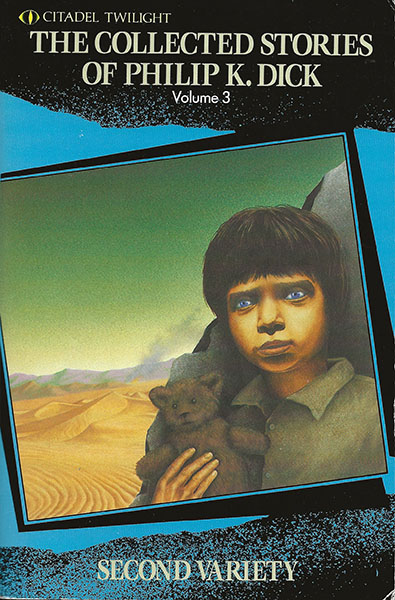
Many thousands of readers consider Philip K. Dick the greatest science fiction mind on any planet. Since his untimely death in 1982, interest in Dick's works has continued to mount and his reputation has been further enhanced by a growing body of critical attention. The Philip K. Dick Award is now given annually to a distinguished work of science fiction, and the Philip K. Dick Society is devoted to the study and promulgation of his works. This collection includes all of the writer's earliest short and medium-length fiction (including some previously unpublished stories) covering the years 1952-1955. These fascinating stories include Second Variety, Foster, You're Dead and The Father-Thing, and many others."A useful acquisition for any serious SF library or collection." -- Kirkus"The collected stories of Philip K. Dick is awe inspiring." -- The Washington Post"More than anyone else in the field, Mr. Dick really puts you inside people's minds." -- Wall Street JournalVolume 3/5. Includes stories from 1953-1959:- Fair Game- The Hanging Stranger- The Eyes Have It- The Golden Man- The Turning Wheel- The Last of the Masters- The Father-Thing- Strange Eden- Tony and the Beetles- Null-O- To Serve the Master- Exhibit Piece- The Crawlers- Sales Pitch- Shell Game- Upon the Dull Earth- Foster, You're Dead- Pay for the Printer- War Veteran- The Chromium Fence- Misadjustment- A World of Talent- Psi-Man Heal My Child!- Second VarietyOther editions of this volume are titled:- The Father-Thing,- Second Variety and Other Classic Stories [by Citadel],- Upon the Dull Earth,- Upon the Dull Earth and Other StoriesEditions published by Citadel include "Second Variety" into Volume 3, whereas other editions had it in Volume 2.

The Glimmung wants Joe Fernwright. Fernwright is a pot-healer — a repairer of ceramics — in a drably utilitarian future where such skills have little value. And the Glimmung? The Glimmung is a being that looks something like a gyroscope, something like a teenaged girl, and something like the contents of an ocean. What's more, it may be divine. And, like certain gods of old Earth, it has a bad temper.What could an omnipresent and seemingly omnipotent entity want with a humble pot-healer? Or with the dozens of other odd creatures it has lured to Plowman's Planet? And if the Glimmung is a god, are its ends positive or malign? Combining quixotic adventure, spine-chilling horror, and deliriously paranoid theology, Galactic Pot-Healer is a uniquely Dickian voyage to alternate worlds of the imagination.

Confessions of a Crap Artist is one of Philip K. Dick's weirdest and most accomplished novels. Jack Isidore is a crap artist -- a collector of crackpot ideas (among other things, he believes that the earth is hollow and that sunlight has weight) and worthless objects, a man so grossly unequipped for real life that his sister and brother-in-law feel compelled to rescue him from it. But seen through Jack's murderously innocent gaze, Charlie and Juddy Hume prove to be just as sealed off from reality, in thrall to obsessions that are slightly more acceptable than Jack's, but a great deal uglier.

In this sardonically funny gem of speculative fiction, Philip K. Dick creates a novel that manages to be simultaneously unpredictable and perversely logical. Poor Pete Garden has just lost Berkeley. He's also lost his wife, but he'll get a new one as soon as he rolls a three. It's all part of the rules of Bluff, the game that's become a blinding obsession for the last inhabitants of the planet Earth. But the rules are about to change--drastically and terminally--because Pete Garden will be playing his next game against an opponent who isn't even human, for stakes that are a lot higher than Berkeley.
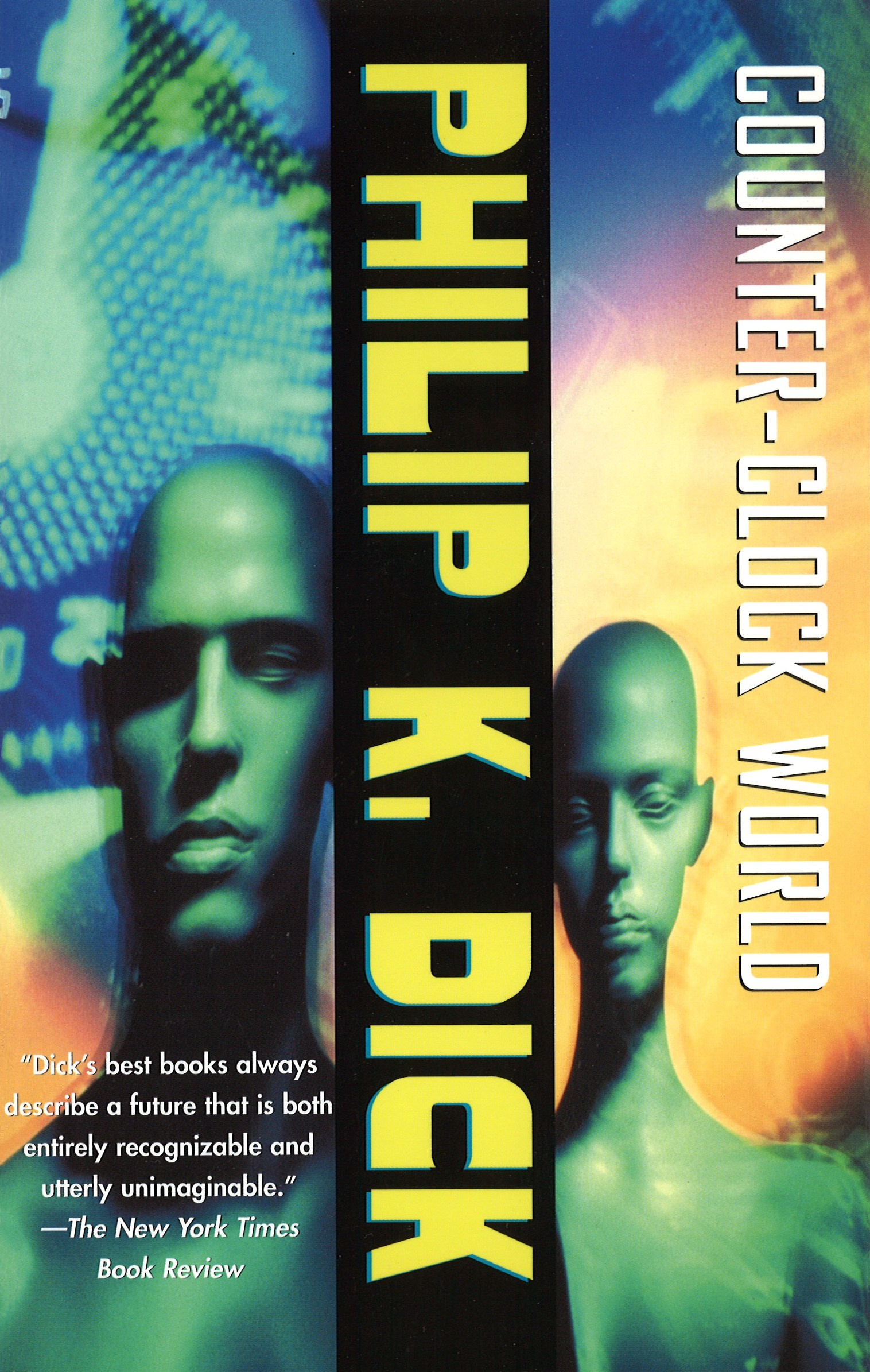
In Counter-Clock World, one of the most theologically probing of all of Dick’s books, the world has entered the Hobart Phase — a vast sidereal process in which time moves in reverse. As a result, libraries are busy eradicating books, copulation signifies the end of pregnancy, people greet with, “Good-bye,” and part with, “Hello,” and underneath the world’s tombstones, the dead are coming back to life. One imminent old-born is Anarch Peak, a vibrant religious leader whose followers continued to flourish long after his death. His return from the dead has such awesome implications that those who apprehend him will very likely be those who control the fate of the world.

Here's a chance to read not just one but fifteen stories created by one of the most popular science fiction writers of today. This anthology is full of both new and classic ideas, brimming over with wit and the author's natural sense of fun.lf you want to learn about The Golden Man — totally irresistible to women, of the secret life of wub fur, of chameleon-like aliens called fnools, and a great deal more, read on...Contents:- Foreword by Mark Hurst- Introduction by Philip K. Dick- The Golden Man (1954)- Return Match (1967)- The King of the Elves (1953)- The Mold of Yancy (1955)- Not By Its Cover (1968)- The Little Black Box (1964)- The Unreconstructed M (1957)- The War with the Fnools (1964)- The Last of the Masters (1954)- Meddler (1954)- A Game of Unchance (1964)- Sales Pitch (1954)- Precious Artifact (1964)- Small Town (1954)- The Pre-Persons (1974)- Story Notes by Philip K. Dick- Afterword by Philip K. DickFront cover illustration by Richard Sparks