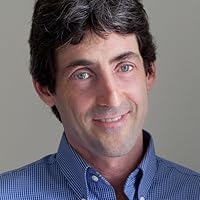
Paul Sabin
Paul Sabin teaches American history at Yale University. He is the author of THE BET: PAUL EHRLICH, JULIAN SIMON AND OUR GAMBLE OVER EARTH'S FUTURE (2013), and CRUDE POLITICS: THE CALIFORNIA OIL MARKET, 1900-1940 (2005). Before joining the Yale faculty, Paul served as founding executive director of the non-profit Environmental Leadership Program. He is a graduate of Yale College and the University of California, Berkeley.
4 Books Written

In 1980, the iconoclastic economist Julian Simon challenged celebrity biologist Paul Ehrlich to a bet. Their wager on the future prices of five metals captured the public's imagination as a test of coming prosperity or doom. Ehrlich, author of the landmark book "The Population Bomb, " predicted that rising populations would cause overconsumption, resource scarcity, and famine--with apocalyptic consequences for humanity. Simon optimistically countered that human welfare would flourish thanks to flexible markets, technological change, and our collective ingenuity. Simon and Ehrlich's debate reflected a deepening national conflict over the future of the planet. "The Bet" weaves the two men's lives and ideas together with the era's partisan political clashes over the environment and the role of government. In a lively narrative leading from the dawning environmentalism of the 1960s through the pivotal presidential contest between Jimmy Carter and Ronald Reagan and on into the 1990s, Paul Sabin shows how the fight between Ehrlich and Simon--between environmental fears and free-market confidence--helped create the gulf separating environmentalists and their critics today. Drawing insights from both sides, Sabin argues for using social values, rather than economic or biological absolutes, to guide society's crucial choices relating to climate change, the planet's health, and our own.

Public Citizens: The Attack on Big Government and the Remaking of American Liberalism
by Paul Sabin
Rating: 3.8 ⭐
The story of the dramatic postwar struggle over the proper role of citizens and government in American society.In the 1960s and 1970s, an insurgent attack on traditional liberalism took shape in America. It was built on new ideals of citizen advocacy and the public interest. Environmentalists, social critics, and consumer advocates like Rachel Carson, Jane Jacobs, and Ralph Nader crusaded against what they saw as a misguided and often corrupt government. Drawing energy from civil rights protests and opposition to the Vietnam War, the new citizens’ movement drew legions of followers and scored major victories. Citizen advocates disrupted government plans for urban highways and new hydroelectric dams and got Congress to pass tough legislation to protect clean air and clean water. They helped lead a revolution in safety that forced companies and governments to better protect consumers and workers from dangerous products and hazardous work conditions.And yet, in the process, citizen advocates also helped to undermine big government liberalism—the powerful alliance between government, business, and labor that dominated the United States politically in the decades following the New Deal and World War II. Public interest advocates exposed that alliance’s secret bargains and unintended consequences. They showed how government power often was used to advance private interests rather than restrain them. In the process of attacking government for its failings and its dangers, the public interest movement struggled to replace traditional liberalism with a new approach to governing. The citizen critique of government power instead helped clear the way for their Reagan-era conservatives seeking to slash regulations and enrich corporations.Public Citizens traces the history of the public interest movement and explores its tangled legacy, showing the ways in which American liberalism has been at war with itself. The book forces us to reckon with the challenges of regaining our faith in government’s ability to advance the common good.

Energy shortages, climate change, and the debate over national security have thrust oil policy to the forefront of American politics. How did Americans grow so dependent on petroleum, and what can we learn from our history that will help us craft successful policies for the future? In this timely and absorbing book, Paul Sabin challenges us to see politics and law as crucial forces behind the dramatic growth of the U.S. oil market during the twentieth century. Using pre–World War II California as a case study of oil production and consumption, Sabin demonstrates how struggles in the legislature and courts over property rights, regulatory law, and public investment determined the shape of the state's petroleum landscape.Sabin provides a powerful corrective to the enduring myth of "free markets" by demonstrating how political decisions affected the institutions that underlie California's oil economy and how the oil market and price structure depend significantly on the ways in which policy questions were answered before World War II. His concise and probing analysis casts fresh light on the historical relationship between business and government and on the origins of contemporary problems such as climate change and urban sprawl. Incisive, engaging, and meticulously researched, Crude Politics illuminates an important chapter in U.S. environmental, legal, business, and political history and the history of the American West.
![[The Bet: Paul Ehrlich, Julian Simon, and Our Gamble over EarthÂ’s Future] [By: Sabin, Paul] [September, 2013]](/placeholder.svg?height=400&width=300)