
Paul Rogat Loeb
Paul Rogat Loeb is an American social and political activist, who has strongly fought for issues including social justice, humanitarianism, environmentalism, and civic involvement in American democracy. Loeb is a frequent public speaker and has written five books and numerous newspaper editorials.
9 Books Written
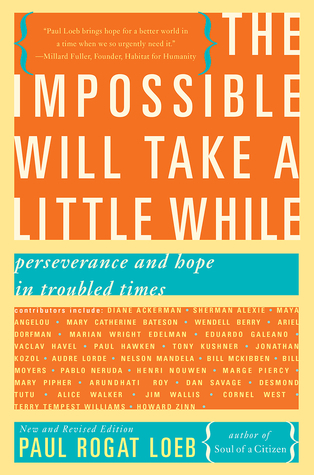
The Impossible Will Take a Little While: A Citizen's Guide to Hope in a Time of Fear
by Paul Rogat Loeb
Rating: 4.2 ⭐
• 2 recommendations ❤️
What keeps us going when times get tough? How do we keep on working for a more humane world, no matter how hard it sometimes seems? In a time when our involvement has never been needed more, this anthology of political hope will help readers with the essential work of healing our communities, our nation, our planet—despite all odds. In THE IMPOSSIBLE WILL TAKE A LITTLE WHILE, a phrase borrowed from Billie Holliday, the editor of Soul of a Citizen brings together fifty stories and essays that range across nations, eras, wars, and political movements.Danusha Goska, an Indiana activist with a paralyzing physical disability, writes about overcoming political immobilization, drawing on her history with the Peace Corps and Mother Teresa. Vaclav Havel, the former president of the Czech Republic, finds value in seemingly doomed or futile actions taken by oppressed peoples.Rosemarie Freeney Harding recalls the music that sustained the civil rights movement, and Paxus Calta-Star recounts the powerful vignette of an 18-year-old who launched the overthrow of Bulgaria’s dictatorship.Many of the essays are new, others classic works that continue to inspire. Together, these writers explore a path of heartfelt community involvement that leads beyond despair to compassion and hope. The voices collected in THE IMPOSSIBLE WILL TAKE A LITTLE WHILE will help keep us all working for a better world despite the obstacles.pt. 1. Seeds of the possible. From "The cure at Troy" / Seamus HeaneyA slender thread / Diane AckermanOrdinary resurrections / Jonathan KozolStanding up for children / Marian Wright EdelmanYou are brilliant and the earth is hiring / Paul HawkenPolitical paralysis / Danusha Veronica Goskapt. 2. Dark before the dawn. From "September 1, 1939" / W.H. AudenThe optimism of uncertainty / Howard ZinnOn being different / Dan SavageThe dark years / Nelson MandelaAn orientation of the heart / Václav HavelReluctant activists / Mary Pipherpt. 3. Everyday grace. "The peace of wild things" / Wendell BerryGate A-4 / Naomi Shihab NyeMountain music / Scott Russell SandersThe Sukkah of Shalom / Arthur WaskowGetting our gaze back / Rose Marie BergerFragile and hidden / Henri NouwenThere is a season / Parker Palmerpt. 4. Rebellious imagination. "Celebration of the human voice" / Eduardo Galeano"Last night as I was sleeping" / Antonio MachadaChildhood and poetry / Pablo NerudaTo love the marigold / Susan GriffinWalking with the wind / John LewisRough translation / Toni MirosevichJesus and Alinsky / Walter WinkStories from the cha cha cha / Vern HuffmanDo not go gentle / Sherman AlexieDespair is a lie we tell ourselves / Tony Kushnerpt. 5. Courage is contagious. "To be of use" / Marge PiercyThe transformation of silence / Audre LordeThe small work in the great work / Victoria SaffordWe are all Khaled Said / Wael GhonimArab revolutions / Stephen ZunesNot deterred / Paxus CaltaIn what do I place my trust? / Rosalie BertellFaith works / Jim WallisThe progressive story of America / Bill Moyerspt. 6. The global stage. "Imagine the angels of bread" / Martín EspadaKids, trees, and climate change / Mark HertsgaardCuritiba / Bill McKibben with a postscript by Paul Rogat LoebCome September / Arundhati RoyThe black hole / Ariel DorfmanBehemoth in a bathrobe / Carla Seaquistpt. 7. Radical dignity. "How have you spent your life?" / Jalaluddin RumiLetter from Birmingham Jail / Martin Luther King, JrThe real Rosa Parks / Paul Rogat LoebPrisoners of hope / Cornel WestRoad to redemption / Billy Wayne SinclairResisting terror / Peter Ackerman and Jack DuVallComposing a life story / Mary Catherine Batesonpt. 8. Beyond hope. "Origami emotion" / Elizabeth BarretteFrom "The New York poem" / Sam HamillStaying the course / Mary-Wynne AshfordThe elm dance / Joanna MacyIs there hope on climate change? / David RobertsThe inevitability trap / K.C. GoldenHoping against hope / Nadezhda MandelstamYou have to pick your team / Sonya Vetra Tinsley, as told to Paul Rogat LoebFrom Hope to hopelessness / Margaret Wheatleypt. 9. Only justice can stop a curse. "Still I rise" / Maya AngelouOnly justice can stop a curse / Alice WalkerThe clan of one-breasted women / Terry Tempest WilliamsNext year in Mas'Ha / StarhawkThe gruntwork of peace / Amos OzNo future without forgiveness / Desmond Tutu

Soul of a Citizen examines how ordinary citizens can make their voices heard and how actions count in a time when we’re told neither matter. It looks at how people get involved in larger community issues and what stops them from getting involved; how they burn out in exhaustion or maintain their commitment for the long haul; how involvement can give them a powerful sense of connection and purpose, even when the road is difficult. Assigned on hundreds of campuses and in every discipline, Soul of a Citizen has helped students of all backgrounds and political perspectives learn to make a difference—and begin journeys of involvement that may last their entire lives.

این کتاب مجموعه جستارهایی است که نویسندگان آن ها به زبانی شیوا تجربه شان را از بخشی از تاریخ انسان بودن روایت می کنند؛ روایتهایی از امید، شهامت و مقاومت؛ هرآنچه در زمانه بیم، در تاریکنای یاس قلبمان را روشن می کند و یادمان می آورد چه بسیار آدمیانی که در طول این تاریخ پر از نقطه های سیاه و سفید و سرخ و خاکستری رنج بسیار کشیده اند، اما در مسیر پاسداشت آزادی و برابری برای همگان، در مراقبت از شان انسان و احقاق حق طبیعت، گیاه و آب و خاک و هر آنچه جان دارد و جان شیرینش خوش است پاپس نکشیده اند.پل روگات لوب در این کتاب جستارهایی از نویسندگانی همچون واسلاو هاول، آرونداتی روی، آریل دورفمن و.... گردآوری کرده و کوشیده کتابش آنتولوژی ای باشد در باب امید سیاسی.کتابش بسیار مورد توجه همگان قرار گرفت و شد سومین کتاب سیاسی سال 2004 به انتخاب انجمن کتاب آمریکا و برنده جایزه ناتیلوس برای بهترین کتاب در زمینه تغییر اجتماعی.

Generation at the Crossroads: Apathy and Action on the American Campus
by Paul Rogat Loeb
Rating: 3.5 ⭐
Challenging prevailing media stereotypes, Generation at the Crossroads explores the beliefs and choices of the students who came of age in the 1980s and 1990s. For seven years, at over a hundred campuses in thirty states, Paul Loeb asked students about the values they held. He examines their concepts of responsibility, the links they draw between present and future, and how they view themselves in relation to the larger human community in which they live. He brings us a range of voices, from "I'm not that kind of person," to "I had to take a stand." Loeb looks at how the rest of us can serve young people as better role models, and give them courage and vision to help build a better world. This insightful book explores the culture of withdrawal that dominated American campuses through most of the eighties. He locates its roots in historical ignorance, relentless individualism, mistrust of social movements, and a general isolation from urgent realities. He examines why a steadily increasing minority has begun to take on critical public issues, whether environmental activism, apartheid, hunger and homelessness, affordable education, or racial and sexual equity. Loeb looks at individuals who have overcome precisely the barriers he has described, and how their journeys can become models. The generational choices he explores will shape our common future.

Book by Loeb, Paul Rogat

Nuclear Culture: Living and Working in the World's Largest Atomic Complex
by Paul Rogat Loeb
Rating: 4.0 ⭐
An account of the growth of the Hanford (Washington state) Nuclear Reservation, the birth of the atomic bomb and the culture which it spawned, seen through the eyes of the participants. Loeb's profile reminds us as few books can just how shocking our normal existence under the nuclear umbrella has really become. Philadelphia, New Society Publishers, 1986. 5.25in x 8in tall; 260pp.
![Soul of a Citizen by Loeb, Paul Rogat [Paperback]](/placeholder.svg?height=400&width=300)
Soul of a Citizen by Loeb, Paul Rogat [Paperback]
by Paul Rogat Loeb
Soul of a CitizenLoeb, Paul Rogat
[Soul of a Citizen: Living with Conviction in Challenging Times] [Author: Loeb, Paul Rogat] [March, 2010]
by Paul Rogat Loeb