
Ottessa Moshfegh
Ottessa Moshfegh is a fiction writer from New England. Eileen, her first novel, was shortlisted for the National Book Critics Circle Award and the Man Booker Prize, and won the PEN/Hemingway Award for debut fiction. My Year of Rest and Relaxation and Death in Her Hands, her second and third novels, were New York Times bestsellers. She is also the author of the short story collection Homesick for Another World and a novella, McGlue. She lives in Southern California.
23 Books Written

An electrifying first collection from one of the most exciting short story writers of our time Ottessa Moshfegh's debut novel Eileen was one of the literary events of 2015. Garlanded with critical acclaim, it was named a book of the year by The Washington Post and the San Francisco Chronicle, nominated for a National Book Critics Circle Award, short-listed for the Man Booker Prize, and won the PEN/Hemingway Award for debut fiction. But as many critics noted, Moshfegh is particularly held in awe for her short stories. Homesick for Another World is the rare case where an author's short story collection is if anything more anticipated than her novel. And for good reason. There's something eerily unsettling about Ottessa Moshfegh's stories, something almost dangerous, while also being delightful, and even laugh-out-loud funny. Her characters are all unsteady on their feet in one way or another; they all yearn for connection and betterment, though each in very different ways, but they are often tripped up by their own baser impulses and existential insecurities. Homesick for Another World is a master class in the varieties of self-deception across the gamut of individuals representing the human condition. But part of the unique quality of her voice, the echt Moshfeghian experience, is the way the grotesque and the outrageous are infused with tenderness and compassion. Moshfegh is our Flannery O'Connor, and Homesick for Another World is her Everything That Rises Must Converge or A Good Man is Hard to Find. The flesh is weak; the timber is crooked; people are cruel to each other, and stupid, and hurtful. But beauty comes from strange sources. And the dark energy surging through these stories is powerfully invigorating. We're in the hands of an author with a big mind, a big heart, blazing chops, and a political acuity that is needle-sharp. The needle hits the vein before we even feel the prick. Bettering myself --Mr. Wu --Malibu --The weirdos --A dark and winding road --No place for good people --Slumming --An honest woman --The beach boy --Nothing ever happens here --Dancing in the moonlight --The surrogate --The locked room --A better place

Man Booker Prize 2016 Collection 6 Books Bundle includes titles in this collection :- The Sellout, Eileen [Hardcover], Hot Milk [Hardcover], All That Man Is [Hardcover], Do Not Say We Have Nothing, His Bloody Project. Description:- The Sellout A biting satire about a young man's isolated upbringing and the race trial that sends him to the Supreme Court, The Sellout showcases a comic genius at the top of his game. Born in Dickens on the southern outskirts of Los Angeles, the narrator of The Sellout spent his childhood as the subject in his father's racially charged psychological studies. He is told that his father's work will lead to a memoir that will solve their financial woes. Eileen The Christmas season offers little cheer for Eileen Dunlop, an unassuming yet disturbed young woman trapped between her role as her alcoholic father's carer in his squalid home and her day job as a secretary at the boys' prison, filled with its own quotidian horrors. Hot Milk Today I dropped my laptop on the concrete floor. It was tucked under my arm and slid out of its black rubber sheath, landing screen-side down. The digital page shattered. Apparently there's a man in the next flyblown town who mends computers. He could send off for a new screen, which would take a month to arrive. Will I still be here in a month? All That Man Is Nine men. Each of them at a different stage of life, each of them away from home, and each of them striving - in the suburbs of Prague, beside a Belgian motorway, in a cheap Cypriot hotel - to understand just what it means to be alive, here and now. Do Not Say We Have Nothing In Canada in 1991, ten-year-old Marie and her mother invite a guest into their home: a young woman who has fled China in the aftermath of the Tiananmen Square protests. Her name is Ai-Ming.
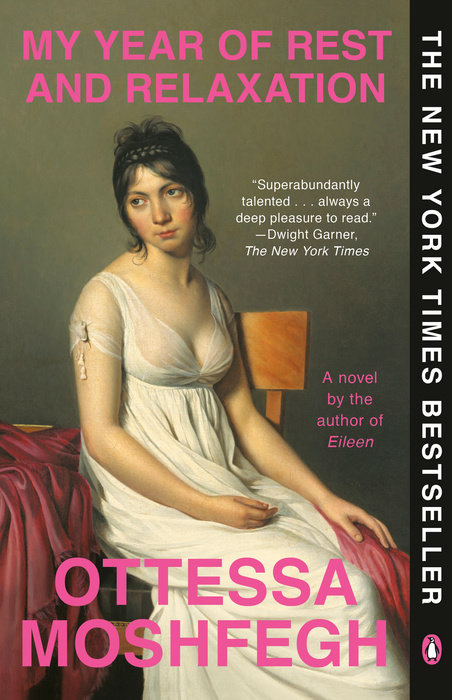
From one of our boldest, most celebrated new literary voices, a novel about a young woman’s efforts to duck the ills of the world by embarking on an extended hibernation with the help of one of the worst psychiatrists in the annals of literature and the battery of medicines she prescribes.Our narrator should be happy, shouldn’t she? She’s young, thin, pretty, a recent Columbia graduate, works an easy job at a hip art gallery, lives in an apartment on the Upper East Side of Manhattan paid for, like the rest of her needs, by her inheritance. But there is a dark and vacuous hole in her heart, and it isn’t just the loss of her parents, or the way her Wall Street boyfriend treats her, or her sadomasochistic relationship with her best friend, Reva. It’s the year 2000 in a city aglitter with wealth and possibility; what could be so terribly wrong?My Year of Rest and Relaxation is a powerful answer to that question. Through the story of a year spent under the influence of a truly mad combination of drugs designed to heal our heroine from her alienation from this world, Moshfegh shows us how reasonable, even necessary, alienation can be. Both tender and blackly funny, merciless and compassionate, it is a showcase for the gifts of one of our major writers working at the height of her powers.

So here we are. My name was Eileen Dunlop. Now you know me. I was twenty-four years old then, and had a job that paid fifty-seven dollars a week as a kind of secretary at a private juvenile correctional facility for teenage boys. I think of it now as what it really was for all intents and purposes—a prison for boys. I will call it Moorehead. Delvin Moorehead was a terrible landlord I had years later, and so to use his name for such a place feels appropriate. In a week, I would run away from home and never go back.This is the story of how I disappeared.The Christmas season offers little cheer for Eileen Dunlop, an unassuming yet disturbed young woman trapped between her role as her alcoholic father’s caretaker in a home whose squalor is the talk of the neighborhood and a day job as a secretary at the boys’ prison, filled with its own quotidian horrors. Consumed by resentment and self-loathing, Eileen tempers her dreary days with perverse fantasies and dreams of escaping to the big city. In the meantime, she fills her nights and weekends with shoplifting, stalking a buff prison guard named Randy, and cleaning up her increasingly deranged father’s messes. When the bright, beautiful, and cheery Rebecca Saint John arrives on the scene as the new counselor at Moorehead, Eileen is enchanted and proves unable to resist what appears at first to be a miraculously budding friendship. In a Hitchcockian twist, her affection for Rebecca ultimately pulls her into complicity in a crime that surpasses her wildest imaginings.Played out against the snowy landscape of coastal New England in the days leading up to Christmas, young Eileen’s story is told from the gimlet-eyed perspective of the now much older narrator. Creepy, mesmerizing, and sublimely funny, in the tradition of Shirley Jackson and early Vladimir Nabokov, this powerful debut novel enthralls and shocks, and introduces one of the most original new voices in contemporary literature. Ottessa Moshfegh is also the author of My Year of Rest and Relaxation, Homesick for Another World: Stories, and McGlue.
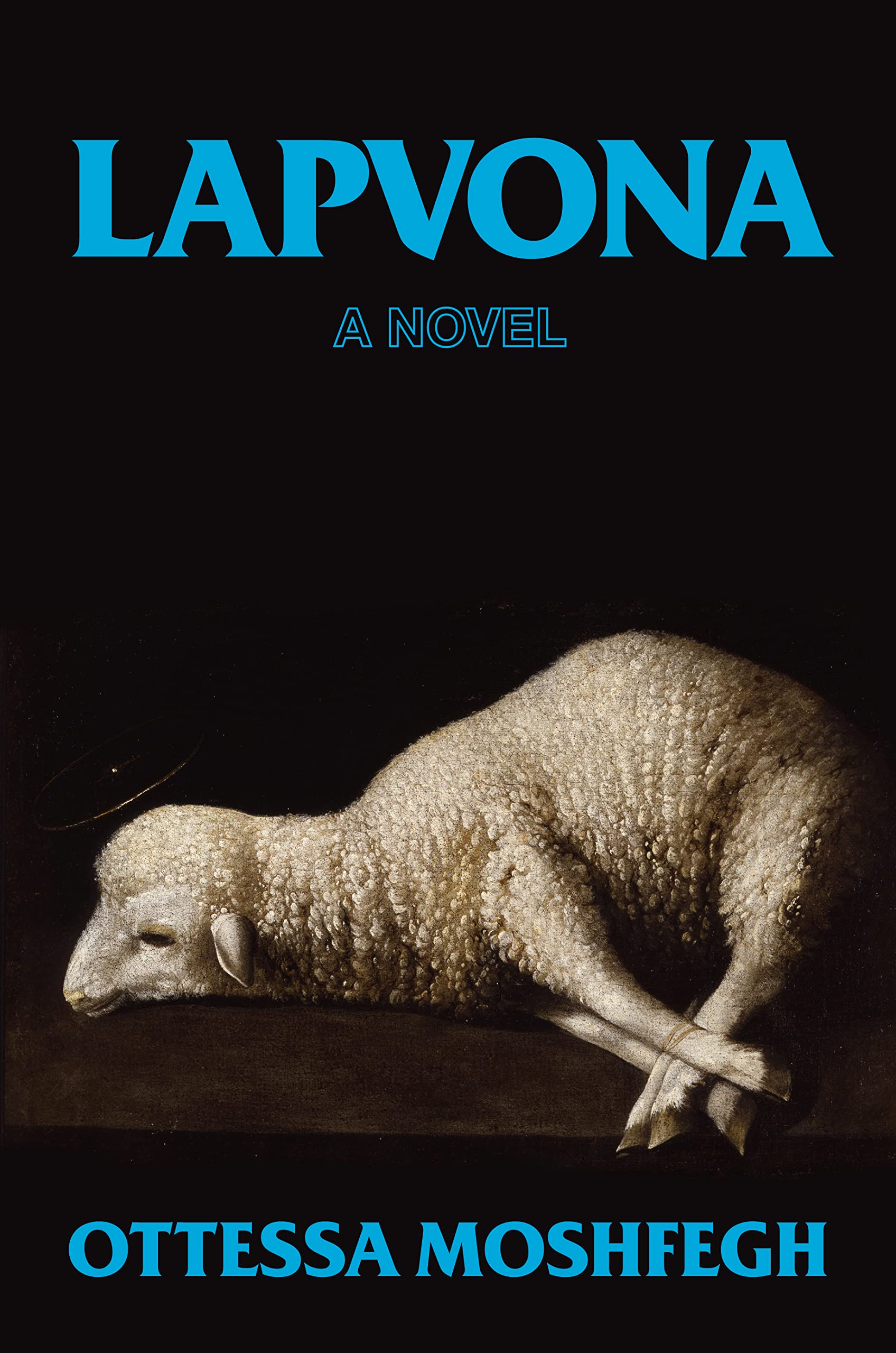
In a village in a medieval fiefdom buffeted by natural disasters, a motherless shepherd boy finds himself the unlikely pivot of a power struggle that puts all manner of faith to a savage test, in a spellbinding novel that represents Ottessa Moshfegh’s most exciting leap yetLittle Marek, the abused and delusional son of the village shepherd, never knew his mother; his father told him she died in childbirth. One of life’s few consolations for Marek is his enduring bond with the blind village midwife, Ina, who suckled him as a baby, as she did so many of the village’s children. Ina’s gifts extend beyond childcare: she possesses a unique ability to communicate with the natural world. Her gift often brings her the transmission of sacred knowledge on levels far beyond those available to other villagers, however religious they might be. For some people, Ina’s home in the woods outside of the village is a place to fear and to avoid, a godless place. Among their number is Father Barnabas, the town priest and lackey for the depraved lord and governor, Villiam, whose hilltop manor contains a secret embarrassment of riches. The people’s desperate need to believe that there are powers that be who have their best interests at heart is put to a cruel test by Villiam and the priest, especially in this year of record drought and famine. But when fate brings Marek into violent proximity to the lord’s family, new and occult forces upset the old order. By year’s end, the veil between blindness and sight, life and death, the natural world and the spirit world, civility and savagery, will prove to be very thin indeed.

A novel of haunting metaphysical suspense about an elderly widow whose life is upturned when she finds a cryptic note on a walk in the woods that ultimately makes her question everything about her new home. While on her normal daily walk with her dog in the forest woods, our protagonist comes across a note, handwritten and carefully pinned to the ground with a frame of stones. "Her name was Magda. Nobody will ever know who killed her. It wasn't me. Here is her dead body". Our narrator is deeply shaken; she has no idea what to make of this. She is new to area, having moved her from her longtime home after the death of her husband, and she knows very few people. And she's a little shaky even on best days. Her brooding about this note quickly grows into a full-blown obsession, and she begins to devote herself to exploring the possibilities of her conjectures about who this woman was and how she met her fate. Her suppositions begin to find echoes in the real world, and with mounting excitement and dread, the fog of mystery starts to form into a concrete and menacing shape. But as we follow her in her investigation, strange dissonances start to accrue, and our faith in her grip on reality weakens, until finally, just as she seems be facing some of the darkness in her own past with her late husband, we are forced to face the prospect that there is either a more innocent explanation for all this or a much more sinister one - one that strikes closer to home.A triumphant blend of horror, suspense, and pitch-black comedy, 'Death in Her Hands' asks us to consider how the stories we tell ourselves both guide us closer to the truth and keep us at bay from it. Once again, we are in the hands of a narrator whose unreliability is well earned, only this time the stakes have never been higher.

Selected for the inaugural Fence Modern Prize in Prose by Rivka Galchen.Salem, Massachusetts, 1851: McGlue is in the hold, still too drunk to be sure of name or situation or orientation—he may have killed a man. That man may have been his best friend. Intolerable memory accompanies sobriety. A-sail on the high seas of literary tradition, Ottessa Moshfegh gives us a nasty heartless blackguard on a knife-sharp voyage through the fogs of recollection.They said I've done something wrong? . . . And they've just left me down here to starve. They'll see this inanition and be so damned they'll fall to my feet and pass up hot cross buns slathered in fresh butter and beg I forgive them. All of them . . . : the entire world one by one. Like a good priest I'll pat their heads and nod. I'll dunk my skull into a barrel of gin.Ottessa Moshfegh was awarded the 2013 Plimpton Discovery Prize for her stories in the Paris Review and a creative writing fellowship from the National Endowment for the Arts. She is currently a Wallace Stegner fellow at Stanford, and lives in Oakland, California.

Short story from the April, 2013 Paris Review.My classroom was on the first floor, next to the nuns’ lounge. I used their bathroom to puke in the mornings. One nun always dusted the toilet seat with talcum powder. Another nun plugged the sink and filled it ...

Original fiction from the publisher's site, (parisreview.org, The Paris Review).On our first date, he bought me a taco, talked at length about the ancients’ theories of light, how it streams at angles to align events in space and time, that it is the source of all information, determines every outcome, how we can reflect it to summon aliens using mirrored bowls of water.


Free online fiction.From The Paris Review.Every day at noon Mr. Wu walked through the back alley, past the stinking ravine and the firecracker salesman and the old temple now used as a kind of flophouse for the farmworkers who came in from the country to ...

Ottessa Moshfegh Bestselling 3 Books Collection - My Year of Rest and Relaxation; Lapvona; Eileen
by Ottessa Moshfegh
Rating: 4.0 ⭐
This Ottessa Moshfegh Bestselling 3 Books Collection 1. My Year of Rest and Relaxation 9780525522133 2. Lapvona 9780593300282 3. Eileen 9780143128755

“You think everyone hates you, Jerome. It might be the one thing you’re getting right.” In Ottessa Moshfegh’s acerbic narrative, My New Novel, struggling writer Jerome Littlefield trades verbal blows with his mother; his therapist; and Stacey, a pregnant stripper who responds to his appeal for an “attentive individual to sit and listen. No speaking required.”

Short Story, "Slumming," by Ottessa Moshfegh. Published in The Paris Review No. 211, Winter 2014. Available to read online at : http://www.theparisreview.org/fiction...

"Shortly after I did fall, irrevocably, in love with McGlue, because he’s the kind of queer, socially maladjusted bad-boy who can always float my boat—if not his own—Rivka Galchen did too. It’s not every day that a publisher launches a book prize. The publisher has to cross her legs and hope that she, the judge she’s picked, will settle on something she, the publisher, can love. Rivka says: “A sextant of the psyche, McGlue works its grand knowing through the mouthfeel of language; it’s a sharply intelligent, beautiful, and singular novel. A scion of Nathaniel Hawthorne and Raymond Carver at once, Moshfegh transforms a poison into an intoxicant.” - Rebecca Wolff, Founder and Editor, Fence Books About the Author: Ottessa Moshfegh is a fiction writer from Boston. She was awarded the Plimpton Discovery Prize for her stories in The Paris Review, and granted a creative writing fellowship from the National Endowment for the Arts. Rivka Galchen chose McGlue for the first annual Fence Modern Prize in Prose. Moshfegh is currently a Wallace Stegner fellow at Stanford University. About the Guest Editor: Fence Books is the offspring of Fence, a biannual literary journal published continuously since 1998. Fence Books has been publishing mostly poetry since 2001. Over the years, many of the most adored and adorable poets have won some of our prestigious book prizes, which are the Fence Modern Poets Series, the Motherwell Prize (now the Ottoline), the National Poetry Series (Fence participates), and the new Fence Modern Prize in Prose (McGlue is its first winner; the second will be announced by December 25, 2014). Notable authors of poetry and prose include Ariana Reines, Douglas Kearney, Aaron Kunin, Harmony Holiday, Claudia Rankine, Catherine Wagner, Joyelle McSweeney, and Clark Coolidge. About the Publisher: Electric Literature is an independent publisher amplifying the power of storytelling through digital innovation. Electric Literature’s weekly fiction magazine, Recommended Reading, invites established authors, indie presses, and literary magazines to recommended great fiction. Once a month we feature our own recommendation of original, previously unpublished fiction. Stay connected with us through our eNewsletter: http://bit.ly/1por3PR

Short Story, "A Dark and Winding Road," by Ottessa Moshfegh. Published in The Paris Review No. 207, Winter 2013.

Short Story, "No Place for Good People," by Ottessa Moshfegh. Published in The Paris Review No. 209, Summer 2014.


Short Story, "Dancing in the Moonlight," by Ottessa Moshfegh. Published in The Paris Review No. 214, Fall 2015.

Short Story, "The Panic Room,' by Ottessa Moshfegh. Published in, "The Baffler No. 30: Panic! Room," [ - http://thebaffler.com/issues/no-30 ].

Anything to Make You Happy. My Mother Raised Me To Believe That Mayonnaise Was For Idiots.
by Ottessa Moshfegh
Rating: 4.7 ⭐
Feature, "Anything to Make You Happy. My mother raised me to believe that mayonnaise was for idiots," by Ottessa Moshfegh. Published May 8, 2015 by Lucky Peach. Full text available to read free online at : http://luckypeach.com/anything-to-mak...


I'd Like to Sleep for the Whole Year
by Ottessa Moshfegh