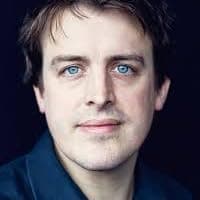
Oliver Bullough
I moved to Russia in 1999, after growing up in mid-Wales and studying at Oxford University. I had no particular plan, beyond a desire to learn Russian, but got a job at a local magazine and realised I liked finding things out and writing about them. The next year I moved to Bishkek, Kyrgyzstan, then joined Reuters news agency, which sent me to Moscow. The first major story I reported on was the Moscow theatre siege of 2002, when a group of Chechens seized a theatre in the capital. It both horrified and fascinated me, and I resolved to find out as much as I could about Chechnya and the North Caucasus, to try to understand the roots of the conflict that had burst so unexpectedly into my life. I travelled extensively in the mountains that form Russia’s southern border, falling in love with the scenery, the food and above all the warm and welcoming people. When I left Russia in 2006, I was exhausted by it, however. I had seen too much misery and never wanted to write about Chechnya again. But I had promised to give a talk to a society in London. After the talk, I was asked if I would ever write a book about what I had seen. I wrote down a few thoughts, took them to a friend who knew about books, and she introduced me to a publisher. I travelled in a dozen countries to meet all the people I needed for the stories I wanted to tell, and wrote them down in Let Our Fame Be Great. Penguin published it in the UK in 2010. It won the Oxfam Emerging Writer Prize and was short-listed for the Orwell Prize, with prize judge James Naughtie calling it “an extraordinary book... a wonderful part-travelogue, part-history”. Basic Books published it in the United States, where the Overseas Press Club awarded it the Cornelius Ryan Award for “best nonfiction book on international affairs”. After it came out, though, a number of Russian friends objected that I had made the Russians into the villains. I don’t think I did, but their complaints chewed away at me a little. Perhaps some readers had been left feeling all Russians were complicit in the crimes of their leaders. The Russians after all suffered as much as anyone at the hands of the government in Moscow. That provoked me into writing my second book, The Last Man in Russia, which describes the struggle of a Russian to live in freedom and the efforts of Soviet officials to stop him. The life story of Father Dmitry, the Orthodox priest I chose as my central figure, seems to me to mirror the life of his whole nation, which is beset by depression and alcoholism. Travelling to meet the people I wanted to talk to and to see the places I wanted to describe took me to the far north of Russia, to rotting gulag towns; to the west of Russia, to half-abandoned villages; and to the Ural Mountains, where the communists locked up their doughtiest opponents; and to Moscow itself, that great fat spider in the centre of its web. I would like to write more books one day but, at the moment, I’m concentrating on my day job as Caucasus Editor for the Institute of War and Peace Reporting. I also write freelance articles and worry about the Welsh rugby team. http://www.oliverbullough.com/biograp...
9 Books Written

Let Our Fame Be Great: Journeys Among the Defiant People of the Caucasus
by Oliver Bullough
Rating: 4.2 ⭐
Two centuries ago, the Russians pushed out of the cold north towards the Caucasus Mountains, the range that blocked their access to Georgia, Turkey, Persia and India. The Caucasus had to be conquered and, for the highlanders, life would never be the same again. This title features author's journeys who intended to hear the stories of the conquest.

Russia is dying from within. Oligarchs and oil barons may still dominate international news coverage, but their prosperity masks a deep-rooted demographic tragedy. Faced with staggering population decline—and near-certain economic collapse—driven by toxic levels of alcohol abuse, Russia is also battling a deeper a spiritual one, born out of the country’s long totalitarian experiment.In

Moneyland: Why Thieves and Crooks Now Rule the World and How To Take It Back
by Oliver Bullough
Rating: 4.2 ⭐
From ruined towns on the edge of Siberia, to Bond-villain lairs in Knightsbridge and Manhattan, something has gone wrong with the workings of the world.Once upon a time, if an official stole money, there wasn't much he could do with it. He could buy himself a new car or build himself a nice house or give it to his friends and family, but that was about it. If he kept stealing, the money

Moneyland, Treasure Islands, The Panama Papers 3 Books Collection Set
by Oliver Bullough
Rating: 3.6 ⭐

Butler to the World: How Britain Helps the World's Worst People Launder Money, Commit Crimes, and Get Away with Anything
by Oliver Bullough
Rating: 4.0 ⭐
In his punchy follow-up to Moneyland, Oliver Bullough's Butler to the World unravels the dark secret of how Britain placed itself at the centre of the global offshore economy and at the service of the worst people in the world…The Suez Crisis of 1956 was Britain’s twentieth century nadir, the moment when the once superpower was bullied into retreat. In the immortal

Please Note That The Following Individual Books As Per Original ISBN and Cover Image In this Listing shall be Dispatched Titles In This Butler to the World [Hardcover]MoneylandOliver Bullough 2 Books Collection Butler to the World [Hardcover]:The Suez Crisis of 1956 was Britain's twentieth-century nadir, the moment when the once superpower was

The Secret Barrister, Moneyland by Oliver Bullough 2 Books Collection Set
by Oliver Bullough
Rating: 4.1 ⭐
Please Note That The Following Individual Books As Per Original ISBN and Cover Image In this Listing shall be Dispatched The Secret Barrister, Moneyland by Oliver Bullough 2 Books Collection Because in 1962, some bankers in London had an idea that changed the world. That idea was called 'offshore'. It meant that, for the first time, thieves could dream big. They could take everything. Join investi
![Moneyland, The Secret Political Adviser [Hardcover], Dreams from My Father [Hardcover], A Very Stable Genius 4 Books Collection Set](https://m.media-amazon.com/images/S/compressed.photo.goodreads.com/books/1699877798i/105228235.jpg)
Moneyland, The Secret Political Adviser [Hardcover], Dreams from My Father [Hardcover], A Very Stable Genius 4 Books Collection Set
by Oliver Bullough
Rating: 4.0 ⭐
Please Note That The Following Individual Books As Per Original ISBN and Cover Image In this Listing shall be Titles In This Moneyland The Secret Political Adviser [Hardcover] Dreams from My Father [Hardcover] A Very Stable Genius Moneyland, The Secret Political Adviser [Hardcover], Dreams from My Father

From the bestselling author of MONEYLAND and BUTLER TO THE WORLD, a revelatory new anatomy of global money laundering, the crime that makes crime payWithout money laundering, few crimes of acquisition would be worth the trouble. South America's drug cartels would be stuffed without it, as would Nigerian kleptocrats, Afghan terrorists, American tax evaders and a whole bestiary of