
Norman F. Cantor
Born in Winnipeg, Canada, Cantor received his B.A. at the University of Manitoba in 1951. He went on to get his master's degree in 1953 from Princeton University and spent a year as a Rhodes Scholar at the University of Oxford. He received his doctorate from Princeton in 1957 under the direction of the eminent medievalist Joseph R. Strayer. After teaching at Princeton, Cantor moved to Columbia University from 1960 to 1966. He was a Leff professor at Brandeis University until 1970 and then was at SUNY Binghamton until 1976, when he took a position at University of Illinois at Chicago for two years. He then went on to New York University, where he was professor of history, sociology and comparative literature. After a brief stint as Fulbright Professor at the Tel Aviv University History Department (1987–88), he devoted himself to working as a full-time writer. Although his early work focused on English religious and intellectual history, Cantor's later scholarly interests were far more diverse, and he found more success writing for a popular audience than he did engaging in more narrowly-focused original research. He did publish one monograph study, based on his graduate thesis, Church, kingship, and lay investiture in England, 1089-1135, which appeared in 1958 and remains an important contribution to the topic of church-state relations in medieval England. Throughout his career, however, Cantor preferred to write on the broad contours of Western history, and on the history of academic medieval studies in Europe and North America, in particular the lives and careers of eminent medievalists. His books generally received mixed reviews in academic journals, but were often popular bestsellers, buoyed by Cantor's fluid, often colloquial, writing style and his lively critiques of persons and ideas, both past and present. Cantor was intellectually conservative and expressed deep skepticism about what he saw as methodological fads, particularly Marxism and postmodernism, but also argued for greater inclusion of women and minorities in traditional historical narratives. In both his best-selling Inventing the Middle Ages and his autobiography, Inventing Norman Cantor, he reflected on his strained relationship over the years with other historians and with academia in general. Upon retirement in 1999, Cantor moved to Miami, Florida, where he continued to work on several books up to the time of his death.
24 Books Written

A Completely Revised and Expanded Edition of Medieval History, the Life and Death of a Civilization.A comprehensive general history of the Middle Ages, centring on medieval culture and religion, rather than political history. While the first and last sections are almost entirely new, Cantor has retained the narrative flow in the rest of the book for this revised edition.

Ring around the rosies,A pocketful of posies,Ashes, ashes,We all fall down.—"Ring Around the Rosies," a children's rhyme about the Black DeathThe Black Death was the fourteenth century's equivalent of a nuclear war. It wiped out one-third of Europe's population, taking some 20 million lives. And yet, most of what we know about it is wrong. The details of the Plague etched in the minds of terrified schoolchildren—the hideous black welts, the high fever, and the awful end by respiratory failure—are more or less accurate. But what the Plague really was and how it made history remain shrouded in a haze of myths.Now, Norman Cantor, the premier historian of the Middle Ages, draws together the most recent scientific discoveries and groundbreaking historical research to pierce the mist and tell the story of the Black Death as a gripping, intimate narrative.

"Alexander's behavior was conditioned along certain lines -- heroism, courage, strength, superstition, bisexuality, intoxication, cruelty. He bestrode Europe and Asia like a supernatural figure." In this succinct portrait of Alexander the Great, distinguished scholar and historian Norman Cantor illuminates the personal life and military conquests of this most legendary of men. Cantor draws from the major writings of Alexander's contemporaries combined with the most recent psychological and cultural studies to show Alexander as he was -- a great figure in the ancient world whose puzzling personality greatly fueled his military accomplishments. He describes Alexander's ambiguous relationship with his father, Philip II of Macedon; his oedipal involvement with his mother, the Albanian princess Olympias; and his bisexuality. He traces Alexander's attempts to bridge the East and West, the Greek and Persian worlds, using Achilles, hero of the Trojan War, as his model. Finally, Cantor explores Alexander's view of himself in relation to the pagan gods of Greece and Egypt. More than a biography, Norman Cantor's Alexander the Great is a psychological rendering of a man of his time.
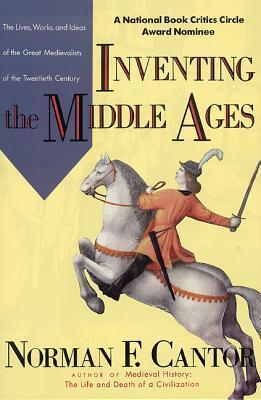
The Lives, Works, and Ideas of the Great Medievalists of the Twentieth CenturyIn this ground-breaking work, Norman Cantor explains how our current notion of the Middle Ages-with its vivid images of wars, tournaments, plagues, saints and kings, knights and ladies-was born in the twentieth century. The medieval world was not simply excavated through systematic research. It had to be conceptually created: It had to be invented, and this is the story of that invention.Norman Cantor focuses on the lives and works of twenty of the great medievalists of this century, demonstrating how the events of their lives, and their spiritual and emotional outlooks, influenced their interpretations of the Middle Ages. Cantor makes their scholarship an intensely personal and passionate exercise, full of color and controversy, displaying the strong personalities and creative minds that brought new insights about the past.A revolution in academic method, this book is a breakthrough to a new way of teaching the humanities and historiography, to be enjoyed by student and general public alike. It takes an immense body of learning and transmits it so that readers come away fully informed of the essentials of the subject, perceiving the interconnection of medieval civilization with the culture of the twentieth century and having had a good time while doing it! This is a riveting, entertaining, humorous, and learned read, compulsory for anyone concerned about the past and future of Western civilization.

s/t: From the Birth of Sumerian Civilization to the Fall of the Roman EmpireBestselling author Norman Cantor delivers this compact but magisterial survey of the ancient world -- from the birth of Sumerian civilization around 3500 B.C. in the Tigris-Euphrates valley (present-day Iraq) to the fall of the Roman Empire in A.D. 476. In Antiquity, Cantor covers such subjects as Classical Greece, Judaism, the founding of Christianity, and the triumph and decline of Rome. In this fascinating and comprehensive analysis, the author explores social and cultural history, as well as the political and economic aspects of his narrative. He explains leading themes in religion and philosophy and discusses the environment, population, and public health. With his signature authority and insight, Cantor highlights the great books and ideas of antiquity that continue to influence culture today.

The Last Knight: The Twilight of the Middle Ages and the Birth of the Modern Era
by Norman F. Cantor
Rating: 3.3 ⭐
There may not be a more fascinating a historical period than the late fourteenth century in Europe. The Hundred Years' War ravaged the continent, yet gallantry, chivalry, and literary brilliance flourished in the courts of England and elsewhere. It was a world in transition, soon to be replaced by the Renaissance and the Age of Exploration -- and John of Gaunt was its central figure. In today's terms, John of Gaunt was a multibillionaire with a brand name equal to Rockefeller. He fought in the Hundred Years' War, sponsored Chaucer and proto-Protestant religious thinkers, and survived the dramatic Peasants' Revolt, during which his sumptuous London residence was burned to the ground. As head of the Lancastrian branch of the Plantagenet family, Gaunt was the unknowing father of the War of the Roses; after his death, his son usurped the crown from his nephew, Richard II. Gaunt's adventures represent the culture and mores of the Middle Ages as those of few others do, and his death is portrayed in The Last Knight as the end of that enthralling period.

A fascinating look at life in the Middle Ages that focuses on eight extraordinary medieval men and women through realistically invented conversations between them and their counterparts.

The only book of its kind, The Medieval Reader is a fascinating, illustrated collection of almost 100 first-hand accounts of the period known as the middle ages, roughly from the fourth to the sixteenth centuries. Revealing the medieval world in all its astonishing diversity, the selections reflect the culture of the people who lived during the period, and the contributions they made to their world and our own.Including, in the best translations, familiar texts such as The Song of Roland, St. Augustine's Confessions and Dante's Divine Comedy, the book also contains the work of many less familiar writers, including prominent medieval women such as Hildegard of Bingen, Christine de Pisan and Margery Kempe. Finally, with the inclusion of many selections illustrating medieval social history, such as The Peasants Revolt of 1381 from the Anonimalle Chronicle, The Medieval Reader brings the Middle Ages to life in a way that no narrative history could.

We have set down in this book the basic rules and principles of historical study that a student should bear in mind as he enters upon his first college history course. In our experience as college teachers of history, we have found that students need to be informed on the nature and methods of history as a distinct intellectual discipline, and we have tried to communicate this information in as direct and practical a way as possible. We have no only set before the college student the standards of excellence one should strive to attain in historical study; we have attempted to show, step by step, how to reach these goals. We have presented the methods and principles that appear to have the widest consensus among academic historians, and we have sought to avoid extreme and idiosyncratic opinions.

An important, controversial account of the history of the Jewish people that is both scholarly and compulsively readable.

Twentieth-century culture from Mao to McLuhan, The Rite of Spring to The Right Stuff, Freud to Frank Lloyd Wright, Eliot to Elvis, Marxism to modernism.

Medieval History; The Life and Death of a Civilization

Imagining the Law: Common Law & the Foundations of the American Legal System
by Norman F. Cantor
Rating: 3.9 ⭐
"At a time when the role of the legal profession, the jury system and other key aspects of American law are under much dispute, Imagining the Law provides a historical perspective on these critical public issues. Historian Norman Cantor explains how and why common law developed out of Roman law, in response to the needs and assumptions of English society and culture from 1000 to 1780, and how it became the basis of the American legal system. Professor Cantor shows that many of the current debates about the jury trial, the adversarial model and other parts of our legal system stem from this history. He highlights the minds and personalities of prominent judicial leaders, from Cicero and Justinian in the ancient world, through Glanville and Bracton in the Middle Ages, to Coke, Blackstone and Bentham in later centuries. A concluding chapter relates the social and cultural history of common law to the American system of Supreme Court Justices John Marshall and Oliver Wendell Holmes and to the legal profession in the United States today. Imagining the Law is authoritatively based on the extensive amount of recent research and writing in the field of legal history, and on Professor Cantor's reading of thousands of court cases. It is the first book to examine legal history in a cultural and sociological context and thus illuminates one of our most important institutions in a whole new way.


Madrid. 18 cm. 430 p. Encuadernación en tapa blanda de editorial. Colección 'El libro de bolsillo. Humanidades ; ', numero coleccion(463). Norman F. Cantor. Cambio social-. S. XX. Estudios y conferencias .. Este libro es de segunda mano y tiene o puede tener marcas y señales de su anterior propietario. 8420614637
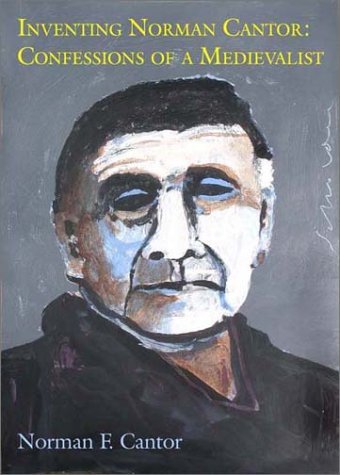
Book by Cantor, Norman F.

Book by Norman cantor
«In Twentieth-Century Culture, Norman Cantor has undertaken the formidable task of explaining, separately, and in their interaction, the major intellectual and cultural movements of our era. To this courageous enterprise Cantor brings extraordinary intelligence, wit, and passion. It will be a rare reader who does not disagree - even disagree vehemently - with some of Cantor's strong opinions, and an even rarer one who does not come away from this book instructed, stimulated, and enlightened.» (Robert W. Hanning, Columbia University)
history

In the latter part of the eleventh century a revolutionary group within the Western Church, centered in the papacy, attempted to overthrow the early medieval system of church-state relations by which the church in each country was under control of the kings and other secular rulers. Here is a comprehensive history of these controversies during the crucial period from the death of Archbishop Lanfranc in 1089 to the end of the reign of Henry I in 1135. The greater part of the book is concerned with the pontificate of Archbishop Anselm (1093-1109) and includes the first substantial account of the episcopal career of this famous theologian. In a concluding chapter, the obscure period in the history of the English Church from 1109 to 1135 is investigated, and the methods by which Henry I reasserted royal authority over the Church are indicated.Originally published in 1958.The Princeton Legacy Library uses the latest print-on-demand technology to again make available previously out-of-print books from the distinguished backlist of Princeton University Press. These editions preserve the original texts of these important books while presenting them in durable paperback and hardcover editions. The goal of the Princeton Legacy Library is to vastly increase access to the rich scholarly heritage found in the thousands of books published by Princeton University Press since its founding in 1905.

Studies and Interpretations by Raymond Aron, Geoffrey Barracough, Alan Bullock, E.H. Carr, A.J.P. Taylor.The Structure of European History, Volume VI