
Nicholas Awde
28 Books Written

Modern Aramaic-English/English-Modern Aramaic Dictionary & Phrasebook: Assyrian/Syriac
by Nicholas Awde
Rating: 4.2 ⭐
• 2 recommendations ❤️
Aramaic is now recognised throughout the world as the language spoken by Christ and the Apostles. Contrary to popular belief, however, it is very much a 'living' language spoken today by the Assyrian peoples in Iran, Iraq, Syria and Turkey. It is also heard in Assyrian emigre communities of the US, Europe and Australia. Modern Aramaic or Assyrian is made up of a number of dialects. The two major ones are Swadaya (Eastern) and Turoyo (Western). This unique dictionary and phrasebook incorporates both dialects in a way that illustrates the differences and gives the reader a complete understanding of both. The dialects are presented in an easy-to-read romanised form that will help the reader to be understood.

Discusses the basics of the Arabic language and provides instruction in the Arabic alphabet.
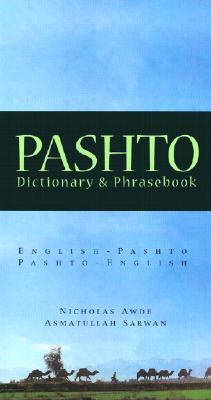
The essential Pashto language resource! Pashto, also known as Pakhto, Pakhtu, or Pushto, is one of two official languages of Afghanistan and is also spoken in the neighboring Northwest Frontier Province of Pakistan. It is an Indo-Iranian language spoken by over 40 million people worldwide. Pashto is written in the Arabic Naskh script, but entries in this dictionary are Romanized with phonetic pronunciation for English speakers. This unique, two-part resource provides travelers to Afghanistan and neighboring regions with the tools they need for daily interaction. The bilingual dictionary has a concise vocabulary for everyday use, and the phrasebook allows instant communication on a variety of topics. Ideal for businesspeople, travelers, students, and aid workers, this guide
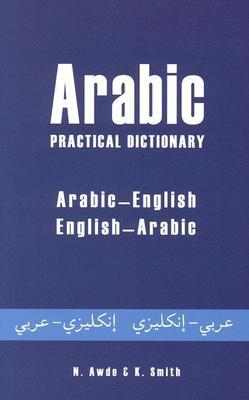
An essential resource for students of Arabic and English alike, this dictionary contains the most up-to- date vocabulary in handy reference form! With more than 18,000 entries, it is especially useful in navigating the growing terminology of politics, telecommunications, technology, the internet, tourism, business and travel. Ideal for students, scholars, businesspeople, journalists, aid workers, and the military in both English-speaking and Arabic-speaking countries. Features :
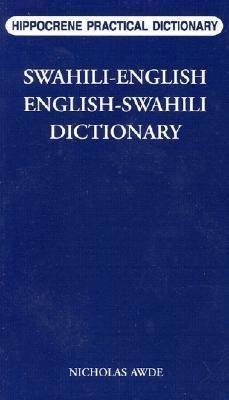
This bestselling bilingual Swahili dictionary is the also most comprehensive available, with over 35,000 entries that cover the modern vocabulary of politics, telecommunications, the Internet, tourism, business and travel. Swahili is the most widely spoken African language and the lingua franca of Eastern Africa, including Kenya, Uganda, Tanzania, and eastern Congo (Zaire). Intended for both speakers of English or Swahili, the guide also includes appendices of English irregular verbs, Swahili noun classes and useful phrases and vocabulary.

The essential Dari language resource! Dari, spoken by over 20 million people worldwide, is one of the official languages of Afghanistan. Closely related to the Persian (Farsi) of Iran, and the Tajik of Tajikistan, the languages have been split by politics and geography over time. This unique, two-part resource provides travelers to Afghanistan or people working with Dari speakers with the tools they need for daily interaction. The bilingual dictionary has a concise vocabulary for everyday use, and the phrasebook allows instant communication on a variety of topics. Ideal for government and NGO workers, interpreters, military personnel, resettlement agencies, teachers, and anyone who needs to communicate in Dari , this guide

Farsi is the official language of Iran, where over 67 million people speak its standard form. This phrase book and dictionary contains all the essential aspects of the language, detailing the alphabet and grammar, as well as listing a number of travel-oriented phrases.

Georgian-English/English-Georgian Dictionary and Phrasebook (Hippocrene Dictionary and Phrasebook Series)
by Nicholas Awde
Rating: 4.0 ⭐
The aim of this dictionary is to assist the student or traveler in expanding his or her knowledge of the language and culture of Georgia.
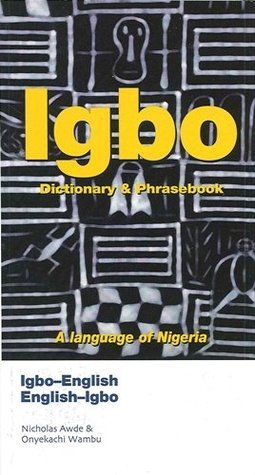
Igbo, also known as ibo, is one of the major languages of Nigeria. This guide contains an introduction to basic grammar, two-way dictionary, and helpful phrases arranged in 34 sections, each of which deals with aspects of everyday life. Also includes cultural information and a brief history of the Igbo people.

Urdu is the national language of Pakistan, one of the official languages of India, and it is spoken in the neighboring regions of Afghanistan, Nepal, and Bangladesh. Urdu uses a modified version of the Arabic script, but it is presented here in the Roman alphabet. The two-way dictionary and the practical, travel-oriented phrasebook pertain to everything from technology to Islamic culture. You will find an introduction to the language, useful tips for travel in Pakistan, and regional cultural information to help make your stay in the Urdu-speaking world a pleasant one.

The Swahili-speaking coast of Africa has many its beaches, safaris, and great cultural diversity. This dictionary and phrasebook contains all of the vocabulary and phrases necessary to communicate in Swahili, the most widely spoken African language. Designed for the visitor, the phrasebook offers vocabulary and phrases for travel and daily life situations. Spoken originally along the eastern coast (the name kiSwahili means 'coastal language'), and now the official language of Tanzania as well as a major language in Kenya, Uganda and the eastern Congo, Swahili is the lingua franca of Eastern Africa, with over 40 million speakers. This unique, two-part resource provides travelers to Kenya and neighboring nations with the tools they need for daily interaction. The bilingual dictionary has a concise vocabulary for everyday use, and the phrasebook allows instant communication on a variety of topics. Ideal for businesspeople, travelers, students, and aid workers, this guide

Western Armenian Dictionary & Phrasebook: Armenian-English/English-Armenian
by Nicholas Awde
Rating: 4.4 ⭐
Western Armenian is the language spoken by most of the seven million Diaspora Armenians who live outside their historic homeland. Its speakers form the majority of Armenians in the United States and the Middle East. Armenian is written in its own unique script, but it is presented here in a Romanized, easy-to-use form for instant communication. In addition to a pronunciation guide, included are a resourceful two-way dictionary containing more than 4,000 entries, an informative grammar section, and a collection of travel-oriented phrases. Observations related to Armenian culture are interspersed throughout the phrasebook. There is also a brief history of the Armenian people and Diaspora.

Kurdish (Sorani)-English/English-Kurdish (Sorani) Dictionary & Phrasebook
by Nicholas Awde
Rating: 3.8 ⭐
Sorani (also called Kurdi) is a Kurdish language spoken mainly in Iraq and Iran, with an estimated 15 million speakers worldwide. This resourceful book includes a 2-way Kurdish (Sorani)-English dictionary with over 4,000 entries as well as a useful phrasebook covering topics like emergency, healthcare, political, relief aid and combat terms.

*Over 24,000 entries *Completely modern and up-to-date *Concise, easy-to-use format *Appendices of Serbo-Croatian and English irregular verbs *Useful phrases

Serbian is the language spoken in Serbia and by the Serbs who live in other parts of the former Yugoslavia. Due to Serbian's similarity to Croatian, the two languages were fused into Serbo-Croat, which was the official language of Yugoslavia until the country divided into various republics in the early 1990s. The user of this dictionary and phrasebook, however, will be clearly understood in Serbia and Montenegro as well as in most of Bosnia and Croatia. Included are a bilingual dictionary with more than 4000 entries, a concise grammar, and a comprehensive phrasebook for students, travelers and foreign aid workers. A commonsense pronunciation guide enables users to speak Serbian without learning the Cyrillic script. A brief history of the language and cultural information are also provided.

This 32-chapter phrasebook includes over 3,000 dictionary entries and covers topics such as shopping, travel, and healthcare for the Eastern Armenian language. This book also includes a concise grammar and pronunciation section.

The aim of this dictionary is to assist the student or traveler in expanding his or her knowledge of the language and culture of Chechnya. It an introduction to basic grammar; pronunciation guide; the Chechen alphabet; Chechen to English and English to Chechen dictionary; and a Chechen phrasebook featuring all topics a visitor to Chechnya needs to know, including time of day, dates, transportation, money, communication services, maps; and much more.

The most modern of its kind available, this new dictionary is an essential resource for students of Modern Standard Arabic and English alike. It is intended to cover their needs with the most up-to-date entries in handy reference form, and will especially prove to be an invaluable aid in navigating the growing global vocabulary of politics, telecommunications, technology, the Internet, tourism, business and travel. Compact and concise, the dictionary includes more than 16,000 entries in clear, easy-to-read the Arabic is provided with romanised transliterations and the English with phonetic pronunciations, while grammatical forms are given for each word in both languages. The selection of current words and expressions and their practical arrangement make this a comprehensive and reliable dictionary that is not only a principal tool for the study of Modern Standard Arabic but also the perfect two-way portal for Arabic and English.
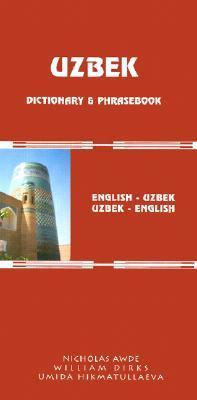
Uzbek, the national language of the Central Asian Republic of Uzbekistan, has over 20 million speakers in Uzbekistan, Afghanistan, Tajikstan, neighboring countries, and emigrant communities abroad. This two-way language guide provides the essential vocabulary and phrases for communication with Uzbek speakers in travel-related and daily life situations. Uzbek is presented here in the Roman alphabet to allow quick pronunciation. --5,000 total entries --Basic Uzbek grammar --Extensive vocabulary and phrases --Practical cultural information --For travelers, students, and businesspeople
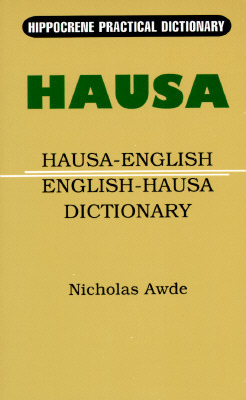
This dictionary is a modern resource designed to strengthen knowledge of the growing vocabularies respective to both Hausa and English. It is especially geared to the needs of speakers of both languages, be they student, business traveler, or tourist. Throughout the 18,000 entries and more than 40,000 definitions presented here in handy reference form, the user is exposed to both traditional as well as modern terminology. Notions of computerization, telecommunications, business, and the globalization of politics, law, and economy are well represented. Hausa is one of the major languages of Nigeria. It is also spoken in Niger and other neighboring West African countries in significant numbers. It is the African language with the greatest number of native speakers in sub-Saharan Africa.

This guide includes over 4,000 dictionary entries, plus an introduction to basic grammar. The helpful phrasebook covers subjects such as etiquette, shopping, government, and food and drink. It is written entirely in the Roman alphabet.

This book is no mere exercise in intellectual archaeology, for Crisp admirably draws out the implications of Shedds thought for the contemporary debate on the crucial subjects of sin and salvation. Crisp represents Shedds positions accurately and sympathetically, even when Crisp himself would develop the argument differently. I highly recommend this fine piece of philosophical theology (or, if one prefers, theological philosophy) and can only hope that it will stimulate renewed interest in Shedd - not only as an eminent theologian of great historical import, but as one who will now speak to the present generation. --Alan W. Gomes, Professor and Chair, Department of Theology, Talbot School of Theology, La Mirada, CaliforniaOliver Crisp convincingly shows that William G. T. Shedd was a reformed theologian whose dogmatics has a philosophical dimension which merits serious attention. In doing so he reveals the same intellectual qualities in evidence in his books on Jonathan Edwards and on philosophical clarity and rigour, theological sensitivity and excellent judgement. --Paul Helm, Emeritus Professor of the History and Philosophy of Religion, Kings College, LondonShedd possessed one of the great dogmatic minds of post-Reformation Protestantism, and this book will do much to commend him to a new readership. Written with Crisps characteristic acumen and sense of the scope and material cohesion of Christian doctrine, it will be read with great profit by students of historical and systematic theology. --John Webster, Kings College, Aberdeen

The Arabic Alphabet: How to Read & Write It by Nicholas Awde, Lyle Stuart
by Nicholas Awde
Rating: 5.0 ⭐
Ever larger numbers of people are starting to learn Arabic, while even more have some contact with the Arab world. Anyone who wishes to learn the language faces a hitherto formidable initial problem: the alphabet. This book proceeds step by step through all the letters of the Arabic alphabet, showin ... Available here:readmeaway.com/download?i=0818404302The Arabic Alphabet: How to Read & Write It PDF by Nicholas AwdeRead The Arabic Alphabet: How to Read & Write It PDF from Lyle Stuart,Nicholas AwdeDownload Nicholas Awde’s PDF E-book The Arabic Alphabet: How to Read & Write It
![Farsi Dictionary & Phrasebook: Farsi-English / English-Farsi (Hippocrene Dictionary & Phrasebooks) [Paperback] [2006] (Author) Nicholas Awde, Camilla Shahribaf](https://m.media-amazon.com/images/S/compressed.photo.goodreads.com/books/1697907625i/124670793.jpg)
Farsi Dictionary & Phrasebook: Farsi-English / English-Farsi (Hippocrene Dictionary & Phrasebooks) [Paperback] [2006] (Author) Nicholas Awde, Camilla Shahribaf
by Nicholas Awde
Rating: 4.0 ⭐

Armenian First Names: By Nicholas Awde & Emanuela Losi (First Name Books from Hippocrene)
by Nicholas Awde
Rating: 3.0 ⭐
With names such as Astrik 'little star' and 'Kaspar 'one of the three wise men', this beautiful gift edition of over 400 Armenian girls' and boys' first names is more then a guide for parents-to-be. It intertwines the modernity and tradition of Armenian culture. Each name has been traced back to its meaning and origin, uncovering historical significance, religious allusion, or nature reference. Features over 400 entries.

Dutch-English/English-Dutch Dictionary And Phrasebook
by Nicholas Awde
Spoken by more than 20 million people worldwide, Dutch is the official language of the Netherlands. The country is a favourite of travellers, renowned for its scenic countryside, traditional villages and beautiful cities such as Amsterdam, Rotterdam and The Hague. Artists as varied as Escher, Rembrandt and Vincent Van Gogh have called it home. This dictionary and phrasebook is the quintessential companion for travellers. The bilingual dictionary includes over 4000 entries while the phrasebook offers guidance for numerous situations related to travel and daily life. Its 29 sections cover topics ranging from basic etiquette and everyday needs to travel questions and emergencies. Users will be prepared whenever Dutch is spoken which, in addition to the Netherlands, includes Aruba, the Dutch Antilles, Belgium, Indonesia and Surinam.

Azerbaijani Dictionary and Phrasebook: Dictionary and Phrasebook
by Nicholas Awde
This dictionary and phrasebook includes a dictionary of over 4,000 entries, plus an introduction to basic grammar and helpful phrasebook chapters covering subjects such as etiquette, the office, government, and food and drink. It is written entirely in the Roman alphabet.This unique language guides for getting around and communicating easily in everyday situations will be equally useful for tourists, business people and aid workers.

Swahili-English/ English-Swahili Concise Dictionary
by Nicholas Awde