
Nathan Rosenberg
Dr. Nathan Rosenberg was an economist who specialized in the history of technology. Rosenberg received Ph.D. from the University of Wisconsin in 1955, and taught at Indiana University (1955–1957), the University of Pennsylvania (1957–1961), Purdue University (1961–1964), Harvard University (1967–1969), the University of Wisconsin (1969–1974), and then Stanford University until his retirement.
28 Books Written

How the West Grew Rich: The Economic Transformation Of The Industrial World
by Nathan Rosenberg
Rating: 3.7 ⭐
• 2 recommendations ❤️
How did the West—Europe, Canada, and the United States—escape from immemorial poverty into sustained economic growth and material well-being when other societies remained trapped in an endless cycle of birth, hunger, hardship, and death? In this elegant synthesis of economic history, two scholars argue that it is the political pluralism and the flexibility of the West's institutions—not corporate organization and mass production technology—that explain its unparalleled wealth.

Economists have long treated technological phenomena as events transpiring inside a black box and, on the whole, have adhered rather strictly to a self-imposed ordinance not to inquire too seriously into what transpires inside that box. The purpose of Professor Rosenberg's work is to break open and examine the contents of the black box. In so doing, a number of important economic problems be powerfully illuminated. The author clearly shows how specific features of individual technologies have shaped a number of variables of great concern to economists: the rate of productivity improvement, the nature of learning processes underlying technological change itself, the speed of technology transfer, and the effectiveness of government policies that are intended to influence technologies in particular ways. The separate chapters of this book reflect a primary concern with some of the distinctive aspects of industrial technologies in the twentieth century, such as the increasing reliance upon science, but also the considerable subtlety and complexity of the dialectic between science and technology. Other concerns include the rapid growth in the development of costs associated with new technologies as well as the difficulty of predicting the eventual performance characteristics of newly emerging technologies.
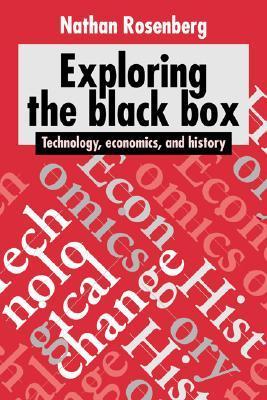
This book presents a unique account of how technological change is generated and the processes by which improved technologies are introduced into economic activity. The central theme of the book is the idea that technological changes are often "path dependent": their form and direction tend to be influenced strongly by the particular sequence of earlier events out of which a new technology has emerged. Individual chapters explore the particular features of new technologies in different historical and sectoral contexts.

Most discussions of U.S. economic competitiveness focus on the creation of new technologies, but the abundant evidence presented in this timely book indicates that the key factor underpinning U.S. competitiveness is not the development of technology itself, but the factors that influence the commercialization of technology. The importance of effective management and performance in the commercialization of new technologies reflects today's changing environment. The post-war decades of undisputed U.S. scientific and technological hegemony have been replaced by a period in which U.S. firms are challenged by foreign competitors in some fields, and struggling to regain their former positions in others. Although the U.S. scientific research establishment arguably has lost little if any of its post-war preeminence, the same cannot be said with respect to the performance of U.S. firms as developers, adapters, and managers of new technologies, largely because government policies have not been conducive to successful commercialization of technology. As we enter the last decade of the twentieth century, economic policy and performance are being linked more and more closely to technology-related issues. Technology commercialization is now recognized as critical to this linkage, and this book constitutes a state-of-the-art analysis of this vital but often overlooked aspect of technological innovation. The sixteen papers in this volume contribute to three important tasks. First, they draw on new developments in theoretical and empirical analysis to integrate the macro-and microeconomic dimensions of technological innovation and commercialization. Second, they extend and enrich the macroeconomic analysis of growth, capital formation, and international economic interactions to highlight the influences of macroeconomic variables on technology commercialization. Technology and capital investment are shown to be complementary inputs to the growth process, which means that favorable investment conditions are prerequisites for higher growth rates. Third, they also extend and enrich the microeconomic analysis of technological innovation and commercialization, in the process providing guidance for managers seeking to improve performance in both of the areas.

1968. Second Printing. 283 pages. Blue dust jacket over blue cloth covered boards with gilt. Pages have mild tanning and foxing throughout, moderate at end-papers, paste-downs and text-block edges. Previous owner's inscription to front paste-down. Binding remains firm. Boards have mild edge-wear with slight rubbing to surfaces. Mild crushing to spine ends. Gilt lettering is bright and clear. Unclipped jacket has light edge-wear with tears and creasing.

Perspectives on Technology consists of papers written by Nathan Rosenberg over a ten-year period, from the early 1960s to the early 1970s. Their origin was in Professor Rosenberg's interest in long-term economic growth processes and, especially, in the behaviour of industrializing societies. The form and direction which this book has taken reflect two basic (1) a growing awareness of the centrality of technological phenomena in generating economic growth, and (2) a growing sense that, in spite of the basic and genuine insights into technological phenomena provided by the neo-classical economics, a deeper and richer understanding of the phenomena can only be achieved by a willingness to step outside the limited intellectual boundaries of this mode of reasoning.

Britannia Bridge: The Generation and Diffusion of Technological Knowledge
by Nathan Rosenberg
Rating: 5.0 ⭐
One of the most well-regarded histories of a single bridge and its implications for the history of technology.

International technology transfer: Concepts, measures, and comparisons
by Nathan Rosenberg
Rating: 4.0 ⭐
For many years it was assumed that technology transfer would prove an unqualified answer for the problems of the developing nations, vastly simplifying and accelerating their rate of economic development. The papers in this volume question these assumptions demonstrating how technology transfer can be very costly and that success is contingent upon a variety of factors including, the direction of indigienous technology and the political setting of the recipient country.

Explores Schumpeter's views as an economist who was, long ago, committed to the notion of the endogeneity of technology.
The Direction of technological change: Inducement mechanisms and focusing devices
by Nathan Rosenberg

Economic Planning in the British Building Industry, 1945-1949
by Nathan Rosenberg
This volume undertakes the examination and appraisal of the economic controls employed by the British Labor Government in attempting to regulate the output of the building industry in the years immediately following the Second World War.An unfortunate consequence of earlier preoccupation with purely income-generating aspects of investment activity was that insufficient consideration was given to the allocation of investment resources. It was precisely this latter problem, however, which became a matter of major concern to the Labor Government. Its building program in the postwar years is examined here with particular reference to the program's peculiar structure and organization and the availability of building workers and materials. Discussion also covers the Government's administrative machinery for regulating building demand and for determining the uses to which building resources were put, as well as the priorities which the Government attempted to impose upon the industry and the consequences of specific policy decisions which were made in attempting to enforce these priorities.The British experience during the years between 1945 and 1949 provides numerous insights into the requirements and the problems associated with centralized planning of the operation of a private industry. The attempt to regulate the building industry is of increasing relevance in view of the growing recognition that nationalization is no panacea and that government planning must be more and more concerned with influencing the behavior of privately-operated industries. The importance of the present study is further enhanced by the fact that it deals with a strategic investment goods industry which must inevitably play a major role in the current and future "development planning" of underdeveloped countries.This work, therefore, is of special interest to economists concerned with the problems of government economic planning. Moreover, because of its strong focus upon the organizational and administrative aspects of government planning, Economic Planning in the British Building Industry is of vital interest to political scientists and all students of public administration.
VALIDATION OF ARMY FIXED-WING APTITUDE BATTERY AGAINST SUCCESS IN ROTC FLIGHT TRAINING
by Nathan Rosenberg
DEVELOPMENT OF EXPERIMENTAL SELECTORS FOR ARMY HELICOPTER PILOT TRAINEES--PERSONALITY CONSTRUCTS
by Nathan Rosenberg
VOCATIONAL INTERESTS OF NAVAL AVIATION CADETS: PRELIMINARY FINDINGS
by Nathan Rosenberg
TIME TO COMPLETE NAVAL AIR TRAINING AS AN ADDITIONAL CRITERION OF SUCCESS
by Nathan Rosenberg
The transfer of technology, opportunities and problems
by Nathan Rosenberg
A general purpose technology at work: The Corliss steam engine in the late 19th century
by Nathan Rosenberg
Why technology forecasts often fail.: An article from: The Futurist
by Nathan Rosenberg
The commercial exploitation of science by American industry
by Nathan Rosenberg
The diffusion of technology in the industrial revolution
by Nathan Rosenberg

Progreso Tecnico - El Analisis Historico
by Nathan Rosenberg

Tecnología y economía
by Nathan Rosenberg
Barcelona etc. 20 cm. 422 p. Encuadernación en tapa blanda de editorial ilustrada. Colección 'Colección Tecnología y Sociedad'. Traducción del inglés de Esther Labarta. Índices. Innovaciones tecnológicas. Estados Unidos. Transferencia de tecnología. Desarrollo económico .. Este libro es de segunda mano y tiene o puede tener marcas y señales de su anterior propietario. 8425209013

Cassel v. Radio-Keith-Orpheum Corporation U.S. Supreme Court Transcript of Record with Supporting Pleadings
by Nathan Rosenberg
The Making of Modern U.S. Supreme Court Records and Briefs, 1832-1978 contains the world's most comprehensive collection of records and briefs brought before the nation's highest court by leading legal practitioners - many who later became judges and associates of the court. It includes transcripts, applications for review, motions, petitions, supplements and other official papers of the most-studied and talked-about cases, including many that resulted in landmark decisions. This collection serves the needs of students and researchers in American legal history, politics, society and government, as well as practicing attorneys. This book contains copies of all known US Supreme Court filings related to this case including any transcripts of record, briefs, petitions, motions, jurisdictional statements, and memorandum filed. This book does not contain the Court's opinion. The below data was compiled from various identification fields in the bibliographic record of this title. This data is provided as an additional tool in helping ensure edition Cassel v. Radio-Keith-Orpheum CorporationPetition / NATHAN ROSENBERG / 1939 / 502 / 308 U.S. 622 / 60 S.Ct. 377 / 84 L.Ed. 519 / 11-3-1939Cassel v. Radio-Keith-Orpheum CorporationBrief in Opposition (P) / JOSEPH M COHEN / 1939 / 502 / 308 U.S. 622 / 60 S.Ct. 377 / 84 L.Ed. 519 / 11-24-1939Cassel v. Radio-Keith-Orpheum CorporationBrief in Opposition (P) / THOMAS D THACHER / 1939 / 502 / 308 U.S. 622 / 60 S.Ct. 377 / 84 L.Ed. 519 / 11-22-1939Cassel v. Radio-Keith-Orpheum CorporationReply Brief / NATHAN ROSENBERG / 1939 / 502 / 308 U.S. 622 / 60 S.Ct. 377 / 84 L.Ed. 519 / 11-30-1939

Sources of Medical TechnologyUniversities and Industry
by Nathan Rosenberg
Evidence suggests that medical innovation is becoming increasingly dependent on interdisciplinary research and on the crossing of institutional boundaries. This volume focuses on the conditions governing the supply of new medical technologies and suggest that the boundaries between disciplines, institutions, and the private and public sectors have been redrawn and reshaped. Individual essays explore the nature, organization, and management of interdisciplinary R&D in medicine; the introduction into clinical practice of the laser, endoscopic innovations, cochlear implantation, cardiovascular imaging technologies, and synthetic insulin; the division of innovating labor in biotechnology; the government- industry-university interface; perspectives on industrial R&D management; and the growing intertwining of the public and proprietary in medical technology.

Technology and American Economic Growth
by Nathan Rosenberg
In 1982, Vaclav Smil turned upside down traditional perceptions of China as a green paradise in "The Bad Earth". Updating and expanding its basic arguments and perceptions, this volume is an inquiry into the fundamental factors, needs, prospects, and limits of modern Chinese society.


THE EMERGENCE OF ECONOMIC IDEAS: Essays in the History of Economics
by Nathan Rosenberg
The most persistent theme of Nathan Rosenberg's work is a concern with the emergence and diffusion of economic ideas. Bringing together Professor Rosenberg's many contributions to the history of economic thought, this volume offers a series of important insights on how economics itself emerged as a distinct discipline. The Emergence of Economic Ideas extends our understanding of the development of capitalist institutions and the manner in which these institutions have contributed to the unique technological dynamism of capitalist societies. The book also - and necessarily - focuses upon the emergence of ideas about capitalism. That is to say, the discipline of economics is itself a body of ideas, and analytical techniques, that have been developed over the past two centuries in order to explain how capitalist economies have developed and how they work. Professor Rosenberg examines the key contributions - from Mandeville, Adam Smith, Babbage, Marx, Schumpeter and Stigler - in the growth of this critical collection of ideas. Economists interested in the emergence of their discipline and historians of ideas will welcome this collection which will make Professor Rosenberg's many substantial contributions more widely accessible to teachers, students and researchers.