
Natasha Trethewey
Natasha Trethewey is an American poet who was appointed United States Poet Laureate in June 2012; she began her official duties in September. She won the 2007 Pulitzer Prize in Poetry for her 2006 collection Native Guard, and she is the Poet Laureate of Mississippi. She is the Robert W. Woodruff Professor of English and Creative Writing at Emory University, where she also directs the Creative Writing Program. Trethewey was born in Gulfport, Mississippi, on April 26, 1966, Confederate Memorial Day, to Eric Trethewey and Gwendolyn Ann Turnbough, who were married illegally at the time of her birth, a year before the U.S. Supreme Court struck down anti-miscegenation laws with Loving v. Virginia. Her birth certificate noted the race of her mother as "colored", and the race of her father as “Canadian”. Trethewey's mother, a social worker, was part of the inspiration for Native Guard, which is dedicated to her memory. Trethewey's parents divorced when she was young and Turnbough was murdered in 1985 by her second husband, whom she had recently divorced, when Trethewey was 19 years old. Recalling her reaction to her mother's death, she said, "that was the moment when I both felt that I would become a poet and then immediately afterward felt that I would not. I turned to poetry to make sense of what had happened". Natasha Trethewey's father is also a poet; he is a professor of English at Hollins University. Trethewey earned her B.A. in English from the University of Georgia, an M.A. in English and Creative Writing from Hollins University, and an M.F.A. in poetry from the University of Massachusetts Amherst in 1995. In May 2010 Trethewey delivered the commencement speech at Hollins University and was awarded an honorary doctorate. She had previously received an honorary degree from Delta State University in her native Mississippi. Structurally, her work combines free verse with more structured, traditional forms like the sonnet and the villanelle. Thematically, her work examines "memory and the racial legacy of America". Bellocq's Ophelia (2002), for example, is a collection of poetry in the form of an epistolary novella; it tells the fictional story a mixed-race prostitute who was photographed by E. J. Bellocq in early 20th-century New Orleans. The American Civil War makes frequent appearances in her work. Born on Confederate Memorial Day—exactly 100 years afterwards—Trethewey explains that she could not have "escaped learning about the Civil War and what it represented", and that it had fascinated her since childhood. For example, Native Guard tells the story of the Louisiana Native Guards, an all-black regiment in the Union Army, composed mainly of former slaves who enlisted, that guarded the Confederate prisoners of war. On June 7, 2012, James Billington, the Librarian of Congress, named her the 19th US Poet Laureate. Billington said, after hearing her poetry at the National Book Festival, that he was "immediately struck by a kind of classic quality with a richness and variety of structures with which she presents her poetry … she intermixes her story with the historical story in a way that takes you deep into the human tragedy of it." Newspapers noted that unlike most poets laureate, Trethewey is in the middle of her career. She was also the first laureate to take up residence in Washington, D.C., when she did so in January 2013. On May 14, 2014, Tretheway delivered her final lecture to conclude her second term as US Poet Laureate. (from Wikipedia)
26 Books Written

An Instant New York Times Bestseller A New York Times Notable Book One of Barack Obama's Favorite Books of 2020 Named One of the Best Books of the Year The Washington Post, NPR, Shelf Awareness , Esquire , Electric Literature , Slate , The Los Angeles Times , USA Today , and InStyle A chillingly personal and exquisitely wrought memoir of a daughter reckoning with the brutal murder of her mother at the hands of her former stepfather, and the moving, intimate story of a poet coming into her own in the wake of a tragedyAt age nineteen, Natasha Trethewey had her world turned upside down when her former stepfather shot and killed her mother. Grieving and still new to adulthood, she confronted the twin pulls of life and death in the aftermath of unimaginable trauma and now explores the way this experience lastingly shaped the artist she became. With penetrating insight and a searing voice that moves from the wrenching to the elegiac, Pulitzer Prize–winning poet Natasha Trethewey explores this profound experience of pain, loss, and grief as an entry point into understanding the tragic course of her mother’s life and the way her own life has been shaped by a legacy of fierce love and resilience. Moving through her mother’s history in the deeply segregated South and through her own girlhood as a “child of miscegenation” in Mississippi, Trethewey plumbs her sense of dislocation and displacement in the lead-up to the harrowing crime that took place on Memorial Drive in Atlanta in 1985. Memorial Drive is a compelling and searching look at a shared human experience of sudden loss and absence but also a piercing glimpse at the enduring ripple effects of white racism and domestic abuse. Animated by unforgettable prose and inflected by a poet’s attention to language, this is a luminous, urgent, and visceral memoir from one of our most important contemporary writers and thinkers.

Winner of the 2007 Pulitzer Prize for Poetry Former U.S. Poet Laureate, Natasha Trethewey’s Native Guard is a deeply personal volume that brings together two legacies of the Deep South. Through elegaic verse that honors her mother and tells of her own fraught childhood, Natasha Trethewey confronts the racial legacy of her native Deep South—--where one of the first black regiments, The Louisiana Native Guards, was called into service during the Civil War. The title of the collection refers to the black regiment whose role in the Civil War has been largely overlooked by history. As a child in Gulfport, Mississippi, in the 1960s, Trethewey could gaze across the water to the fort on Ship Island where Confederate captives once were guarded by black soldiers serving the Union cause. The racial legacy of the South touched Trethewey’s life on a much more immediate level, too. Many of the poems in Native Guard pay loving tribute to her mother, whose marriage to a white man was illegal in her native Mississippi in the 1960s. Years after her mother’s tragic death, Trethewey reclaims her memory, just as she reclaims the voices of the black soldiers whose service has been all but forgotten. Trethewey's resonant and beguiling collection is a haunting conversation between personal experience and national history.

The stunning follow-up volume to her 2007 Pulitzer Prize–winning Native Guard, by America’s new Poet LaureateNatasha Trethewey’s poems are at once deeply personal and historical—exploring her own interracial and complicated roots—and utterly American, connecting them to ours. The daughter of a black mother and white father, a student of history and of the Deep South, she is inspired by everything from colonial paintings of mulattos and mestizos to the stories of people forgotten by history. Meditations on captivity, knowledge, and inheritance permeate Thrall, as she reflects on a series of small estrangements from her poet father and comes to an understanding of how, as father and daughter, they are part of the ongoing history of race in America.Thrall confirms not only that Natasha Trethewey is one of our most gifted and necessary poets but that she is also one of our most brilliant and fearless.
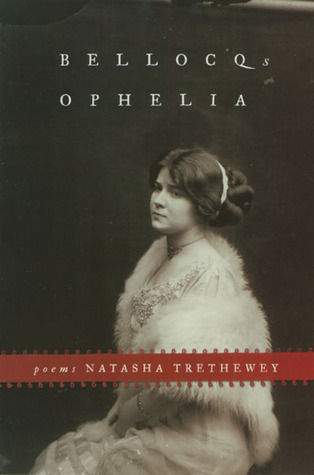
Selected as a "2003 Notable Book" by the American Library AssociationIn the early 1900s, E.J. Bellocq photographed prostitutes in the red-light district of New Orleans. His remarkable, candid photos inspired Natasha Trethewey to imagine the life of Ophelia, the subject of Bellocq's Ophelia, her stunning second collection of poems. With elegant precision, Ophelia tells of her life on display: her white father whose approval she earns by standing very still; the brothel Madame who tells her to act like a statue while the gentlemen callers choose; and finally the camera, which not only captures her body, but also offers a glimpse into her soul.

Urgent new poems on race and gender inequality, and select poems drawing upon Domestic Work, Bellocq’s Ophelia, Native Guard, Congregation, and Thrall, from two-time U.S. Poet Laureate and Pulitzer Prize winner Natasha Trethewey.Layering joy and urgent defiance―against physical and cultural erasure, against white supremacy whether intangible or graven in stone―Trethewey’s work gives pedestal and witness to unsung icons. Monument , Trethewey’s first retrospective, draws together verse that delineates the stories of working class African American women, a mixed-race prostitute, one of the first black Civil War regiments, mestizo and mulatto figures in Casta paintings, and Gulf coast victims of Katrina. Through the collection, inlaid and inextricable, winds the poet’s own family history of trauma and loss, resilience and love.In this setting, each poem drawn from an “opus of classics both elegant and necessary,”* weaves and interlocks with those that come before and those that follow. As a whole, Monument casts new light on the trauma of our national wounds, our shared history. This is a poet’s remarkable labor to source evidence, persistence, and strength from the past in order to change the very foundation of the vocabulary we use to speak about race, gender, and our collective future.*Academy of American Poets’ chancellor Marilyn Nelson“[Trethewey’s poems] dig beneath the surface of history―personal or communal, from childhood or from a century ago―to explore the human struggles that we all face.” ―James H. Billington, 13th Librarian of Congress

Winner of the 2001 Mississippi Institute of Arts and Letters AwardIn this widely celebrated debut collection of poems, Natasha Trethewey draws moving domestic portraits of families, past and present, caught in the act of earning a living and managing their households. Small moments taken from a labor-filled day--and rendered here in graceful and readable verse--reveal the equally hard emotional work of memory and forgetting, the extraordinary difficulty of trying to live with or without someone.

Beyond Katrina is poet Natasha Trethewey’s very personal profile of the Mississippi Gulf Coast and of the people there whose lives were forever changed by hurricane Katrina.Trethewey spent her childhood in Gulfport, where much of her mother’s extended family, including her younger brother, still lives. As she worked to understand the devastation that followed the hurricane, Trethewey found inspiration in Robert Penn Warren’s book Segregation: The Inner Conflict in the South, in which he spoke with southerners about race in the wake of the Brown decision, capturing an event of wide impact from multiple points of view. Weaving her own memories with the experiences of family, friends, and neighbors, Trethewey traces the erosion of local culture and the rising economic dependence on tourism and casinos. She chronicles decades of wetland development that exacerbated the destruction and portrays a Gulf Coast whose citizens—particularly African Americans—were on the margins of American life well before the storm hit. Most poignantly, Trethewey illustrates the destruction of the hurricane through the story of her brother’s efforts to recover what he lost and his subsequent incarceration.Renowned for writing about the idea of home, Trethewey’s attempt to understand and document the damage to Gulfport started as a series of lectures at the University of Virginia that were subsequently published as essays in the Virginia Quarterly Review. For Beyond Katrina, Trethewey has expanded this work into a narrative that incorporates personal letters, poems, and photographs, offering a moving meditation on the love she holds for her childhood home.A Sarah Mills Hodge Fund Publication.

An exquisite meditation on the geographies we inherit and the metaphors we inhabit, from Pulitzer Prize winner and nineteenth U.S. poet laureate Natasha Trethewey In a shotgun house in Gulfport, Mississippi, at the crossroads of Highway 49, the legendary highway of the Blues, and Jefferson Street, Natasha Trethewey learned to read and write. Before the land was a crossroads, however, it was a a farming settlement where, after the Civil War, a group of formerly enslaved women, men, and children made a new home. In this intimate and searching meditation, Trethewey revisits the geography of her childhood to trace the origins of her writing life, born of the need to create new metaphors to inhabit “so that my story would not be determined for me.” She recalls the markers of history and culture that dotted the horizons of her the Confederate flags proudly flown throughout Mississippi; her gradual understanding of her own identity as the child of a Black mother and a white father; and her grandmother’s collages lining the hallway, offering glimpses of the world as it could be. With the clarity of a prophet and the grace of a poet, Trethewey offers up a vision of writing as of our own lives and the stories of the vanished, forgotten, and erased.

These poems are mostly reprinted from BEYOND KATRINA, but brought together with one previously published poem and another that is new to create a valid chapbook with its own identity.
![[Native Guard: Poems] [By: Trethewey, Natasha] [April, 2007]](https://m.media-amazon.com/images/S/compressed.photo.goodreads.com/books/1696104640i/144126303.jpg)


Domestic Work: Poems by Trethewey, Natasha(August 1, 2000) Paperback
by Natasha Trethewey
Rating: 5.0 ⭐

Native Guard by Natasha Trethewey. Mariner Books,2006
Rare Natasha Trethewey / Native Guard Signed 1st Edition 2006 - Boston: Houghton Mifflin, 2006 [Hardcover] Trethewey, Natasha
by Natasha Trethewey
Rating: 4.0 ⭐
This rare and vintage book is a perfect addition to any bibliophile's collection
Native Guard: Poems, Library Edition
by Natasha Trethewey
BY Trethewey, Natasha ( Author ) [{ Beyond A Meditation on the Mississippi Gulf Coast (Sarh Mills Hodge Fund Publications) Available Used By Trethewey, Natasha ( Author ) Jun - 01- 2012 ( Paperback ) } ]

Native Guard gift edition
by Natasha Trethewey

Bellocq's Ophelia by Natasha Trethewey
by Natasha Trethewey

PMS Poemmemoirstory - 2005
by Natasha Trethewey
6" x 9" PMS is a journal of women's poetry, memoir, and short fiction published once a year in the spring by the University of Alabama at Birmingham
![By Natasha Trethewey Native Guard: Poems (1st First Edition) [Hardcover]](https://m.media-amazon.com/images/S/compressed.photo.goodreads.com/books/1694820938i/161844537.jpg)
By Natasha Trethewey Native Guard: Poems (1st First Edition) [Hardcover]
by Natasha Trethewey
![Vigilance [Unbound Pages in Slipcase] Limited Edition Number 54 of 300 Signed by Author](https://m.media-amazon.com/images/S/compressed.photo.goodreads.com/books/1697485437i/159769727.jpg)
Vigilance [Unbound Pages in Slipcase] Limited Edition Number 54 of 300 Signed by Author
by Natasha Trethewey
![Bellocqs Ophelia Poems by Trethewey, Natasha [Graywolf Press,2002]](https://m.media-amazon.com/images/S/compressed.photo.goodreads.com/books/1696807160i/132267450.jpg)
Bellocqs Ophelia Poems by Trethewey, Natasha [Graywolf Press,2002]
by Natasha Trethewey
Bellocqs Ophelia Poems by Trethewey, Natasha. Published by Graywolf Press,2002, Paperback

Mìscegenation
by Natasha Trethewey
collection day
by Natasha Trethewey
Articulation
by Natasha Trethewey
Articulation has descriptive copy which is not yet available from the Publisher.