
Mordecai Richler
Working-class Jewish background based novels, which include The Apprenticeship of Duddy Kravitz (1959) and Saint Urbain's Horseman (1971), of Canadian writer Mordecai Richler. People best know Barney's Version (1997) among works of this author, screenwriter, and essayist; people shortlisted his novel Solomon Gursky Was Here (1989) for the Man Booker Prize in 1990. He was also well known for the Jacob Two-two stories of children. A scrap yard dealer reared this son on street in the mile end area of Montréal. He learned Yiddish and English and graduated from Baron Byng High School. Richler enrolled in Sir George Williams College (now Concordia University) to study English but dropped before completing his degree. Years later, Leah Rosenberg, mother of Richler, published an autobiography, The Errand Runner: Memoirs of a Rabbi's Daughter (1981), which discusses birth and upbringing of Mordecai and the sometime difficult relationship. Richler, intent on following in the footsteps of many of a previous "lost generation" of literary exiles of the 1920s from the United States, moved to Paris at age of 19 years in 1950. Richler returned to Montréal in 1952, worked briefly at the Canadian Broadcasting Corporation, and then moved to London in 1954. He, living in London meanwhile, published seven of his ten novels as well as considerable journalism. Worrying "about being so long away from the roots of my discontent", Richler returned to Montréal in 1972. He wrote repeatedly about the Jewish community of Montréal and especially portraying his former neighborhood in multiple novels. In England in 1954, Richler married Catherine Boudreau, a French-Canadian divorcée nine years his senior. On the eve of their wedding, he met Florence Wood Mann, a young married woman, who smited him. Some years later, Richler and Mann divorced and married each other. He adopted Daniel Mann, her son. The couple had five children together: Daniel, Jacob, Noah, Martha and Emma. These events inspired his novel Barney's Version. Richler died of cancer.
28 Books Written

From Mordecai Richler, one of our greatest satirists, comes one of literature's most delightful characters, Duddy Kravitz -- in a novel that belongs in the pantheon of seminal twentieth century books. Duddy -- the third generation of a Jewish immigrant family in Montreal -- is combative, amoral, scheming, a liar, and totally hilarious. From his street days tormenting teachers at the Jewish academy to his time hustling four jobs at once in a grand plan to "be somebody," Duddy learns about living -- and the lesson is an outrageous roller-coaster ride through the human comedy. As Richler turns his blistering commentary on love, money, and politics, The Apprenticeship Of Duddy Kravitz becomes a lesson for us all...in laughter and in life.

Before his brain began to shrink, Barney Panofsky clung to two cherished beliefs. Life was absurd, and nobody truly understood anybody else. Even his friends tend to agree that Barney is a 'wife-abuser, an intellectual fraud, a purveyor of pap, a drunk with a penchant for violence and probably a murderer'. But when his sworn enemy threatens to publish this calumny, Barney is driven to write his own memoirs, rewinding the spool of his life, editing, selecting and plagiarising, as his memory plays tricks on him - and on the reader. Ebullient and perverse, he has seen off 3 wives - the enigmatic Clara, whom he drove to suicide in Paris in 1952; the garrulous Second Mrs Panofsky; and finally Miriam who stayed married to him for decades before running off with a sober academic. Houdini-like, Barney slides from crisis to success, from lowlife to highlife in Montreal, Paris and London, his outrageous expolits culminating in the scandal he carries around like a humpback - the murder charge that he goes on denying to the end.

Berger, son of the failed poet L.B. Berger, is in the grips of an obsession. The Gursky family with its colourful bootlegging history, its bizarre connections with the North and the Inuit, and its wildly eccentric relations, both fascinates and infuriates him. His quest to unravel their story leads to the enigmatic Ephraim Gursky: document forger in Victorian England, sole survivor of the ill-fated Franklin expedition and charasmatic religious leader of the Arctic. Of Ephraim's three grandsons, Bernard has fought, wheeled and cheated his way to the head of a liquor empire. His brother Morrie has reluctantly followed along. But how does Ephraim's protege, Solomon, fit in? Elusive, mysterious and powerful, Solomon Gursky hovers in the background, always out of Moses' grasp, but present-like an omen.

Poor Jacob Two-Two. Not only must he say everything twice just to be heard over his four brothers and sisters, but he finds himself the prisoner of the dreaded Hooded Fang. What had he done to deserve such a punishment? The worst crime of all – insulting a grown-up! Although he’s small, Jacob is not helpless, especially when The Infamous Two come to his aid.

Long considered one of Mordecai Richler’s most beloved and acclaimed novels, St. Urbain’s Horseman has now been adapted into a high-profile two-part CBC drama. The attention this star-studded and heavily promoted mini-series will receive will renew interest in the book among Richler fans and introduce many new readers to this modern classic, now available in this attractive tie-in edition.St. Urbain’s Horseman is a complex, moving, and wonderfully comic evocation of a generation consumed with guilt – guilt at not joining every battle, at not healing every wound. Thirty-seven-year-old Jake Hersh is a film director of modest success, a faithful husband, and a man in disgrace. His alter ego is his cousin Joey, a legend in their childhood neighbourhood in Montreal. Nazi-hunter, adventurer, and hero of the Spanish Civil War, Joey is the avenging horseman of Jake’s impotent dreams. When Jake becomes embroiled in a scandalous trial in London, England, he puts his own unadventurous life on trial as well, finding it desperately wanting as he steadfastly longs for the Horseman’s glorious return. Irreverent, deeply felt, as scathing in its critique of social mores as it is uproariously funny, St. Urbain ’ s Horseman confirms Mordecai Richler’s reputation as a pre-eminent observer of the hypocrisies and absurdities of modern life.

Joshua Then and Now is about Joshua Shapiro today, and the Joshua he was. His father a boxer turned honest crook, his mother an erotic dancer whose greatest performance was at Joshuaâ s bar mitzvah, Joshua has overcome his inauspicious beginnings in the Jewish ghetto of Montreal to become a celebrated television writer and a successful journalist. But Joshua, now middle-aged, is not a happy man. Incapacitated by a freak accident, anguished by the disappearance of his WASP wife, and caught up in a sex scandal, Joshua is besieged by the press and tormented by the ghosts of his youth. Set in Montreal, the novel chronicles the rocky journey we all make between the countries of the past and the present. Raucous, opinionated, tender, Joshua Then and Now is a memorable excursion into Mordecai Richler's comic universe.From the Hardcover edition.
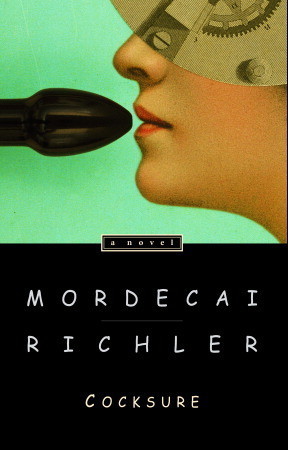
In the swinging culture of sixties’ London, Canadian Mortimer Griffin is a beleaguered editor adrift in a sea of hypocrisy and deceit. Alone in a world where nobody shares his values but everyone wants the same things, Mortimer must navigate the currents of these changing times. Richler’s eccentric cast of characters include the gorgeous Polly, who conducts her life as though it were a movie, complete with censor-type cuts at all the climactic moments; Rachel Coleman, slinky Black Panther of the boudoir; Star Maker, the narcissistic Hollywood tycoon who has discovered the secret of eternal life; and a precocious group of school children with a taste for the teachings of the Marquis de Sade. Cocksure is a savagely funny satire on television, movies, and the entertainment industry. This is Mordecai Richler at his most caustic and wicked best.

In this beguiling collection of short stories and memoirs, first published in 1969, Mordecai Richler looks back on his childhood in Montreal, recapturing the lively panorama of St. Urbain the refugees from Europe with their unexpected sophistication and snobbery; the catastrophic day when there was an article about St. Urbain Street in Time; Tansky’s Cigar and Soda with its “beat-up brown phonebooth” used for “private calls”; and tips on sex from Duddy Kravitz.Overflowing with humour, nostalgia, and wisdom, The Street is a brilliant introduction to Richler’s lifelong love-affair with St. Urbain Street and its inhabitants.

Young Noah Adler, passionate, ruthlessly idealistic, is the prodigal son of Montreal’s Jewish ghetto. Finding tradition in league with self-delusion, he attempts to shatter the ghetto’s illusory walls by entering the foreign territory of the goyim . But here, freedom and self-determination continue to elude him. Eventually, Noah comes to recognize “justice and safety and a kind of felicity” in a world he cannot – entirely – leave behind. Richler’s superb account of Noah’s struggle to scale the walls of the ghetto overflows with rich comic satire. Son of a Smaller Hero is a compassionate, penetrating account of the nature of belonging, told with the savage realism for which Mordecai Richler’s fiction is celebrated.
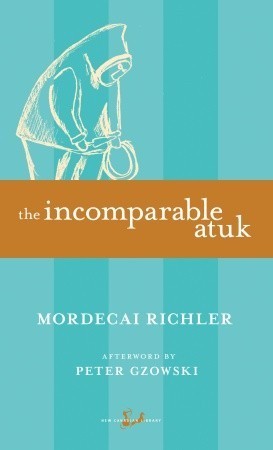
Transplanted to Toronto from his native Baffin Island, Atuk the poet is an unlikely overnight success. Eagerly adapting to a society steeped in pretension, bigotry, and greed, Atuk soon abandons the literary life in favour of more lucrative—and hazardous—schemes.Richler's hilarious and devastating satire lampoons the self-deceptions of "the Canadian identity" and derides the hypocrisy of a nation that seeks cultural independence by slavishly pursuing the American dream.

A humorous look at Quebec's movement toward independence from Canada, remarking upon the Draconian language laws imposed on English-speaking Quebecois, the economic problems posed by the movement, and the troubles with blind nationalism.
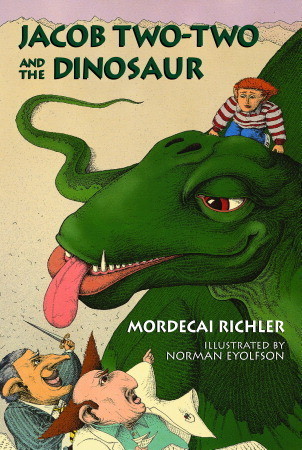
When his parents return from Kenya with a cute little green lizard on his eighth birthday (he’s two times two times two), Jacob Two-Two is thrilled. But it isn’t long before Jacob realizes that his new pet Dippy isn’t a lizard after all. And as months pass, it is apparent Dippy isn’t so little either. Soon Dippy is attracting all sorts of unwanted attention and before he knows it, Jacob is on the run from the Canadian government with a full-grown dinosaur to hide.
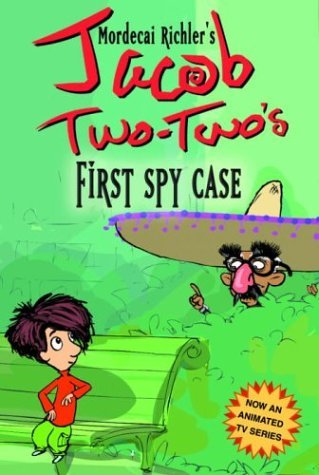
Things turn sour at Privilege House, Jacob Two-Two’s private school, when the headmaster, Mr. Goodbody, is replaced by the despicable I.M. Greedyguts. Now everything is unbearable, from geography class to the ghastly lunches made by Perfectly Loathsome Leo Louse. Worse yet, nobody’s parents believe how bad it really is. Fortunately, Jacob has a new friend he can turn to for help: X. Barnaby Dinglebat, Master Spy.

"In 1944, I was aware of three youth groups committed to the compelling idea of an independent Jewish Hashomer Hatza'ir (The Young Guard), Young Judaea, and Habonim (The Builders).Hashomer Hatza'ir was resolutely Marxist. According to intriguing reports I had heard, it was the custom, on their kibbutzim already established in Palestine, for boys and girls under the age of eighteen to shower together. Hashomer Hatza'ir members in Montreal included a boy I shall call Shloime Schneiderman, a high-school classmate of mine. In 1944, when we were still in eighth grade, Schloime enjoyed a brief celebrity after his photo appeared on the front page of the Montreal Herald. Following a two-cent rise in the price of chocolate bars, he had been a leader in a demonstration, holding high a placard that down with the 7cents chocolate bar. Hashomer Hatza'ir members wore uniforms at their blue shirts and neckerchiefs. "They had real court martials," wrote Marion Magid in a memoir about her days in Habonim in the Bronx in the early fifties, "group analysis, the girls were not allowed to wear lipstick." Whereas, in my experience, the sweetly scented girls who belonged to Young Judaea favored pearls and cashmere twinsets. They lived on leafy streets in the suburb of Outremont, in detached cottages that had heated towel racks, basement playrooms, and a plaque hanging on the wall behind the wet bar testifying to the number of trees their parents had paid to have planted in Eretz Yisrael, the land of Israel.I joined Habonim -- the youth group of a Zionist political party, rooted in socialist doctrine -- shortly after my bar mitzvah, during my first year at Baron Byng High School. I had been recruited by a Room 41 classmate whom I shall call Jerry Greenfeld..."

Che cosa hanno in comune Paul Newman, la Regina Madre d’Inghilterra e il popolo degli insonni disposti a seguire in televisione, fino all’alba, le silenziose evoluzioni delle palle colorate su un tappeto verde a tutto schermo? Semplice: una passione, la stessa che Mordecai Richler ha sempre nutrito e che in questo libro, il suo ultimo, si è deciso a raccontare. Convinto che il biliardo sia un gioco troppo serio per lasciarlo ai cronisti sportivi (categoria della quale ha peraltro a lungo, e onorevolmente, fatto parte), Richler ne tesse qui un’elegia che sembra il colpo da maestro di un grande giocatore, con la palla che finisce in buca dopo un gioco di sponde imprevedibile. Così, la penna che sembrava prepararsi a incidere il cammeo di un fuoriclasse devia d’improvviso verso i locali fumosi della Montreal del secondo dopoguerra, da lì rimbalza in un confronto a distanza con le pagine dedicate allo sport da grandi scrittori, poi colpisce in rapida successione il calcio, il football o lo hockey – senza risparmiare, nei suoi andirivieni, niente e nessuno. E come i numerosi devoti della Versione di Barney avranno già previsto, i primi a cadere sono proprio i santini quali l’immenso Wayne Gretzky, simbolo dello sport americano oggi a riposo, e quindi disposto a interpretare qualsiasi spot – «tranne quello dei Tampax. Per ora». Il mio biliardo è stato pubblicato per la prima volta nel 2001.

Following the success of the #1 bestseller and Giller Prize-winner Barney's Version, an irresistible and timely collection of the best of Mordecai Richler's recent essays.Mordecai Richler is not only a great novelist - he is also our best essayist, regularly offending some deeply, endearing himself mightily to others, and always entertaining. The Toronto Star calls him "mercilessly observant, funny, caustic and irreverent". To paraphrase Alberto Manguel in The Sunday Times - "Like Dr. Johnson at his insulting best, Mordecai at the top of his form is unsurpassed."Here we have his take on many unforgettable Canadians, heroes, and sinners, including Gretzky, Eddie Quinn and Pete Rose; we see him give a final skewering to his hated quarry, Brian Mulroney (but the NDP leadership fares little better); Woody Allen does not escape, but for Saul Bellow he has warm admiration and his tribute to Gordie Howe is as fond as it is thoughtful; he brings to life London in the 50s and leaves us with life in the Eastern Townships today. He is a storyteller even in his essays, and these are memorable for his character sketches, his sharp ear for dialogue, his unblinkered view of events. Like all great satirists, Richler cares passionately about the society in which we live; it's that love of country, as much as his love of sanity and common sense and his hatred of sacred cows, that underlies these essays.

A colony of Canadian and American writers and filmmakers, exiled by McCarthyist witch-hunts at home, find themselves in London, England, where they evolve a society every bit as merciless, destructive, and close-minded as that from which they have fled. The bonds of the group are strained when Norman Price, an academic turned hack writer, befriends an enigmatic German refugee. Ostracized by his colleagues, Norman soon perceives how easily conviction devolves into tyranny. Believing that “all alliances are discredited,” he enters a moral nightmare in which his choice of enemies is no longer clear. With relentless irony and biting accuracy, Mordecai Richler maps out a surreal territory of doubt, describing not only one man’s personal dilemma but the moral condition of modern society.From the Paperback edition.

Book by Mordecai Richler


Traduzione di Matteo Codignola e Franco Salvatorelli. 8vo pp. 200 Brossura (wrappers) Perfetto (Mint)

The first book to be set in the new Richler typeface, commissioned by Random House of Canada Limited and Jack Rabinovitch in memory of Mordecai.Mordecai Richler’s final book pays homage to his personal heroes and celebrates a writer’s love of sport with his trademark irascibility, humour and acuity.Even while writing his bestselling novels, Mordecai Richler nurtured his obsession with sports, writing brilliantly on ice hockey, baseball, salmon fishing, bodybuilding, and wrestling for such publications as GQ , Esquire , The New York Times Magazine , Inside Sports , Commentary , and The New York Review of Books . Mordecai himself chose the pieces to include in Dispatches from the Sporting Life , and together they give us an intimate portrait of a man who admired the players and prized the struggle of sport -- as much as he enjoyed skewering those who made a mockery of its principles.His encounters with Pete Rose, Wayne Gretzky and Gordie Howe (“Mr. Elbows…the big guy with the ginger-ale bottle shoulders”) are by turns bizarre, moving and uproarious. Richler travelled with Guy LaFleur’s Montreal Canadiens (“Les Canadiens sont là!”), but also with the “far-from-incomparable” Trail Smoke Eaters to Stockholm for the world hockey championships, where Canadians are “widely known, and widely disliked.”There are wonderful pieces here about Ring Lardner, George Plimpton, Hank Greenberg and lady umpires, and a marvellous essay on his unlimited enthusiasm for the all-inclusive Encyclopedia of Jews in Sports , which includes among its champions Sandy Koufax, “who may well be the greatest pitcher of all time, regardless of race, colour or creed,” as well as one Steve Allan Hertz, an infielder who played five total games in Houston in 1964 and had a batting average of .000.

The Canadian-born comic novelist, back in his homeland after twenty expatriate years, writes about the places, people, objects, and experiences that characterize Canada and have shaped his own life and career

SIGNED SCARCE AS NEW FIRST EDITION dust jacket hardcover, clean text, solid binding, NO remainders NOT ex-library slight shelfwear / storage-wear; WE SHIP FAST. In un-clipped very good jacket. Carefully packed and quickly sent. 201601838 SIGNED "Mordecai Richler" on the title page. Reading this collection of essays from 40-plus years ago is a bracing exercise in discovering just how much more artful one had to be as an adversarial pundit in the early 1970s. You couldn't just jab at this or that person, but explain yourself and what you thought. Mordecai Richler never had trouble with that, as "Shovelling Trouble" shows. A collection of essays and book reviews published in magazines from 1960 through 1970 and published in 1972, "Shovelling Trouble" presents Richler having at everything from Norman Mailer to comic-book ads, explaining his approach to writing at a critical juncture in his career, and expressing more than once a sadness about the fact his literary generation doesn't quite measure up against the famous "Lost Generation" (Hemingway, Picasso, et al) of the 1920s. This last point comes to the fore in the collection's best essay, "A Sense Of The Ridiculous", Richler's detailed remembrance of his younger days as a writer in the early 1950s in Paris, the city from whence the Lost Generation sprang and whose collective shadow haunted Richler and his mates. "We were not, it's worth noting, true adventurers, but followers of a romantic convention," he writes. Of the politics and poseurs of that time and place, Richler writes with great amusement and humor, while summoning an atmosphere of quiet, all-encompassing collapse. Walking into a cheap hotel room that once was part of a Wehrmacht brothel, Richler notes, he first would hammer at the door to scare away the rats and ghosts. The ghosts still linger in these pages. We recommend selecting Priority Mail wherever available. (No shipping to Mexico, Brazil or Italy.)

A collection of essays and reports.

A novelist who has set the highest stands for his profession, Mordecai Richler brings to essay writing the same exacting demand for quality the same well-honed wit, biting satire, and masterful prose style. And the best of it all can be found in this volume, representing selections from his two published collections, Shovelling Trouble and Hunting Tigers Under Glass. In an easy mingling of the journalistic and the literary. Richler informs and delights his readers. Whether he is musing on the comic strips or movies, putting James Bond in his place, or mocking Canadian provincialism, he is always engaging, always engrossing, and consistently at the top of his form.

Contents: Bond.--Why I write.--A sense of the ridiculous.--Gordon Craig.--Writing for the movies.--Notes on an endangered species.--The great comic book heroes.--The catskills.--Jews in sport.--Intimate behavior.--Following the Babylonian Talmud, after Mainonides...--With the Trail Smoke Eaters in Stockholm.--Going home.--Expo 67.--"Etes-vous canadien?"

Excerpt from Stick Your Neck OutAbout the PublisherForgotten Books publishes hundreds of thousands of rare and classic books.This book is a reproduction of an important historical work. Forgotten Books uses state-of-the-art technology to digitally reconstruct the work, preserving the original format whilst repairing imperfections present in the aged copy. In rare cases, an imperfection in the original, such as a blemish or missing page, may be replicated in our edition. We do, however, repair the vast majority of imperfections successfully; any imperfections that remain are intentionally left to preserve the state of such historical works. This text has been digitally restored from a historical edition. Some errors may persist, however we consider it worth publishing due to the work's historical value.The digital edition of all books may be viewed on our website before purchase.