
Milton Friedman
Milton Friedman was an American economist who became one of the most influential and controversial figures of the twentieth century, widely recognized for his profound contributions to monetary economics, consumption theory, and the defense of classical liberalism. A leading figure of the Chicago School of Economics, Friedman challenged the prevailing Keynesian consensus that dominated mid-century policy and instead placed monetary policy at the center of economic stability, arguing that changes in the money supply were the primary drivers of inflation and fluctuations in output. His groundbreaking permanent income hypothesis reshaped the study of consumer behavior by suggesting that individuals make spending decisions based on long-term expected income rather than current earnings, a theory that profoundly influenced both academic research and practical policymaking. Alongside Anna Schwartz, Friedman coauthored A Monetary History of the United States, 1867–1960, a monumental work that emphasized the role of Federal Reserve mismanagement in deepening the Great Depression, a thesis that redefined historical understanding of the period and helped establish monetarism as a major school of thought. His broader philosophy was articulated in works such as Capitalism and Freedom, where he argued that political and economic liberty are interdependent and advanced ideas like educational vouchers, voluntary military service, deregulation, floating exchange rates, and the negative income tax, each reflecting his conviction that society functions best when individuals are free to choose. Together with his wife Rose Friedman, he later brought these ideas to a global audience through the bestselling book and television series Free to Choose, which made complex economic principles accessible to millions and expanded his influence beyond academia. Awarded the Nobel Prize in Economic Sciences in 1976 for his achievements in consumption analysis, monetary history, and stabilization policy, Friedman became a prominent public intellectual, sought after by policymakers and leaders around the world. His ideas strongly influenced U.S. policy in the late twentieth century, particularly during the administration of Ronald Reagan, and found resonance in the economic reforms of Margaret Thatcher in the United Kingdom, both of whom embraced aspects of his prescriptions for free markets and limited government intervention. Friedman’s policy recommendations consistently opposed measures he regarded as distortions of market efficiency, including rent control, agricultural subsidies, and occupational licensing, while he proposed alternatives such as direct cash transfers through a negative income tax to replace complex welfare bureaucracies. His teaching career at the University of Chicago shaped generations of economists, many of whom extended his research and helped institutionalize the Chicago School as a major force in global economic thought, while his later role at the Hoover Institution at Stanford University provided him with a platform to continue his scholarship and public advocacy. Beyond technical economics, Friedman’s clarity of expression and ability to frame debates in terms of individual freedom versus state control made him one of the most recognizable intellectuals of his era, admired by supporters for his defense of personal liberty and market efficiency, and criticized by detractors who accused him of underestimating inequality, social costs, and the complexities of government responsibility. Despite the controversies, his impact on the development of modern economics was immense, reshaping debates about inflation, unemployment, fiscal policy, and the role of the central bank. His writings, lectures, and media appearances consistently reinforced his belief that competitive markets, voluntary exchange, and limited government intervention offer the most effective means of promoting prosperit
29 Books Written

In this classic discussion about economics, freedom, and the relationship between the two, Milton and Rose Friedman explain how our freedom has been eroded and our affluence undermined through the explosion of laws, regulations, agencies, and spending in Washington. Also they carefully examine how good intentions often produce deplorable results when government steps in as a middleman. The Friedmans also provide remedies for those economic ills-energetically informing us about what we should do in order to expand our freedom and promote prosperity. Powerful and persuasive, here is the important analysis of what has gone wrong in America in the past and what is necessary for our economic health to flourish.

"Milton Friedman, dikkat çekici analitik yetenekleri ve teknik ustalığıyla diğerlerinden ayrılan, ABD’nin olağanüstü iktisatçılarından biri. Her zaman aydınlatıcı, özgür, cesur, zeki ve en önemlisi de ufuk açıcı.”Henry Hazlitt, Newsweek“Kendi meslektaşlarının düşünüş şeklini büyük ölçüde değiştirebilen bir profesör çok nadirdir. Dünyanın değişmesine etki edeni daha da nadirdir. Friedman ikisini de başardı.”Stephen Chapman, Chicago TribuneKapitalizm ve Özgürlük’ün ilk baskısı 1962 yılında yayınlandığında, Büyük Buhran’ın acı hatıraları Amerikan halkının önemli bir kısmının hafızasında halen canlıydı. O dönemde, entelektüellerin yanı sıra hem Cumhuriyetçi hem Demokrat siyasetçilerin de tercihleri Keynesyen politikalardı. Böyle bir atmosferde yayınlanan Kapitalizm ve Özgürlük’te Friedman, devlet müdahalesinin niyet edilmemiş kötü sonuçlarına dikkat çekti. Rekabetçi kapitalizmin teorik ve pratik üstünlüklerini açık ve kuvvetli bir şekilde izah etti.Friedman, bu kitapta, ekonomik özgürlükler ile siyasî özgürlükler arasındaki bağıntıyı net bir şekilde ortaya koymuştur. Friedman’ın iktisat felsefesinde merkezî bir tema olan rekabetçi kapitalizm, hem iktisadî özgürlüğe ulaşmak için bir araç hem de siyasî özgürlük için gerekli bir koşuldur.Güncelliğini o zamandan bu yana dünyanın pek çok yerinde koruyan önemli pratik konulara rekabetçi kapitalizm perspektifinden yaklaşımlar sunan Friedman, devletin, duhul ettiği alanlardaki olumsuz etkilerini araştırmış ve bunlara çözüm önerileri getirmiştir. Devlet müdahalesinin etkilerinin yoğun bir şekilde hissedildiği uluslararası ticaret, malî politika, eğitim sistemi, ayrımcılık, tekeller, ruhsatlandırma, gelir dağılımı, sosyal refah politikaları ve yoksulluk gibi konular bu kitabın odaklandığı alanlardandır.Kapitalizm ve Özgürlük, 20. Yüzyıl’ın en etkili ve etkileyici kitaplarından birisi olarak gösterilmektedir. İlk edisyonundan sonra birkaç kez revize edilen kitap, onlarca dile çevrilmiş, tüm dünyada yüzbinlerce okura ulaşmıştır. Kitap, birçok ülkenin iktisat politikasını etkileyen fikirleri yaymasının yanı sıra Friedman’ın 1976 yılında Nobel İktisat Ödülü almasında etkili olmuştur.
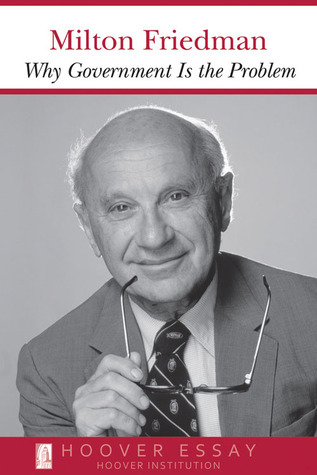
The major social problems of the United States—deteriorating education, lawlessness and crime, homelessness, the collapse of family values, the crisis in medical care—have been produced by well-intended actions of government. That is easy to document. The difficult task is understanding why government is the problem. The power of special interests arising from the concentrated benefits of most government actions and their dispersed costs is only part of the answer. A more fundamental part is the difference between the self-interest of individuals when they are engaged in the private sector and the self-interest of the same individuals when they are engaged in the government sector. The result is a government system that is no longer controlled by "we, the people." Instead of Lincoln's government "of the people, by the people, and for the people," we now have a government "of the people, by the bureaucrats, for the bureaucrats," including the elected representatives who have become bureaucrats. At the moment, term limits apear to be the reform that promises to be most effective in curbing Leviathan.

"A lively, enlightening introduction to monetary history…from monetarism's most articulate apostle."— Kirkus Reviews "The Oliver Stone of economics" (Chicago Tribune), Nobel Prize laureate Milton Friedman makes clear once and for all that no one, from the local corner merchant to the Wall Street banker to the president of the United States, is immune from monetary economics. In Money Mischief, Friedman discusses the creation of value: from stones to feathers to gold. He outlines the central role of monetary theory and shows how it can act to ignite or deepen inflation. Through colorful historical episodes, he demonstrates the mischief that can result from a misunderstanding of monetary economics — how, for example, the work of two obscure Scottish chemists destroyed the presidential prospects of William Jennings Bryan and how Franklin D. Roosevelt's decision to appease a few senators from the American West helped communism triumph in China. And he explains, in plain English, what the present monetary system in the United States means for your paycheck and your savings as well as for the global economy.
Writing in the June 1965 issue of theEconomic Journal, Harry G. Johnson begins with a sentence seemingly calibrated to the scale of the book he set himself to review: The long-awaited monetary history of the United States by Friedman and Schwartz is in every sense of the term a monumental scholarly achievement--monumental in its sheer bulk, monumental in the definitiveness of its treatment of innumerable issues, large and small . . . monumental, above all, in the theoretical and statistical effort and ingenuity that have been brought to bear on the solution of complex and subtle economic issues.Friedman and Schwartz marshaled massive historical data and sharp analytics to support the claim that monetary policy--steady control of the money supply--matters profoundly in the management of the nation's economy, especially in navigating serious economic fluctuations. In their influential chapter 7, The Great Contraction--which Princeton published in 1965 as a separate paperback--they address the central economic event of the century, the Depression. According to Hugh Rockoff, writing in January 1965: If Great Depressions could be prevented through timely actions by the monetary authority (or by a monetary rule), as Friedman and Schwartz had contended, then the case for market economies was measurably stronger.Milton Friedman won the Nobel Prize in Economics in 1976 for work related to A Monetary History as well as to his other Princeton University Press book, A Theory of the Consumption Function (1957).

Milton Friedman is one of the most famous economists in history. His writings and theories on everything from capitalism and freedom to deregulation and welfare have inspired movements, influenced government policies, and changed the course of America’s economic history.Now, acclaimed Friedman biographer Dr. Lanny Ebenstein brings together twenty of Friedman’s greatest essays in his new book, The Indispensable Milton Essays on Politics and Economics. The only collection of Friedman’s writings to span his entire career, The Indispensable Milton Essays on Politics and Economics features some of Friedman’s never-before-republished writings as well as the best and most timeless of his works.These exceptional essays not only illuminate the progression of Friedman’s thought, but explain how America might overcome some of its most difficult challenges. Broken into two sections, politics and economics, The Indispensable Milton Friedman shows how we can ultimately turn America around, and is more necessary than ever during this critical election year and time of economic uncertainty.

What is the exact nature of the consumption function? Can this term be defined so that it will be consistent with empirical evidence and a valid instrument in the hands of future economic researchers and policy makers? In this volume a distinguished American economist presents a new theory of the consumption function, tests it against extensive statistical J material and suggests some of its significant implications. Central to the new theory is its sharp distinction between two concepts of income, measured income, or that which is recorded for a particular period, and permanent income, a longer-period concept in terms of which consumers decide how much to spend and how much to save. Milton Friedman suggests that the total amount spent on consumption is on the average the same fraction of permanent income, regardless of the size of permanent income. The magnitude of the fraction depends on variables such as interest rate, degree of uncertainty relating to occupation, ratio of wealth to income, family size, and so on. The hypothesis is shown to be consistent with budget studies and time series data, and some of its far-reaching implications are explored in the final chapter.

Economics is sometimes divided into two positive economics and normative economics. The former deals with how the economic problem is solved, while the latter deals with how the economic problem should be solved. The effects of price or rent control on the distribution of income are problems of positive economics. The desirability of these effects on income distribution is a problem of normative economics. Within economics, the major division is between monetary theory and price theory. Monetary theory deals with the level of prices in general, with cyclical and other fluctuations in total output, total employment, and the like. Price theory deals with the allocation of resources among different uses, the price of one item relative to another. Prices do three kinds of things. They transmit information, they provide an incentive to users of resources to be guided by this information, and they provide an incentive to owners of resources to follow this information. Milton Friedman's classic book provides the theoretical underpinning for and understanding of prices. Economics is not concerned solely with economic problems. It is a social science, and is therefore concerned primarily with those economic problems whose solutions involve the cooperation and interaction of different individuals. It is concerned with problems involving a single individual only insofar as the individual's behavior has implications for or effects upon other individuals. Price Theory is concerned not with economic problems in the abstract, but with how a particular society solves its economic problems.
"Stimulating, provocative, often infuriating, but well worth reading."—Peter Newman, Economica"His critical blast blows like a north wind against the more pretentious erections of modern economics. It is however a healthy and invigorating blast, without malice and with a sincere regard for scientific objectivity."—K.E. Boulding, Political Science Quarterly"Certainly one of the most engrossing volumes that has appeared recently in economic theory."—William J. Baumol, Review of Economics and Statistics

The description for this book, The Great Contraction, 1929-1933, will be forthcoming.

Collects magazine columns in which Professor Friedman explains, in layman's terms, the economic realities underlying current political and social issues. Bibliogs

Analyzes the failure of the Reagan Administration's attempts to greatly reduce taxes, regulations, and government spending and suggests practical changes

In Two Lucky People , Rose and Milton Friedman provide a memorable and lively account of their lives, the people they knew, and the work they shared. Their involvement with world leaders and many of this century's most important public policy issues moves their memoir beyond the merely personal and makes fascinating reading for anyone interested in the history of twentieth-century ideas."The Friedmans come across as the last Enlightenment thinkers in a post-modern world. . . . This is a book that restores your faith in reasoned discourse. . . . There really are people who believe in scholarly exchange as a way to discover truth."—David Brooks, New York Times Book Review"The Friedmans are a feisty couple, who clearly delight in their lives and each other. And shining through their reticence, and their conservatism, is a decency that even liberals will recognize."—Milton and Judith Viorst, Washington Post Book World"This engaging book recounts the life and contributions of one of America's most influential writers and economists in the second half of the twentieth century. And her husband's no slouch either. . . . An indispensable guide through the evolution of economic thought."—Stephen Moore, National Review"A thought-provoking book and one rich in history, the personal history of the Friedmans . . . and the cultural and political history of our country."—Steve Huntley, Chicago Sun-Times Books"[ Two Lucky People ] is almost like a letter from a couple of old friends—a couple of old friends who had a long, compelling intellectual journey, came to know some of the great world leaders of this century, and had 60 years of happy, supportive marriage."—N. Gregory Mankiw, Fortune"A rich autobiographical and historical panorama."—William P. Kucewicz, Wall Street Journal

On his death in the autumn of 2006, Milton Friedman was lauded as “the grandmaster of free-market economic theory in the postwar era” by the New York Times and “the most influential economist of the second half of the 20th century” by the Economist. Winner of the Nobel Prize in Economics in 1976, Friedman was both a highly respected economist and a prominent public intellectual, the leader of a revolution in economic and political thought that argued robustly in favor of virtues of free markets and laissez-faire policies.Milton Friedman on Selected Papers collects a variety of Friedman’s papers on topics in economics that were originally published in the Journal of Political Economy. Opening with Friedman’s 1977 Nobel Lecture, the volume spans nearly the whole of his career, incorporating papers from as early as 1948 and as late as 1990. An excellent introduction to Friedman’s economic thought, Milton Friedman will be essential for anyone tracing the course of twentieth-century economics and politics.
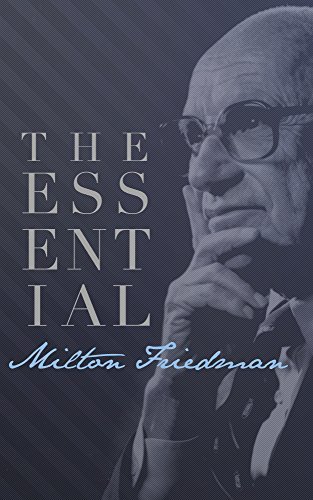
One of the most influential economists of the 20th century, Milton Friedman was a voice for free market economics and limited government. Friedman showed how free markets and human freedom are inextricable, and how government intervention often hinders human progress despite its best intentions. Topics • morality in relation to economics• is America getting better or worse• the real nature of freedom• is greed good?• how much government do we need• what the example of Hong Kong teaches us• myth of the robber barron• what really caused the great depression• Reaganomicsand more.

Milton Friedman on Freedom: Selections from The Collected Works of Milton Friedman
by Milton Friedman
Rating: 4.2 ⭐
In this book, Robert Leeson and Charles Palm have assembled an amazing collection of Milton Friedman’s best works on freedom. Even more amazing is that the selection represents only 1 percent of the 1,500 works by Friedman that Leeson and Palm have put online in a user-friendly format—and an even smaller percentage if you include their archive of Friedman’s audio and television recordings, correspondence, and other writings. This book and the larger online collection are sorely needed and very welcome. Milton Friedman deserves to be read in the original by generation after generation.

Two speeches & two replies, being the 7th Arthur K. Salomon Lectures at the New York University Graduate School of Buiness Aministration held on 11/14/1968.

The Nobel Prize winner writes here on current issues of prevailing concern to every American citizen and taxpayer, displaying the powers of analysis and expression that have made him one of the most widely respected economists in America. Edited and with an Introduction by William R. Allen.
This classic set of essays by Nobel Laureate and leading monetary theorist Milton Friedman presents a coherent view of the role of money, focusing on specific topics related to the empirical analysis of monetary phenomena and policy. The early chapters cover factors determining the real quantity of money held in a community and the welfare implications of policies that affect the quantity held. The following chapters formally restate why quantity analysis has become central to the science of economics. Friedman's presidential address to the American Economic Association, included here, provides a general summary of his views on the role of monetary policy, with an emphasis on its limitations and its possibilities. This theoretical framework is used in examining a number of empirical the demand for money, the explanation of price changes in wartime periods, and the role of money in business cycles. These essays summarize some of the most important results of Friedman's extensive research over the course of his lifetime. The chapters on policy that follow survey the positions of earlier economists and deal with the importance of lags and the implications of destabilizing speculation in foreign markets. Taken as a whole, The Optimum Quantity of Money provides a comprehensive view of the body of monetary theory developed in leading centers of monetary analysis. This work is essential reading for economists and graduate students in the field. The volume will be no less important for practicing business and banking personnel as well. The new statement by Michael Bordo, a student of Friedman's and an expert in the field, provides a sense of where the field now stands in the economy and academy.


This work provides a systematic statement of the theoretical position of the Chicago school on monetary economics. Milton Friedman restates the quantity theory of money and discusses the significance of its revival after a period of eclipse by the Keynesian view. Four empirical studies by Phillip Cogan, John J. Klein, Eugene M. Lerner, and Richard T. Selden are provided in support of the theory. The four studies...of inflation during and after the world wars and in the U.S. over the past century...show a striking regularity in economic response to monetary change. They will be of particular interest to monetary theorists, to empirical investigators in this area, and to economic historians and theorists generally.CONTENTS: The Quantity Theory of Money...A Restatement (Friedman) * The Monetary Dynamics of Hyperinflation (Cagan) * German Money and Prices, 1932-44 (Klein) * Inflation in the Confederacy, 1861-65 (Lerner) * Monetary Velocity in the United States (Selden)

Friedman and Szasz on Liberty and Drugs: Essays on the Free Market and Prohibition
by Milton Friedman
Rating: 4.0 ⭐
Book by Milton Friedman, Thomas S. Szasz
"[T]he only really sure way to beat inflation is to cut off inflation at the root. . . Milton Friedman [presents his strategy against] inflation in his penetrating . . . book . . . This is controversial stuff, and Professor Friedman . . . doesn't blanch at what he feels is his call of duty. And many a banker will just see red . . . [This book] can be recommended for a good look at the real roots of inflation―the look that thus far has not been widespread enough, among enough people."― The Wall Street Journal
Los diversos ensayos contenidos en este volumen ofrecen la esencia de los temas y conceptos que constituyen la teoría -ya clásica- de Milton Friedman, máximo exponente de la Escuela de Ciencias Económicas de Chicago. Siempre polémico, Friedman fue analista de estadísticas para el gobierno de Estados Unidos, asesor económico de Richard Nixon y Ronald Reagan y colaboró con el gobierno de Margaret Tatcher. En las discusiones sobre la alternativa entre decisiones macroeconómicas de cuño keynesiano y medidas de política monetarista, el protagonismo de las teorías de Friedman fue notorio en todo el mundo occidental en las últimas décadas del pasado siglo. «Monetarista de toda la vida», abogó por un crecimiento moderado y constante de la masa monetaria, sosteniendo que sólo la estabilidad económica permite generar y consolidar la estabilidad política. «La fe de Friedman es la fe del gran matemático que concibe la lógica de los procesos monetarios como abstracción de la lógica social. [...] Friedman es uno de los grandes defensores de la libertad. Todos sus propósitos en política económica se insertan en el marco de la primacía de la ley y de la promoción de la libertad individual bajo esta ley. Friedman cree firmemente en la superioridad moral y material de una sociedad libre sobre un sistema regulado y planificado. [...] Si bien -como diría él- las buenas ideas triunfan en última instancia después después de que hayamos experimentado las malas, no cabe duda de que sòlo espíritus tan destacados como Adam Smith y Milton Friedman han ofrecido contribuciones grandes que cambian la historia.» De la «Introducción» de Sir Alan Walters, vicepresidente y director del AIG Trading Group y ex economista jefe asesor del Reino Unido.
Book by Friedman, Milton


. 1983 5th imp booklet, bright clean copy, no markings, Professional booksellers since 1981
