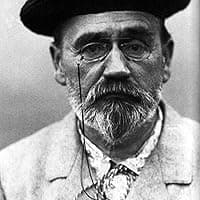
Émile Zola
Émile Zola was a prominent French novelist, journalist, and playwright widely regarded as a key figure in the development of literary naturalism. His work profoundly influenced both literature and society through its commitment to depicting reality with scientific objectivity and exploring the impact of environment and heredity on human behavior. Born and raised in France, Zola experienced early personal hardship following the death of his father, which deeply affected his understanding of social and economic struggles—a theme that would later permeate his writings. Zola began his literary career working as a clerk for a publishing house, where he developed his skills and cultivated a passion for literature. His early novels, such as Thérèse Raquin, gained recognition for their intense psychological insight and frank depiction of human desires and moral conflicts. However, it was his monumental twenty-volume series, Les Rougon-Macquart, that established his lasting reputation. This cycle of novels offered a sweeping examination of life under the Second French Empire, portraying the lives of a family across generations and illustrating how hereditary traits and social conditions shape individuals’ destinies. The series embodies the naturalist commitment to exploring human behavior through a lens informed by emerging scientific thought. Beyond his literary achievements, Zola was a committed social and political activist. His involvement in the Dreyfus Affair is one of the most notable examples of his dedication to justice. When Captain Alfred Dreyfus was wrongfully accused and convicted of treason, Zola published his famous open letter, J’Accuse…!, which condemned the French military and government for corruption and anti-Semitism. This act of courage led to his prosecution and temporary exile but played a crucial role in eventual justice for Dreyfus and exposed deep divisions in French society. Zola’s personal life was marked by both stability and complexity. He married Éléonore-Alexandrine Meley, who managed much of his household affairs, and later had a long-term relationship with Jeanne Rozerot, with whom he fathered two children. Throughout his life, Zola remained an incredibly prolific writer, producing not only novels but also essays, plays, and critical works that investigated the intersections between literature, science, and society. His legacy continues to resonate for its profound impact on literature and for his fearless commitment to social justice. Zola’s work remains essential reading for its rich narrative detail, social critique, and pioneering approach to the realistic portrayal of human life. His role in the Dreyfus Affair stands as a powerful example of the intellectual’s responsibility to speak truth to power.
15 Books Written

«Yo vivo en París, abro la ventana cada mañana y miro lo que tengo delante.» El interés por la actualidad y la necesidad de pintarla en toda su materialidad, como sus amigos los pintores impresionistas, llevaron a Zola a centrar en Les Halles, el Mercado Central de París −«una tímida revelación del siglo XX»−, la acción de la tercera novela del ciclo de Los Rougon-Macquart. En ella Lisa, una Macqu

The Masterpiece is the tragic story of Claude Lantier, an ambitious and talented young artist who has come from the provinces to conquer Paris but is conquered instead by the flaws of his own genius. Set in the 1860s and 1870s, it is the most autobiographical of the twenty novels in Zola's Rougon-Macquart series. It provides a unique insight into Zola's career as a writer and his relationsh

Pot Luck , Zola's most acerbic satire, describes daily life in a newly constructed block of flats in late nineteenth-century Paris. In examining the contradictions that pervade bourgeois life, Zola reveals a multitude of betrayals and depicts a veritable 'melting pot' of moral and sexualdegeneracy. This new translation captures the robustness of Zola's language and restores the omissions of

In the small Provençal town of Plassans, the day after the coup d'état from which the Second Empire was born, two teenagers, Miette and Silvère, join the insurgents. Their love story like the Republican uprising runs through the novel, but beyond them, it is also the birth of a family that is evoked: the Rougons at the same time as the Macquarts whose double lineage, legitimate and bastard, descen

The seventh novel in the Rougon-Macquart cycle, L'Assommoir (1877) is the story of a woman's struggle for happiness in working-class Paris. At the center of the story stands Gervaise, who starts her own laundry and for a time makes a success of it. But her husband soon squanders her earnings in the Assommoir, a local drinking spot, and gradually the pair sink into poverty and squalor. L'

The thirteenth novel in Émile Zola’s great Rougon-Macquart sequence, Germinal expresses outrage at the exploitation of the many by the few, but also shows humanity’s capacity for compassion and hope.Etienne Lantier, an unemployed railway worker, is a clever but uneducated young man with a dangerous temper. Forced to take a back-breaking job at Le Voreux mine when he cannot get other wo

Pauline Quenu, the daughter of shopkeepers in the Parisian business district Les Halles (see The Fat and the Thin, aka The Belly of Paris), is taken in by relatives on the coast of Normandy following the death of her parents. There, Pauline - kind and open-minded - is confronted with a gout-plagued host, his avaricious wife, and their lazy son, a morbid hypochondriac, whom she is exp

The Flood is a novel by French author Emile Zola, published in 1880. The story takes place in a small village located in the valley of the River Seine. The protagonist, a young engineer named Louis Roubien, is tasked with ensuring the safety of the village's dam during a period of heavy rain and flooding. As the water levels rise, Louis must navigate the complex relationships between the villagers

Emile Zola's novel Le Rêve (1888) is a love idyll concerning a poor embroideress, Angelique, and the son of a wealthy aristocratic family, set against the backdrop of a sleepy cathedral town in northern France.A far cry from the seething, teeming world evoked in Zola's best-known novels, it may at first seem a strange interlude between La Terre and La Bête humaine

The Ladies Paradise (Au Bonheur des Dames) recounts the rise of the modern department store in late nineteenth-century Paris. The store is a symbol of capitalism, of the modern city, and of the bourgeois family: it is emblematic of changes in consumer culture, and the changes in sexual attitudes and class relations taking place at the end of the century. This new translation of the eleventh

One of Zola's most famous realist novels, Therese Raquin is a clinically observed, sinister tale of adultery and murder among the lower classes in nineteenth-century Parisian society.Set in the claustrophobic atmosphere of a dingy haberdasher's shop in the passage du Pont-Neuf in Paris, this powerful novel tells how the heroine and her lover, Laurent, kill her husband, Camille,

When Jean Macquart arrives in the peasant community of Beauce, where farmers have worked the same land for generations, he quickly finds himself involved in the corrupt affairs of the local Fouan family. Aging and Lear-like, Old Man Fouan has decided to divide his land between his three children: his penny-pinching daughter Fanny, his eldest son - a far from holy figure known as 'Jesus Christ' - a

The penultimate novel of the Rougon-Macquart cycle, La Debacle (1892) takes as its subject the dramatic events of the Franco-Prussian War and the Commune of 1870-1. During Zola's lifetime it was the bestselling of all his novels, praised by contemporaries for its epic sweep as well as for its attention to historical detail. La Debacle seeks to explain why the Second E
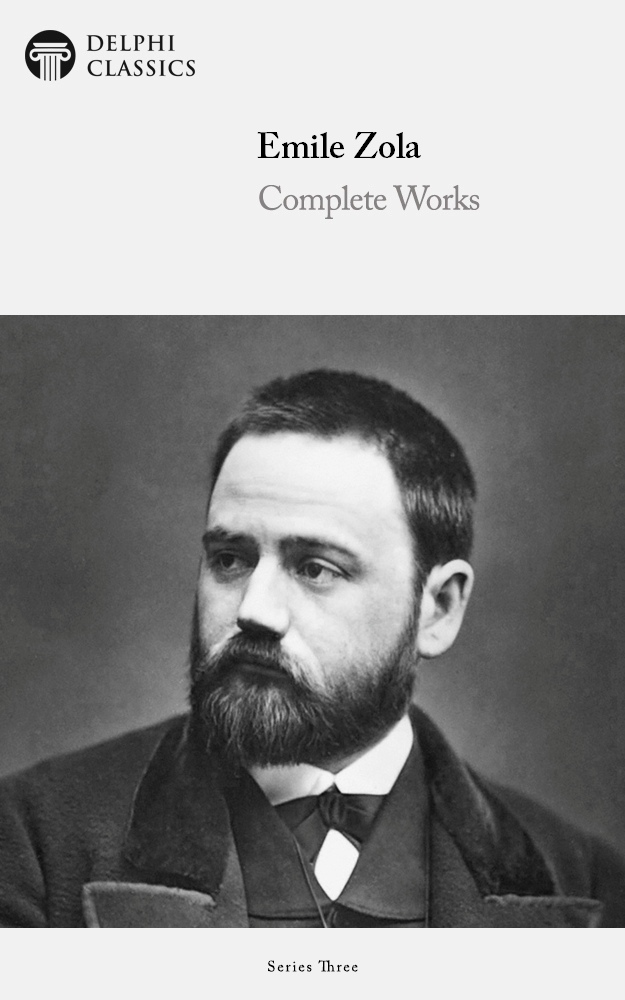
For the first time in the English language, Delphi Classics is proud to present the complete fictional works of the French master Émile Zola. This monumental eBook features beautiful illustrations, informative introductions.CONTENTS:The Early NovelsCLAUDE’S CONFESSIONTHE DEAD WOMAN’S WISHTHE MYSTERY OF MARSEILLETHERESE RAQUINMADELEINE FERAT<br

The Library of Alexandria is an independent small business publishing house. We specialize in bringing back to live rare, historical and ancient books. This includes manuscripts such classical fiction, philosophy, science, religion, folklore, mythology, history, literature, politics and sacred texts, in addition to secret and esoteric subjects, such occult, freemasonry, alchemy, hermetic, shamanis