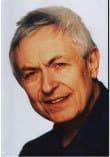
Michel Odent
For several decades Michel Odent has been instrumental in influencing the history of childbirth and health research. As a practitioner he developed the maternity unit at Pithiviers Hospital in France in the 1960s and '70s. He is familiarly known as the obstetrician who introduced the concept of birthing pools and home-like birthing rooms. His approach has been featured in eminent medical journals such as Lancet, and in TV documentaries such as the BBC film Birth Reborn. With six midwives he was in charge of about one thousand births a year and could achieve ideal statistics with low rates of intervention. After his hospital career he practiced home birth. As a researcher he founded the Primal Health Research Center in London (UK), which focuses upon the long-term consequences of early experiences. An overview of the Primal Health Research data bank ( www.birthworks.org/primalhealth) clearly indicates that health is to a great extent shaped during the primal period (from conception until the first birthday). It also suggests that the way we are born has long-term consequences in terms of sociability, aggressiveness or, otherwise speaking, capacity to love. Michel Odent has developed a preconceptional program (the "accordion method") in order to minimize the effects of intrauterine and milk pollution by synthetic fat soluble chemicals such as dioxins, PCBs, etc. His other research interests are the non-specific long term effects on health of early multiple vaccinations. Author of approximately 50 scientific papers, Odent has 11 books published in 21 languages to his name. In his books he developed the art of turning traditional questions around, looking at the question of “how to develop good health” rather than at that of “how to prevent disease”, and at the question of “how the capacity to love develops”, rather than at that of “how to prevent violence”. His books The Scientification of Love and The Farmer and the Obstetrician raise urgent questions about the future of our civilizations. His latest book ('The Caesarean') has been published in April 2004.
17 Books Written

Michel Odent, a leading figure in the natural childbirth movement, explains the techniques used at his Pithiviers hospital and the philosophy behind his remarkable a gentle, intimate trauma-free birth method.

Primal Health: Understanding the Critical Period Between Conception and the First Birthday
by Michel Odent
Rating: 4.3 ⭐
Michel Odent, the leading pioneer for natural childbirth, indicates that the period between conception and a child’s first birthday is critical to life-long health. In this prophetic book—first published in 1986 and reproduced here in its original form—he argues that different parts of the ‘primal adaptive system’ develop, regulate and adjust themselves during fetal life and the time around birth

How did a magnificent rescue operation become such a common way of giving birth? And how safe is it really? Why do some countries have 10 percent caesarean births, and some more than 50 percent? Why have risky procedures, such as forceps deliveries, not been eliminated by the C-section? What are the very first microbes met by a caesarean-born baby? Is it easy to breastfeed after a caesarean? What

Known for his pioneering work in natural childbirth the author in this book looks at what water has meant in the past through myths and legends and what it means for us now. He also wrote "Entering the World", "Birth Reborn", "Primal Health" and "The Z Factor".

In his new book Michel Odent shows how farming and childbirth have been industrialized side by side during the 20th century - with dramatic and disturbing consequences. The similarities are striking. In both cases innovations have been presented as the long awaited solution to an old problem: the advent of powerful synthetic insecticides has, overnight, dramatically reduced the costs and increased

Why do all cultures ritually disrupt the first contact between mother and new-born baby? Why has there hitherto been an evolutionary advantage in developing human potential for aggression rather than the capacity to love? Until recently love has been the realm of poets, artists and philosophers. Latterly it has been studied from multiple scientific perspectives. Michel Odent argues that the specia

"Відроджені пологи" - перша, найзнаменитіша книга французького доктора Мішеля Одена — історія пологового відділення в лікарні м Пітів'є. Завдяки Одену природність і свобода стали складовою акушерської практики; поклавшись на фізіологію, лікар і півдюжини акушерок змінили ставлення до пологів і практику в усьому світі. І продовжують міняти. Палати з домашньою обстановкою, мінімум втручань в несвідо
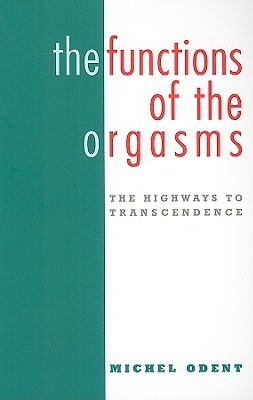
'Fetus ejection reflex', 'milk ejection reflex', 'sperm ejection reflex', 'orgasmogenic cocktail'...These are examples of terms used by Michel Odent in his study of the ecstatic/orgasmic states associated with different episodes of human sexual life. This book about male and female orgasms is an opportunity to convince anyone that humanity is at a turning point. Due to the improved technique of me

Since the middle of the twentieth century, the development of plastics has been one of the main factors influencing the history of medicine. This development has not only transformed most medical disciplines, it has also made possible the emergence of new medical concepts. Focusing on obstetrics, this first book about the history of medicine in relation to the plastic revolution asks vit al questi

In discussions of the future the emphasis is usually on the effects of myriad new technologies on our lives (examples being Al Gore’s The Future and Michel Serres’ Petites Poucettes). However, former obstetrician and revolutionary childbirth pioneer Michel Odent argues that the aspect of human lifestyle that has been most profoundly changed in recent decades is the period of time surrounding the b

A collection of articles by Michel Odent previously published in Midwifery Today magazine. French obstetrician Odent has been a natural childbirth advocate for years--this ebook is full of his birth wisdom on a variety of topics including waterbirth, breech birth, doulas and birth hormones.

The period surrounding birth is a phase of modern life that has been dramatically altered in recent decades, and emerging scientific disciplines have shown that this short period is critical in the formation of human beings. Michel Odent, former obstetrician and revolutionary childbirth pioneer, believes that these are two good reasons to raise questions about the way babies are born, and the cons

All about twin birth! This ebook is filled with articles previously published in Midwifery Today magazine. Includes education articles as well as twin birth stories. A perfect gift for the twinning mother or for any birth worker wanting to learn more.

What is the future of the human capacity to give birth? What is the future of underused physiological functions? Should we expect an evolution of Homo sapiens in relation to the way babies are born? Can fast-developing scientific disciplines induce a new awareness?In this wide-ranging, interdisciplinary look at the future of birth, renowned obstetrician Michel Odent takes the question

The Birth of Homo, the Marine Chimpanzee: When the tool becomes the master
by Michel Odent
Rating: 4.6 ⭐
Drawing on a diversity of fast-developing disciplines including genetics, physiology and pathology as well as the history of canoeing and studies of the fluctuation of sea levels, revolutionary thinker and birth pioneer Michel Odent examines the case for viewing the genus Homo as a ‘marine chimpanzee’ – particularly adapted to coastal areas. By exploring the practical implications of this vision o

After introducing the concept of the birthing pool in the 1970s, Michel Odent has continuously expanded his interest in the mysterious connections between humans and water. In Planet Ocean he shows that the evolution of the oceans – particularly the fluctuations of sea levels – and the evolution of humans are inseparable. The oceans are the givers and sustainers of life, holding ninety-five per ce

Since the advent of agriculture and animal husbandry, the human population has multiplied by about one thousand in a ‘demographic explosion’. However, in recent years, global fertility rates have begun to decrease significantly, and this is one reason to make a case for humans being becoming an endangered species. Many of the possible interpretations of this dramatic U-turn in the history of manki