
Michael Lockwood
21 Books Written
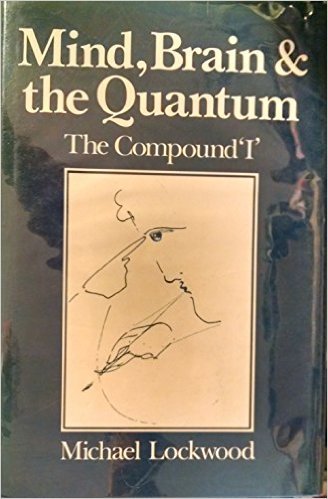
Mind, Brain, and the Quantum: The Compound 'I'
by Michael Lockwood
Rating: 4.7 ⭐
• 2 recommendations ❤️
The author, (philosophy, Oxford U.) speaks to a fairly general (albeit sophisticated) audience, presupposing no previous acquaintance with philosophy, neuroscience, or physics. Rooting his discussion in the latest thinking about quantum mechanics and in some previously neglected ideas of Bertrand Russell, he develops a theory of the relation between mind and body and what he believes to be the correct way to understand quantum mechanics. Annotation copyright Book News, Inc. Portland, Or.

Modern physics has revealed our knowledge of the universe as a much stranger place than we could have imagined. The puzzle at the center of our understanding of the universe is time. Michael Lockwood takes the reader on a fascinating journey into the nature of things. He investigates philosophical questions about the past, present, and future, our experience of time, and the possibility of time travel. And he provides the most careful, lively, and up-to-date introduction to the physics of time and the structure of the universe. His aim is not just to boggle the mind, but to lead the reader towards an understanding of the science and philosophy.

6 car tours, 37 picnic suggestions, 18 short walks for motorists, 23 main walks. Today, people are increasingly aware that inland Spain is a fascinating country just waiting to be explored. And yet this knowledge is, in many cases, ultimately frustrating, since so little has been published - other than in very general guidebooks - on where to go for a quiet day's walking and wildlifing in and around the major holiday destinations of Barcelona and the Costa Brava. This book covers coastal and inland Costa Brava from the French border south to Barcelona - taking in the bird-rich coastal marshes of the Aiguamolls de l'Emporda, the dormant volcanoes of the Garrotxa, the subalpine heights of the Montseny, the extraordinary conglomerate pinnacles of Montserrat, and the Garraf Massif. The authors have been guiding wildlife tours here for decades.

In 1963, Lionel Abel's book, A New View of Dramatic Form, was published. The basic idea of metatheater is that of multiple 'layers' of illusion. The prefix 'meta-', here, suggests 'beyond', 'above', or 'within'. Metatheater, in one of its senses, can be viewed as one make-believe (dramatic) world superimposed upon another make-believe (dramatic) world. Or as one dramatic world framed within another dramatic world. The most easily understandable example of this relationship is the 'play-within-the-play'. The question might be asked what relevance such a recent topic of literary criticism in the West would have to a study of ancient Sanskrit drama. Each of the six essays in Part One of this book provides an effective answer. In the sixth essay, a translation is given of the passage in the Abhinavabharati, wherein Abhinavagupta comments on the term 'natyayita'. Remarkably, this ancient Sanskrit term is most appropriately translated by the freshly minted English word, 'metatheater'! And it is through an understanding of this 30-year-old English term ('metatheater') that one is able to obtain a revealing insight into what Abhinava was saying one thousand years ago about 'natyayita', a term used on Sarira Abhinaya, and illustrated by Abhinava with a reference to Subandhu's play, Vasavadatta Natyadhara. The first five essays illustrate how profoundly a knowledge of the metadramatic structure of Sanskrit plays will affect the way in which they are to be understood and translated. Part Two of this book presents the text and translation of, and commentary on, two Sanskrit faces which were written in the seventh century A.D. by the South Indian king, Mahendravarman. These two plays superbly illustrate the multi-dimensional splendor of 'metatheater' in Sanskrit drama. Printed 174.


In this brief travel guide, Michael Lockwood describes the various temples in and around Mamallapuram. He uses Hindu Myths and local lore to identity stories and history of this ancient place.

The Follower
by Michael Lockwood

The Follower
by Michael Lockwood
Have you ever followed someone or something – in real life or online – without quite knowing where it’s going to lead? If you have, then you’ll know how 17-year-old Joe Best feels when following somebody leads him on an unexpected journey – a journey which turns out to be an inner quest as well as a physical one.To his schoolmates, he’s Ordinary Joe, Joe Average, Joe Bloggs. He’s even come to think of himself as having ‘no distinguishing features’, just like his passport says. He leads an uneventful life at home with his single parent mother and seems to have an equally uninspiring job ahead of him.But when by chance he finds himself recruited into Revival, a group led by self-styled Life Coach, Magnus King, Joe begins to feel that maybe he can become somebody different – somebody with a completely new name. Led by his infatuation with the mysterious Revival member, Zoe, he becomes a follower of Magnus, both in person and on social media. Joe tells us his own story of how this crush on Zoe sees him becoming more and more deeply involved with Revival and more and more enmeshed in the web of lies he spins for his mother.Alongside his quest for what Magnus calls ‘the best version of himself’, Joe also becomes involved in a search for his absent father, despite warnings from his mother. As Revival suddenly begins to take a sinister turn, Joe finds himself trapped inside the group. What has he got himself involved in – a cult, a scam, a dangerous political organisation?There are many twists and turns in the road for Joe as he tries to escape from the clutches of Revival and find his way back to a different kind of family life. But breaking free from the grasp of a rapidly growing movement, as well as coming to terms with some newly-discovered secrets at home, can be harder than he thinks… A dramatic, absorbing and engaging read for teenagers and young adults (ages 13-18).

Henry's War
by Michael Lockwood
Imagine you’re a quiet, sensitive 18-year-old. You’re just about to embark on your first relationship. You’ve never spent a night away from home and never been outside your own county.Then, one day, a letter arrives that will take you away from everything that’s familiar to you for six long years. You will face physical and mental challenges, the like of which you could never have imagined. You will be transported two thousand miles away to another continent. And the journey back home will lie through bitter battles and political intrigue. Only your loved ones’ letters will help preserve the fragile thread of connection with home.This is the reality Henry Leonard faces when he’s called up to serve in World War Two. As both a foot soldier and a gunner at different times, a private then a sergeant, Henry takes part in fierce battles in North Africa and Italy. But the mental conflicts he faces on and off the battlefield prove to be his most difficult tests. When the fighting is at last over for him, Henry faces his final adjusting to the new realities of peacetime. This means coming to terms with the shifting alliances of the new Cold War, as well as re-establishing old family and personal relationships. In particular, it means finally confronting an authoritarian father and a bullying colleague. And facing up to the inner demons Henry brings back with him from his war.To give the story immediacy, Henry’s War is told by Henry himself in a first-person narrative, as if it is happening in the present. As well as detailing the hard realities of warfare, the novel also recreates, through dialogue between Henry and his closest comrades, some of the ironic, soldierly humour which helps them through the toughest of times.Henry's War is written for readers aged 13-18+.

The Warhorse Blacksmith
by Michael Lockwood
Have you ever wondered who looked after all those warhorses of World War One? Who changed their shoes, took nails out of their hooves, whispered in their ears? This is a story about one man who did just that. And another man who tried to stop him.When the First World War breaks out, Tom Smith is sixteen and has just finished a blacksmith’s apprenticeship in his father’s forge. Though he’s underage, he enlists as a sapper in the Royal Engineers without telling his family.The novel follows Tom through his initial training, where he meets up with Harold, already a friend, and the slightly older Vernon. These two become his constant companions throughout his years of warfare. At the start of his training Tom also encounters the bullying Sergeant Eccles.When Tom is posted to the Western Front, he finds himself involved in some of the most well-known campaigns of World War One. At the infamous battle of the Somme, he’s sent to support the Tunnelling Company who are laying mines under German positions. The narrative follows Tom as he goes underground to help with this dangerous work. Later, at Passchendaele, he finds himself faced with an impossible choice. Does he attempt a desperate rescue from the swamps of the battlefield or face a charge of insubordination for disobeying an order? Finally, at the battle of Cambrai, he ends up serving as a mechanic, part of the crew of the new British 'wonder weapon', the tank. When his tank comes under fire from attacking German troops, Tom has to prove himself both as a mechanic and as a soldier.However, Tom has a secret, which he's successfully managed to hide during his training and war service so far. But just as the war seems to be nearing its end, his secret comes under threat. Will it be revealed? And what will be the consequences for Tom if it is?The Warhorse Blacksmith creates a dramatic storyline to engage young readers, along with believable characters they can empathise with. At the same time, it's carefully researched to increase children’s awareness of WW1. Letters to Tom from Lizzie, his childhood sweetheart, are interwoven with the central chapters dealing with Tom's time on the front line, to help give young readers a feel for women’s experience of the war on the Home Front.Although the story deals with the grim realities of WW1, it does so without using the kind of explicit details of the conflict that would be inappropriate for a younger readership. Seeing the war through the eyes of Tom and his fellow sappers, in their roles as support for the frontline troops, means the events can be described with a degree of detachment and also, where appropriate, some gentle humour.Suitable for readers of 9-13 years and upwards.
Pallava Art
by Michael Lockwood
The kings of the Pallava dynasty were the paramuont rulers of south India, holding sway over the area of the present states of Taml nadu and Kerala, from the fourth to the end of the ninth century, A.D. A times, during the fouth to seventh centuries, their rule extended further to the north over the suothern part of Andhra Prdsh and Karnataka. The collected studies n this book seek to establish answers to some fo the long-standing questions concerning their art and their monuments, especially at Mamallapuram. Brought to ligh are such interesting things as the world's oldest children's slide and the very earliest extant Pallava free standing image of a deity carved in the round. The royal inscriptins of the Pallavas at Mamallapuram and elsewhere in South India are translated and analyzed, and photographs and exquisite delineations of many of their important inscriptions are given. The facsimiles of some of these iscriptions have never been published before. A seventh century, A.D. "musical inscription", perhaps the world's earliest record of sophisticaed and lengthy musical notation , is included in the inscriptions studied. In this book, the term "art" is taken in it's broadest sense to include, besides the usual topic, such things as literature, music, epigraphy and palaeography. This is an authoritative and original treatment of many of the enduring mysteries and problems of Pallava art.

King Mahendra's Bhagavad-ajjuka Prahasana
by Michael Lockwood
Mahabalipuram studies
by Michael Lockwood

The Whale Point Project
by Michael Lockwood
Thirteen-year-old Alison has found herself involved before in strange happenings in the quiet English seaside town of Brigtown where she lives. Three times, to be exact. These ‘Projects’ all involved new neighbours of her grandmother’s and a slightly reluctant accomplice in local boy, Tommy Barraclough.But this time, Alison and Tommy are faced with a situation much more dangerous than they’ve ever encountered before. It starts when they become involved in protests about a new nuclear power plant near Brigtown, little suspecting where this will lead them…Adding to Alison’s anxiety, her beloved Gran seems to be becoming more and more forgetful as each day passes.Alongside Alison and Tommy’s story runs that of a war veteran, told in flashbacks to the traumatic events of his past. The two stories converge at the end in a dramatic climax, when all their lives are at stake.The Whale Point Project uses believable characters, natural dialogue and realistic settings to tell two parallel narratives. Set in the 1980s, the novel explores environmental issues, alongside themes of war, revenge and memory. There’s also a strong thread of suspense and tension to keep readers of 8-12 years turning the pages.This standalone story features the same characters and settings as the author’s earlier Brigtown novels The Clockmaker Project, The Spycatcher Project and The Bonehouse Project.Reader comments on other novels in The Brigtown Projects I thought the start of the novel was intriguing.The characters are engaging.I liked the dynamic between Alison and Tommy.The writing is confident and capable.I enjoyed reading it, as I’m sure most children of the target age group would.Click on ‘Look Inside’ to find out more.

Life History Of Abraham Lincoln: THE TRUE LIFE HISTORY OF A GREAT MAN OF INTEGRITY
by Michael Lockwood
The man who signed his name "A. Lincoln" is the subject of much speculation.Friends and foes alike have used their own labels or libels to describe Lincoln during his lifetime and ever since.Michael Lockwood provides a fresh and compelling definition of Lincoln in this magnificent book as a man of integrity—what contemporary commentators refer to as "authenticity"—whose moral compass is the key to understanding his life.White paints a picture of Lincoln's personal, political, and moral development through meticulous research of the recently completed Lincoln Legal Papers as well as recently discovered letters and photographs.White portrays Lincoln as a man who would jot down ideas on scraps of paper and file them in his top hat or the bottom drawer of his desk, leaving a trail of thoughts behind him.a country lawyer who questioned not only to win the case but also to discover his own opinions on a topic;a hands-on chief who ordered an attack on Confederate shore batteries at the tip of the Virginia peninsula from a boat while soldiers and sailors watched in awe;a man who, while serving as president, took both public and private actions to end slavery for good;Lastly, a president who was on a religious odyssey and wrote a personal reflection on "the will of God" during the Civil War, which would become his best speech.It is most instructive to learn that the Abraham Lincoln depicted in this excellent narrative is a person who was intellectually curious, tolerant of ambiguity, and unafraid to "think anew and act anew."A. Lincoln will engage a whole new generation of Americans because it is a transcendent, expansive, and passionately written biography that greatly expands our knowledge and understanding of its subject.At a time when the United States is commemorating the bicentennial of his birth, it is poised to shed significant light on our greatest president.

心身問題と量子力学
by Michael Lockwood

Mythicism: A Seven-Fold Revelation of the Buddhist 'Branch' Grafted onto Jesse's 'Lineage Tree'
by Michael Lockwood
The expression 'Mythicism' has come to be used to identify the negative side of the debate whether 'Jesus of Nazareth' was or was not a historical person. This book examines five major types of challenges to Jesus' I. In the first Section, Robert M. Price's article, "New Testament Narrative as Old Testament Midrash", and Thomas L. Brodie's book, Beyond the Quest for the Historical Jesus, reviewed by Rene Salm, reveal a layer of fictional mimetic dependence of many works of the New Testament on the Old Testament. II. In the second Section, Dennis R. MacDonald's book, The Homeric Epics and the Gospel of Mark, reviewed by Richard Carrier, reveals a truly astonishing second layer of fictional mimetic dependence which Mark's Gospel has on Homer's lliad and Odyssey. As Mark's is the earliest of the four Gospels, this mimetic dependence also extends to the other three. III. In the third Section, an examination of the books by John H.C. Pippy (Egyptian Origin of the Book of Revelation) and D.M. Murdock (Christ in Egypt) reveals a third layer of fictional mimetic dependence of the New Testament on ancient Egyptian religious writings. IV. In the fourth Section, ten very short reports by Christian Lindtner reveal an astounding fourth layer of fictional mimetic dependence of the canonical Gospels on Buddhist scriptures. V. In the fifth Section, Robert Eisenman's book, The New Testament Code, reviewed by Robert Price, reveals a fifth layer of fictionalized mimetic dependence of the New Testament on a coded transformation of historical material from the writings of Philo of Alexandria, Flavius Josephus, and others. In the Preface, Introduction, and Miscellaneous Concluding Remarks, Michael Lockwood reveals how these five mimetic layers are interrelated and how Lindtner's overarching theory confirms and even surpasses the German philosopher Arthur Schopenhauer's brilliant insight that Christianity came into being by its "grafting the doctrine of Buddha upon the mythological dogmas of Judaism". This book is sequel to Lockwood's earlier work, Buddhism's Relation to Christianity (2010).

Buddhism's Relation to Christianity: A Miscellaneous Anthology with Occasional Comment
by Michael Lockwood
There is a proverb in India to the effect that one should not inquire too deeply into the origin of rishis (God-men) or rivers. This book, however, seeks to plumb the very depths of the great puzzle of the relation between the Buddha and Jesus. The First Section features a select, annotated bibliography highlighting almost two hundred years of scholarly work on the remarkable parallelism between the messages and lives of the Buddha and Jesus.

The Clockmaker Project
by Michael Lockwood
When 12-year-old Alison is sent to stay with her grandmother and her Down’s syndrome aunt during a school holiday, she expects some peace and quiet, away from the family tensions at home. Instead she finds herself caught up in a mystery which no-one except Alison seems interested in solving. Alison dislikes her grandmother’s seaside house at first because of its paper-thin walls and the noisy neighbours. But what she finds out about the reclusive old clockmaker who used to live there and the people next door turns Alison into a nosy neighbour. In a junk shop she finds a red clock made in the very room she is sleeping in. Alison has a strange and vivid dream about the clockmaker on the first night she has the clock in her bedroom. Other dreams follow. What do they mean? With the sometimes reluctant help of Tommy, a local boy living nearby with his single parent father, Alison launches her Clockmaker Project to investigate further. This leads them into situations where it seems as if it is Alison herself who is turning into the criminal mastermind...The Clockmaker Project uses believable characters and authentic dialogue in a realistic setting, along with plenty of gentle humour, to tell a story that has a strong thread of mystery, suspense and tension to keep middle grade readers of 8-12 years turning the pages. The novel is the first book in The Brigtown Projects series and is followed by book two, The Spycatcher Project and book three, The Bonehouse Project. Each novel can also be read as a standalone story. Comments on the novel from readers: Very gripping opening; Good plot; I liked how the dream sequences were woven in; Well-defined characters; Very natural dialogue; An ending I didn’t see coming. Click on ‘Look Inside’ to find out more.

Promoting Reading for Pleasure in the Primary School
by Michael Lockwood
Winner of the UKLA Author Award 2009′Lockwood has written a useful, supportive book which will help teachers and librarians…He describes the background and summarises the research and then proposes thoroughly practical programmes′ - Carousel′Michael Lockwood has produced an excellent, practical overview and analysis of what works in the primary school to promote reading for pleasure….Lockwood′s work is grounded and valuable to those who need it most - teachers in the classroom working hard to engender a love of reading′ - English Drama Media′This book is first class. It puts the matter very clearly and succinctly, and presents a great deal of evidence to support the argument that pleasure is not a frivolous extra, but the very heart and essence of what reading is about. It also gives readers plenty of ideas for carrying the principle into the classroom, and for justifying it...This is an excellent piece of work, which I hope will find a place on every staffroom bookshelf.′ - Philip PullmanEnglish primary school children are less likely to read for pleasure than their counterparts in many other countries. This practical and focused book discusses the background to this situation and looks at how government initiatives have tried to address it. Drawing on the author′s own research project in order to identify good practice in promoting reading for enjoyment, the book presents specific activities which teachers can use to develop their own whole school and classroom practice, enabling them to put the fun back into reading.Each chapter features case-study material and provides examples of planning from schools that have successfully created thriving reading cultures through schemes such as reading assemblies, book clubs, library loyalty cards, school book evenings and quizzes. There is also an extensive, annotated list of print and internet-based resources. Topics covered - Becoming a reading for pleasure school- Promoting a love of reading in the early years- Developing reading enjoyment in the later primary years- Getting boys readingPromoting Reading for Pleasure in the Primary School is written for all those involved in education who would like to see as many children as possible develop a love of reading. It will be particularly relevant for primary teachers, teaching assistants, trainee teachers, advisers and consultants, as well as teacher educators and researchers.
Mamallapuram and the Pallavas
by Michael Lockwood
Who were the builders of Mamallapuram? Why are most of the monuments unfinished? What is the chronology of the building of the monuments? This book is a collection of twelve articles which attempts to answer these and other questions. Brought to light for he first tie are such interesting things as the world's oldest children's slide and the very earliest Pallava free standing image of a deity carved in the round. The royal inscriptions of the Pallavas at Mamallapuram and from some other places in South India are translated and analyzed. This is an authoritative and original treatment of some of hte long-standing mysteries and problems of Mamallapuram studies.