
Michael Foley
Originally from Killavullen, Co Cork, Michael Foley has written Kings of September, winner of the 2007 BoyleSports Irish Sportsbook of the year. He also ghostwrote Harte: Presence Is the Only Thing, the autobiography of Tyrone gaelic football manager Mickey Harte, shortlisted for the 2009 William Hill Irish Sportsbook of the Year. Winner of the GAA’s McNamee Award in 2008 and shortlisted for Sports Journalist of the Year in 2003, he is acting sports editor and GAA correspondent for the Irish edition of the Sunday Times. This is his third book. He currently resides in Macroom, Co Cork.
28 Books Written

The Age of Absurdity: Why Modern Life Makes it Hard to be Happy
by Michael Foley
Rating: 3.6 ⭐
• 2 recommendations ❤️
In a wry take on how contemporary culture is antithetical to happiness, Michael Foley paints a philosophical but hugely entertaining portrait of the cultural landscape—and comes up smiling The good news is that the great thinkers from history have proposed the same strategies for happiness and fulfillment—the bad news is that these turn out to be the very things most discouraged by contemporary culture. This knotty dilemma is the subject of Michael Foley's wry and accessible investigation into how the desirable states of well-being and satisfaction are constantly undermined by modern life. He examines the elusive condition of happiness common to philosophy, spiritual teachings, and contemporary psychology, then shows how these are becoming increasingly difficult to apply in a world of high expectations. The common challenges of earning a living, maintaining a relationship, and aging are becoming battlegrounds of existential angst and self-loathing in a culture that demands conspicuous consumption, high-octane partnerships, and perpetual youth. Ultimately, rather than denouncing and rejecting the age, Foley presents an entertaining strategy of not just accepting but embracing today's world—finding happiness in its absurdity.

On the morning of 21 November 1920, Jane Boyle walked to Sunday Mass in the church where she would be married five days later. That afternoon she went with her fiancée to watch Tipperary and Dublin play a gaelic football match at Croke Park. Across the city nine men lay dead in their beds after a synchronised IRA attack designed to cripple British intelligence services in Ireland. Trucks of police and military rumbled through the city streets as hundreds of people clamoured at the metal gates of Dublin Castle seeking refuge. Some of them were headed for Croke Park.Award-winning journalist and author Michael Foley recounts the extraordinary story of Bloody Sunday in Croke Park and the 90 seconds of shooting that changed Irish history forever. In a deeply intimate portrait he tells for the first time the stories of those killed, the police and military that were in Croke Park that day, and the families left shattered in its aftermath, all against the backdrop of a fierce conflict that stretched from the streets of Dublin and the hedgerows of Tipperary to the halls of Westminster.

'In recession-chastened, soddenly staycationing Britain, Foley may well have devised a new bestseller a how-to book offering a way of escape ... [a] lovely book' Guardian It has always been difficult to appreciate everyday life, often devalued as dreary, banal and burdensome, and never more so than in a culture besotted with fantasy, celebrity and glamour. Yet, with characteristic wit and earthiness, Michael Foley - author of the bestselling The Age of Absurdity - draws on the works of writers, thinkers and artists who have celebrated and examined the ordinary life, and encourages us to delight in the complexities of the everyday.With astute observation, Foley brings fresh insights to such things as the banality of everyday speech, the madness and weirdness of snobbery, love and sex, and the strangeness of the everyday environment, such as the office. It is all more fascinating, comical and mysterious than you think.Intelligent, funny and entertaining, Foley shows us how to find contentment and satisfaction by embracing the ordinary things in life.'A convincing argument for the beauty of the seemingly banal… ' Scotsman

Written for 'The School of Life series, Foley takes one of his favourite philosophers, Henri Bergson, and highlights the ideas from Bergson that are most relevant to our ordinary everyday dilemmas.

Isn't This Fun?: Investigating the Serious Business of Enjoying Ourselves
by Michael Foley
Rating: 3.0 ⭐
Michael Foley wants to understand why he doesn't appear to be experiencing as much 'fun' as everyone else. So, with characteristic wit and humour, he sets out to understand what fun really means, examining its heritage, its cultural significance and the various activities we associate with fun. He investigates pursuits such as dancing, sex, holidays, sport, gaming, and comedy, and concludes that fun is not easy, simple and fixed, as many seem to believe, but elusive, complex and constantly changing. In fact, fun is a profoundly serious business, a range of new group rituals evolving in response to cultural developments, often motivated as much by spirituality as hedonism. Also, while fun is a modern phenomenon it turns out to have recreated many of the elements of early ritual. His findings will invigorate you with insights, make you laugh at life, and quite possibly help you to understand why the post-post-modern is actually the pre-pre-modern.

On the 19st September 1982 Mick O'Dwyer's Kerry ran out in Croke Park chasing immortality. Victory over Offaly in the All-Ireland football final would secure them five titles in a row, a record certain never to be matched again. And it had taken Offaly six heartbreaking years under manager Eugene McGee to drag themselves up from their lowest ebb, but now they stood on the cusp of a glorious reward. The result was a classic final that changed lives and dramatically altered the course of football history. The Kings of September is an epic story of triumph and loss, joy and tragedy, a story of two teams that illuminated a grim period in Irish life and enthralled a nation.

Henri Bergson was a French professor and philosopher. Born in Paris in 1859 to a Polish composer and Yorkshire woman of Irish descent, his revelatory ideas of life as ceaseless transformation and the importance of attention, learning, humor and joy brought him incredible fame and media celebrity.Here you will find insights from his greatest works.The Life Lessons series from The School of Life takes a great thinker and highlights those ideas most relevant to ordinary everyday dilemmas. These books emphasize ways in which wise voices from the past have urgently important and inspiring things to tell us.
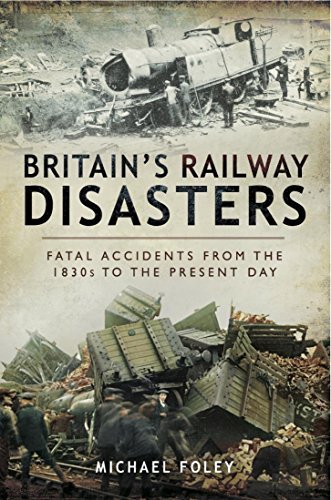
Britain's Railway Disasters: Fatal Accidents from the 1830s to the Present Day
by Michael Foley
Rating: 3.8 ⭐
Passengers on the early railways took their lives in their hands every time they got on board a train. It was so dangerous that they could buy an insurance policy with their ticket. There seemed to be an acceptance that the level danger was tolerable in return for the speed of travel that was now available to them.British Railway Disasters looks at the most serious railway accidents from the origins of the development of the train up to the present day. Seriousness is judged on the number of those who died. Information gleaned from various newspaper reports is compared with official reports on the accidents.The book will appeal to all those with a fascination for rail transport as well as those with a love of history.Michael Foley examines the social context of how injuries and deaths on the railways were seen in the early days, as well as how claims in the courts became more common, leading to a series of medical investigations as to how travelling and crashing at high speed affected the human body

This historical study examines how the Bolshevik Revolution and Russian Civil War influenced events on the world stage in the Great War and beyond.The Russian Revolution of 1917 is remembered as the catalyst for a bloody conflict between the Communist Red Army and the anti-Communist White Army. But in reality, the conflict was far more complex and multifaceted, involving forces from outside Russia. In this probing history, Michael Foley examines the Russian Civil War in terms of its relationship to the larger conflict raging across Europe. It is an epic tale of brutal violence and political upheaval featuring a colorful cast of characters—including Tsar Nicholas II, Vladimir Lenin, Leon Trotsky, Joseph Stalin and Winston Churchill.

Dublin 1920‘Above the noise of the crowd, I could hear men shouting. I looked back and saw them – a line of trucks, and men with guns starting to run towards the field. That’s when it happened.’On a bright day in November, three boys joined the huge crowd heading to a Gaelic football match at Croke Park. Excitement filled the air, but also fear. Important men had been killed in their beds that morning by the IRA. The police were angry. In the middle of a cruel war for Irish independence, people were afraid of what might happen next.But that war wouldn’t come to Croke Park. Would it?
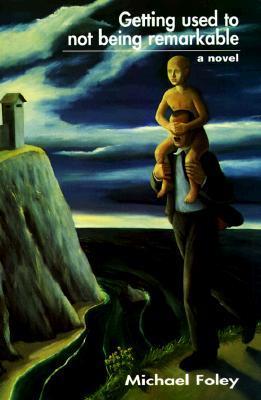
Martin is intoxicated by the extremism of decadent French literature. Clare is intoxicated by the demonic lustre of the young man. Over the years, Martin loses his lustre through marriage and child-rearing, while Clare grows in maturity and confidence and eventually takes on a young lover.

The outbreak of the Second World War had an enormous effect on the railway system in Britain. Keeping the trains running through times of conflict was not such a distant memory for the railway companies and their workers but in this second major war of the twentieth century, the task was to prove a very different one.The railway system no longer consisted of the hundreds of companies of the past, but the ‘Big Four’ still needed to learn how to work together and forget their differences for the war effort. The logistics of the mass evacuation of children, and transporting thousands of troops during the evacuation of Dunkirk and the preparations for D-Day, for instance, were unprecedented. At the same time, they had to cope with the new and constant threat of aerial bombing that military advances brought to the Second World War. The railway system, and the men and women who ran it, effectively served as another branch of the military during the conflict.At the end of the war, Winston Churchill likened London to a large animal, declaring that what kept the animal alive was its transport system. The metaphor could have been applied to the whole of Britain, and its most vital transport system was the railway.This book is a fascinating account of the important role that the railways played in the defense of the country as well as in their support of the Allied forces in theaters of war around the world. It brings to light the often forgotten stories of the brave and hardworking men and women who went to work on the railways and put their lives on the line.

On a cold dark Seattle street, a thief breaks into The Night Shanghai, an antique store featuring priceless Asian artifacts. But this mysterious place is more than he bargained for, and his burglary sets off a chain of events that draws other people to The Night Shanghai—a woman on the verge of divorce, a Latin man hiding a secret, a pastor fighting a crisis of faith. These and several others will find solace and a new strength within this magical store and with its proprietor, the beautiful Lily Wu. Welcome to a world of magic and mystery. Welcome to a world that beckons your soul. Welcome to The Night Shanghai.

Essex is populated with defensive structures that have gone some way to combating the threat of invasion. From the remains of ancient castles through to Napoleonic Martello towers, nineteenth-century forts and Second World War defences, the perilous history of Essex can be seen in all corners of the county. Remains of what were once large military barracks can now mainly only be found hidden among more modern constructions. Many of the military structures of Essex are mentioned and illustrated in Essex at War. From ancient prints of thriving military settlements to the modern photographs of unused and often derelict buildings, this book will appeal to anyone interested in the history of the county.

Rise of the Tank: Armoured Vehicles and their use in the First World War
by Michael Foley
Rating: 2.3 ⭐
Rise of the Tank will be concentrated on the period of the development of the tank and its use in the First World War. This will appeal to those interested in new developments in war and those interested in the First World War generally. The book will be especially relevant due to the forthcoming centenary of the beginning of the war and for this reason it will be easy to promote the book as there will be a lot of media interest.Using the resources of the Imperial War Museum, The National Archives and the Tank Museum, Rise of the Tank will have lots of information available on the development and use of the early tanks as well as personal reminiscences of those who fought in them.The author, Michael Foley, has also collected a great deal of material from the period such as the First World War field service pocket book of a 2nd lieutenant of the 10th Tank Battalion and copies of various magazines of the period. He will have also be accessing First World War newspapers to find original and rare archive sources.

When the Wright Brothers made their first flight in the early years of the twentieth century it sparked the imagination of those who wanted to fly, both in their country and around the world. In Britain, however, the spark wasn’t strong enough to light a fire and it was in other parts of Europe, notably France, where flight began to develop seriously. Early pioneers of flight faced a high level of danger and many died in pursuit of fulfilling their dream. Although aircraft design had made incredible progress by the time of the outbreak of war, accidents still occurred on a regular basis. For some time, as many pilots died in accidents as they did in combat.This publication consolidates a range of stories, insights, and facts that, when combined, offer a vivid impression of events as they unfolded. The chaos stirred up during the First World War and the scramble to develop aircraft in response to the threat to homeland security is eloquently relayed, as are the battles that characterized this conflicted era. The reality of conflict gave aviation engineers and designers the opportunity to test their craft in the harshest of environments, pushing the benchmark ever higher in terms of what could be achieved. Sure to appeal to aviation enthusiasts and historians alike, this work offers the reader a full account of the developmental early days of flight.

Before the First World War, Essex was a very different county from that which we know today. The economy was largely based on agriculture, and its people rarely travelled beyond its borders, or even out of their towns or villages. The war opened up a whole new world for the people of Essex. Men from the county enlisted in Kitchener's Army and travelled abroad, and many troops came into the camps and barracks which sprang up around the countryside. Some of these men came from all points of the British Empire and had enlisted to fight for the mother country. Essex was a key area during the war. Situated on the east coast, it was thought that the enemy could potentially use it as a site for invasion, so many defences were set up all round the county. Essex was subjected to great danger and harsh times by the enemy in the form of air raids from Zeppelins, and later, from the more potent aeroplane attacks. This well-illustrated and informative book sets out the experiences of the county and its inhabitants against what was happening in the broader theatre of war. It offers a valuable insight into life for Essex folk in the First World War and will appeal to anyone interested in the county's history.

The story of family and betrayal in the First World War

#DatesAndFlakes: The ups and downs of being single in NYC. The struggle is real!
by Michael Foley
Rating: 4.0 ⭐
Have you ever been on so many bad dates and dated so many of the wrong people that you thought to yourself "I should write a book about these characters?" I've contemplated that for years and now it's time to let the cat out of the bag and tell you all about my experiences in the dating world of New York City. You'll also be taken down memory lane with online dating stories from AOL to Plenty Of Fish.

The British Presidency: Tony Blair and the Politics of Public Leadership
by Michael Foley
Rating: 4.0 ⭐
Foley (international politics, U. of Wales-Aberystwyth) finds British Prime Minister Blair's personal power to be best explained by comparison with the US presidency. Among the parallels he finds are an emphasis on individual leadership and communications, personal similarities between Blair and Bill Clinton, campaigning and governing styles, and interpreting events and developments. On the other hand, he points out, the similarities are merely formal and structural, and are often more or less direct criticism of Blair and the New Labour Party. Distributed in the US by St. Martin's Press. Annotation c. Book News, Inc., Portland, OR (booknews.com)

The East End of London has always been looked down on by those who live in the rest of the capital. Jack London's People Of the Abyss is just one of the many books written about the poverty, crime and suffering that has blighted the East End throughout the past. As what is now the East End spread out towards Essex, however, the picture has become very different. Many areas such as Bethnal Green, West Ham and Forest Gate were once small rural villages.Not only has the East End been a centre of poverty but it has also been where many of the worst disasters to occur in London have happened. Among the streets of small terraced houses, however, there are often areas of surprising beauty with parks that have survived from the middle ages and houses that were once lived in by a more affluent population. The East End has always been a contrast of rich and poor, mansion and slum, throughout history.

A satirical novel about the pretensions, hypocrisies and paranoia of the literary world and its hangers-on - novelists, poets, academics, passionate women and barking-mad eccentrics - and, for good measure, Northern Irish cultural conditioning, marital breakdown and the maelstrom that passes for family life. Filtered through the bemused, wisecracking observations of the young narrator, the plot gallops through a twenty-year journey from the North to Dublin to London, encountering on the way Kyle Magee 'the Zorba of the North' - novelist, painter, jazzman, drinker, lover of women and celebrant of life - and the lovers, relatives, disciples and poseurs that swirl in the vortex of his restless energy.

Despite the close connection between Barking and Dagenham now, there was an obvious difference in how the two places developed. Built in the seventh century, Barking's abbey elevated the town into significance, while Dagenham, until quite recently, was only a small rural village. By the nineteenth century, Barking was an industrial town, its wealth growing around the town quay, while Dagenham was still focused on farming. Dagenham changed dramatically after the First World War when the Becontree estate, the largest council estate in the world at the time, engulfed the small village. Along with the new houses came new industries on the banks of the Thames and in other smaller industrial estates. As Barking spread eastward and the Becontree estate spread to the west, the space between the two towns began to disappear and Barking and Dagenham merged. However, as the pictures in this book show, among the modern buildings there are still signs of the past, when both towns were separate entities.

"A Friend of Dorothy/Life on the Yellow Brick Road" is about the struggle for self-acceptance and discovering that a happy life is the sole responsibility of the individual traveler. A story that shares some of life's most difficult challenges using humor and honesty to navigate those sometimes treacherous paths. But inevitably "A Friend of Dorothy" is about the realization that the road to a joy filled life starts and ends in our own hearts.

London has been under attack for literally centuries. London Under Attack charts the military history of the capital from Roman times until the Second World War. Throughout this period London was at the centre of hostilities, not always instigated by foreign enemies, but more often from its own inhabitants or those from other parts of Britain. As well as the terrible Blitz on London during the Second World War, earlier conflicts which made an impact on the city are also documented, including the Civil Wars of twelfth and seventeenth centuries, the war between King John and the barons, uprisings against the poll tax, the uprising against Queen Mary's marriage to Philip of Spain, the Gordon Riots, the riots and deaths at the funeral of Queen Caroline in the nineteenth century and numerous other uprisings and conflicts that have mainly been forgotten in the twenty-first century. London Under Attack is a must-read for all those interested in military history as well as the turbulent history of our nation’s capital.

Paperback. Very good condition. From the collection of poet Gavin Ewart, with his annotation marks on a couple of pages. Signed and dedicated by author to Ewart. Some minor wear to cover. RB

The Age of Absurdity: Why Modern Life Makes it Hard to be Happy by Michael Foley
by Michael Foley
Rating: 4.5 ⭐

Romford History Tour is a unique insight into the illustrious history of this east London town, its well-known streets and famous places, and explains what they meant to local people throughout the nineteenth and into the twentieth century. Readers are invited to follow a timeline of events and watch the changing face of Romford as author Michael Foley guides us through the local streets.