
Michael Ballé
25 Books Written

What is a lean sensei and what exactly do they do? That is the key question at the heart of this important new book sharing the secret of Lean thinking, which Dan Jones calls “the alternative business model for our age.” Jones explains that “behind all the tools for operational excellence and the different management system needed to support their use, lies a much deeper to develop the human potential of everyone to create a culture of accelerating continuous improvement to meet today’s changing circumstances. Learning is at the heart of lean.” The Lean Sensei provides both a conceptual and hands-on toolkit for developing lean leaders—and becoming one yourself. It will challenge you to reflect on how you coach; share mindful questions that improve your awareness of what to look for; and keep both you and your students focused on the signs, symptoms, and syndromes that can slow your lean success. This book, written by six lean pioneers who have experienced and followed the path of the Sensei, shares a radical vision of how to flourish with this approach. They argue that Lean is a system of gaining competitiveness by continuously developing people, and as such, sensei play a vital role in helping others deepen their thinking every day. To be effective in transforming processes and the people who operate within them, any sensei “must first learn to transform yourself,” they write. "No one can do lean for you. It is up to you. But you will also need a Sensei to help you discover new ways of seeing and acting, and to help everyone learn to adapt to a rapidly changing world. These lean pioneers discovered what Senseis really do. Learn from them before you search for your own Sensei.” - Daniel T. Jones, co-author of The Machine That Changed The World, Lean Thinking, Lean Solutions and The Lean Strategy.

"Lead With Respect is a terrific book that puts the elements of genuine motivation into a broader context and helps leaders translate those principles into action."—Daniel H. Pink, author of TO SELL IS HUMAN and DRIVE"The Ballé books are a great way to get started or to speed up your pace of transformation, personal and organizational."—Jim Womack, Founder of Lean Enterprise InstituteIn their new business novel Lead With Respect, authors Michael and Freddy Ballé reveal the true power of developing people through a rigorous application of proven tools and methods. And, in the process, creating the only sustainable source of competitive advantage—a culture of continuous improvement.In this engaging and insightful story, CEO Jane Delaney of Southcape Software discovers from her sensei Andy Ward that learning to lead with respect enables her to help people improve every day. “For us, lean is all about challenging yourself and each other to find the right problems, and working hard every day to engage people in solving them,” he says.Lead With Respect’s timely message brings a new understanding of lean. While lean has become essential for companies to compete in today’s global economy, most practitioners see it as a rigorous focus on process to produce higher quality goods and services—a limited understanding that fails to realize the true power of this approach. This new novel by the Ballés, the third in a series that includes Shingo Research Award-winners The Gold Mine and The Lean Manager, breaks new ground by sharing huge amounts of practical information on the most important yet least understood aspect of lean how to develop people through a rigorous application of lean tools. You’ll • How to apply Lead With Respect attitudes to the lean tools you are using now so that you develop a truly sustainable lean culture.• What specific steps to follow to make lean leadership behaviors daily habits.• How to manage with respect through the emotion, conflict, tension, and self-doubt that you’ll face during a lean transformation.

Raise the Bar: Zero to 1 Billion: Combining Lean and Digital for People-Centric, Sustainable Growth
by Michael Ballé
Rating: 4.7 ⭐
From zero to 1 billion! See how Aramis Group founders integrated lean and digital to fuel rapid growth by developing employees.This blow-by-blow account of learning at the workplace reveals how relentless focus on solving customers’ problems, encouraging teamwork across silos, and using lean principles and tools to visualize learning opportunities paved a path to enduring success.With lean thinking, the authors created a game plan to turn the many unavoidable crises of growth into occasions for personal and collective progress and to establish the company as a circular-economy pioneer with the large-scale refurbishment and resale of preowned cars.Raise the Bar shares the authors’ lean journey and how daily problem-solving revealed that rigid processes are the problem and people the solution, and how this led them to radically change their management model: From command and control to orient and support From managing by the numbers to teamwork From demanding compliance to setting up a chain of help From local optimization to wall-to-wall lead-time improvementThis inspiring journey will show you new ways to think about combining digital, brick-and-mortar, and lean for stability, agility, rapid growth, and sustainability.
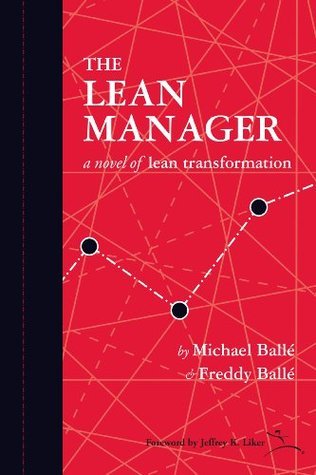
In this groundbreaking sequel to "The Gold Mine," authors Michael and Freddy Ballé present a compelling story that teaches readers the most important lean lesson of how to transform themselves and their workers through the discipline of learning the lean system. "The Lean A Novel of Lean Transformation" reveals how individuals can go beyond the short-term gains from tools, and realize a deeper, sustainable path of improvement. Full of human moments that capture the excitement and drama of lean implementation, as well as clear explanations of how tools and systems go hand-in-hand, this book will teach and inspire every person working to make lean a reality in their organization today. This book will help you learn both the how of doing lean, as well as the why behind the tools, enabling you to become lean. Lean is the most important business model for competitive success today. Yet companies still struggle to sustain enduring and deep-rooted business success from their lean implementation efforts. The most important problem for these companies is becoming how can they advance beyond realizing isolated gains from deploying lean tools, to fundamentally changing how they operate, think, and learn? In other words, how can companies learn to go beyond lean turnaround to achieve lean transformation? "The Lean A Novel of Lean Transformation," by lean experts Michael and Freddy Ballé, addresses this critical problem. As we move from what Jim Womack, author, lean management authority, and LEI founder, calls “the era of lean tools to the era of lean management,” The Lean Manager gives companies a definitive guide for sustaining their ability to learn and improve operations and financial performance, while continually developing people. “The only way to become and stay lean is to produce lean managers,” says Womack. “Every isolated effort will recede—or fail—unless companies learn to use the lean process as a way of developing individual problem-solvers with the ownership, initiative, and know-how to solve problems, learn, and ultimately coach new individuals in this discipline. That’s why this book matters so much.” "The Lean Manager," the sequel to the Ballé’s international bestselling business novel "The Gold Mine," tells the compelling story of plant manager Andrew Ward as he goes through the challenging but rewarding journey to becoming a lean manager. Under the guidance of Phil Jenkinson (whose own lean journey was at the core of "The Gold Mine"), Ward learns to use a deep understanding of lean tools, as well as a technical know-how of his plant’s operations, to foster a lean attitude that sustains continuous improvement. Where "The Gold Mine" shows you how to introduce a complete lean system, "The Lean Manager" demonstrates how to sustain it. Ward moves beyond fluency with tools to changing his behavior as a manager and leader. He shifts from giving orders and answers to asking the right questions so people identify and address problems. He learns how to use tools to unleash the creativity and motivation of people, so they learn how to solve problems as well as coach and teach others to solve problems. Ward learns how to create lean managers.

The Lean Strategy: Using Lean to Create Competitive Advantage, Unleash Innovation, and Deliver Sustainable Growth
by Michael Ballé
Rating: 4.0 ⭐
A groundbreaking and revolutionary book that will transform how lean is understood, practiced, and used within organizations A lean strategy is about gaining a competitive edge by offering better quality products at competitive prices and making a sustainable profit by eliminating waste through engaging employees in discovering deeper ways to think about their own jobs and smarter ways of working together. In its current form, lean has been radically effective, but its true powers have yet to be harnessed. Lean Strategy harnesses that power and delivers a new way of creating value from lean. Leading lean experts address popular misconceptions about the basics of lean/TPS, showing the true purpose of tools, methods, and attitudes that leverage the intelligence of every employee doing the work. You’ll learn how to think―and then act―differently, tapping the power of every person in your organization in a disciplined manner that generates unparalleled, sustainable success that is responsive to today’s most pressing challenges

Rapidement devenu l'ouvrage de référence dans son domaine, Le management lean est aussi le livre de management qui répond aux défis du 21e siècle. Au-delà des conceptions dépassées du travail, il propose une vision réellement dynamique de l’entreprise et offre les outils pour répondre et s’adapter à la complexité et l’instabilité du monde d’aujourd’hui. Résolument tourné vers l’humain, il vise le développement de tous les collaborateurs autant que la satisfaction des clients. Car loin des effets de mode, le management lean n’est ni une méthode ni une philosophie. C’est avant tout une pratique, dont les principes, s’ils sont simples à comprendre, nécessitent néanmoins que l’on soit accompagné pour les acquérir. Cet ouvrage est un manuel qui, bien au-delà de la "chasse au gaspillage", explique ce qu’est le vrai lean, quels en sont les fondamentaux et la démarche à adopter pour sa mise en application. Forts de vingt ans d’observation et d’accompagnement d’entreprises et de dirigeants qui se sont engagés dans le véritable lean, les auteurs livrent ici les clés du succès de cette pratique, retrouvant ses sources profondes, originales et éprouvées, et plus que jamais pertinentes pour bâtir l’avenir. À l’occasion de cette nouvelle édition ils proposent des outils plus précis, et insistent sur le changement de posture essentiel que représente le management lean : apprendre ensemble, sur le terrain, dans le brouillard de l’action, pour que chacun contribue, à son niveau de responsabilité, à la formation pas à pas d’une entreprise nouvelle, plus innovante et plus performante.

Learn to lead with lean by developing In a world in which innovation is the name of the game and competition gets fiercer by the day, lean management has become the go-to methodology for organizations committed to providing greater value for their customers. Sadly, the vast majority of lean transformations fail - and more often than not the reason behind this is to be found in a common misinterpretation of what lean actually is.Over the past 25 years, our understanding of lean thinking - a management philosophy inspired by Japanese carmaker Toyota - has changed beyond recognition. From a set of tools and techniques, this unique approach has come to be seen as a system for learning that, if adopted as a business strategy, has the power to transform any organization.Too many business executives still see lean thinking as a set of tools, a "program" that employees are force-fed, or a magic solution to all problems - failing to see that business transformation and leadership transformation are inextricably linked. The only way to succeed is, indeed, to lead with lean.This book will take you through the evolution of lean thinking and practice, as seen through the eyes of one of the Lean Community’s leading experts - Michael Ballé. By collecting some of Michael's best papers – many of which were written with lean gurus like Dan Jones, Jeff Liker and Art Smalley – Lead with Lean will strengthen your understanding of the methodology and encourage you to take it on (if you haven’t already).Michael's unique writing style has the power to inform, inspire, and challenge the reader by providing engaging practical examples that are used to convey deep reflections and lessons learned. This is clearly reflected in the stories of lean transformations contained in the book, which were observed and documented by Michael himself at the "gemba" (Japanese for "the place where the work takes place").

Votre chef vous annonce qu’il vient de prendre une décision qui vous semble complètement absurde et pourtant il est si sûr de lui ! Vous pensez qu’il se trompe et qu’il vous mène au désastre mais vous ne voyez pas comment aborder le sujet. Plutôt, vous repensez aux décisions arbitraires que vous avez vous-même imposées à vos équipes et aux échecs plus ou moins visibles qui en ont résulté.Que faire ? Le problème ne vient ni de l’intelligence de votre chef, ni de sa capacité de décision – mais du processus de décision lui-même !Définir une situation, prendre une décision, diriger sa mise en œuvre, démêler les conséquences inattendues : cette pensée « 4D » n’est pas la meilleure manière de prendre des décisions stratégiques. Or, il est possible d’apprendre à mieux aborder ses décisions par la pensée « 4C » : aller chercher les problèmes sur le terrain pour mieux comprendre la situation, confronter la partie du problème que nous ne maîtrisons pas pour ne pas se tromper de problème et ouvrir le champ des possibles, cadrer en orientation et en intention pour que tout le monde comprenne la cible visée et enfin coconstruire les solutions sur les expériences, idées et initiatives des uns et des autres pour créer un futur ensemble.

Michael Ballé and his father Freddy have written three novels that form a trilogy of lean discovery. This companion study guide will help you and your team explore together the novels and their lean principles, tools, and insights to more deeply understand and adopt kaizen spirit into your daily work. Lean is very much a journey of learning—we hope this guide helps you navigate yours.The guide is designed to work through the books one chapter at a time. The material is structured to support a regular cadence of team discussions. Each chapter section contains:1. A chapter summary.2. Author explanations of the significance of each chapter and how specific tools embody specific lean principles. 3. Key ideas contained in the chapter. 4. Reflection questions to guide your conversations.

Managing With Systems Thinking: Making Dynamics Work for You in Business Decision Making
by Michael Ballé
Rating: 3.2 ⭐
The common scenario when a problem arises in an organization is that management find a solution that is localized and focused on solving that specific problem - if your warehouse is failing to deliver on time, you need to address the failure and put it right. However, the problem may re-occur if the management decisions that allowed the difficulty to arise in the first place are not retraced and examined. Systems thinking is a framework that enables managers to exploit the commonsense, intuitive responses they may already follow when getting to the root of problems or inefficiencies in their organizations. By unravelling decision-making processes in a logical, systematic way, managers can address issues central to their organization, creating far-reaching benefits. This text is a practical guide to this method, popularized by Peter Senge's "The Fifth Discipline". It has a readable style, diagrams and anecdotal case studies that provide and explanation of the benefit and "how to" of systems thinking is a business environment. The text identifies areas of action and a seven-step approaaoch to systematic analysis.


Réussir ses décisions stratégiques: Mieux penser pour mieux décider (Management Lean)
by Michael Ballé
Rating: 5.0 ⭐
Votre chef vous annonce qu’il vient de prendre une décision qui vous semble complètement absurde et pourtant il est si sûr de lui ! Vous pensez qu’il se trompe et qu’il vous mène au désastre mais vous ne voyez pas comment aborder le sujet. Plutôt, vous repensez aux décisions arbitraires que vous avez vous-même imposées à vos équipes et aux échecs plus ou moins visibles qui en ont résulté.Que faire ? Le problème ne vient ni de l’intelligence de votre chef, ni de sa capacité de décision – mais du processus de décision lui-même !Définir une situation, prendre une décision, diriger sa mise en œuvre, démêler les conséquences inattendues : cette pensée « 4D » n’est pas la meilleure manière de prendre des décisions stratégiques. Or, il est possible d’apprendre à mieux aborder ses décisions par la pensée « 4C » : aller chercher les problèmes sur le terrain pour mieux comprendre la situation, confronter la partie du problème que nous ne maîtrisons pas pour ne pas se tromper de problème et ouvrir le champ des possibles, cadrer en orientation et en intention pour que tout le monde comprenne la cible visée et enfin coconstruire les solutions sur les expériences, idées et initiatives des uns et des autres pour créer un futur ensemble.

Loin des effets de mode, le management lean n'est ni une méthode ni une philosophie. C’est avant tout une pratique, dont les principes – s’ils sont simples à comprendre –, nécessitent un accompagnement.Véritable guide à l’usage de tous les managers, ce livre dépasse la vision caricaturale de la « chasse au gaspillage » à laquelle le lean est parfois réduit. Fondé sur trois décennies d’observations de terrain et de coaching d’organisations engagées dans un lean proactif, l’ouvrage livre les clés du succès d’une démarche à l’épreuve du temps et des tendances managériales pour répondre aux défis contemporains. Crises économiques, quête de sens au travail, essor de l’intelligence artificielle, exigences d’adaptabilité... le lean offre toute la résilience dont les organisations ont besoin pour assurer leur pérennité, l’épanouissement de leurs équipes et le rayonnement de leur marque employeur.Si Management Lean est une référence, c’est parce qu'il ne transige jamais sur les principes essentiels de la pratique lean : assurer le succès durable de l’entreprise, son alignement sur les besoins de ses clients – par le développement personnel et professionnel de chaque collaborateur –, et plus largement, sa contribution aux objectifs globaux de préservation de l’environnement et du lien social.Qu’attendez-vous pour passer au lean ?


La reconfiguration des processus reste une priorité dans la plupart des entreprises industrielles. Elle porte aujourd'hui sur 4 aspects : les flux, les processus opérationnels, les projets, les processus supports. Cet ouvrage s'attaque de façon simple et sans jargon à la questionde la mise en oeuvre du reengineering, tel que formalisé par MichaelHammer et James Champy.

The Effective Organization's Workbook
by Michael Ballé
A practical text that tackles the basics of organizing teams to work effectively, this text shows managers how to make the most of the techniques that form and motivate effective teams. It offers an interactive workbook format for managers to use to train their team members.

LES MODÈLES MENTAUX
by Michael Ballé
Les démarches d'amélioration de la qualité et de la production, et leur contrepartie, la " résistance au changement ", sont des enjeux majeurs pour les entreprises industrielles à l'aube du XXIè siècle. La confrontation d'expériences de psychologie cognitive et sociale avec les réalités de la mise en place du " juste-à-temps " dans de nombreux sites industriels, met en évidence le rôle déterminant de la réflexion et des choix dans les comportements. La notion de " modèle mental " montre que les raisonnements individuels et collectifs sont issus de représentations imaginaires simplifiées de la situation, plutôt que de raisonnements formels.

L'hôpital apprenant: L'amélioration continue au service du soin
by Michael Ballé
Comment améliorer la prise en charge des patients à l’hôpital ?L’hôpital doit pouvoir suivre les progrès toujours plus rapides de la médecine, tout en s’adaptant aux évolutions des besoins de la population. Dans le même temps, l’institution hospitalière, multiséculaire, semble écrasée sous la lourdeur de son fonctionnement, parfois jusqu’à épuiser ses propres soignants.Certes, des réformes profondes s’imposent. Toutefois, leurs effets ne sont jamais immédiats, et pendant ce temps le sort des patients et soignants ne progresse guère.Comment améliorer la prise en charge des patients et le quotidien des soignants dès aujourd’hui ?Sans espérer, d’un coup de baguette magique, répondre complètement à cette question, il est possible d’apprendre à s’améliorer tous les jours :en allant sur le terrain pour mieux comprendre les vrais problèmes ;en travaillant collectivement à les résoudre chaque jour un peu plus ;en discutant régulièrement de ses propres pratiques ;en améliorant les déterminants de l’ambiance dans les services.Un hôpital apprenant se penche quotidiennement sur ces sujets pour résoudre un à un les obstacles qui entravent son fonctionnement.Ce livre expose les fondements théoriques et les outils pratiques de cette approche de l’amélioration continue dans le contexte hospitalier. Illustré d’exemples variés, inspirés de l’expérience des auteurs, il propose une démarche opérationnelle très concrète, permettant à chaque hospitalier, quel que soit son rôle dans l’organisation, de s’approprier ces nouveaux modes de fonctionnement, et ainsi de bâtir un hôpital apprenant.

Les ailes de la libellule
by Michael Ballé
Il suffit d’un rien pour enchanter certaines soirées d’été : un bourdonnement effronté vous frôle et vous fait tourner la tête, et voici que surgit une libellule aux couleurs magiques et au nom rieur. L’amour et la poésie ont tous deux pouvoir de transfiguration. Sans fanfare mais non sans ardeur et fidélité, la voix de Miguel Ballé célèbre les jours et les saisons, leur répétition et celle des petits miracles qui peuplent le quotidien ou des élans qui le transportent. Et, vraiment, qu’est-ce que la poésie sinon cet art de saisir et d’accueillir jour après jour la lumière ?


Réussir en équipes: De zéro à un milliard : comment coconstruire la croissance avec les équipes et les clients
by Michael Ballé
Avec un simple téléphone et un ordinateur portable, Nicolas Chartier et Guillaume Paoli ont créé une start-up de vente de voitures en ligne qui a aujourd’hui dépassé le milliard d’euros de chiffre d’affaires et qu’ils ont menée jusqu’à l’introduction en Bourse.Leur volonté de fonder une entreprise pérenne les a vite confrontés aux contradictions de la croissance et de la rentabilité, de la satisfaction des clients et de l’épanouissement des collaborateurs, de l’ajout de nouvelles offres, fonctions et systèmes face au poids de la complexité.Réussir en équipes raconte leur rencontre avec le lean : comment cette méthode de management innovante leur a permis de changer de regard en résolvant les problèmes avec les équipes pour la satisfaction de chaque client, et de maintenir la dynamique et la vitalité de l’entreprise face au changement d’échelle.La lecture de cet ouvrage vous donnera les clés d’un management sincère et performant qui a appris à concilier apprentissage individuel et intelligence collective, réussite de chacun et réussite de l’entreprise.Vous y trouverez comment les fondateurs et leurs équipes ont su transformer les crises en opportunités, comment ils ont coconstruit cette réussite à partir des idées et des initiatives de tous, et comment ils continuent à innover pour réussir en équipes les virages du digital, de l’économie circulaire et de la voiture électrique.Avant-propos de Dan Jones

LES MODÈLES MENTAUX: Sociologie cognitive de l'entreprise
by Michael Ballé
Les démarches d'amélioration de la qualité et de la production, et leur contrepartie, la " résistance au changement ", sont des enjeux majeurs pour les entreprises industrielles à l'aube du XXIè siècle. La confrontation d'expériences de psychologie cognitive et sociale avec les réalités de la mise en place du " juste-à-temps " dans de nombreux sites industriels, met en évidence le rôle déterminant de la réflexion et des choix dans les comportements. La notion de " modèle mental " montre que les raisonnements individuels et collectifs sont issus de représentations imaginaires simplifiées de la situation, plutôt que de raisonnements formels.

La Citadelle
by Michael Ballé
Le célèbre - et sulfureux - philosophe indien R. K. Ramalingam vient passer l'hiver dans un village provençal. Petit à petit, ses adeptes le rejoignent, suscitant interrogations et déclenchant les passions locales : authentique mouvement spirituel ou secte dangereuse ? Le narrateur relate les évènements de cet été hors du commun, à la veille de la pandémie, et chronique la crise de spiritualité dans laquelle la victoire absolue du matérialisme nous a plongés et les pistes pour nous en sortir : intrigue, mystère, amour et humour. Rien n'est tout à fait comme on croit et, parfois, chemin et destination ne font qu'un.

L'éveil
by Michael Ballé
La vie d'un intellectuel, spécialiste des traditions ésotériques, est bouleversée par deux rencontres, un maître à penser et une femme fatale, qui l'obligent à remettre en cause ses croyances. Premier roman mélangeant les styles avec désinvolture afin d'effacer les frontières entre réalité et fiction.