
Michael Allaby
John Michael Allaby was a British author and actor. He was the Aventis Junior prize-winner.
29 Books Written

The Encyclopedia of Earth: A Complete Visual Guide
by Michael Allaby
Rating: 4.6 ⭐
• 2 recommendations ❤️
This sumptuously illustrated, beautifully written encyclopedia, the best book available on the topic, presents the most up-to-date information about planet Earth in a style and format that will appeal to an extremely wide range of readers. With thousands of photographs, illustrations, diagrams, and maps and a text written by a team of international experts, it presents an impressive overview of our globe―beginning with the history of the universe and ending with today's conservation issues. A truly spectacular reference, The Encyclopedia of Earth offers new visual interpretations of many ideas, concepts, and facts, painting a fascinating picture of Earth today and across the ages.The encyclopedia is divided into six sections that are designed for either browsing or in-depth study. Birth gives an overview of Earth's 4.6-billion-year history, including the evolution of life. Fire explains the inner workings of our dynamic planet, its structure, and the tectonic forces that have molded its landscape. Land surveys rocks, minerals, and habitats. Air covers weather, including extreme weather events such as tornadoes and hurricanes. Water tours the oceans, rivers, and lakes of the world. The final section, Humans, provides a compelling portrait of our relationship with Earth, and of how the natural world has shaped social and political developments. Weldon Owen PublishingThe Encyclopedia of Earth * Some of the world's finest landscape photography and hundreds of detailed illustrations and diagrams, cross sections, cutaways, maps, and charts* Coverage of topics including volcanology, paleontology, geology, natural history, cosmology, and more* Simple, easy-to-understand explanations of complex phenomena* The most recent scientific information and conservation data* "Fact files" providing information at readers' fingertips* "Heritage Watch" boxes focusing on key conservation issues and World Heritage sites

Michael Allaby has thoroughly revised this bestselling volume, offering the most authoritative and up-to-date zoology dictionary available today. Allaby covers all aspects of the study of animals in more than 5,250 clearly written entries--many new to this edition, including alarm pheromone,Fick's laws, manometer , and synanthrope . Illustrated with many line drawings, the book defines terms from animal behavior, evolution, earth history, zoogeography, genetics, and physiology, provides full taxonomic coverage of arthropods and other invertebrates, fish, reptiles, amphibians, birds, andmammals, and introduces new material on behavioral ecology and conservation biology. In many entries, he recommends web links, which are kept up to date through the Dictionary of Zoology 's companion website. Finally, the book includes detailed appendices covering the universal genetic code,endangered animals, the geologic time scale, and SI units. An invaluable dictionary for students of zoology and the related fields of biological and biomedical sciences, A Dictionary of Zoology is also ideal for amateur naturalists and anyone with an interest in animals.

Who knew that bee orchids trick insects into having sex with them, avocado flowers are female one day and male the next, and some flowers are the insect equivalent of nightclubs where males and females meet and mate? Author Mike Allaby reveals more than 200 of nature's most unseemly creations in this sensational exposé. The sexual antics of plants are far more varied than those of people, and plants have preferences and techniques for which we have no equivalent. Being rooted to the spot, many rely on pollinators for assistance—and forget birds and bees, we're talking kangaroos, giraffes, and vampire bats. Botanical illustrations throw light on the gallery of pimps, hookers, and gigolos who may be lurking in your back garden and spice up this compendium of scurrilous botany which—be warned—may shock the worldliest of gardeners.

This leading dictionary - now in its fourth edition - offers wide-ranging and authoritative coverage of the earth sciences and related topics in over 7,500 clear and accessible entries. Coverage includes geology, planetary science, oceanography, palaeontology, mineralogy, and volcanology, aswell as climatology, geochemistry, and petrology.This new edition has been fully updated with 150 new entries added, with expanded coverage of geology and planetary geology terms. Over 130 line drawings accompany the definitions.The Dictionary also provides recommended web links which are listed and regularly updated on a dedicated companion website. Appendices include a revised geological time scale, an updated bibliography, stratigraphic units, lunar and Martian time scales, wind-strength scales, and SI units. Thisdictionary is essential for students of geography, geology, and earth sciences, and for those in in related disciplines.

In the best-selling tradition of Smithsonian Animal, this extraordinary survey of our planet provides unrivaled insight into the forces and processes that formed our environment and which continue to influence its evolution. With thousands of breathtaking photographs and unique visual catalogues of the features and phenomena that take place on Earth -- such as rocks, minerals, and mountains to tropical rain forests and the different types of clouds -- Earth contains the most up-to-date ideas on how our world works, a compelling review on the health of the planet, and unbelievable images of the world's most stunning features.

The Great Extinction: the Solution to One of the Great Mysteries of Science, the Disappearance of the Dinosaurs
by Michael Allaby
Rating: 3.9 ⭐
Argues that the extinction of the dinosaurs was caused by a collision between the earth and a meteorite that resulted in atmospheric pollution and hazardous chemical conditions that destroyed larger animals.

Explores a wide range of weather topics, including climate and seasons, wind and gales, lightning and thunderstorms, hurricanes and tornadoes, solar wonders, and weather forecasting. Reprint.

This leading dictionary--now in its third edition--offers wide-ranging and authoritative coverage of the earth sciences and related topics. In more than 6,250 clear and accessible entries, it covers geology, oceanography, paleontology, mineralogy, volcanology, and planetary science as well asclimatology, geochemistry, and petrology. The third edition is fully updated and includes additional coverage of process geomorphology and physical geography, plus more than 50 new line drawings to accompany descriptions of forms and processes. The new edition also features web links accessed via acompanion website, featuring additional information that is regularly updated to ensure that it stays fresh. Finally, the book has a revised bibliography and a number of appendices that include a revised geological time scale, stratigraphic units, lunar and Martian time scales, wind-strength scales,and SI units. It is an essential reference for students of geography, geology, and earth sciences and in related disciplines.

The books in this series make up an introduc tion to the science of weather for all readers aged eleven a nd over. The six volumes in the series are - Tornadoes, Drou ghts, Blizzards, Hurricanes, Floods, and A Chronology of Wea ther. '

Written in a clear, accessible style, the Oxford Dictionary of Ecology contains over 5,000 entries on all aspects of ecology and related environmental scientific disciplines such as biogeography, genetics, soil science, geomorphology, atmospheric science, and oceanography. Coverage iswide-ranging and includes plant and animal physiology, animal behavior, pollution, conservation, and habitat management, evolution, environmental pollution, climatology and meteorology. Entries are cross-referenced for ease of use and are supported by clear diagrams where appropriate. Fully revised,updated, and expanded, the third edition contains over 30 new illustrations and over 200 new entries. It also includes a new appendix listing useful websites for further research. Invaluable to students of ecology or any branch of the environmental sciences, this reference is also a perfect tool forgeneral readers with an interest in the natural world.
The new edition of this popular student text offers an engaging introduction to environmental study. It covers the entire breadth of the environmental sciences, providing concise, non-technical explanations of physical processes and systems and the effects of human activities. In this second edition the scientific background to major environmental issues is clearly explained. These * global warming* genetically modified foods* desertification* acid rain* deforestation* human population growth* depleting resources* nuclear power generation* descriptions of the 10 major biomes.Special student text features include illustrations and explanatory diagrams, boxed case studies, concepts and definitions.

This is the most comprehensive and up-to-date paperback dictionary of botany available. It contains over 5,500 clear and concise entries on all aspects of botany, including biochemistry, plant physiology, cytology, ecology, genetics, evolution, biogeography, molecular biology, and the earthsciences. Classification is comprehensive and approximately one-third of the entries are devoted to taxonomic groups, from bacteria and fungi to the main groups of flowering and non-flowering plants. Helpful cross-referencing throughout makes it a breeze to find exactly what you arelooking for. This edition also includes biographical notes supplying context on important individuals in the field.This fascinating dictionary is invaluable to students, amateur botanists and naturalists, and essential reading for anyone with an interest in plants and their environments. It will also provide a useful reference tool for students and others with interests in agriculture, horticulture, physicalgeography, and related fields.

“We owe it to our plants to read this book. After all, while we just live with the weather, our plants have to survive it.” — The Washington Post All gardeners are at the whim of Mother Nature, and so are our plants. Whether it’s coping with extreme drought or record-breaking snow fall, gardeners—and gardens—across the country are fighting against the elements. Instead of just reacting to the weather, Michael Allaby suggests that gardeners use knowledge about how the weather works to create the best growing conditions for their plants. Allaby brings big-picture atmospheric concepts to life with a comprehensive introduction to how weather works and explanations climate change, weather systems, and microclimates. The Gardener’s Guide to Weather and Climate proves that instead of gardening at the mercy of the weather, knowledgeable gardeners can make the weather work for them

Explains the history, behavior, and structure of hurricanes, including why they are tropical, what happens inside the storm, and how they are predicted and tracked.

Describes the Gaia hypothesis, the theory that the earth functions as a single superorganism, details the effects of pollution, and suggests implications for the future

Examines the efforts made by scientists in the fields of environment, environmental protection, and environmental science. Covering a range of topics - including the Earth sciences, atmosphere, oceans, ecology, animals, plants, and exploration - this title provides a panorama of accounts of particular discoveries and the people who made them.

A best-selling series continues with a volume full of informative photographs and projects that can help families learn together about weather, weather forecasting, and the science of meteorology. Reprint.


Each book in this series provides readers with a deeper understanding of the world's biological communities, with each title focusing on a particular biome, biome type, groups of biomes or system. The books contain an introduction to the Earth's principal biomes with enough depth for project work. The atlas approach gives the series a relevance to the geography curriculum.
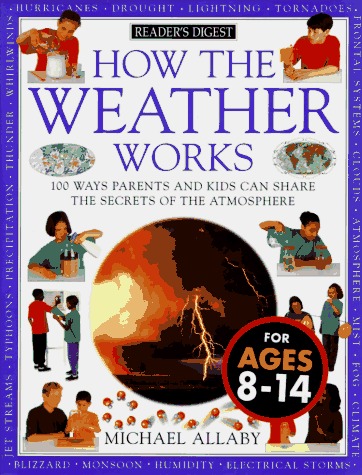
Invites curious young readers and their parents to learn about weather with a series of hands-on experiments that explain the principle to be investigated and highlight historical events in the science of weather. 60,000 first printing.

Animals begins its story in ancient Greece, at a time when thinkers were trying to construct a coherent image of the universe. They needed to make sense of the world around them and the earliest theories explaining the origins of animals were drawn from the experiences of hunters. Greek philosophers eventually came to realize that careful observation of the animal kingdom is the only basis for a true understanding of the natural world. With this realization in mind, they laid the foundation of what would become a scientific approach to phenomena. Animals provides brief glimpses of some of the events that have led to the present scientific understanding of animals, as well as short accounts of the lives of a few of the remarkable individuals who have contributed to that story. Describing a few of the changing ideas that have shaped the way people see the world of animals, this new, full-color book examines some of the research that has revealed their physiology and explained their evolution and behavior. It explores the discovery of the gene, the physical structure of DNA, and how the genetic constitution of species came to be used to determine their relationships. Animals contains a glossary defining technical terms as well as a list of books and Web sites for further information. Chapters

Text and illustrations, diagrams, tables, and charts present information on such topics as surface features of Earth, weather and climate, natural resources, and environmental problems.

Examines the deserts of the world, discussing such topics as history, geography, plants and animals, geology, human cultures and societies, and water resources.

Earth is a visual guide to the latest thinking on all aspects of Earth science, from the formation of the planet to violent volcanic eruptions and the ever-changing patterns of life on Earth. Dive into the depths of the oceans and beyond, through rocks and minerals, right down to Earth's core. Explore Earth's different habitats, their plants and animals, and the role humans have played in their protection and demise. Then look to the heavens for a comprehensive guide to weather in all its manifestations. This book is an absolute essential for any eager Earth explorer. The more we learn, the more fascinating Earth becomes.

Details some of the greatest surveyors and mapmakers, including Captain James Cook and Robert FitzRoy, as well as some of the explorations that made a huge impact on ocean research. This book also examines ocean basins. It contains chapters that Mapping the Oceans, The Origin of the Oceans, and Studying the Ocean Floor.


The Dictionary of Science for Gardeners: 6000 Scientific Terms Explored and Explained
by Michael Allaby
Rating: 4.5 ⭐
A Library Journal Best Reference Pick of 2015!Every gardener is a scientist. Pollination, native plants, ecology, climatology—these are just a few of the scientific concepts that play a key role in a successful garden. While the ideas are intuitive to many gardeners, they are often discussed in unfamiliar scientific terms. The Dictionary of Science for Gardeners is the first of its kind to provide practical scientific descriptions for gardening terms. Highlighting 16 branches of science that are of particular interest to gardeners, with entries from abaptation to zoochory , Michael Allaby explores more than 6,000 terms in one easy-to-use reference.

Extracts from the diary of a natural history photographer chronicle the successful birth and early days of a foal and discuss pony intellect and behavior