
Merlin Coverley
8 Books Written

In recent years the term "psychogeography" has been used to illustrate a bewildering array of ideas from ley lines and the occult, to urban walking and political radicalism. But where does it come from and what exactly does it mean? This book examines the origins of psychogeography in the Paris of the 1950s, exploring the theoretical background and its political application in the work of Guy Debord and the Situationists. Psychogeography continues to find retrospective validation in much earlier traditions, from the visionary writing of William Blake and Thomas De Quincey to the rise of the flâneur and the avant-garde experimentation of the Surrealists. These precursors to psychogeography are discussed here alongside their modern counterparts, for today these ideas hold greater currency than ever through the popularity of writers and filmmakers such as Iain Sinclair, Will Self and Patrick Keiller. From the urban wanderer to the armchair traveller, psychogeography provides us with new ways of experiencing our environment, transforming the familiar streets of our everyday experience into something new and unexpected. Merlin Coverley conducts the reader through this process, providing an explanation of the terms involved and an analysis of the key figures and their works.

More than any other city London has a secret history concealed from view. Unearthing the secret city and its forgotten inhabitants, this rediscovery encompasses a historical panorama from the Elizabethan age to the present day, introducing the magic of Dr. Dee and Simon Forman, the rise of the Kabbalah, and the occult designs of Wren and Hawksmoor. Elsewhere figures such as Spring-Heeled Jack and the Highgate Vampyre, and occult organizations from the Invisible College to the Golden Dawn are explained and explored. Also included are instructions for a series of four walks covering features of occult significance for the Elizabethan, 18th-century, Fin de Siécle, and contemporary periods; as well as an A-to-Z geographic dictionary of London's most resonant occult locations.

Ghosts and specters, the eerie and the occult. Why is contemporary culture so preoccupied by the supernatural, so captivated by the revenants of an earlier age, so haunted? The concept of Hauntology has evolved since first emerging in the 1990s, and has now entered the cultural mainstream as a shorthand for our new-found obsession with the recent past. But where does this term come from and what exactly does it mean? This book seeks to answer these questions by examining the history of our fascination with the uncanny from the golden age of the Victorian ghost story to the present day. From Dickens to Derrida, MR James to Mark Fisher; from the rise of Spiritualism to the folk horror revival, Hauntology traces our continuing engagement with these esoteric ideas. Moving between the literary and the theoretical, the visual and the political, Hauntology explores our nostalgia for the cultural artifacts of a past from which we seem unable to break free.

A philosophical history of that strange but prolific hybrid—the writer as walker From the peripatetic philosophers of Ancient Greece to the streets of 20th-century London, Paris, and New York, the figure of writer as walker has continued to evolve through the centuries, the philosopher and the Romantic giving way to the experimentalist and radical. From pilgrim to pedestrian, flâneur to stalker, the names may change, but the activity of walking remains constant, creating a literary tradition encompassing philosophy and poetry, the novel and the manifesto; a tradition which this book explores in detail. Today, as the figure of the wanderer returns to the forefront of the public imagination, writers and walkers around the world are reengaging with the ideas which animated earlier generations—for the walker is once again on the march, mapping new territory and recording new visions of the landscape.
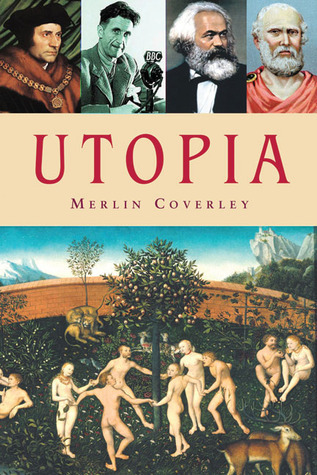
For more than 2,000 years utopian visionaries have sought to create a blueprint of the ideal society—from Plato to H. G. Wells, from Cloudcuckooland to Shangri-La. The utopian impulse has generated a vast body of work, encompassing philosophy and political theory, classical literature, and science fiction; yet these utopian dreams have often turned to nightmare, as utopia gives way to its dark reflection, dystopia. Taking the reader on a journey through these imaginary worlds, this work charts the progress of utopian ideas from their origins within the classical world to the rebirth of utopian ideals in the Middle Ages. Later we see the emergence of socialist and feminist ideas; while the 20th century was to be dominated by expressions of totalitarian oppression. Today it is claimed that we are witnessing the death of utopia, as increasingly the ideals that give rise to them are undermined or dismissed. These arguments are explored and evaluated here, as are contemporary examples of utopian thought used to demonstrate the enduring relevance of the utopian tradition.

Pocket Essentials is a dynamic series of books that are concise, lively, and easy to read. Packed with facts as well as expert opinions, each book has all the key information you need to know about such popular topics as film, television, cult fiction, history, and more. This book is a guide to the London novel, starting with its origins in the Victorian metropolis and moving through to the present day and the revival of London writing. It includes an examination of the occult tradition, London noir, the disaster novel, and the rise of psychogeography, and features both recognized classics and the work of lost London writers. From Bleak House to Hawksmoor, from Dr. Jekyll & Mr. Hyde to White Chappell, Scarlet Tracings, London has continued to generate a series of fantastic visions, and Merlin Coverley traces their genesis and influence in this volume.

How has the idea of the South come to exert such a powerful hold over our imagination? From the beaches of Southern Europe to the Great White South of the Antarctic; from South America to the South Pacific, South explores this most diverse and captivating of regions. The South has long since cast its spell on writers and artists, from Goethe and Poe, to Gauguin, Lawrence and Kerouac; while landscapes of ice and snow, sand and sea, have lured explorers southwards for centuries, often with fatal consequences. This book will follow in the footsteps of Cook, Scott, John Muir and others as they recount their journeys.

Psychogeography
by Merlin Coverley
Psychogeography . In recent years this term has been used to illustrate a bewildering array of ideas from ley lines and the occult, to urban walking and political radicalism. But where does it come from and what exactly does it mean?This book examines the origins of psychogeography in the Paris of the 1950s, exploring the theoretical background and its political application in the work of Guy Debord and the Situationists. Psychogeography continues to find retrospective validation in much earlier traditions, from the visionary writing of William Blake and Thomas De Quincey to the rise of the flâneur and the avant-garde experimentatin of the Surrealists. These precursors to psychogeography are discussed here alongside their modern counterparts, for today these ideas hold greater currency than ever through the popularity of writers and filmmakers such as Iain Sinclair, Will Self and Patrick Keiller.From the urban wanderer to the armchair traveller, psychogeography provides us with new ways of experiencing our environment, transforming the familiar streets of our everyday experience into something new and unexpected. Merlin Coverley conducts the listener through this process, providing an explanation of the terms involved and an analysis of the key figures and their works.