
Mary Oliver
Mary Jane Oliver was an American poet who won the National Book Award and the Pulitzer Prize. Her work is inspired by nature, rather than the human world, stemming from her lifelong passion for solitary walks in the wild. Librarian Note: There is more than one author in the Goodreads database with this name. See this thread for more information.
30 Books Written

Mary Oliver was awarded the National Book Award for New and Selected Poems, Volume One. Since its initial appearance it has become one of the best-selling volumes of poetry in the country. This collection features thirty poems published only in this volume as well as selections from the poet's first eight books.Mary Oliver's perceptive, brilliantly crafted poems about the natural landscape and the fundamental questions of life and death have won high praise from critics and readers alike. "Do you love this world?" she interrupts a poem about peonies to ask the reader. "Do you cherish your humble and silky life?" She makes us see the extraordinary in our everyday lives, how something as common as light can be "an invitation/to happiness,/and that happiness,/when it's done right,/is a kind of holiness,/palpable and redemptive." She illuminates how a near miss with an alligator can be the catalyst for seeing the world "as if for the second time/the way it really is." Oliver's passionate demonstrations of delight are powerful reminders of the bond between every individual, all living things, and the natural world.

Dream Work, a collection of forty-five poems, follows both chronologically and logically Mary Oliver's American Primitive, which won for her the Pulitzer Prize for the finest book of poetry published in 1983 by an American poet. The depth and diversity of perceptual awareness-so steadfast and radiant in American Primitive-continue in Dream Work. Additionally, she has turned her attention in these poems to the solitary and difficult labors of the spirit-to accepting the truth about one's personal world, and to valuing the triumphs while transcending the failures of human relationships. Whether by way of inheritance-as in her poem about the Holocaust-or through a painful glimpse into the present-as in "Acid," a poem about an injured boy begging in the streets of Indonesia-the events and tendencies of history take on a new importance also. More deeply than in her previous volumes, the sensibility behind these poems has merged with the world. Mary Oliver's willingness to be joyful continues, deepened by self-awareness, by experience, and by choice.

A celebration of the beloved, award-winning poet Mary Oliver, narrated by actress and activist Sophia Bush featuring selections from the late poet’s work, in her own voice, plus a tapestry of complementary voices reflecting on Oliver’s legacy.Wild and Precious: A Celebration of Mary Oliver is a first of its kind audio commemoration of one of the greatest poets in modern history. Actress and activist Sophia Bush guides listeners on a journey of contemplation and discovery into the artistry of Mary Oliver as remembered by many who were most greatly impacted by it. For the first time, Oliver’s Bennington College students open up about what it was like to have her for a teacher, friends and neighbors recall her love of place and nature, multi-faith leaders contemplate her spiritual lessons, and high-profile artists and fans like Carmen Maria Machado, Ross Gay, and Rainn Wilson, among others, reflect on the profound influence of her poetry on their own work and lives.Wild and Precious features over 30 poems (including “The Summer Day,” “When Death Comes,” and “In Blackwater Woods”) alongside abiding admiration for Oliver’s craft and sheds new light on one of the greatest poets and writers in modern history. The result is a tapestry of sound that weaves together recollections of first-hand accounts with the poet, readings of her poetry by contributors and by Oliver herself, and personal testimonials—both heart-wrenching and joyful—of Oliver’s imprint on American culture.A meditative trek deep into the heart of Mary Oliver’s legacy, Wild and Precious is a perfect entry for poetry newcomers and a must-listen for fans.Contributors include: actress and activist Sophia Bush, chef Samin Nosrat, poet Ross Gay, writer Carmen Maria Machado, actress Busy Philipps, writer and actor Rainn Wilson, memoirist Claire Bidwell Smith, and bestselling author Susan Cain.

In A Thousand Mornings, Mary Oliver returns to the imagery that has come to define her life’s work, transporting us to the marshland and coastline of her beloved home, Provincetown, Massachusetts. In these pages, Oliver shares the wonder of dawn, the grace of animals, and the transformative power of attention. Whether studying the leaves of a tree or mourning her adored dog, Percy, she is ever patient in her observations and open to the teachings contained in the smallest of moments.Our most precious chronicler of physical landscape, Oliver opens our eyes to the nature within, to its wild and its quiet. With startling clarity, humor, and kindness, A Thousand Mornings explores the mysteries of our daily experience.

Pulitzer Prize-winning poet Mary Oliver presents a personal selection of her best work in this definitive collection spanning more than five decades of her esteemed literary career.“No matter where one starts reading, Devotions offers much to love, from Oliver's exuberant dog poems to selections from the Pulitzer Prize-winning American Primitive, and Dream Work, one of her exceptional collections. Perhaps more important, the luminous writing provides respite from our crazy world and demonstrates how mindfulness can define and transform a life, moment by moment, poem by poem.” —The Washington Post“It’s as if the poet herself has sidled beside the reader and pointed us to the poems she considers most worthy of deep consideration.” —Chicago TribuneThroughout her celebrated career, Mary Oliver has touched countless readers with her brilliantly crafted verse, expounding on her love for the physical world and the powerful bonds between all living things. Identified as "far and away, this country's best selling poet" by Dwight Garner, she now returns with a stunning and definitive collection of her writing from the last fifty years.Carefully curated, these 200 plus poems feature Oliver's work from her very first book of poetry, No Voyage and Other Poems, published in 1963 at the age of 28, through her most recent collection, Felicity, published in 2015. This timeless volume, arranged by Oliver herself, showcases the beloved poet at her edifying best. Within these pages, she provides us with an extraordinary and invaluable collection of her passionate, perceptive, and much-treasured observations of the natural world.

Comprising a selection of essays, Upstream finds beloved poet Mary Oliver reflecting on her astonishment and admiration for the natural world and the craft of writing. As she contemplates the pleasure of artistic labor, finding solace and safety within the woods, and the joyful and rhythmic beating of wings, Oliver intimately shares with her readers her quiet discoveries, boundless curiosity, and exuberance for the grandeur of our world. This radiant collection of her work, with some pieces published here for the first time, reaffirms Oliver as a passionate and prolific observer whose thoughtful meditations on spiders, writing a poem, blue fin tuna, and Ralph Waldo Emerson inspire us all to discover wonder and awe in life's smallest corners.

Mary Oliver's Dog Songs is a celebration of the special bond between human and dog, as understood through the poet's relationship to the canines that have accompanied her daily walks, warmed her home, and inspired her work. Oliver's poems begin in the small everyday moments familiar to all dog lovers, but through her extraordinary vision these observations become higher meditations on the world and our place in it.Dog Songs includes visits with old friends, like Oliver's beloved Percy, and introduces still others in poems of love and laughter, heartbreak and grief. Throughout, the many dogs of Oliver's life emerge as fellow travelers and guides, uniquely able to open our eyes to the lessons of the moment and the joys of nature and connection.

Mary Oliver, winner of the Pulitzer Prize, celebrates love in her new collection of poems “If I have any secret stash of poems, anywhere, it might be about love, not anger,” Mary Oliver once said in an interview. Finally, in her stunning new collection, Felicity, we can immerse ourselves in Oliver’s love poems. Here, great happiness abounds.Our most delicate chronicler of physical landscape, Oliver has described her work as loving the world. With Felicity she examines what it means to love another person. She opens our eyes again to the territory within our own hearts; to the wild and to the quiet. In these poems, she describes—with joy—the strangeness and wonder of human connection.As in Blue Horses, Dog Songs, and A Thousand Mornings, with Felicity Oliver honors love, life, and beauty.

In this stunning collection of new poems, Mary Oliver returns to the imagery that has defined her life’s work, describing with wonder both the everyday and the unaffected beauty of nature.Herons, sparrows, owls, and kingfishers flit across the page in meditations on love, artistry, and impermanence. Whether considering a bird’s nest, the seeming patience of oak trees, or the artworks of Franz Marc, Oliver reminds us of the transformative power of attention and how much can be contained within the smallest moments.At its heart, Blue Horses asks what it means to truly belong to this world, to live in it attuned to all its changes. Humorous, gentle, and always honest, Oliver is a visionary of the natural world.

The forty-seven new works in this volume include poems on crickets, toads, trout lilies, black snakes, goldenrod, bears, greeting the morning, watching the deer, and, finally, lingering in happiness. Each poem is imbued with the extraordinary perceptions of a poet who considers the everyday in our lives and the natural world around us and finds a multitude of reasons to wake early.

"(...) A Poetry Handbook was written with writers of poetry most vividly in my mind; their needs and problems and increase have most directly been my concerns. But I am hopeful that readers of poetry will feel welcome here, too, and will gain from these chapters an insight into the thoughtful machinery of the poem, as well as some possibly useful ideas about its history, and, if you please, some ideas also of the long work and intense effort that goes into the making of a poem. The final three chapters are especially directed towards issues important to the writer of poems, but here too the reader of poems is heartily welcome. (...)" [Text taken from the final part of the Introduction written by Mary Oliver]

Winner of the Pulitzer Prize for PoetryHer most acclaimed volume of poetry, American Primitive contains fifty visionary poems about nature, the humanity in love, and the wilderness of America, both within our bodies and outside."American Primitive enchants me with the purity of its lyric voice, the loving freshness of its perceptions, and the singular glow of a spiritual life brightening the pages." -- Stanley Kunitz"These poems are natural growths out of a loam of perception and feeling, and instinctive skill with language makes them seem effortless. Reading them is a sensual delight." -- May Swenson

Thirst, a collection of forty-three new poems from the Pulitzer Prize-winner Mary Oliver, introduces two new directions in the poet's work. Grappling with grief at the death of the love of her life and partner of over forty years, the remarkable photographer Molly Malone Cook, she strives to experience sorrow as a path to spiritual progress, grief as part of loving and not its end. And within these pages she chronicles for the first time her discovery of faith, without abandoning the love of the physical world that has been a hallmark of her work for four decades. In three stunning long poems, Oliver explores the dimensions and tests the parameters of religious doctrine, asking of being good, for example, "To what purpose? / Hope of Heaven? Not that. But to enter / the other kingdom: grace, and imagination, / and the multiple sympathies: to be as a leaf, a rose,/ a dolphin."

This collection of poems by Mary Oliver once again invites the reader to step across the threshold of ordinary life into a world of natural and spiritual luminosity.Tell me, what is it you plan to dowith your one wild and precious life?—Mary Oliver, "The Summer Day" (one of the poems in this volume)Winner of a 1991 Christopher AwardWinner of the 1991 Boston Globe Lawrence L. Winship Book Award
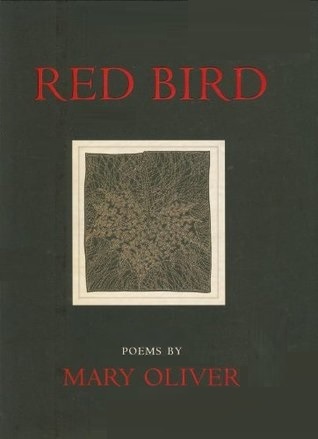
Red bird came all winter / firing up the landscape / as nothing else could. So begins Mary Oliver's twelfth book of poetry, and the image of that fiery bird stays with the reader, appearing in unexpected forms and guises until, in a postscript, he explains himself: "For truly the body needs / a song, a spirit, a soul. And no less, to make this work, / the soul has need of a body, / and I am both of the earth and I am of the inexplicable / beauty of heaven / where I fly so easily, so welcome, yes, / and this is why I have been sent, to teach this to your heart."This collection of sixty-one new poems, the most ever in a single volume of Oliver's work, includes an entirely new direction in the poet's work: a cycle of eleven linked love poems-a dazzling achievement. As in all of Mary Oliver's work, the pages overflow with her keen observation of the natural world and her gratitude for its gifts, for the many people she has loved in her seventy years, as well as for her disobedient dog, Percy. But here, too, the poet's attention turns with ferocity to the degradation of the Earth and the denigration of the peoples of the world by those who love power. Red Bird is unquestionably Mary Oliver's most wide-ranging volume to date.

Mary Oliver has been writing poetry for nearly five decades, and in that time she has become America's foremost poetic voice on our experience of the physical world. This collection presents forty-two new poems-an entire volume in itself-along with works chosen by Oliver from six of the books she has published since New and Selected Poems, Volume One.

A perfect introduction to Mary Oliver’s poetry, this stunning collection features 26 nature poems and prose writings about the birds that played such an important role in the Pulitzer Prize winner’s life. Within these pages you will find hawks, hummingbirds, and herons; kingfishers, catbirds, and crows; swans, swallows and, of course, the snowy owl, among a dozen others-including ten poems that have never before been collected. She adds two beautifully crafted essays, “Owls,” selected for the Best American Essays series, and “Bird,” a new essay that will surely take its place among the classics of the genre.In the words of the poet Stanley Kunitz, “Mary Oliver's poetry is fine and deep; it reads like a blessing. Her special gift is to connect us with our sources in the natural world, its beauties and terrors and mysteries and consolations.”For anyone who values poetry and essays, for anyone who cares about birds, Owls and Other Fantasies will be a treasured gift; for those who love both, it will be essential reading.

“Joy is not made to be a crumb,” writes Mary Oliver, and certainly joy abounds in her new book of poetry and prose poems. Swan , her twentieth volume, shows us that, though we may be “made out of the dust of stars,” we are of the world she captures here so the acorn that hides within it an entire tree; the wings of the swan like the stretching light of the river; the frogs singing in the shallows; the mockingbird dancing in air. Swan is Oliver’s tribute to “the mortal way” of desiring and living in the world, to which the poet is renowned for having always been “totally loyal.” As the Los Angeles Times noted, innumerable readers go to Oliver’s poetry “for solace, regeneration and inspiration.” Few poets express the immense complexities of human experience as skillfully, or capture so memorably the smallest nuances. Speaking, for example, of stones, she writes, “the little ones you can / hold in your hands, their heartbeats / so secret, so hidden it may take years / before, finally, you hear them.” It is no wonder Oliver ranks, according to the Weekly Standard, “among the finest poets the English language has ever produced.”

Never afraid to shed the pretense of academic poetry, never shy of letting the power of an image lie in unadorned language, Mary Oliver offers us poems of arresting beauty that reflect on the power of love and the great gifts of the natural world. Inspired by the familiar lines from William Wordsworth, “To me the meanest flower that blows can give / Thoughts that do often lie too deep for tears,” she uncovers the evidence presented to us daily by nature, in rivers and stones, willows and field corn, the mockingbird’s “embellishments,” or the last hours of darkness.From the Trade Paperback edition.

From the winner of the Pulitzer Prize and the National Book Award, her most personal book yet "What good company Mary Oliver is!" the Los Angeles Times has remarked. And never more so than in this extraordinary and engaging gathering of nine essays, accompanied by a brief selection of new prose poems and poems. (One of the essays has been chosen as among the best of the year by THE BEST AMERICAN ESSAYS 1998, another by The Anchor Essay Annual.) With the grace and precision that have won her legions of admirers, Oliver talks here of turtle eggs and housebuilding, of her surprise at an unexpected whistling she hears, of the "thousand unbreakable links between each of us and everything else." She talks of her own poems and of some of her favorite poets: Poe, writing of "our inescapable destiny," Frost and his ability to convey at once that "everything is all right, and everything is not all right," the "unmistakably joyful" Hopkins, and Whitman, seeking through his poetry "the replication of a miracle." And Oliver offers us a glimpse as well of her "private and natural self—something that must in the future be taken into consideration by any who would claim to know me."

The New York Times has called Mary Oliver's poems "thoroughly convincing - as genuine, moving, and implausible as the first caressing breeze of spring." In this stunning collection of forty poems - nineteen previously unpublished - she writes of nature and love, of the way they transform over time. And the way they remain constant. And what did you think love would be like? A summer day? The brambles in their places, and the long stretches of mud? Flowers in every field, in every garden, with their soft beaks and their pastel shoulders? On one street after another, the litter ticks in the gutter. In one room after another, the lovers meet, quarrel, sicken, break apart, cry out. One or two leap from windows. Most simply lean, exhausted, their thin arms on the sill. They have done all they could. The golden eagle, that lives not far from here, has perhaps a thousand tiny feathers flowing from the back of its head, each one shaped like an infinitely small but perfect spear.

A rich collection of ten poems, two essays, and two dozen of Mary Oliver's classic works on flowers, trees, and plants of all sorts, elegantly illustrated, Blue Iris is the essential companion to Owls and Other Fantasies , one of the best-selling volumes of poetry of 2003 and a Book Sense 76 selection.

‘The gift of Oliver's poetry is that she communicates the beauty she finds in the world and makes it unforgettable.’ (Miami Herald) This has never been truer than in Long Life, a luminous collection of seventeen essays and ten poems.With the grace and precision that are the hallmarks of her work, Oliver shows us how writing ‘is a way of offering praise to the world’ and suggests we see her poems as ‘little alleluias’. Whether describing a goosefish stranded at low tide, the feeling of being baptized by the mist from a whale's blowhole, or the ‘connection between soul and landscape’, Oliver invites readers to find themselves and their experiences at the center of her world. In Long Life she also speaks of poets and writers: Wordsworth's ‘whirlwind’ of ‘beauty and strangeness’; Hawthorne's ‘sweet-tempered’ side; and Emerson's belief that ‘a man's inclination, once awakened to it, would be to turn all the heavy sails of his life to a moral purpose’. With consummate craftsmanship, Mary Oliver has created a breathtaking volume sure to add to her reputation as ‘one of our very best poets’ (New York Times Book Review).

As Diane Wakoski has noted, the power of Mary Oliver's Frost-influenced pastoral writing is in her ability to cast a spell, to create "the illusion that the natural world is graspable." Oliver's fierce independence, beautiful imagery, and love and knowledge of the natural world are all driven by a searching mind, expressed in poems that make for good company. In Some Questions You Might Ask, Oliver gives us this one to chew over: "Is the soul solid, like iron?/ or is it tender and breakable, like/ the wings of a moth in the beak of an owl?" Highly recommended.

One of the astonishing aspects of Oliver's work is the consistency of tone over this long period. What changes is an increased focus on nature and an increased precision with language that has made her one of our very best poets. --Stephen Dobyns, New York Times Book ReviewMary Oliver has published fifteen volumes of poetry and five books of prose in the span of four decades, but she rarely performs her poetry in live readings. Now, with the arrival of At Blackwater Pond, Mary Oliver has given her audience what they've longed to hear: the poet's voice reading her own work. In this beautifully produced compact disc, Mary Oliver has recorded forty of her favorite poems, nearly spanning the length of her career, from Dream Work through her newest volume, New and Selected Poems, Volume Two. The package is shrink-wrapped so that the elegant clothbound audiobook can takes its place on the poetry shelf. It also includes a fifteen-page booklet with an original essay, Performance Note, photos of the author at Blackwater Pond, and a full listing of the poems and their sources.

Mary Oliver is one of the most popular and widely honored poets in the United States. In this much-awaited collection of forty poems - eighteen previously unpublished - she writes of the silky bonds between every person and the natural world, of the delight of writing, of the value of silence. Says James Dickey, "Mary Oliver works . . . a true spell, unlike any other poet's, the enchantment of the true maker."

"True ease in writing comes from art, not chance, / As those move easiest who have learn'd to dance," wrote Alexander Pope. "The dance," in the case of Oliver's brief and luminous book, refers to the interwoven pleasures of sound and sense to be found in some of the most celebrated and beautiful poems in the English language, from Shakespeare to Edna St. Vincent Millay to Robert Frost. With a poet's ear and a poet's grace of expression, Oliver shows what makes a metrical poem work - and enables readers, as only she can, to "enter the thudding deeps and the rippling shallows of sound-pleasure and rhythm-pleasure that intensify both the poem's narrative and its ideas."

In her fourth volume of poetry, Twelve Moons, Pulitzer Prize-winning Mary Oliver continues to explore the alluring, yet well-nigh inaccessible kingdoms of nature and human relationships, and man's profound, persistent desire for a joyous union with them. These vibrant, magical poems pulse with an aching awareness of nature's unaffected beauty. Her absorbing intimate vision leads us into the natural and human kingdoms we only fleetingly grasp.

An astonishing book-length poem in seven parts from the winner of the Pulitzer Prize and the National Book Award.With piercing clarity and craftsmanship, Mary Oliver has fashioned an unforgettable poem of questioning and discovery, about what is observable and what is not, about what passes and what persists. "It's hard to imagine anyone putting down Oliver's book-length poem and not sighing with satisfaction, so sensible is every word and thought." -- Virginia Quarterly Review

Mary Oliver, winner of the Pulitzer Prize for poetry, is one of the most celebrated poets in America. Molly Malone Cook, who died in 2005, was Oliver's partner for many years, a pioneer gallery owner and photographer. Our World weaves forty-nine of Cook's photographs and selections from her journals with Oliver's extended writings, both reminiscence and reflection, in prose and in poetry. The result is an intimate revelation of their lives and art.Within the art world, Molly Malone Cook made her reputation as an early advocate of photography as an art form; she was a champion of the work of now-famous photographers, including Edward Steichen, Eugene Atget, Berenice Abbott, Minor White, Ansel Adams, Harry Callahan, and W. Eugene Smith. There are famous faces here as well, captured by Cook's camera, among them Walker Evans, Robert Motherwell and Henry Geldzahler, the first curator of twentieth-century art at the Metropolitan Museum.Cook and Oliver also lived among writers, and Cook caught several on film, including Lorraine Hansberry and Norman Mailer. Other artists and dozens of wonderful characters and scenes are also immortalized by Cook's unfailing eye for telling detail and composition. Oliver writes of Cook's work, the people they knew, and the places they visited or lived. The poet's beautiful text captures not only the vivifying qualities of her partner's work, but the texture of their shared world. In Mary Oliver's words, Cook taught the beginner poet "to see, with searching attention and compassion."