
Mark Dvoretsky
31 Books Written

The Fourth Edition of a Modern ClassicWhen you are serious about improving your endgame skills, it is time for Dvoretsky's Endgame Manual. Perhaps the best known and most respected instructor of world class chessplayers, Mark Dvoretsky has produced a comprehensive work on the endgame that will reward players of all strengths. For those ready to immerse themselves in endgame theory, there may be no better manual available today.But, even if you do not play at master level, the book has been designed to help your endgame too. Basic theories and "must-know" concepts are highlighted in blue. You may skip the more complex analysis, focus on the text in blue, and still improve your endgame technique.When it appeared in 2003, the first edition of Dvoretsky's Endgame Manual was immediately recognized by novice and master alike as one of the best books ever published on the endgame. The enlarged and revised Fourth Edition is better than ever!"I am sure that those who study this work carefully will not only play the endgame better, but overall, their play will improve. One of the secrets of the Russian chess school is now before you, dear reader!" - From the Foreword to the First Edition by Grandmaster Artur Yusupov"Going through this book will certainly improve your endgame knowledge, but just as important, it will also greatly improve your ability to calculate variations... What really impresses me is the deep level of analysis in the book... All I can say is: This is a great book. I hope it will bring you as much pleasure as it has me." - From the Preface to the First Edition by International Grandmaster Jacob AagaardHere's what they had to say about the First Edition:"Dvoretsky's Endgame Manual ... may well be the chess book of the year... [It] comes close to an ultimate one-volume manual on the endgame." - Lubomir Kavalek in his chess column of December 1, 2003 in the Washington Post."Dvoretsky's Endgame Manual is quite simply a masterpiece of research and insight. It is a tremendous contribution to endgame literature, certainly the most important one in many years, and destined to be a classic of the literature (if it isn't already one). The famous trainer Mark Dvoretsky has put together a vast number of examples that he has not only collected, but analysed and tested with some of the world's strongest players. This is a particularly important book from the standpoint of clarifying, correcting, and extending the theory
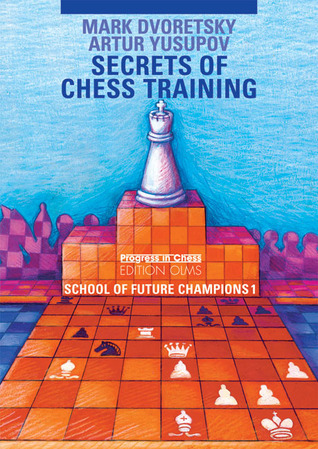
The world’s top trainer, Mark Dvoretsky, and one of his best-known pupils, grandmaster Artur Yusupov, present a five-volume series based on courses given to talented young players throughout the world. The books contain contributions by other leading trainers and grandmasters, as well as games by pupils who have attended the courses. In this first volume the reader is shown how to assess his strengths and weaknesses, analyze his own games, and learn from the rich heritage of the past by a study of the chess classics. Over a hundred graded test positions provide ample material for self-improvement. The 2006 edition of Secrets of Chess Training was based on Training for the Tournament Player, and should not be confused with the 1996 Secrets of Chess Training published by Batsford.

In this second book in his School of Chess Excellence series, Mark Dvoretsky looks at combinations and tactical techniques and suggests methods for developing a player's ability to calculate. Using a number of fascinating examples, he also analyzes methods of attack and defense. The book also includes special test positions and questions to engage and instruct the reader.This book includes essays earlier released in Dvoretsky's Secrets of Chess Tactics book.

Dvoretsky's Analytical Manual: Practical Training for the Ambitious Chessplayer
by Mark Dvoretsky
Rating: 4.5 ⭐
This book is aimed first of all at helping strong players complete themselves. This ensures that it will overflow with exceptionally complex analyses and exercises, which will be difficult for even the leading grandmasters to handle. But even amateur players will find something of interest in it. How can it not be interesting to peek - perhaps not as an owner, but at least as a guest - into the world of high-level chess, to see with one's own eyes what sort of problems chess "pros" have to wrestle with (successfully or not), and how far from being complete even their play is?The many exercises presented in this book differ greatly from one another in their level of some are fairly simple and accessible. It makes sense to take a stab at solving the tougher exercises, too; then later, once you have seen the answer, you will have a better grasp of your own abilities, strength and weakness. And the analyses presented in this book include a multitude of most impressive passages, unusual and spectacular moves and combinations - and chessplayers of almost any grade can certainly find enjoyment in beauty.Readers who become familiar with this book will soon see, no doubt, that side variations are often analyzed in far more detail than is necessary to follow the course of battle in the game under discussion. Why would the author do this? Because, first of all, to give an objective assessment of all, or nearly all, the previously existing commentaries, written by other annotators. But chiefly because many of these side variations are interesting and educational in and of themselves, and create supplementary exercises. Look at them simply as lyrical digressions; don't worry if they seem unconnected to the main theme.Where possible, the author has tried to lay out the principles, methods and rules, ideas and techniques that lie behind the moves.The book was also designed as a practice book, to test and underscore the reader's newly acquired knolwedge.This book takes it place next to the author's classic "Dvoretsky's Endgame Manual" as being one of the great books of the modern era, a book from which the serious student may take his or her knowledge and understanding of complex middlegame ideas to the next level.

This guide, intended for tournament players, addresses all the factors that indicate the correct choice of opening lead. The format challenges players to think for themselves before being presented with the solution.

Mark Dvoretsky is regarded as the leading chess coach in the world, and the first book in his School of Chess Excellence series is devoted to the endgame. He analyzes a wide range of positions, and his comments are packed with advice. Special test positions and frequent questions ensure the reader's participation. Endgame Analysis is a new edition of the 1991 book Secrets of Chess Training published by Batsford which should not be confused with the 2006 Secrets of Chess Training book published by Edition Olms which is a separate title.

Book by Dvoretsky, Mark, Yusupov, Arthur, Iusupov, Artur, Vulfson, Vladimir

Studies for Practical Players: Improving Calculation and Rescourfulness in the Endgame
by Mark Dvoretsky
Rating: 4.1 ⭐
Nowadays, chessplayers spend almost all their free time preparing openings, and rarely spend the time necessary to perfect the vitally important technique of calculating. Regular training in solving and playing out endgames studies is a good recipe for eliminating that shortcoming. This training is directed at developing resourcefulness, fantasy (in chess, these qualities are called combinative acuity ), and the readiness to sacrifice material, in pursuit of the goal winning! How do we develop good habits of winning endgame play? There are lots of manuals; but this may be the first in which a famous practical player, a trainer with a world-renowned name, and a study composer who has earned the title of International Grandmaster of Composition, share their views in one and the same book.
The Key Concepts of Chess EndingsIn 2003 when it was released, Dvoretsky's Endgame Manual became an instant classic. Now the chess instructor extraordinaire offers an introduction to the fascinating world of chess endings. This book is designed to highlight the key concepts of the most common chess endgames and will prove quite instructive to chessplayers of all levels.Topics - The King in the Endgame- Pawn play- Zugzwang- Saving Methods- Tactics in the Endgame- Piece Maneuvering- Piece Exchanges- "Technique"...and much more!The author has countless practical suggestions for improving your endgame play in this era of rapid-time controls so that you don't end up "drowning" in the ocean of endgame theory. Let Mark Dvoretsky help you win more games as he examines some elementary endgame errors from master play and shows you how to avoid making the same mistakes.

The world's top trainer, Mark Dvoretsky, and one of his best-known pupils, grandmaster Artur Yusupov, present a five-volume series based on courses given to talented young players throughout the world. The books contain contributions by other leading trainers and grandmasters, as well as games by pupils who have attended the courses. The final volume of the series deals with various creative aspects, such as the calculation of variations and the development of intuition. It also explores the psychology of taking decisions, both when attacking and when defending.

The Mark of a Master Instructor Mark Dvoretsky has long been considered one of the premier chess coaches and trainers in the world. He is renowned for taking talented masters and forging them into world-class grandmasters and champions. His literary achievements are also quite distinguished. For example, Dvoretsky’s Endgame Manual, soon to be released in a fourth edition, established itself as the sine qua non of endgame theory from the moment it appeared over a decade ago. This accomplished chess instructor and author now shares his story in a ground-breaking two-volume set. You are invited to share his journey from his childhood and maturing into a strong master, to his participation in the powerful Soviet championships and then, his transition to full-time chess coach. Along the way, Dvoretsky pulls no punches with his commentary and insights about the all-encompassing Soviet chess machine, top-flight grandmasters, and his trials and tribulations as he helped develop “average” masters into world-class players.

This third volume in Mark Dvoretsky’s course is devoted to questions of strategy, and is aimed at improving the reader’s positional understanding. The author also examines a number of positions that lie on the boundary between the middlegame and endgame.As in the other books of the series, he uses examples from his own games and those of his pupils, together with original analyses of episodes from other player’s games.“My books may or may not be liked, but it is unlikely that they could have been any different. I demonstrate examples that are memorable to me in the way that I myself see them, and I describe the chess and psychological mechanisms in the same way that I explain them in lessons to my pupils. I am sure that an attempt to deliberately correct, and artificially simplify the material would have led to a significant lowering of its quality, and a distortion of the chess patterns generated in the mind of the author, and, I hope, subsequently also in the mind of the reader …”― MARK DVORETSKY

FIND THE BEST SQUARES FOR YOUR PIECES!To a large extent, the level of any chessplayer's skill depends on his or her ability to discover and evaluate positional operations as quickly and correctly as possible. In this book, premier chess instructor and trainer Mark Dvoretsky examines one of the most important aspects of positional skill, namely the art of playing with pieces, of maneuvering and finding the best squares for your pieces.Training your maneuvering skills will help you at every stage of the game ― which is why among the exercises there are opening, middlegame and endgame positions, and not only those that are taken from practical games, but also studies.The conscientious student, carefully working his or her way through this book, will help improve positional mastery and significantly enhance overall playing skill.
"Know Thy Enemy"Sun Tsu, The Art of WarUnderstanding what your opponent is planning to do or trying to accomplish is one of the core skills required to take your game to the next level. Viktor Kortchnoi once wrote, Well, if you do not check what your opponent is doing, you will end up complaining about bad luck after every game.This book consists of four chapters, all associated with the ability to think not only for yourself, but also for your opponent, to put yourself in his place. In this book, renowned author and chess trainer Mark Dvoretsky supplies the reader with high-quality material for independent training.Each chapter starts with a short theoretical section. Then dozens of exercises are given, from easy, even elementary, to difficult. Training your skills in searching for a move and calculating variations will help you at all stages of the game ― which is why among the almost 500 exercises, there are opening, middlegame and endgame positions.Finally, the comments in the Solutions are quite detailed. Throughout the book, the author has tried to set forth the logic of the search for a solution, to show how a player can come to the right conclusions at the board.Recognizing Your Opponent's Resources is virtually unique in chess literature. And Sun Tsu would surely have approved...

The fourth in Mark Dvoretsky's School of Chess Excellence series, this book analyzes opening problems that players may face in any game. As always, there are numerous examples to help illustrate the best choices to make for chess success.

The Journey Continues! Mark Dvoretsky has long been considered one of the premier chess coaches and trainers in the world. He is renowned for taking talented masters and forging them into world-class grandmasters and champions. His literary achievements are also quite distinguished. For example, Dvoretsky’s Endgame Manual, now in its fourth edition, established itself as the sine qua non of endgame theory from the moment it appeared over a decade ago. In this second volume of his highly-acclaimed autobiographical work, the author focuses on his early development as a player, issues which challenge chess coaches, as well as varied topics related to improving one’s play. Whether you are a player, coach, fan or passionate aficionado, you will find this second volume as enjoyable and enlightening as the first. Here’s what the critics had to say about Volume 1: “[Volume 1 is]an insightful glimpse into the mind of one of the strongest coaches in any sport ever to walk the face of the earth. I can’t recommend this book highly enough, especially for students of chess history.” – Chris Wainscott, ChessIQ.com “If you are interested in a first-hand account of some very important events and persons in chess history, it’s hard to find a better book than this one. Few have influenced modern chess like Dvoretsky has, and Chess Coach reads like his valedictory address.” – John Hartmann in the January 2015 issue of Chess Life.

“Success is a collection of problems solved.” – I.M. Pei, Architect In this, his penultimate work, legendary chess instructor Mark Dvoretsky (1947-2016) explores identifying and dealing with problems on the chessboard. “While working on the games that I have included in this book, I have sought to uncover their core ideas which are important for a chessplayer’s improvement and demonstrate them as vividly as possible. Those may include both approaches to playing out certain typical situations and mastering various positional and tactical ideas, as well as improving technical skills and training an ability to search for decisions and to make them on the basis of the precise calculation of variations. “The last two parts of the book are devoted to the specific forms of training that I routinely use during my lessons: analysis of games in the form of solving a string of consecutive tasks and playing out of certain specially selected positions. “I hope that this book will be of help not only to high-ranking players at whom it is primarily aimed, but also to every reader who is serious about self-improvement and wishes to understand problems that grandmasters and masters face over the board and the ways they solve them; what are the reasons for errors they sometimes commit and how to avoid those mistakes.” – Mark Dvoretsky, from his Foreword

Chess TestsMark Dvoretsky (1947-2016) is considered one of the greatest chess instructors in the modern era. He left behind a great legacy of many books and publications. At the time of his passing, there were two unpublished manuscripts he had finished (and one other co-authored with study composer Oleg Pervakov).“Chess Tests offers chessplayers material of very high quality for working on various themes, from training combinative vision to techniques of realizing advantages. I recommend using those materials for in-depth work in the directions mentioned in the book. If you follow this advice, then this volume will become a valuable addition to your chess studies and will help you reinforce skills and knowledge you have already obtained.“And here is probably the most important point. Dvoretsky wanted to write a book that would not only teach some intricacies of chess, but would also be simply a pleasure to read for aficionados of the game, so he tried to amass the 'tastiest' of examples here. I hope that this last book by him is going to achieve this, presenting its readers with many chess discoveries and joy of communication with the great coach and author.” – From the Foreword by Artur Yusupov

In this second book in his School of Chess Excellence series , Mark Dvoretsky looks at combinations and tactical techniques and suggests methods for developing a player’s ability to calculate. Using a number of fascinating examples, he also analyzes methods of attack and defense. The book also includes special test positions and questions to engage and instruct the reader.


The FastTrack to Endgame Expertise!Since it first appeared in 2003, Dvoretsky’s Endgame Manual has been acclaimed as the best single volume ever written on the endgame. With staggering depth and accuracy, it clearly reveals the secrets of this most important stage of the game.One of the unique characteristics of the Endgame Manual has been the highlighting of text considered to be essential to the understanding of endgame theory. The late, great trainer Mark Dvoretsky carefully selected the text to be highlighted so that players at all levels could benefit from this monumental work.Now in its fifth edition, the 440-page manual may seem somewhat intimidating to some readers. With that in mind, German grandmaster Karsten Müller and American grandmaster Alex Fishbein – both recognized endgame experts in their own right – have collected the highlighted text from the fifth edition and presented it so that the core concepts might be more readily available.The result is Dvoretsky’s Endgame FastTrack Edition. As noted by Australian grandmaster Ian Rogers in his I am very pleased that Dvoretsky’s Endgame FastTrack Edition has come along. It is eminently suitable to sit in an amateur player’s library as their only endgame book, and equally good at preparing a serious student for many other fine endgame books – not forgetting of course the storied father of this volume, Dvoretsky’s Endgame Manual.If you are serious about studying endgames, have a limited amount of time, or are simply looking for a convenient way to improve your play in endgames, the FastTrack Edition may just be the book you have been looking for.

![[SCHOOL OF CHAMPIONS 1 (School of Future Champions)] [Author: Dvoretsky, Mark] [January, 2006]](https://m.media-amazon.com/images/S/compressed.photo.goodreads.com/books/1699910017i/164452498.jpg)
[SCHOOL OF CHAMPIONS 1 (School of Future Champions)] [Author: Dvoretsky, Mark] [January, 2006]
by Mark Dvoretsky
Rating: 5.0 ⭐
“And the Rest Is Just a Matter of Technique...”How often has this comment been appended to a game move or variation? As many players know, it really may not be all that easy to figure out what is meant by this familiar phrase.After the untimely passing of legendary instructor Mark Dvoretsky, Artur Yusupov was given access to Dvoretsky’s famous card files. With the core material based upon these files, the former top ten grandmaster – and perhaps the most successful of all of Dvoretsky’s students – put together this book, modifying and refining the content as needed.The book begins with a “theoretical” explanatory section. This is followed by 102 practice positions, which increase in in difficulty. Good technique for gaining an advantage is useful in all areas of the game, so there are positions from the opening, middlegame, and especially the endgame – not only from practical games but also from various studies.The comments to the solutions are very detailed, explaining not only the main line but also the supplementary side variations. Yusupov thought it important to demonstrate the logic in the search for a decision and to show how a chessplayer can come to the right conclusions at the board.Dvoretsky’s master student Artur Yusupov has done a great job in selecting and presenting the material so that this book “feels” like another genuine Dvoretsky work. This book is a real gem and I hope that it gives you as much pleasure as it has given me. And that from now on, when you have an advantage, the rest really will be, well, just a matter of technique… – From the Foreword by Grandmaster Dr. Karsten Müller


Manual de finales
by Mark Dvoretsky
La teoría de finales no es difícil de estudiar. Solo hay que conocer bien ciertas posiciones exactas básicas, y algunos de los principios, evaluaciones y técnicas más importantes. Lo difícil es seleccionar el material más importante entre los miles de finales analizados en distintos manuales. ¿Qué encontrarás en este libro?Posiciones exactas: son posiciones con un número mínimo de peones que es importante memorizar y que te servirán como guía una y otra vez en tus partidas. El sentido común dicta que el esfuerzo debe ser proporcional al beneficio esperado. La capacidad de la memoria humana es limitada, y no tiene sentido llenarla de posiciones que casi nunca se den en nuestras partidas. Es mejor estudiar un número limitado de posiciones (las más importantes y frecuentes), pero analizarlas y comprenderlas a la perfección.Ideas de finales: en el ajedrez, como en cualquier otra esfera de la actividad humana, es imposible aprender bien la teoría con solo ver un ejemplo. Hay que practicar, y para ello te serán útiles los ejemplos adicionales. Verás ejemplos instructivos donde se ponen en práctica los conocimientos teóricos básicos que acabes de estudiar.Ejercicios: encontrarás un gran número de ejercicios con distintos niveles de dificultad. Algunos no tienen una única solución, sino que hay que resolverlos practicando, tomando una serie de decisiones. No es necesario estudiar todos los ejemplos ni resolver todos los ejercicios. Pero, si lo haces, tus conocimientos de la teoría básica serán mucho más sólidos y fiables. Además, el autoaprendizaje desarrolla la capacidad de calcular líneas de forma profunda y precisa, una habilidad esencial para cualquier jugador.Opinión de Vladímir Krá«Es imposible recordar la gran variedad de finales teóricos, así que es importante seleccionar los que tengan un valor estructural básico. Creo que Dvoretsky consiguió esto de forma muy acertada al seleccionar la base de conocimiento de finales que todo jugador debe aprender, omitiendo la información que no hace falta recordar.El ajedrez moderno ha cambiado mucho, y actualmente hay que tomar decisiones críticas en muy poco tiempo. Con frecuencia, un jugador debe hacer cálculos e intentar encontrar la mejor jugada después de siete horas de partida, cuando suele estar agotado. En estos casos, es esencial contar con marcadores (señales en el amplio océano de posibilidades de los finales) para conocer bien qué finales están ganados y cuáles no, y tener al menos una idea aproximada de cómo jugarlos.No podrás acordarte de todo, pero tendrás una gran ventaja si sabes evaluar bien las posiciones y conoces los criterios esenciales de los finales teóricos.Aunque las posiciones analizadas en el libro no se produzcan tal cual en tus partidas, seguro que ayudarán a mejorar tus habilidades defensivas y técnica de finales. Si sabes en qué finales teóricos tienes que entrar y en cuáles no, podrás tomar las decisiones adecuadas en muchos otros finales que no se explican aquí.Hoy en día, cualquier jugador puede consultar una tabla de finales para ver cómo se evalúa un final teórico y cuáles son las jugadas correctas. Pero es imposible dominar de verdad los finales trabajando solo con el ordenador.
For Friends & Colleagues Volume 2
by Mark Dvoretsky
Special Signed and Numbered Edition!! Like Volume 1, this book has a Special Edition of the second volume. While the second volume is available as a high-quality softcover book, the Special Edition is A limited run of 500 copies. Each copy numbered, with a library-quality hard cover binding with dust jacket. Each copy signed by Mark Dvoretsky!! This is your chance to own a genuine piece of chess history! The Journey Continues! Mark Dvoretsky has long been considered one of the premier chess coaches and trainers in the world. He is renowned for taking talented masters and forging them into world-class grandmasters and champions.

Manovrare con armonia. Come ottenere posizioni superiori attraverso l'arte di manovrare i pezzi
by Mark Dvoretsky
Trova le migliori case per i pezzi! Il livello di abilità di ogni giocatore dipende, in larga misura, dalla propria capacità di valutare rapidamente ed efficacemente le "operazioni" di posizionamento dei pezzi. In questo libro, quello che è stato il miglior allenatore degli ultimi vent'anni, esamina uno degli aspetti più importanti dell'abilità posizionale, vale a dire l'arte di organizzare i pezzi, cioè l'arte della manovra che consente di trovare la migliore posizione per i propri pezzi sulla scacchiera. Valutare quanto efficaci sono le proprie capacità di manovra aiuta infatti il giocatore in ogni fase del gioco - per questo tra gli esercizi ve ne sono sia di apertura, sia di mediogioco, sia di finale tratti da partite giocate o composti allo scopo, ma anche studi che servono a mettervi davanti alle potenziali doti di creatività che dovreste sviluppare. Lo studente volenteroso, che lavorerà attentamente su questo libro, migliorerà la propria padronanza posizionale e aumentèrà in modo significativo la sua capacità complessiva di gioco. per giocatori da 1800 a 2500 punti elo.

Il pensiero preventivo ovvero la profilassi negli scacchi. Come anticipare le intenzioni dei tuoi avversari
by Mark Dvoretsky
Alcuni assunti base di Dvoretsky di questo Per prevenire i piani dell'avversario, bisogna conoscerli; ciò significa imparare a mettersi nei suoi panni e cercare di capire che cosa può essergli vantaggioso / Pensare in maniera profilattica significa chiedersi costantemente che cosa vuole fare l'avversario e quale sarà la sua prossima mossa; ciò consiste nell'abilità di trovare una risposta a queste domande e a tenerne conto nel processo decisionale /Sviluppare l'abilità al pensiero profilattico consente al giocatore di fare un enorme passo in avanti, e di accrescere notevolmente il proprio livello di gioco / Il 1° principio per concretizzare un vantaggio è limitare il controgioco dell' è evidente che non si può fare senza pensiero profilattico / Gli scacchi sono una lotta tra 2 giocatori ad armi pari, e le idee del vostro avversario forse non sono peggio delle vostre / Spesso i giocatori si dimenticano di pensare ai piani altrui. È concentrarsi su se stessi è tipico della natura umana. Migliorando questo aspetto carente, e rendendo il nostro pensiero più armonioso, accresceremo notevolmente il nostro generale livello di gioco. 1800-2500