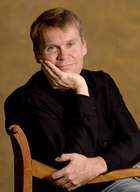
Mark Childress
Mark Childress was born in Monroeville, Alabama. He is the author of the novels A WORLD MADE OF FIRE, V FOR VICTOR, TENDER, CRAZY IN ALABAMA, GONE FOR GOOD, ONE MISSISSIPPI, and GEORGIA BOTTOMS. Childress has received the Harper Lee Award for Alabama's Distinguished Author, Thomas Wolfe Award, the University of Alabama's Distinguished Alumni Award, and the Alabama Library Association's Writer of the Year. He is a staff member and a director of the Community of Writers at Squaw Valley. He has lived in Ohio, Indiana, Mississippi, Louisiana, Georgia, California, Costa Rica, and currently lives in Key West, Florida, where he is writing his eighth novel and a film script.
25 Books Written

The Book of Orange: A Journal of the Trump Years By a Crazed Snowflake Employing Rhyming Insults, Limericks, Loathing, Hyperbole, Secret Transcripts, Show Tunes, Mockery, Rants, Jokes, & Rude Memes
by Mark Childress
• 2 recommendations ❤️
A man who can’t pronounce “anonymous” / In high office, seems rather ominous. / We don’t have to get all / Brains and power are rarely synonymous." "I love every word Mark Childress writes, including this new compilation of his great political writing. He is brilliant and hilarious. " – Anne Lamott "You, sir, are a libtard!" – Glenn Beck. New York Times bestselling author Mark Childress was like many liberal Americans whose life veered off the tracks as Donald Trump rose to power. In his day-by-day journal, Childress tirelessly pursues the funny side of America’s descent into Trumpism. From Viet Nam to New Orleans to the Women’s March and beyond, the author spins variations on all the absurd, ridiculous, head-exploding, enraging, unbelievable moments of the Trump Years. The book includes photos, tweets, teets, doggerel, lyrics, fake news, and all manner of hijinks, twaddle, & flimflammery. If Trump & Company drive you crazy, but you're almost ready to laugh - this is the book for you.

Family tumult and nationwide social unrest converge to shake the world of 12-year-old orphan Peejoe Bullis in the summer of 1965, "when everybody went crazy in Alabama.'' This wise, funny novel by the author of Tender opens as Peejoe's relatively tranquil life with his grandmother is jolted by the arrival of his Aunt Lucille, who is on her way to Hollywood to become a star after poisoning her husband (in the first of the book's many violent images, she pulls the dead man's severed head out of a tupperware container). Peejoe and his older brother Wiley move on to their Uncle Dove's home in Industry, Ala., where racial conflict brings frightening bloodshed as well as oratory from George Wallace and Martin Luther King Jr. Meanwhile, on the road and in California, the newly emancipated Lucille brings every ounce of her desirability and determination to bear on her quest for stardom. Childress tells his story through the masterfully crafted voice of the adult Peejoe reminiscing from his home in present-day San Francisco. He depicts each character with convincing detail and all the vividness of childhood memory; there is magic in his mixture of humor and pathos, boyish candor and time-earned understanding. The narrative has a unique gentleness that tempers even the most extreme horrific or comic events without dismissing or oversimplifying them. Terrible crimes go unpunished, and good people face tragedy--not always nobly--but this remains a tale of laughter and great hope, one not easily forgotten.

This exuberantly acclaimed novel by the author of the bestselling Crazy in Alabama tells an uproarious and moving story about family, best friends, first love, and surviving the scariest years of your life.You need only one best friend, Daniel Musgrove figures, to make it through high school alive. After his family moves to Mississippi just before his junior year, Daniel finds fellow outsider Tim Cousins. The two become inseparable, sharing a fascination with ridicule, The Sonny and Cher Comedy Hour, and Arnita Beecham, the most bewitching girl at Minor High. But soon things go terribly wrong. The friends commit a small crime that grows larger and larger, and threatens to engulf the whole town. Arnita, the first black prom queen in the history of the school, is injured and wakes up a different person. And Daniel, Tim, and their families are swept up in a shocking chain of events.

Georgia Bottoms is known in her small community of Six Points, Alabama, as a beautiful, well-to-do, and devoutly Baptist Southern belle.Nobody realizes that the family fortune has long since disappeared, and a determinedly single woman like Georgia needs an alternative, and discreet, means of income. In Georgia's case it is six well-heeled lovers -- one for each day of the week, with Mondays off -- none of whom knows about the others.But when the married preacher who has been coming to call (Saturdays) decides to confess their affair in front of the whole congregation, Georgia must take drastic measures to stop him.In George Bottoms , Mark Childress proves once again his unmistakable skill for combining the hilarious and the absurd to reveal the inner workings of the rebellious human heart.

East Tupelo was a sprinkling of poor houses at the scratched-out back edge of Mississippi--and the birthplace of a boy who would become the greatest rock legend of his time.In Tender, novelist Mark Childress has redefined the American epic. He takes us on a wild ride through the last three decades as his fictional hero, Leroy Kirby, makes his meteoric rise to stardom, from the poverty-stricken child of an overprotective mother and absent father, to an icon who stands for everything American--a role that will ultimately consume him. After reading Tender, you will never think about the South, fame, or rock-and-roll the same way again.

By the time Newsweek dubs thirty-four-year-old Ben (Superman) Willis "The New Super-Poet of Pop," he has millions of adoring fans, piles of money, a beautiful family--and a secret desire to chuck it all and disappear forever. He gets his wish after a violent storm, some wicked Mexican weed, and a faulty compass cause his precious plane to crash on a remote tropical island.When he hears Marilyn Monroe's breathless voice saying he's "kind of cute," Superman thinks he has woken up dead. Amelia Earhart is there too, noting the worst landing she has ever seen, while Jimmy Hoffa cooks up some fine chicken barbecue. They never died, you see. They just came here to escape their celebrity--invited guests, living out their lives in total privacy, all expenses paid, every need fulfilled. To Superman, it is heaven on earth.Until he discovers the one little catch: he can never leave. . . .

"The ambivalence of fire--as evocation of glowing love and furious destruction--permeates this stunning first novel by Mark Childress, a young Southern writer who gives fresh expression to his region's literary preoccupations. A World Made of Fire is set in rural Alabama in the decades before World War I . . . Childress has created a wholly believable world. The landscapes are forceful and the characters deeply felt. . . . A World Made of Fire probes varieties of tenderness and love, principally from the viewpoint of [a] young girl, Estelle Bates, whose literary forebears include Lena Grove in Faulkner's Light in August. . . .Childress dramatically traces her course, keeping the violent and the tender elements in a tense, remarkably effective balance. . . . Reading it is rather like staring for a good long while into the coals of a fire; in that concentration of energy, many things can be learned."--Newsday
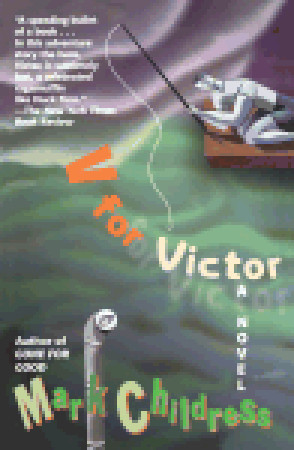
Alabama, 1942. The war is everywhere, but Victor--a sixteen-year old boy sent by his father to care for his dying grandmother on a lonely island in Mobile Bay--can only dream of it. Then he wakes one amazing night to a thunderous roar from the Bay, and watches as a thug burns his boat. He also discovers a decomposing corpse, witnesses a near-seduction . . . and sees the ominous shadow of an enemy submarine surfacing at night.Suddenly Victor is playing unforeseen roles--now hostage, now pursuer--in the perilous war at home. . . .

Best-selling author Mark Childress, also from Monroeville, recounts the influence Harper Lee had on life, his love of literature and the effect reading "To Kill A Mockingbird" had on his young mind, when he first read it while nestled on a porch swing one sunny afternoon, knowing she herself was just right down the road.
In two short essays and one long piece of reportage, author and screenwriter Mark Childress ("Crazy in Alabama," "One Mississippi," "Georgia Bottoms") explores New Orleans before, during, and after Katrina. "What It Means to Miss New Orleans" originally appeared in the New York Times, "Disaster Tourism" in Salon magazine, and "The Tragic City Laughs" in The Birmingham News. All proceeds from this book go to Habitat for Humanity for their continued work in New Orleans. Approximately 36 pp., 9000 words, with illustrations.

Billy has banished his brother Henry from their messy room and must set out on a magical adventure to find him. His neighbors wax their pet dinosaurs and work on their rockets as Billy frantically searches the wacky suburb. Billy flies on his Gravity Sled above the neighborhood, encountering the Alien Zoo, the Hall of Big Fun, and the Bridge of the Invisible Gnome. Still no Henry -- Billy is terrified. He abandons his sled, full of remorse for his earlier temper tantrum. Does Billy have the gumption to climb the enormous erupting volcano? Or will he see his brother's missing face on the next carton of milk?

Living with his family in a log cabin on the banks of the Magnolia River, Joshua makes a pet of a tiny alligator that he calls Bigtooth, but his problems begin when his tiny pet starts to grow--and grow.


Setting out on his boat to deliver a huckleberry pie to his granny, young Joshua is astonished when a mob of crabs raids the boat and steals the tasty fare, and he becomes equally frustrated when no one believes his story.

Looking for Harper Lee
by Mark Childress
Novelist Mark Childress ("Crazy in Alabama," "Georgia Bottoms") happened to be born in Monroeville, Alabama -- the town Harper Lee called Maycomb when she wrote about it in the classic "To Kill a Mockingbird." For years, as a journalist, Childress was told to pursue an interview with the famously reclusive author, who refused all entreaties. The first essay describes the importance of Harper Lee's novel to the Southern fiction of today, and goes a distance toward exploring the question of why Harper Lee prefers to remain a figure of mystery. 2,500 words. This essay is about ten pages if typed, double-spaced, or the length of a typical magazine article. The second essay, about 1,800 words, is adapted from the remarks delivered when Childress received the "Harper Lee Award for Alabama's Distinguished Writer" in 2014.
CRAZY IN ALABAMA. Original Screenplay
by Mark Childress
El ídolo
by Mark Childress
Barcelona. 23 cm. 533 p. il. Encuadernación en tapa blanda de editorial ilustrada. Traducción, Gerardo Gambolini. Éxito internacional. Traducción Tender .. Este libro es de segunda mano y tiene o puede tener marcas y señales de su anterior propietario. 8440625316
Crazy In Alabama [ Uncorrected Proof]
by Mark Childress
Tender
by Mark Childress
V For VICTOR.
by Mark Childress
Meteor Boy: A Novel
by Mark Childress
Meteor Boy: A Novel
by Mark Childress
V is for Victor
by Mark Childress