
Marilynne Robinson
American novelist and essayist. Across her writing career, Robinson has received numerous awards, including the Pulitzer Prize for Fiction in 2005, National Humanities Medal in 2012, and the 2016 Library of Congress Prize for American Fiction. In 2016, Robinson was named in Time magazine's list of 100 most influential people. Robinson began teaching at the Iowa Writers' Workshop in 1991 and retired in the spring of 2016. Robinson is best known for her novels Housekeeping (1980) and Gilead (2004). Her novels are noted for their thematic depiction of both rural life and faith. The subjects of her essays have spanned numerous topics, including the relationship between religion and science, US history, nuclear pollution, John Calvin, and contemporary American politics.
28 Books Written

Nearly 25 years after Housekeeping, Marilynne Robinson returns with an intimate tale of three generations, from the Civil War to the 20th century: a story about fathers and sons and the spiritual battles that still rage at America's heart. In the words of Kirkus, it is a novel "as big as a nation, as quiet as thought, and moving as prayer. Matchless and towering." GILEAD tells the story of America and will break your heart.

A modern classic, Housekeeping is the story of Ruth and her younger sister, Lucille, who grow up haphazardly, first under the care of their competent grandmother, then of two comically bumbling great-aunts, and finally of Sylvie, their eccentric and remote aunt. The family house is in the small Far West town of Fingerbone set on a glacial lake, the same lake where their grandfather died in a spectacular train wreck, and their mother drove off a cliff to her death. It is a town "chastened by an outsized landscape and extravagant weather, and chastened again by an awareness that the whole of human history had occurred elsewhere." Ruth and Lucille's struggle toward adulthood beautifully illuminates the price of loss and survival, and the dangerous and deep undertow of transience.

Marilynne Robinson, one of the greatest novelists of our time, returns to the town of Gilead in an unforgettable story of a girlhood lived on the fringes of society in fear, awe, and wonder. Lila, homeless and alone after years of roaming the countryside, steps inside a small-town Iowa church - the only available shelter from the rain - and ignites a romance and a debate that will reshape her life. She becomes the wife of a minister, John Ames, and begins a new existence while trying to make sense of the life that preceded her newfound security. Neglected as a toddler, Lila was rescued by Doll, a canny young drifter, and brought up by her in a hardscrabble childhood. Together they crafted a life on the run, living hand to mouth with nothing but their sisterly bond and a ragged blade to protect them. Despite bouts of petty violence and moments of desperation, their shared life was laced with moments of joy and love. When Lila arrives in Gilead, she struggles to reconcile the life of her makeshift family and their days of hardship with the gentle Christian worldview of her husband which paradoxically judges those she loves. Revisiting the beloved characters and setting of Robinson's Pulitzer Prize–winning Gilead and Home, a National Book Award finalist, Lila is a moving expression of the mysteries of existence that is destined to become an American classic.

Home parallels the story told in Robinson's Pulitzer Prize-winning Gilead. It is a moving and healing book about families, family secrets, and the passing of the generations, about love and death and faith.Hundreds of thousands were enthralled by the luminous voice of John Ames in Gilead, Marilynne Robinson’s Pulitzer Prize–winning novel. Home is an entirely independent, deeply affecting novel that takes place concurrently in the same locale, this time in the household of Reverend Robert Boughton, Ames’s closest friend. Glory Boughton, aged thirty-eight, has returned to Gilead to care for her dying father. Soon her brother, Jack—the prodigal son of the family, gone for twenty years—comes home too, looking for refuge and trying to make peace with a past littered with tormenting trouble and pain. Jack is one of the great characters in recent literature. A bad boy from childhood, an alcoholic who cannot hold a job, he is perpetually at odds with his surroundings and with his traditionalist father, though he remains Boughton’s most beloved child. Brilliant, lovable, and wayward, Jack forges an intense bond with Glory and engages painfully with Ames, his godfather and namesake. Home is a moving and healing book about families, family secrets, and the passing of the generations, about love and death and faith. It is Robinson’s greatest work, an unforgettable embodiment of the deepest and most universal emotions.

Marilynne Robinson, winner of the Pulitzer Prize and the National Humanities Medal, returns to the world of Gilead with Jack, the latest in one of the great works of contemporary American fiction.Jack tells the story of John Ames Boughton, the beloved, erratic, and grieved-over prodigal son of a Presbyterian minister in Gilead, Iowa. In segregated St. Louis sometime after World War II, Jack falls in love with Della Miles, an African American high school teacher who is also the daughter of a preacher―discerning, generous, and independent. Their fraught, beautiful romance is one of Robinson’s greatest achievements.The Gilead novels are about the dilemmas and promise of American history―about the ongoing legacy of the Civil War and the enduring impact of both racial inequality and deep-rooted religious belief. They touch the deepest chords in our national character and resonate with our deepest feelings.
Since the 1981 publication of Marilynne Robinson’s novel, Housekeeping—a stunning debut that was nominated for the Pulitzer Prize—she has built a sterling reputation not only as a writer of sharp, subtly moving prose, but also as a rigorous thinker and incisive essayist. Her compelling and demanding collection The Death of Adam—in which she reflected on her Presbyterian upbringing, investigated the roots of Midwestern abolitionism, and mounted a memorable defense of Calvinism—is respected as a classic of the genre, praised by Doris Lessing as “a useful antidote to the increasingly crude and slogan-loving culture we inhabit.” In this new collection she returns to the themes which have preoccupied her work: the role of faith in modern life, the inadequacy of fact, the contradictions inherent in human nature. Clear-eyed and forceful as ever, Robinson demonstrates once again why she is regarded as a modern rhetorical master.

One of our greatest novelists and thinkers presents a radiant, thrilling interpretation of the book of Genesis.For generations, the book of Genesis has been treated by scholars as a collection of documents, by various hands, expressing different factional interests, with borrowings from other ancient literatures that mark the text as derivative. In other words, academic interpretation of Genesis has centered on the question of its basic coherency, just as fundamentalist interpretation has centered on the question of the appropriateness of reading it as literally true.Both of these approaches preclude an appreciation of its greatness as literature, its rich articulation and exploration of themes that resonate through the whole of Scripture. Marilynne Robinson’s Reading Genesis , which includes the original text, is a powerful consideration of the profound meanings and promise of God’s enduring covenant with humanity. This magisterial book radiates gratitude for the constancy and benevolence of God’s abiding faith in Creation.

The spirit of our times can appear to be one of joyless urgency. As a culture we have become less interested in the exploration of the glorious mind, and more interested in creating and mastering technologies that will yield material well-being. But while cultural pessimism is always fashionable, there is still much to give us hope. In The Givenness of Things, the incomparable Marilynne Robinson delivers an impassioned critique of our contemporary society while arguing that reverence must be given to who we are and what we are: creatures of singular interest and value, despite our errors and depredations.Robinson has plumbed the depths of the human spirit in her novels, including the National Book Critics Circle Award-winning Lila and the Pulitzer Prize-winning Gilead, and in her new essay collection she trains her incisive mind on our modern predicament and the mysteries of faith. These seventeen essays examine the ideas that have inspired and provoked one of our finest writers throughout her life. Whether she is investigating how the work of the great thinkers of the past, Calvin, Locke, Bonhoeffer--and Shakespeare--can infuse our lives, or calling attention to the rise of the self-declared elite in American religious and political life, Robinson's peerless prose and boundless humanity are on display. Exquisite and bold, The Givenness of Things is a necessary call for us to find wisdom and guidance in our cultural heritage, and to offer grace to one another.Humanism --Reformation --Grace --Servanthood --Givenness --Awakening --Decline --Fear --Proofs --Memory --Value --Metaphysics --Theology --Experience --Adam --Limitation --Realism

In this award-winning collection, the bestselling author of Gilead offers us other ways of thinking about history, religion, and society. Whether rescuing "Calvinism" and its creator Jean Cauvin from the repressive "puritan" stereotype, or considering how the McGuffey readers were inspired by Midwestern abolitionists, or the divide between the Bible and Darwinism, Marilynne Robinson repeatedly sends her reader back to the primary texts that are central to the development of American culture but little read or acknowledged today.A passionate and provocative celebration of ideas, the old arts of civilization, and life's mystery, The Death of Adam is, in the words of Robert D. Richardson, Jr., "a grand, sweeping, blazing, brilliant, life-changing book."

New essays on theological, political, and contemporary themes, by the Pulitzer Prize winnerMarilynne Robinson has plumbed the human spirit in her renowned novels, including Lila , winner of the National Book Critics Circle Award, and Gilead , winner of the Pulitzer Prize and the National Book Critics Circle Award. In this new essay collection she trains her incisive mind on our modern political climate and the mysteries of faith. Whether she is investigating how the work of great thinkers about America like Emerson and Tocqueville inform our political consciousness or discussing the way that beauty informs and disciplines daily life, Robinson’s peerless prose and boundless humanity are on full display. What Are We Doing Here? is a call for Americans to continue the tradition of those great thinkers and to remake American political and cultural life as “deeply impressed by obligation [and as] a great theater of heroic generosity, which, despite all, is sometimes palpable still.”

Absence of Mind: The Dispelling of Inwardness from the Modern Myth of the Self
by Marilynne Robinson
Rating: 3.8 ⭐
In this ambitious book, acclaimed writer Marilynne Robinson applies her astute intellect to some of the most vexing topics in the history of human thought—science, religion, and consciousness. Crafted with the same care and insight as her award-winning novels, Absence of Mind challenges postmodern atheists who crusade against religion under the banner of science. In Robinson’s view, scientific reasoning does not denote a sense of logical infallibility, as thinkers like Richard Dawkins might suggest. Instead, in its purest form, science represents a search for answers. It engages the problem of knowledge, an aspect of the mystery of consciousness, rather than providing a simple and final model of reality.By defending the importance of individual reflection, Robinson celebrates the power and variety of human consciousness in the tradition of William James. She explores the nature of subjectivity and considers the culture in which Sigmund Freud was situated and its influence on his model of self and civilization. Through keen interpretations of language, emotion, science, and poetry, Absence of Mind restores human consciousness to its central place in the religion-science debate.

At the time when Robinson wrote this book, the largest known source of radioactive contamination of the world's environment was a government-owned nuclear plant called Sellafield, not far from Wordsworth's cottage in the Lakes District; one child in sixty was dying from leukemia in the village closest to the plant. The central question of this eloquently impassioned book is: How can a country that we persist in calling a welfare state consciously risk the lives of its people for profit.

Marilynne Robinson’s Gilead series—Gilead, Home, Lila, and Jack—is an intergenerational story about faith, race, and love radiating out from the interwoven histories of two families in a small Iowa town to encompass all of American our ideals and beliefs, our contradictions, failings, and hopes. Over the past sixteen years, Marilynne Robinson’s now-mythical world of Gilead, Iowa, and the beloved characters who inhabit it, have illuminated and interrogated the complexities of American history, the power of our emotions, and the wonders of a sacred world.These four novels, which have won one Pulitzer Prize and two National Book Critics Circle Awards, among many other honors, are a vital contribution to contemporary American literature and a revelation of our national character and humanity. Robinson’s meditation on the paradoxes of American life has given us “something we only occasionally find in the vastness of a glimpse of eternity” (Sam Sacks, The Wall Street Journal).

I had one friend named Connie Bronson who lived two houses up the street from me and was one year younger than I and...

Marilynne Robinson's essay "Puritans and Prigs" was first published in Salmagundi 101/102 (1994) and has been edited and reprinted in several collections, including The New Salmagundi Reader and The Death of Adam.


The Apt Awakening And Selected Short Sybaritic Stories is a wonderful twist on the original The Awakening and Selected Short Stories. If you are a long time fan of the Kate Chopin original, you'll be curious how true this book is to the original. The book makes a departure from the original and may be the most wacky by-product for the Kate Chopin fan. In this expanded edition of The Awakening and Selected Short Stories, 85 percent of the original text has been preserved but fused with how Kate Chopin would write it today....It's the perfect read for literature lovers, Kate Chopin fans, and anyone who loves a reanimated The Awakening and Selected Short Stories.

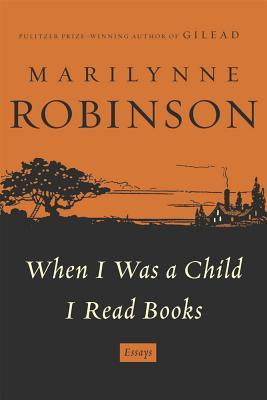
When I Was a Child
by Marilynne Robinson
Tinkers
by Marilynne Robinson
En casa
by Marilynne Robinson
Barcelona. 21 cm. 365 p. Encuadernación en tapa dura de editorial con sobrecubierta. Robinson, Marilynne 1943-. Traducción de Montserrat Gurguí y Hernán Sabaté. En el [101]. Título Home .. Este libro es de segunda mano y tiene o puede tener marcas y señales de su anterior propietario. 9788467248647 (Círculo de Lectores); 9788481099638
Gilead / Home / Lila / Jack
by Marilynne Robinson

No Bed For Bacon .or. Shakespeare Sows An Oat - 1st US Edition/1st Printing
by Marilynne Robinson
Longtemps mpris, le " stupide XIXe sicle " (1819-1905) est devenu l'ge d'or de l'art franais, dans toute sa diversit, avec Ingres et Delacroix, Manet et Puvis de Chavannes, Gustave Eiffel et Charles Garnier. Tout y concourt, la volont politique comme les innovations techniques, la puissance, parfois paralysante, des institutions, la vigueur des initiatives prives. L'art franais devient universellement exemplaire, rpandant l'tranger les trouvailles de l'impressionnisme, le modle haussmannien ou les audaces de l'Art nouveau mais recevant en retour, par les artistes qu'il a attirs sur son sol, de nombreuses influences. Ainsi il apparat foisonnant, alignant une cohorte de grands matres, seuls face leur cration, ou tourns vers l'ide d'un art total et rvant, avec Baudelaire et Valry, au " mlange cumant des arts ".

Marilynne Robinson in Conversation with Susan Straight (2009): Los Angeles Times Festival of Books
by Marilynne Robinson
The Los Angeles Times Festival of Books began in 1996 with a simple to bring together the people who create books with the people who love to read them. The festival was an immediate success and has become the largest and most prestigious book festival in the country, attracting more than 130,000 book lovers each year.Susan Straight's book A Million Nightingales was nominated for a Los Angeles Times 2007 Book Prize in Fiction. Her short story in the anthology, "Los Angeles Noir", was the winner of a 2008 Edgar Award. Highwire Moon was a National Book Award finalist.Marilynne Robinson is the author of three novels, including Gilead, which won a Pulitzer Prize, as well as two books of nonfiction. She teaches at the University of Iowa Writers' Workshop. Robinson's most recent novel, Home, is a 2008 Los Angeles Times Book Prize Finalist in Fiction.

An Introduction to Housekeeping (Audio Guide)
by Marilynne Robinson
The Big Read is a program of the National Endowment for the Arts, designed to restore reading to the center of American culture. The NEA presents The Big Read in partnership with Arts Midwest. The Big Read brings together partners across the country to encourage reading for pleasure and enlightenment.
Empire [Full leather First Edition signed by Author]
by Marilynne Robinson