
Marcus Valerius Martialis
Born: March 1, 40 AD, in Augusta Bilbilis (now Calatayud, Spain); Died: ca. 102 AD--Marcus Valerius Martialis, known in English as Martial, was a Latin poet from Hispania (the Iberian Peninsula) best known for his twelve books of Epigrams, published in Rome between AD 86 and 103, during the reigns of the emperors Domitian, Nerva and Trajan. In these short, witty poems he cheerfully satirises city life and the scandalous activities of his acquaintances, and romanticises his provincial upbringing. Considered the creator of the modern epigram, Martial wrote a total of 1,561 - 1,235 of which are in elegiac couplets.
29 Books Written

This lively translation accurately captures the wit and uncensored bawdiness of the epigrams of Martial, who satirized Roman society, both high and low, in the first century CE. His pithy little poems amuse, but also offer vivid insight into the world of patrons and clients, doctors and lawyers, prostitutes, slaves, and social climbers in ancient Rome. The selections cover nearly a third of Martial's 1,500 or so epigrams, augmented by a foreword by historian Marc Kleijwegt and informative notes on literary allusion and wordplay by translator Susan McLean.

Martial, the father of the epigram, was one of the brilliant provincial poets who made their literary mark on first-century Rome. His Epigrams can be affectionate or cruel, elegiac or playful; they target every element of Roman society, from slaves to schoolmasters to, above all, the aristocratic elite. With wit and wisdom, Martial evokes not “the grandeur that was Rome,” but rather the timeless themes of urban life and society.
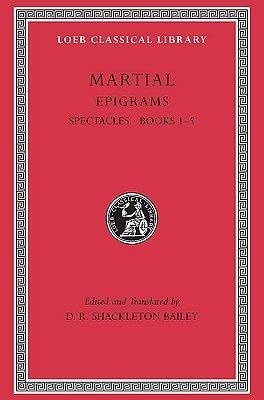
Written to celebrate the 80 CE opening of the Roman Colosseum, Martial's first book of poems, "On the Spectacles," tells of the shows in the new arena. The great Latin epigrammist's twelve subsequent books capture the spirit of Roman life in vivid detail. Fortune hunters and busybodies, orators and lawyers, schoolmasters and acrobats, doctors and plagiarists, beautiful slaves and generous hosts populate his witty verses. We glimpse here the theater, public games, life in the countryside, banquets, lions in the amphitheater, the eruption of Vesuvius. Martial's epigrams are sometimes obscene, sometimes affectionate and amusing, and always pointed. Like his contemporary Statius, though, Martial shamelessly flatters his patron Domitian, one of Rome's worst-reputed emperors.Shackleton Bailey's translation of Martial's often difficult Latin eliminates many misunderstandings in previous versions. The text is mainly that of his highly praised Teubner edition of 1990 ("greatly superior to its predecessors," R. G. M. Nisbet wrote in Classical Review).These volumes replace the earlier Loeb edition with translation by Walter C. A. Ker (1919).


It was to celebrate the opening of the Roman Colosseum in 80 CE that Martial published his first book of poems, "On the Spectacles." Written with satiric wit and a talent for the memorable phrase, the poems in this collection record the broad spectacle of shows in the new arena. The great Latin epigrammist's twelve subsequent books capture the spirit of Roman lifeboth public and privatein vivid detail. Fortune hunters and busybodies, orators and lawyers, schoolmasters and street hawkers, jugglers and acrobats, doctors and plagiarists, beautiful slaves, and generous hosts are among the diverse characters who populate his verses.Martial is a keen and sharp-tongued observer of Roman society. His pen brings into crisp relief a wide variety of scenes and events: the theater and public games, life in the countryside, a rich debauchee's banquet, lions in the amphitheater, the eruption of Vesuvius. The epigrams are sometimes obscene, in the tradition of the genre, sometimes warmly affectionate or amusing, and always pointed. Like his contemporary Statius, though, Martial shamelessly flatters his patron Domitian, one of Rome's worst-reputed emperors.D. R. Shackleton Bailey now gives us, in three volumes, a reliable modern translation of Martial's often difficult Latin, eliminating many misunderstandings in previous versions. The text is mainly that of his highly praised Teubner edition of 1990.

It was to celebrate the opening of the Roman Colosseum in 80 CE that Martial published his first book of poems, "On the Spectacles." Written with satiric wit and a talent for the memorable phrase, the poems in this collection record the broad spectacle of shows in the new arena. The great Latin epigrammist's twelve subsequent books capture the spirit of Roman life--both public and private--in vivid detail. Fortune hunters and busybodies, orators and lawyers, schoolmasters and street hawkers, jugglers and acrobats, doctors and plagiarists, beautiful slaves, and generous hosts are among the diverse characters who populate his verses.Martial is a keen and sharp-tongued observer of Roman society. His pen brings into crisp relief a wide variety of scenes and events: the theater and public games, life in the countryside, a rich debauchee's banquet, lions in the amphitheater, the eruption of Vesuvius. The epigrams are sometimes obscene, in the tradition of the genre, sometimes warmly affectionate or amusing, and always pointed. Like his contemporary Statius, though, Martial shamelessly flatters his patron Domitian, one of Rome's worst-reputed emperors.D. R. Shackleton Bailey now gives us, in three volumes, a reliable modern translation of Martial's often difficult Latin, eliminating many misunderstandings in previous versions. The text is mainly that of his highly praised Teubner edition of 1990.


Martial, the father of the epigram, was one of the brilliant provincial poets who made their literary mark on first-century Rome. His Epigrams can be affectionate or cruel, elegiac or playful; they target every element of Roman society, from slaves to schoolmasters to, above all, the aristocratic elite. With wit and wisdom, Martial evokes not “the grandeur that was Rome,” but rather the timeless themes of urban life and society.About the Author: James Michie studied classics at Trinity College, Oxford. His other translations include The Poems of Catullus and Horace’s Odes (available as a Modern Library Paperback Classic). His Collected Poems was awarded the Hawthornden Prize.Shadi Bartsch is Chair of the Department of Classics at the University of Chicago, the editor in chief of Classical Philology, and the author of Decoding the Ancient Novel; Ideology in Cold Blood: A Reading of Lucan’s “Civil War”; and Actors in the Audi-ence: Theatricality and Doublespeak from Nero to Hadrian.

Qui vi sono epigrammi, che gli sporchi stimano sporchi; altri che lamentano il fuggire della vita e che invitano a bruciarla nell'immediato e nella ginnastica erotica; altri che sono struggenti (o ironiche) lapidi funerarie. Eros e Thanatos non sono che il duplice volto, qui, della consunzione dell'effimero.

A Martial Reader: Selections from the Epigrams (Bc Latin Readers)
by Marcus Valerius Martialis
Rating: 3.9 ⭐
Latin selections from Roman poet Martial (Marcus Valerius Martialis), with vocabulary and grammar notes. Includes an introduction, two maps, full vocabulary, and selected bibliography.

Considered to be the creator of the modern epigram, the Roman poet Martial produced twelve books of Epigrams, featuring short, witty poems that vividly illustrate daily life in Imperial Rome, whilst hilariously satirising the poet’s friends and enemies. This comprehensive eBook presents the complete extant works of Martial, with contextual illustrations, a special dual English and Latin section, informative introductions and the usual Delphi bonus material. (Version 1) * Beautifully illustrated with images relating to Martial's life and works * Features the complete works of Martial, in both English translation and the original Latin * Concise introductions to the poetry * Includes Walter C. A. Ker’s translation, previously appearing in the Loeb Classical Library edition, first time in digital print * Excellent formatting of the texts * Easily locate the epigrams you want to read with detailed contents tables * Includes Martial's rare apocryphal works, first time in digital print * Provides a special dual English and Latin text, allowing readers to compare the texts epigram by epigram – ideal for students * Features a bonus biography – discover Martial's ancient world * Scholarly ordering of texts into chronological order and literary genres Please note: some of Ker’s translations of the more ‘obscene’ epigrams are in Italian. We regret that no suitable English alternatives are available in the public domain at present. CONTENTS: The Translations ON THE SPECTACLES EPIGRAMS The Latin Text LIST OF LATIN TEXT The Dual Texts DUAL LATIN AND ENGLISH TEXTS The Biography INTRODUCTION TO MARTIAL by Walter C. A. Ker


ÍNDICE GENERAL:-Introducción General-Libro de los Espectáculos-Libro I-Libro II-Libro III-Libro IV-Libro V-Libro VI

Good epigrams (like demonic Rice Krispies) go Snap, Crackle, Pow! Witness Fitts' rendering of Martial X:16- "He aimed at the target, but he got/ his wife in the gullet. Lucky shot." The translator of the epigrams faces problems of how to keep them sharp and stinging, bright and biting, and pertinent- for they abound in topical allusion. Fitts succeeds brilliantly in mastering these problems by respecting the tenor and the tone as well as the texts of the originals. With wit, an unerring ear for idiom and analogous word-play, and joy in the use/abuse of slick stereotypes, he creates poetry for contemporary Americans with no infidelity to Roman Martial. Witness IX: 33- "You asked at the Baths why all this sudden applause?/ It's their habit, Cabot./ Another Yale type has stepped out of his drawers." This slight and selective collection is recommended as excellent Martial and fine modern verse.

L’uccello non è un dito. Non est mentula quod digitus. Oscenità, vizi e malizie di Roma antica
by Marcus Valerius Martialis
Rating: 3.8 ⭐
Testo latino a fronte.Di temperamento estroverso, attento alla realtà contemporanea, Marziale descrisse gli eterni vizi dell'uomo. In questi epigrammi si concentra sulle abitudini sessuali degli antichi Romani, mettendo in ridicolo la loro immoralità con un linguaggio esplicito e osceno. Ne deriva una galleria di personaggi irresistibili, gli stessi che probabilmente si aggiravano per il foro, le terme, i mercati e i postriboli della Roma del suo tempo.

This is a reproduction of a book published before 1923. This book may have occasional imperfections such as missing or blurred pages, poor pictures, errant marks, etc. that were either part of the original artifact, or were introduced by the scanning process. We believe this work is culturally important, and despite the imperfections, have elected to bring it back into print as part of our continuing commitment to the preservation of printed works worldwide. We appreciate your understanding of the imperfections in the preservation process, and hope you enjoy this valuable book.


This book is the first full-scale edition of the so-called Liber spectaculorum by Martial. A comprehensive introduction addresses the role of epigram in commemorating monuments and occasions, the connection between spectacle and imperial panegyric in Martial's oeuvre, characteristics of the collection, possible circumstances of composition and "publication," transmission of the text, and related issues. Each epigram is followed by an apparatus criticus, an English translation, and a detailed commentary on linguistic, literary, and historical matters, adducing extensive evidence from epigraphy and art as well as literary sources. The book is accompanied by four concordances, five tables, two maps, 30 plates, and an appendix.

This edition provides an English translation of and detailed commentary on the second book of epigrams published by the Latin poet Marcus Valerius Martialis. The past ten years have seen a resurgence of interest in Martial's writings. But contemporary readers are in particular need of assistance when approaching these epigrams, and until now there has been no modern commentary dedicated to Book II. This new commentary carefully illuminates the allusions to people, places, things, and cultural practices of late first-century Rome that pervade Martial's poetry. It analyzes the epigrammatist's poems as literary creations, treating such topics as the structure of the individual poems and of the book as a whole, and the influence of earlier texts on Martial's language and themes.


Épigrammes: Tome I : Livres I-VII. (Collection Des Universites De France)
by Marcus Valerius Martialis
Rating: 4.0 ⭐
Book by MARTIAL

Faz agora 1900 anos que desapareceu Marcial, o maior epigramatista da literatura ocidental. A publicação deste último volume dos seus poemas, reunindo os Livros X a XIV, é a forma que escolhemos de o celebrar nessa data. Além dos dois livros de dísticos destinados a acompanhar os presentes oferecidos pelas Saturnais, apresentam-se aqui os três livros que escreveu após o assassínio de Domiciano, o último dos quais, composto já na Hispânia natal, para onde regressou depois de 34 anos na fervilhante Roma, veio a lume pouco tempo antes de morrer.

This is a pre-1923 historical reproduction that was curated for quality. Quality assurance was conducted on each of these books in an attempt to remove books with imperfections introduced by the digitization process. Though we have made best efforts - the books may have occasional errors that do not impede the reading experience. We believe this work is culturally important and have elected to bring the book back into print as part of our continuing commitment to the preservation of printed works worldwide.

English, Latin (translation)Original Latin

Mientras se lee a Marcial, uno se da cuenta de lo lejos y lo cerca, al mismo tiempo, que la sociedad romana del s. I d. de C. está de la nuestra. Aquello en lo que está más lejos es lo que ha hecho que una parte de la obra de Marcial apenas logre «tocarnos» hoy en dí un buen número de sus poemas nos resultan, si no incomprensibles, sí al menos bastante ajenos. Pero hay otra gran parte de su obra (la que pretende mostrar al lector contemporáneo esta edición bilingüe) que nos muestra que el ser humano no ha cambiado en absoluto desde las mismas pasiones, tendencias, pulsiones, vicios, estupideces, miserias; pero también la exaltación de la amistad, el goce del banquete y del vino, el disfrute del momento fugitivo, la rendida admiración ante la belleza, el amor, el sexo... Y Marcial supo mostrarlo con una inteligencia, una picardía, una sutileza y un ingenio tales, que hacen de él un poeta que siempre estará muy vivo y que continúa interpelándonos de manera sabia, directa y, en muchos casos, tan cruda.

MARCJALIS (Marcus Valerius Martialis; ok. 40-104 n.e.), który później zasłynął jako autor epigramów i wprowadził ten gatunek poetycki na wyżyny rozwoju artystycznego, tworzył wiersze już w młodości, ale te pierwsze utwory zaginęły. Za najwcześniejsze jego dzieło (lata 80. pierwszego stulecia n.e.) uchodzi zatem zbiór epigramów znany jako Epigrammaton liber (Księga epigramów) lub Spectaculorum liber (Księga widowisk) – kolekcja 36 krótkich utworów sławiących igrzyska zorganizowane przez cesarza Tytusa na inaugurację amfiteatru Flawiuszów, zwanego później Koloseum, budowli uważanej za jeden z cudów świata i symbol Wiecznego Miasta.Pojedynki gladiatorów, polowania na dzikie zwierzęta i walki zwierząt, wystawne inscenizacje mitów, w których drastyczne epizody odgrywali skazańcy, naumachie, czyli bitwy morskie, i pokazy na wodzie – to tematy epigramów Marcjalisa, zaświadczających, że rozmachem i różnorodnością igrzyska Tytusa przewyższyły wszystko, co kiedykolwiek oglądali mieszkańcy Rzymu i przybysze z najodleglejszych stron.U stóp władcy, rozpoznając w nim boga, korzy się słoń i szuka ratunku uciekająca przed pogonią łania; w piasek areny wsiąka krew prośnej maciory, której rozpłatano brzuch, i krew rozszarpywanego przez niedźwiedzia „Orfeusza”, wokół którego „pełzają wzniesienia” i „biegają lasy” – w wierszach Marcjalisa czołobitność przed władcą zdumiewa niewiele mniej niż okrucieństwo spektakli śmierci, będących w istocie publicznymi egzekucjami…Lektura epigramów Marcjalisa, których treść tak jest odległa od dzisiejszej wrażliwości, tak szokująca i bulwersująca, staje się dla współczesnego Czytelnika wyzwaniem. Są one jednak – podobnie jak same igrzyska, które wychwala poeta – nieodłącznym elementem rzymskiej tradycji, z której wyrosła przecież kultura europejska.(Opis ze strony wydawnictwa)