
Mahatma Gandhi
Mohandas Karamchand Gandhi, commonly known as Mahatma Gandhi, was the preeminent leader of Indian nationalism in British-ruled India. Employing non-violent civil disobedience, Gandhi led India to independence and inspired movements for non-violence, civil rights and freedom across the world. The son of a senior government official, Gandhi was born and raised in a Hindu Bania community in coastal Gujarat, and trained in law in London. Gandhi became famous by fighting for the civil rights of Muslim and Hindu Indians in South Africa, using new techniques of non-violent civil disobedience that he developed. Returning to India in 1915, he set about organizing peasants to protest excessive land-taxes. A lifelong opponent of "communalism" (i.e. basing politics on religion) he reached out widely to all religious groups. He became a leader of Muslims protesting the declining status of the Caliphate. Assuming leadership of the Indian National Congress in 1921, Gandhi led nationwide campaigns for easing poverty, expanding women's rights, building religious and ethnic amity, ending untouchability, increasing economic self-reliance, and above all for achieving Swaraj—the independence of India from British domination. His spiritual teacher was the Jain philosopher/poet Shrimad Rajchandra.
31 Books Written
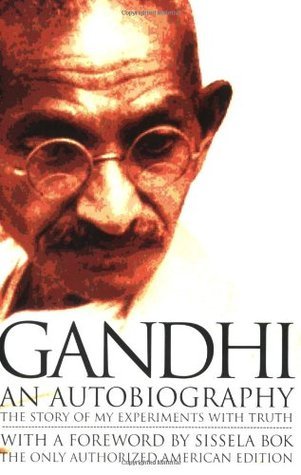
Gandhi An Autobiography: The Story of My Experiments With Truth
by Mahatma Gandhi
Rating: 4.1 ⭐
• 6 recommendations ❤️
Mohandas K. Gandhi is one of the most inspiring figures of our time. In his classic autobiography he recounts the story of his life and how he developed his concept of active nonviolent resistance, which propelled the Indian struggle for independence and countless other nonviolent struggles of the twentieth century.In a new foreword, noted peace expert and teacher Sissela Bok urges us to adopt Gandhi's "attitude of experimenting, of tesing what will and will not bear close scrutiny, what can and cannot be adapted to new circumstances,"in order to bring about change in our own lives and communities. All royalties earned on this book are paid to the Navajivan Trust, founded by Gandhi, for use in carrying on his work.

Mahatma Gandhi was a profound and original thinker as well as one of the most influential figures in the history of the twentieth century. A religious and social reformer, he became a notable leader in the Indian nationalist movement, made famous for his advocacy of non-violent civil resistance. His many and varied writings are essentially responses to the specific challenges he faced, and they show his maturing ideas and political will, as well as his spirituality and humanity, over several decades.This new selection demonstrates how his thinking was truly radical, dealing with problems from the roots upwards: in the lives of individuals, of societies, and of political structures. It underlines the supreme importance of non-violence, and Gandhi's unique and unrealized vision of a new India after the departure of the British.

Ethical Religion is a ten part list of essays written by philosopher, religious and political leader, Mohandas Gandhi. Selection includes an active table of contents. "Hypocrisy has nowadays increased in the world. Whatever a man's religion, he thinks of only its outward form and fails in his real duty. In our crazy pursuit of wealth, we seldom think of the harm we cause, or are likely to cause, to others".

The Essential Gandhi: An Anthology of His Writings on His Life, Work, and Ideas
by Mahatma Gandhi
Rating: 4.3 ⭐
An Anthology of His Writings on His Life, Work & IdeasMohandas K. Gandhi, called Mahatma (“great soul”), was the father of modern India, but his influence has spread well beyond the subcontinent, and is as important today as it was in the first part of the twentieth century, and during this nation’s own civil rights movement. Taken from Gandhi’s writings throughout his life. The Essential Gandhi introduces us to his thoughts on politics, spirituality, poverty, suffering, love, non-violence, civil disobedience, and his own life. The pieces collected here, with explanatory head-notes by Gandhi biographer Louis Fischer, offer the clearest, most thorough portrait of one of the greatest spiritual leaders the world has known.“Gandhi was inevitable. If humanity is to progress, Gandhi is inescapable... We may ignore him at our own risk.” – Dr. Martin Luther King, Jr.With a new Preface drawn from the writings of Eknath EaswaranIn the annals of spirituality certain books stand out both for their historical importance and for their continued relevance. The Vintage Spiritual Classics series offers the greatest of these works in authoritative new editions, with specially commissioned essays by noted contemporary commentators. Filled with eloquence and fresh insight, encouragement and solace, Vintage Spiritual Classics are incomparable resources for all readers, who seek a more substantive understanding of mankind's relation to the divine.

Mohandas Karamchand Gandhi (1869-1948) was a major political and spiritual leader of India and the Indian independence movement. In India, he is recognized as the Father of the Nation. A British-educated lawyer, Gandhi first employed his ideas of peaceful civil disobedience in the Indian community s struggle for civil rights in South Africa. Upon his return to India, he led nationwide campaigns for the alleviation of poverty, for the liberation of women, for brotherhood amongst differing religions and ethnicities, for an end to untouchability and caste discrimination, and for the economic self-sufficiency of the nation, but above all for Swaraj-the independence of India from foreign domination. He famously led Indians in the disobedience of the salt tax on the 400 kilometre (248 miles) Dandi Salt March in 1930, and in an open call for the British to Quit India in 1942. He was imprisoned for many years on numerous occasions in both South Africa and India. He dedicated his life to the wider purpose of discovering truth, or Satya. He tried to achieve this by learning from his own mistakes and conducting experiments on himself. He called his autobiography The Story of My Experiments with Truth.

Presented to his disciples at prayer meetings over a nine-month period in 1926, Mahatma Gandhi's commentaries on the Gita are regarded in India as among the most important of the century. In them Gandhi addresses the issues he felt most directly affected the spiritual lives of common people.
This book was converted from its physical edition to the digital format by a community of volunteers. You may find it for free on the web. Purchase of the Kindle edition includes wireless delivery.

This volume focuses on Gandhi's vision of Satyagraha, whereby one appeals to reason and conscience, and puts an end to evil by converting the evil-doer. The book begins with an explanation of Satyagraha, and proceeds with detailed discussions of the self-training and courage necessary for Satyagraha.

Hind Swaraj is Mahatma Gandhi's fundamental work, and a key to the understanding both of his life and thought, and South Asian politics in the twentieth century. This volume presents for the first time the original 1910 edition of this work, including Gandhi's Preface and Foreword, not found in other editions. This is the first fully annotated edition of the work, and the volume also includes Gandhi's correspondence with Tolstoy, Nehru and others. Anthony Parel's introduction sets the work in its historical and intellectual contexts. Short bibliographical notes on prominent figures mentioned in the text and a chronology of important events are also included as aids to the reader.

In this book, Merton has selected the basic statements of principle and interpretation which make up Gandhi's philosophy of non-violence (AHIMSA) and non-violent action (SATYAGRAHA). The Gandhi text follows that established by the Navaijivan Trust with sections dealing with "Principles of non-violence", "Non-violence, true and false", "Spiritual dimensions of non-violence". "The political scope of non-violence", and "The purity of non-violence".

All Men Are Brothers is a compelling and unique collection of Gandhi's most trenchant writings on nonviolence, especially in the context of a post-nuclear world. This compendium, which reads like a traditional book, is drawn from a wide range of his reflections on world peace. "It is not that I am incapable of anger, but I succeed on almost all occasions to keep my feelings under control. Such a struggle leaves one stronger for it. The more I work at this, the more I feel delight in my life, the delight in the scheme of the universe. It gives me a peace and a meaning of the mysteries of nature that I have no power to describe." - Mahatma Gandhi.

Mohandas Gandhi (1869-1948), acknowledged as one of the great souls of the twentieth century and leader of the Indian independence movement, defined the modern practice of nonviolence. These writings reveal the heart and soul of a man whose message of nonviolence bears special relevance to all spiritual seekers today

My uniform experience has convinced me that there is no other God than Truth. And if every page of these chapters does not proclaim to the reader that the only means for the realization of Truth is ahimsa, I shall deem all my labour in writing these chapters to have been in vain. And, even though my efforts in this behalf may prove fruitless, let the readers know that the vehicle, not the great principle, is at fault.- M. K. Gandhi

Gandhi's ideas are as meaningful today as they were during his long and inspiring life. His enlightening thoughts and beliefs, especially on violence and the atomic bomb, reveal his eloquent foresight about our contemporary world. The words of one of the greatest men of the twentieth century, chosen by the award-winning director Richard Attenborough from Gandhi's letters, speeches, and published writings, explore the prophet's timeless thoughts on daily life, cooperation, nonviolence, faith, and peace. This bestselling volume includes an introduction by Attenborough and an afterword by Time magazine Senior Foreign Correspondent Johanna McGeary that places Gandhi's life and work in the historical context of the twentieth century. This book and the film Gandhi were the result of producer/director Richard Attenborough's long commitment to keeping alive the flame of Gandhi's spiritual achievement and the wisdom of his actions and his words. They are the wisdom and words of peace. Also included are twenty striking historical photographs, specially selected from the archives at the National Gandhi Museum in New Delhi, that capture the important personal, political, and spiritual aspects of Gandhi's career.

One of the most influential figures of the twentieth century, M. K. Gandhi was a revolutionary leader not only in politics, but also in religion. It was for the power of his devotion to God that he was granted the title Mahatma, Great Soul, and continues to be regarded by millions as a Hindu saint. This book explores the deep religious roots of Gandhi's worldly accomplishments, and reveals, in his own words, his intellectual, moral and spiritual approaches to the divine. First published in India in 1971, The Way to God is based on Gandhi's lifetime of experiments with truth, and reveals the heart of his teachings on love, the soul, meditation, service, surrender and prayer. Readers from every faith will find wisdom and inspiration in its message. This edition, the first available to American readers, includes a foreword by Arun Gandhi, the grandson of the Mahatma, and an introduction by Michael N. Nagler.

s/t: The Story in His Own Words

Based on the complete edition of his works, this new volume presents Gandhi's most important political writings arranged around the two central themes of his political satyagraha (the power of non-violence) and swaraj (freedom). Dennis Dalton's general Introduction and headnotes highlight the life of Gandhi, set the readings in historical context, and provide insight into the conceptual framework of Gandhi's political theory. Included are bibliography, glossary, and index.

Millions of people today continue to be inspired by Mahatma Gandhi's teachings because he was a genuine man of God. He also was an original thinker with an inquiring mind who refused to accept untested principles. What many people may not know is that Gandhi's thoughts on health are as original as his thoughts on spirituality and politics. This book shows how his renunciation of Western medicine transformed the man and his ideas.

Profound wisdom comes through reflection on dreams. Every presentation has a meaning. In this work an attempt has been made, by assembling together passages from writings and speeches of Mahatma Gandhi, to give the reader an idea of the dream Gandhi had of a completely free and independent India of his conception in which she has control of her own domestic affairs as well as her relations with the rest of the world.

This work has been selected by scholars as being culturally important and is part of the knowledge base of civilization as we know it. This work is in the public domain in the United States of America, and possibly other nations. Within the United States, you may freely copy and distribute this work, as no entity (individual or corporate) has a copyright on the body of the work. Scholars believe, and we concur, that this work is important enough to be preserved, reproduced, and made generally available to the public. To ensure a quality reading experience, this work has been proofread and republished using a format that seamlessly blends the original graphical elements with text in an easy-to-read typeface. We appreciate your support of the preservation process, and thank you for being an important part of keeping this knowledge alive and relevant.

"After the great war it is difficult, to point out a single nation that is happy; but this has come out of the war, that there is not a single nation outside India, that is not either free or striving to be free.It is said that we, too, are on the road to freedom, that it is better to be on the certain though slow course of gradual unfoldment of freedom than to take the troubled and dangerous path of revolution whether peaceful or violent, and that the new Reforms are a half-way house to freedom.The new constitution granted to India keeps all the military forces, both in the direction and in the financial control, entirely outside the scope of responsibility to the people of India. What does this mean? It means that the revenues of India are spent away on what the nation does not want. But after the mid-Eastern complications and the fresh Asiatic additions to British Imperial spheres of action. This Indian military servitude is a clear danger to national interests..."

«لا يستطيع المرء أن يفعل ما هو صحيح في مجال واحد في الحياة، بينما هو مشغول في فعل الخطأ في مجال آخر؛ فالحياة وحدة واحدة لا تتجزأ.»


Vegetarianism should have that moral basis — that a man is not born a carnivorous animal, but born to live on the fruits and herbs that the earth grows.

What is Hinduism?If were asked to define the Hindu creed, I should simply say: Search after Truth through non-violent means. A man may not believe even in God and still call himself a Hindu. Hinduism is a relentless pursuit after Truth and if today it has become moribund, inactive, irresponsive to growth, it is because we are fatigued and as soon as the fatigue is over Hinduism will burst forth upon the world with a brilliance perhaps unknown before. Hinduism is the most tolerant of all religions. Its creed is all embracing.

First published in India in 1977, this discourse on prayer and meditation by the great spiritual leader explores the meaning of devotion and describes the specific pratices he used. Reprint. Original.

“Después de todo, por muy sinceros que hayan sido mis esfuerzos en pro de la Ahimsa [No violencia y Amor], siguen siendo imperfectos e inadecuados. Por tanto, los pequeños y fugaces vislumbres que he podido tener de la Verdad apenas pueden dar una idea del indescriptible esplendor de la misma, que es un millón de veces más intenso que el del sol que vemos cada día con nuestros ojos. De hecho, lo que yo he captado es tan sólo el más débil atisbo de ese poderoso resplandor. Pero puedo decir con seguridad, como resultado de todos mis experimentos, que una visión perfecta de la Verdad sólo puede ser la consecuencia de una realización completa de la Ahimsa. Para ver cara a cara al Espíritu de la Verdad universal y omnipresente debe uno ser capaz de amar a la más pequeña de las criaturas como a sí mismo. Y una persona que aspira a ello no puede permitirse permanecer fuera de ningún campo de la vida... Pero sé que todavía hay ante mí un difícil camino por recorrer. Tengo que reducirme a cero. Mientras la persona no se ponga libre y voluntariamente en el último lugar entre todas las demás criaturas, no habrá salvación para ella. La Ahimsa es el límite extremo de la humildad”. MOHANDAS KARAMCHAD GANDHI nació en 1869 en la ciudad india de Porbandar (Gujarat). Su vida estuvo marcada por la lucha en favor de la verdad y la no violencia. Fue asesinado el 30 de enero de 1948, en Delhi. La Editorial Sal Terrae ha publicado, además de sus Escritos esenciales y su Autobiografía (Edición abreviada), las siguientes El que sigue el camino de la verdad no Palabras para la «Mi vida es mi mensaje»: Escritos sobre Dios, la verdad y la no Mi La Verdad es Mi fe en la Verdad.

این کتاب مجموعهای از سخنان و نوشتههای گاندی دربارهی تلقی او از مفهوم خداست. هرچند مهاتما گاندی به عنوان رهبر جنبش استقلال طلبانهی مردم هند شهرت جهانی یافت، اما او خود را "یک مردِ خدا" مینامد که "به کسوت سیاستمداران درآمده است." در کتاب "خدا"، چهرهی او را به عنوان یک راهبر روحانی میبینیم که اندیشهها و آموزههایش، به جویندگانِ اهل همه مذاهب و عقاید، روشنی و تسلا و آرامش میبخشد.

Gandhi is widely revered as one of the great moral prophets of the twentieth century. This book focuses on a less well-known area of his his engagement with Jesus and Christianity. As a faithful Hindu, he was unwilling to accept Christian dogma, but in Jesus he recognized and revered one of history's great prophets of nonviolence.